


Tag Archives: Videos
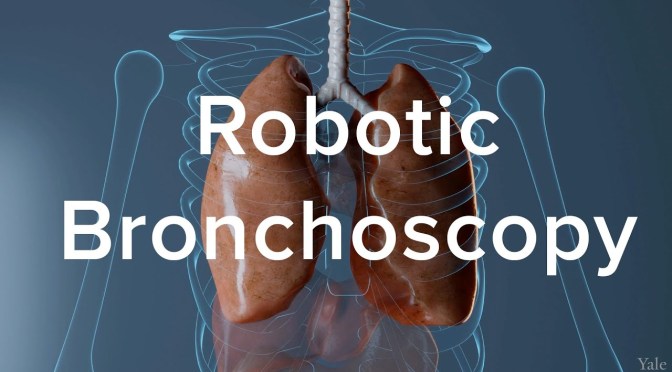
Lung Cancer: Benefits Of Robotic Bronchoscopy

Early diagnosis and treatment often lead to better outcomes. A diagnosis of lung cancer often begins when a chest X-ray or computed tomography (CT) scan shows a nodule—an area of abnormal tissue—in the lungs. If the nodule is suspicious or grows over time, doctors will perform a biopsy to collect a tissue sample that can be tested for the presence of cancer cells. Bronchoscopy is a widely used procedure for biopsying lung nodules.
In traditional bronchoscopy, a doctor manually guides a thin tube, called a bronchoscope, into the patient’s mouth or nose, down the throat, past the vocal cords and windpipe, and into the passageways of the lungs. The bronchoscope is equipped with a light, camera, and biopsy tools that allow doctors to visually examine and biopsy nodules. But robotic bronchoscopy is different. Like traditional bronchoscopy, it’s a minimally invasive procedure that allows doctors to biopsy nodules in the lungs.
The difference is that in robotic bronchoscopy, the doctor uses a controller at a console to operate a robotic arm. The robotic arm guides a catheter—a thin, flexible, and maneuverable tube equipped with a camera, light, and shape-sensing technology—through the patient’s airways. The robotic arm’s precise movements enable doctors to accurately direct the catheter around tight turns in the airways and into the hard-to-reach areas of the lungs. This means doctors can examine and biopsy suspicious nodules—and potentially detect cancer—in parts of the lungs that may be inaccessible with traditional bronchoscopy.
What’s more, the procedure is safe—serious complications are rare—and recovery is usually quick. “As part of the comprehensive Thoracic Oncology Program, we are now able to offer patients the option of robotic bronchoscopy,” says Yale Medicine interventional pulmonologist Christopher Morton, MD. “This technology will allow us to biopsy lung nodules and masses with improved accuracy and fewer side effects, in addition to lymph node biopsies that we already do. This will get patients diagnosed and referred to the appropriate treating physician quicker.”
Ear Health: Diagnosing And Managing ‘Tinnitus’

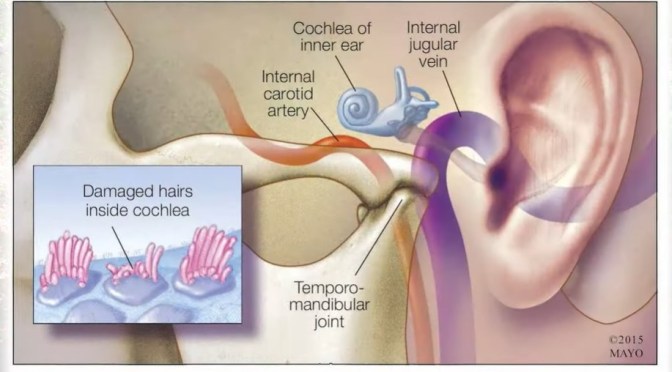
Dr. Poling says the tiny hairs in our inner ear may play a role. Dr. Poling says there’s no scientifically proven cure for tinnitus, but there are treatment and management options. Other options include using a sound generator or using a fan at night. If ringing in your ears bothers you, start by seeing your health care provider for a hearing test.

EPIGENETICS & AGING: DNA BREAKAGE & REPAIR EFFECTS

It also shows that restoring the integrity of the epigenome reverses age-related symptoms.
Learn more at https://hms.harvard.edu/news/loss-epi…

Cardiology: When Chest Discomfort Is Serious

MEDICAL REVIEW: ‘SINGLE-PORT ROBOTIC SURGERY’

Although still relatively uncommon, single-port surgery has been gaining momentum in recent years. The benefits are noticeable. Compared to traditional surgery, single-port surgery might leave patients with shorter recovery times, less scarring, and overall better outcomes.
The technique is also transforming how surgeons think about and execute surgery itself. “It’s allowing us to do surgeries differently than we do with [multi-port surgery],” said Michael Stifelman, M.D., director of robotic surgery at Hackensack University Medical Center. “What every patient wants is to get back to their life. Single-port robotics is allowing us to get them to that point more quickly.”
Learn more about the future of single-port surgery in this episode of “Operation: Reimagine Surgery,” a Freethink original series produced in partnership with Intuitive, which created the world’s first commercially available robotic surgery system in the 1990s.
Reviews: Heart Attacks Vs. Sudden Cardiac Arrest
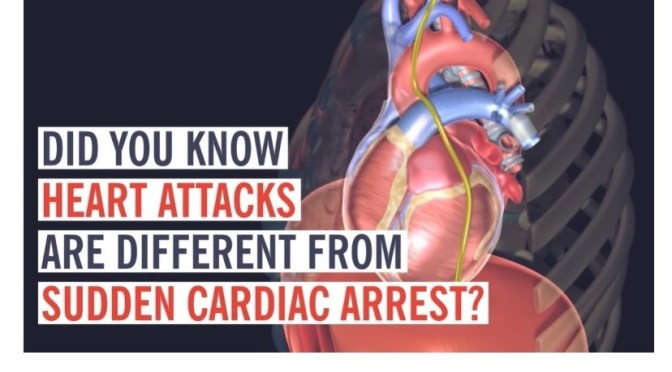
Sudden cardiac arrest (SCA) isn’t the same as a heart attack, though people often use the terms interchangeably. While both are life-threatening heart conditions, understanding the differences could be lifesaving.
When it comes to cardiac arrest versus a heart attack, it can be easy to get them confused. You may be wondering, Is cardiac arrest the same as a heart attack?
Both a heart attack and cardiac arrest can be scary and life-threatening medical conditions affecting your heart, but there are differences in how and why they occur.
A heart attack is caused by a blockage. It happens when an artery blocks the blood flow to your heart.
Cardiac arrest is an electrical issue. It occurs when quick, irregular impulses take over your heart’s rhythm.

Reviews: A 2023 Update For Vaccinations (Mayo Clinic)

Reviews: WHY ARE FLU, RSV AND STREP SURGING IN 2022?

Video timeline: 0:24 – Flu Damage 1:25 – Lower population immunity 2:03 – Who’s most vulnerable? 3:05 – How can we protect ourselves?
Medicine: Living Donor Liver Transplantation

All potential donors will undergo a complete medical and psychosocial evaluation. Not everyone is suitable or eligible to become a living liver donor based on a number of factors such as pre-existing medical conditions, psychosocial concerns, or liver size. Donating an organ is a personal decision that should only be made after becoming fully informed about its potential risks and benefits.
 Doctors Without Waiting Rooms