Tag Archives: The Doctors 101 Chronic Symptoms & Conditions

THE DOCTORS 101 CHRONIC SYMPTOMS & CONDITIONS #52: RHEUMATOID ARTHRITIS

Painful, stiff joints are almost the rule as we get older, it seems. Both osteoarthritis and rheumatoid arthritis contribute to that eventuality. Osteoarthritis typically worsens as we get older, whereas rheumatoid arthritis starts in middle age.
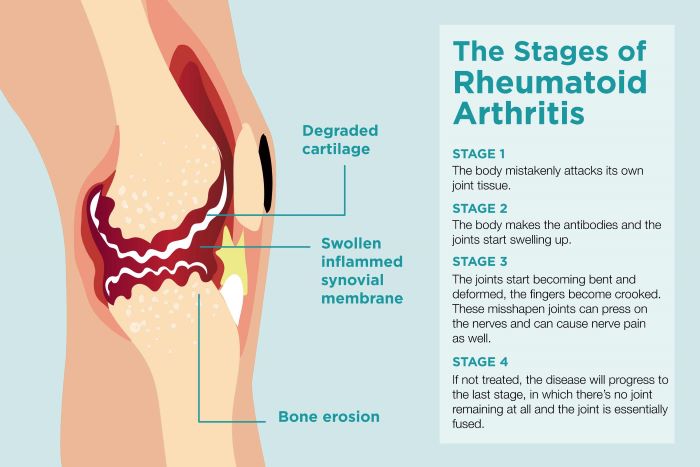
Rheumatoid arthritis is much more severe than osteoarthritis, since it is an autoimmune condition with an episodic inflammatory component. A recent medical study of different blood substances found that the “metabolome” has many markers for exacerbation of rheumatoid arthritis.

The main test currently being used to show exacerbation is CRP, C-reactive protein. Rheumatoid factor tests, such as anti-CCP, are used to confirm the diagnosis.

Rheumatoid arthritis tends to involve the small joints of the hand, and osteoarthritis the larger joints, such as the hips and knees. I go a bit against the grain, having diagnosed osteoarthritis of my fingers and toes, more typical of RA, but, even at the age of 89, my large joints are still in good shape, even with a lot of walking. Since walking is thought to increase the perfusion of joint fluid to nourish the knee cartilages, perhaps I should say BECAUSE of walking. Running tends to wear the knees and hips out, because of high impact on the joints.

The inflammation of rheumatoid arthritis tends to wax and wane, but during an exacerbation can be quite incapacitating. The interleukin TNF seems instrumental in causing these flares, and antibodies directed towards TNF, such as etanercept, has been a helpful treatment. This injection is also given for other inflammatory, autoimmune conditions such as psoriasis, particularly psoriatic arthritis, and the inflammatory bowel diseases.

Almost half the people who have rheumatoid arthritis also experience signs and symptoms in other tissues, such as the skin, eyes, heart, and lungs. It is truly a systemic, autoimmune disease.

For more information please consult the following mayo clinic article on rheumatoid arthritis.
—Dr. C.

Read more

THE DOCTORS 101 CHRONIC SYMPTOMS & CONDITIONS #51: PSORIASIS (SKIN DISEASE)

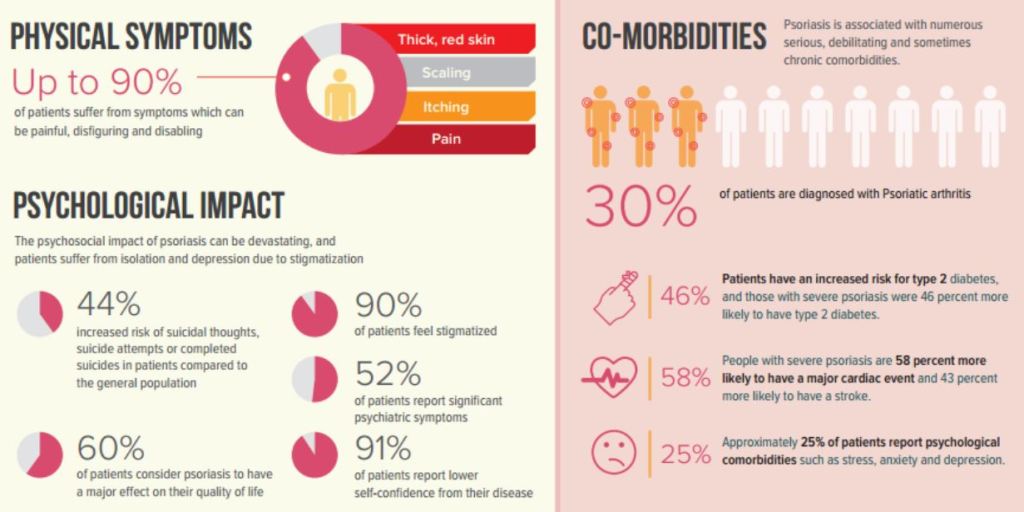
Psoriasis is a common skin disease, thought to be in the auto immune category. One of the main elements supporting auto immunity is it’s frequent association with an arthritis, which can be severe.

Eczema (atopic dermatitis) is both a skin and an allergic disease, and looks a bit like psoriasis. In my practice I saw many patients with psoriasis, perhaps people confusing allergy and dermatology.

Both psoriasis and eczema have a red inflamed base, with many little silvery scales of skin on top. These patchy areas tend to be on the outside bends of the elbows and knees in psoriasis, contrasting with eczema, where the dermatitis is located on the inside of the bends. Eczema is a lot more itchy.

The cause of the skin lesions in psoriasis is thought to be due to an interleukin called TNF, which calls to the area a number of inflammatory cells which, in addition to the thickened skin area and excess of epithelial cells, leads to a characteristic appearance under the microscope; biopsies are uncommonly needed when there is doubt about the diagnosis.

In its severe form, psoriasis can be very disfiguring, irritating, painful or itchy, and life altering. You have probably seen advertisements on TV.
Psoriasis has accumulated many different treatments, since it has been recognized and treated over such a long period of time. The basis of many effective treatments is “shotgun” systemic  immunosuppression, which reduces the autoimmune inflammatory reaction, but with side effects.

Topical Cortisone cream is the cheapest reasonably effective treatment, and works for mild cases. More recent treatments are specifically aimed out the interleukins which cause the disease, like TNF.

Please refer to the mayo clinic article for more pictures, and discussion of treatment.

—Dr. C.

Read more

THE DOCTORS 101 CHRONIC SYMPTOMS & CONDITIONS #50: HASHIMOTO’S DISEASE

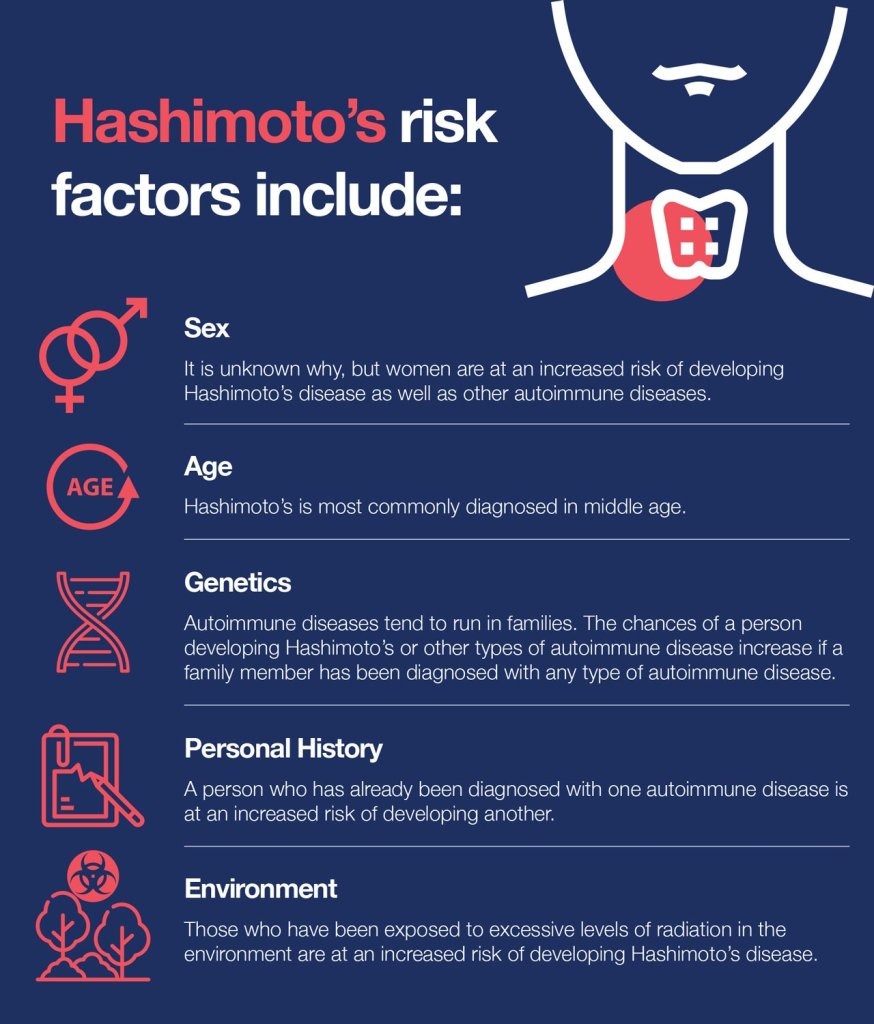
Hashimoto’s thyroiditis is the most common cause of thyroid deficiency. As a practicing allergist, I would routinely palpate the front of the neck area around the windpipe where the thyroid is located. Every few months or so, I would feel an enlarged thyroid, order a high sensitivity TSH test, and, if positive, check for thyroid antibodies.

This saved my patients from having to go through the symptoms of underactive thyroid(hypothyroidism), since I detected the problem at an early stage, before symptoms developed.

Major symptoms of an underactive thyroid include fatigue, increased sensitivity to the cold, constipation, unexplained weight gain, and depression. Be sure to seek medical care if you are suffering from these symptoms.

An elevated LDL cholesterol is one of the biochemical results of hypothyroidism, and can lead to heart problems. I have been hearing that the routine physical examination it is becoming less common, and may even be replaced by telemedicine. The early detection of Hashimoto’s thyroiditis will be one of the casualties, since the doctor can’t find an enlarged thyroid unless she palpates for it.

You might wonder why an enlarged thyroid gland is associated with decreased thyroid production. The way it works is that the pituitary gland at the base of the brain detects a decrease in thyroid production. It responds by secreting a thyroid stimulant, TSH. The TSH causes enlargement of the thyroid gland, leading to the association of an elevated TSH with decreased thyroid activity.

Hashimoto’s  is one of the large number of autoimmune diseases. A person who has an autoimmune disease, such as rheumatoid arthritis, type one diabetes, or celiac disease, is more likely to develop others, and should be alert to that possibility.

Finding that you have  low thyroid activity is only part of the problem. It takes several visits plus input from both patient and doctor in order to arrive at the proper medication schedule. There are several different thyroid medications, and people respond differently to them.

Be on the alert for hypothyroidism. It can sneak up on you.

—Dr. C.

THE DOCTORS 101 CHRONIC SYMPTOMS & CONDITIONS #49: KYPHOSIS (ROUNDBACK)

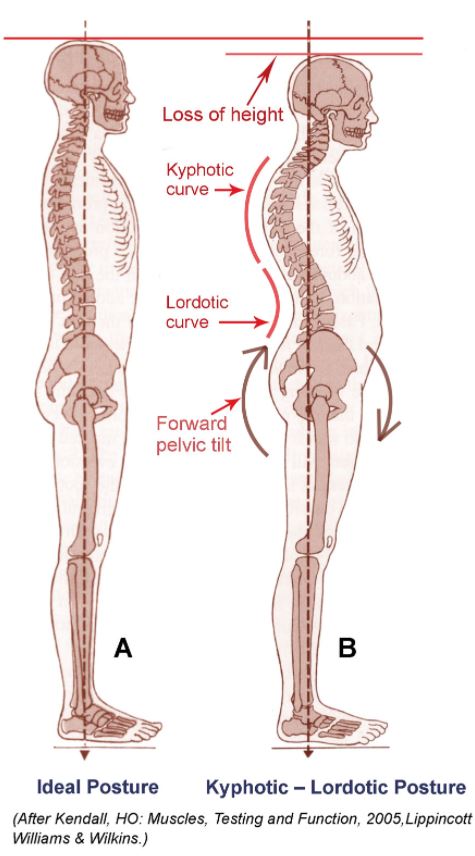
Older people are more susceptible to kyphosis. Osteoporosis is a risk factor, so it is no surprise that women are affected more frequently. This rounding tendency of the thoracic spine can be measured on a lateral x-ray of the spine in terms of degrees; 20 to 40°  is considered normal. The angle increases with age, and almost half of older people have an angle more than 40°.

Children can also get kyphosis-Scheuermann’s disease-during the rapidly growing years. Kyphosis occurs when the normally block-like vertebrae become wedge shaped, with the narrow part towards the front.

Causes of kyphosis include fractures, with or without osteoporosis, disc degeneration, cancer and cancer treatment. Tuberculosis of the bone used  to be a common cause of hunchbacks, but this is no longer a problem.

Kyphosis can produce breathing problems by putting pressure on the lungs, increase digestive problems such as GERD, or compress spinal nerves causing pain.

At the age of 89, I have a problem with kyphosis. At the age of 30, one of my thoracic vertebrae sustained a wedge compression fracture, probably from jumping off a wall or something similarly stupid.

I continually have to fight foreword slouching when I walk, and remind myself to stand up straight, and throw my shoulders back. My neck arthritis makes it difficult to look up when I walk.

I also do angle push-ups to strengthen my back muscles. I have a friend who has severe kyphosis, and recently had an orthopedic operation to correct it. I am hopeful that this operation will relieve his sense of shortness of breath and reduce his GERD.

Treatment includes taking vitamin D and calcium, or other medicines for osteoporosis. Smoking should be avoided, and alcohol limited. There are a number of exercises that are recommended, some of which I have mentioned.

Please refer to the following Mayo clinic article for more information.

—Dr. C.

Read more

THE DOCTORS 101 CHRONIC SYMPTOMS & CONDITIONS #48: URTICARIA (HIVES)

ALLERGY is a type of reaction that can vary from annoying to fatal. The question has always been: what possible utility to the body does the allergic reaction, which has survived evolution, provide? The best theory fingers parasitic infestations; not only can parasites cause allergic reactions, Indicate allergy by showing blood eosinophilia, but the allergic reaction seem to help us fight parasitic infestation, which was much more common in humanity’s  past, and in present day underdeveloped societies.

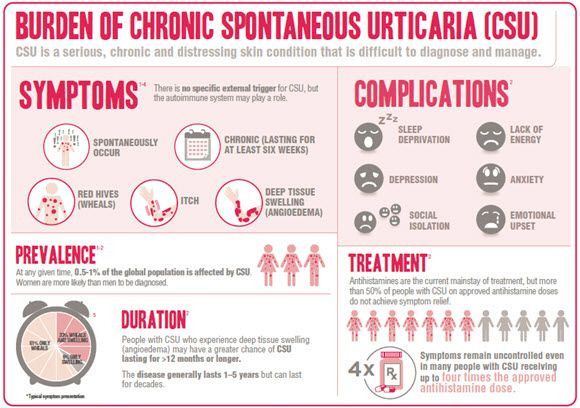
URTICARIA consists of a number of little welts or bumps that pop up on the skin and are very itchy. This reaction is caused by little darkly-staining cells called MAST CELLS, which release Histamine  and other irritants into the skin, causing hives. These mast cells are provoked into releasing their irritating cargo by IGE antibodies, the basis of true allergy.

Treatment consist of removing the cause, blocking the action of the IgE antibodies, or giving medication to block the action of the histamine( anti-histamines).

There are multiple common causes, several giving its name to a type of Urticaria. Pressure urticaria can be caused by a belt or tight fitting clothing pressing on the skin to cause the hives. Solar urticaria can be caused by sunlight.

Cold urticaria can be caused by exposure to very cold objects. Hives can also be caused stress, exercise, different foods(seafood and strawberries are the most famous), different drugs(penicillin and aspirin are the most famous), and scratching on the skin(dermatographia).

Hives can occur as a feature of ANAPHYLAXIS. If the IgE-mast cell reaction is extensive, the blood pressure can drop, internal organs can be affected, and emergency treatment must take place to prevent death.
My only experience with hives was after a bee sting, when I broke out with itchy bumps. I had desensitization with honeybee venom, although this is not always done these days. Be sure to check with your doctor if you have such a reaction, however.

The biggest recent improvement in treating people who are incapacitated with frequently recurring and long lasting hives is anti-IGE, an expensive but very effective injection.

If you have hives, be sure to keep a record of events that immediately preceded the hives, including foods, activities,, and exposures. Although the recommended Mayo clinic article that follows suggests that you see a dermatologist or an allergist, I would reverse that and suggest the allergist first.

—Dr. C.

Read more

THE DOCTORS 101 CHRONIC SYMPTOMS & CONDITIONS #47: POST-TRAUMATIC STRESS DISORDER (PTSD)

PTSD, post traumatic stress disorder, has been increasingly recognized by the medical community, and was admitted to the status of a psychiatric disorder in 1980. It was first recognized as “shell shock” in combat soldiers.

The movie, “Patton”, featured one such case; abusive behavior of a soldier by Patton hit the newspapers, and he was sidelined for the start of “ operation overlord“. Since the majority of soldiers were not incapacitated , Patton thought the soldier was cowardly.

As an allergist, I was sent one case of PTSD; Believe it or not, the referring physician thought it might be an “allergy”, so little was it understood.

Now, memory consolidation  is considered to be one of its dimensions. An incompletely consolidated memory allows flashbacks to be considered the real thing.

PTSD is partly under genetic control, since identical twins are more more likely to experience the condition. Anxiety and other psychiatric problems such as depression and substance abuse  can be associated. Women are more likely to experience it. Individuals with low cortisol, elevated norepinephrine or a small amygdala or more likely to develop PTSD. Even children can be involved if they have been abused physically.

Any kind of a frightening experience, especially sexual, can be a cause.
Symptoms can include recurrent distressing memories, flashbacks, or nightmares of the traumatic event, or emotional distress and anxiety on exposure to a similar experience.

Treatment can include medication for depression, but  benzodiazepines should be avoided. Cognitive behavioral therapy has enjoyed some success, but treatment is generally difficult. Please consult the attached Cleveland clinic article for more information.

–Dr. C

Read more

THE DOCTORS 101 CHRONIC SYMPTOMS & CONDITIONS #46: COCCYDYNIA

Pain is the hallmark of Coccydynia (Tailbone Pain). The word can be divided into two parts; the first, coccy, refers to the triangular structure itself, which sits at the bottom of the vertebral column, and comes from the Greek word for ”cuckoo”. I previously thought it translated as “tail”. The second part of the word, -“dynia” translates as “pain”, which is much more appropriate.

The coccyx, or tailbone, is one of those useless vestiges of evolution, joining ranks with the appendix and paranasal sinuses. It sits just above the gluteal cleft on your backside, and  is the conjunction of four or five boney segments which are either fused, or joined by a variety of bony, cartilaginous or fibrous unions.

If these unions are damaged, irritated, or fractured, PAIN can result.
The attached muscles, the anus in front, and the buttocks(gluteus maximus) in back, account for some of the activities that can cause pain when the coccyx is disordered.

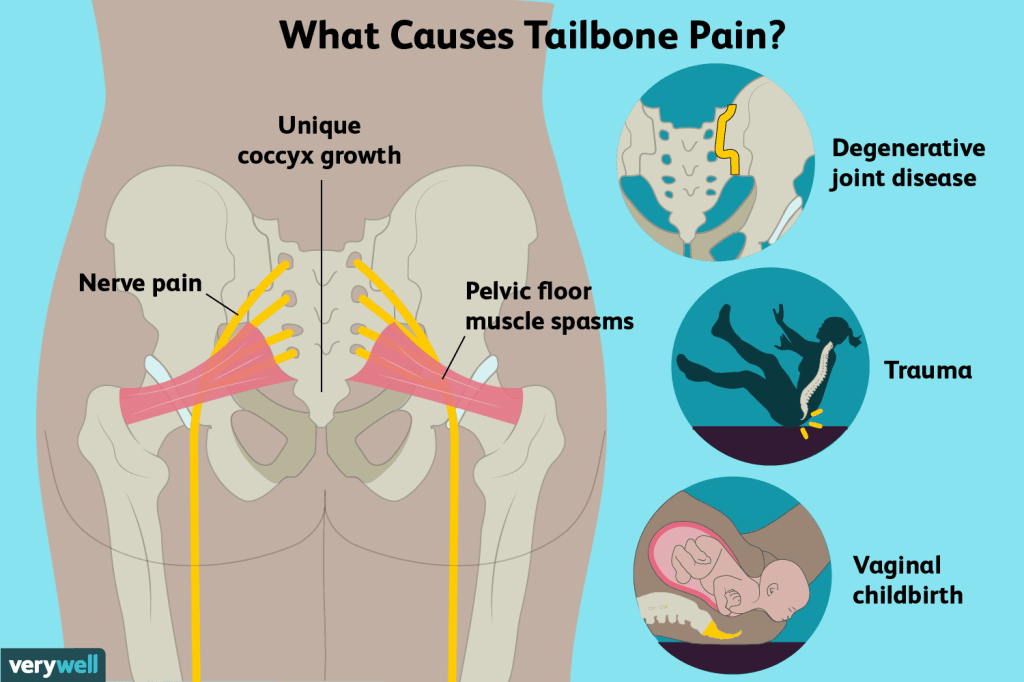
The main causes of coccydynia are falling on your backside, sports has bicycling, especially on irregular surfaces, or childbirth, which requires mobilization of the coccyx in order for the baby to exit.

One of my friends recently developed coccydynia from riding for several hours on a very bumpy dirt pathway. She has had the pain for two or three weeks now, has pain while sitting & upon getting up, but can walk without pain. Sleeping, especially on her side, causes no problems.

Ibuprofen affords temporary relief, but she likes to avoid taking it regularly because of side effects. Most people with coccydynia will recover after a few weeks, or occasionally a few months, and will be sufficiently impressed to avoid the causative activities.

If the pain persists for a long time or prevents normal activities, you should visit the doctor for diagnostic tests.

Please refer to the article by the Cleveland clinic for more information.

—Dr. C.

Read more

THE DOCTORS 101 CHRONIC SYMPTOMS & CONDITIONS #45: SLEEP APNEA

Sleep apnea and obesity are bound together as Charles dickens observed in his Pickwick papers. The Pickwickian syndrome is obesity associated with alveolar hypoventilation(insufficient breathing) with an increase in CO2 in the bloodstream which causes narcosis, or SLEEPINESS, in the daytime.

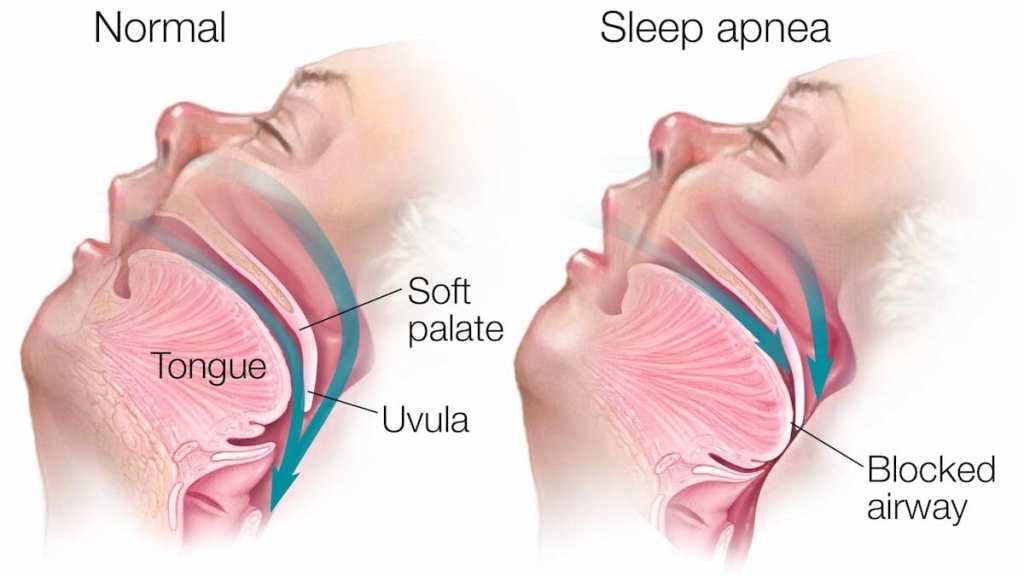
When I went in for my sleep apnea study, I noticed a number of double wide chairs available for the usual clientele there. OBESITY is one of the major risk factors for sleep apnea. Depositions at the base of the tongue and throat interfere with breathing, and causes snoring to the point of tracheal blockage and apnea at night.

Some people with normal “ BMI”, have sleep apnea. Sleep apnea can run in families, occur when you are older, or have a thick neck. So no matter what your weight, if you have daytime sleepiness after an apparently full night of sleep, you should be considered for a sleep study.

A SLEEP STUDY requires that you go into a sleep center overnight, get hooked up to an electroencephalogram machine, oxygen monitor, chest straps, and the like. This is the gold standard for a diagnosis of sleep apnea, but a recording pulse oximeter will let you know a lot less expensively if you have the critical problem, a drop in oxygen saturation. The type of sleep apnea I have been discussing so far is obstructive sleep apnea. Of course there are other types such as central, or complex sleep apnea.

Most sleep apnea responds to nasal CPAP, if you can tolerate it.
My own sleep apnea was diagnosed as moderate, 15% central and 85%  obstructive in type.  I have a stuffy nose which I believe to be the main problem setting me up for sleep apnea, and I could not tolerate the positive nasal CPAP. There is also a dental apparatus that I tried unsuccessfully. I wound up sleeping on my side, and propping myself in that position with pillows .This seems to help me, but I still wake up several times a night, usually at the end of a 90 minute sleep cycle, and with a full bladder.

I sleep through better on days when I have had more physical or mental exercise. Avoiding a full stomach at bedtime is also helpful with both sleep apnea and GERD.

I do use Afrin on the left side of my nose, which is more obstructed. I restrict the use to every third day, although I have heard that you can use it every other day, alternating sides, if you have a stuffy nose that has resisted other treatments .I have also heard that using corticosteroid nasal sprays makes Afrin better tolerated. Be sure to get clearance with your doctor before trying this.

— Dr. C

Read more at Mayo Clinic

THE DOCTORS 101 CHRONIC SYMPTOMS & CONDITIONS #44: SYPHILIS (STD)

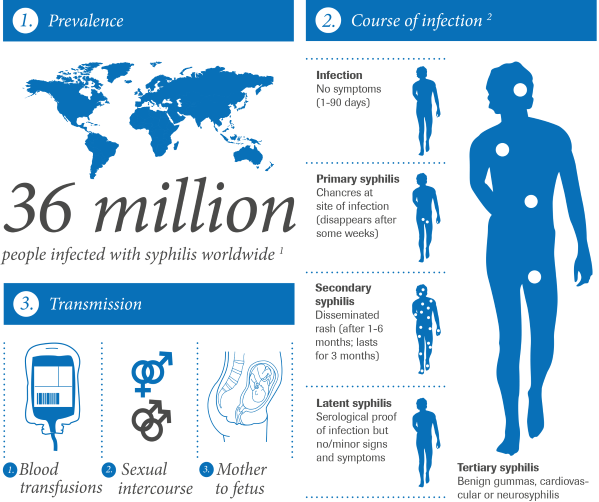
Syphilis is a venereal disease, or STD, that is unusual,  unique in many ways. First of all, it is one of the few major diseases to have originated in the Americas, the New World, and carried back to Europe most likely by Columbus; Popularized by “guns germs and steel”, the infectious disease traffic was almost all the other way, most famously smallpox which decimated the Native Americans.

A second unusual characteristic is that it’s treatment(penicillin) is known, cheap, easy, and yet Syphillis infects millions of people yearly, most commonly to be sure in the developing world, but also large numbers in America where is helped by AIDS, and spread by men having sex with men.

A third unusual characteristic  is that syphilis can mimic practically any disease. There are three stages.  The first stage is a painless ulcer, usually on the genitals.  After a few weeks, the second stage develops, showing a widespread rash and other symptoms.  After a few more months, problems develop in the heart, brain, or growths ( gummas) in many other areas .

When I was in medical school we used to go to an old peoples home to listen for aortic regurgitation, and observe the neurologic symptoms of syphilis patients. Syphilis is still a cause of aortic  insufficiency, if untreated.

Treponema pallidum, The causative agent, is also unusual. It has a very small geome, and has many missing cellular mechanisms, making it dependent upon Homo sapiens, it’s only known Reservoir. The fragile but very active organism will die in a few hours outside of its human host. Like it’s confederate,AIDS, The infection can easily spread from mother to child with devastating consequences. It is one of the major diseases for which pregnant mothers are tested.

Syphilis is one of the best arguments for being monogamous. If this can’t be, remember that syphilis is easily treatable, and that you should report any unusual illnesses to your doctor.

—Dr. C

THE DOCTORS 101 CHRONIC SYMPTOMS & CONDITIONS #43: CELIAC DISEASE

Celiac disease – I know of no disease more rare that is a fixation for more people. Practically everything I see in the processed food area advertises itself as being gluten free, yet celiac disease affects about only one in 100 people.  Even the dogs that I see on my walk are claimed by their owner to be on a gluten restricted diet.

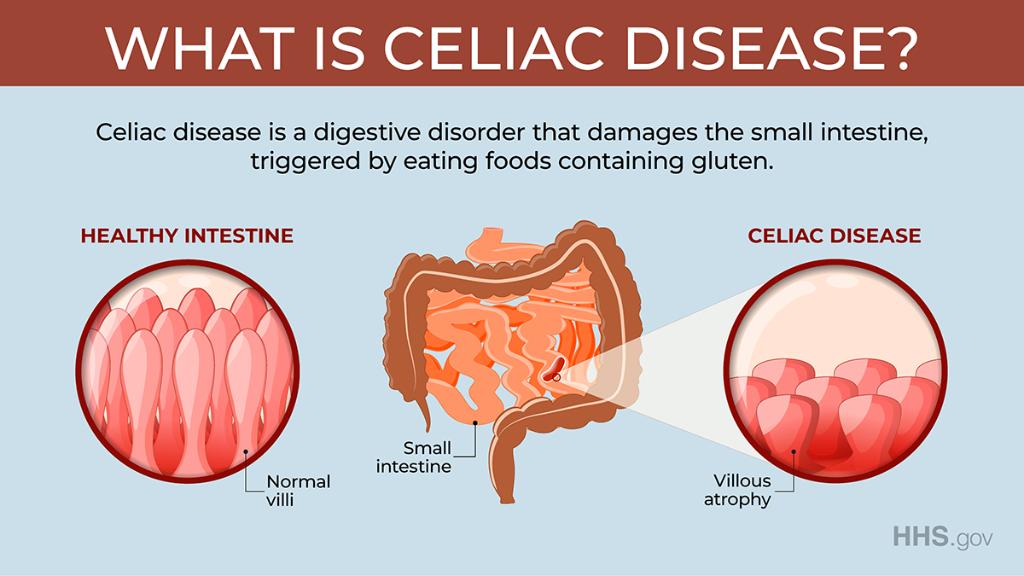
Celiac disease-it’s hard to imagine a more complicated and variable disease. Although Coeliac Disease runs in families with HLA-DQ2 and HLA-DQ8, having these markers is not alone sufficient to cause Coeliac Disease. Eating gluten is not even sufficient, but requires an enzymatic change via tTG2 to make gluten fire up the immune system. Testing  for an antibody to tTG2 is one of the better tests for celiac disease, and a drug that blocks tTG2 has recently proven helpful as a treatment for celiac disease.

CD often starts in young children, but the disease can begin at any age. Although gastrointestinal symptoms such as diarrhea or constipation, bloating, and bulky, oily stools are typical, even clear-cut cases may have no recognized symptoms at all. In other cases almost any organ can be involved, or the symptoms can be non-specific such as Weight loss, anemia and fatigue.

it is estimated that only about 10% of people with celiac disease are ever proven to have the diagnosis. It Is massively under diagnosed in spite of permeating the popular lore.

A lot of people place themselves on a gluten-free diet and  claim to feel better, but being on a gluten-free diet makes the diagnosis difficult to make; if celiac disease is seriously suspected, the doctor will place the patient on a gluten-containing diet which allows the tests, such as  anti-t-TG2, or villous atrophy of the small bowel to become positive.

Among people who actually have real, valid, proven celiac disease, who have every reason to want to restrict gluten to improve their Disease, 40% of them have great difficulty in adhering to the necessarily draconian gluten free diet.

Even the doctors can have a blind eye to celiac disease, since it is quite rare. A good friend of mine with chronic bloating went to a gastroenterologist who declared her free of disease, without having ruled out celiac disease. One would think that a gastroenterologist  would be tuned in to coeliac disease, given the prominence of gastrointestinal symptoms and pathology.

The patient should be her own advocate.

—Dr. C

Read more