Tag Archives: SLEEP

MENTAL HEALTH: SOME THOUGHTS ON DIAGNOSING AND TREATING “DEPRESSION”

I recently posted a discussion on osteoporosis that was based on a MNEMONIC, using the word itself as the basis of exploring the Risk factors Evidence that you have Osteoporosis is hidden, and are discovered by Dexascan, or when you suddenly have a major fracture.

DEPRESSION is common, but sneaks up on you. It may be a job to discover that you have it, to DIAGNOSE it, so that you can be treated. The diagnosis has about 10 markers that can be formulated into a mnemonic, so that you can remember what they are. My favorite is by Paul Blenkiron, writing in the BMJ:
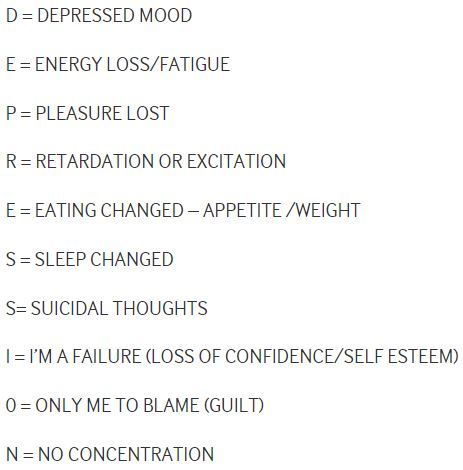
These 10 symptoms are described in the 10th edition of “the international classification of Diseases. The problem with some mnemonics is to remember the mnemonic itself.

Not here. Interestingly, The 4 PILLARS OF HEALTH are each represented in this list. 3 of them are valid TREATMENTS for DEPRESSION, as you will see in the following articles. When I looked up intellectual stimulation as a treatment for Depression, all i found was electrical or magnetic deep brain stimulation.
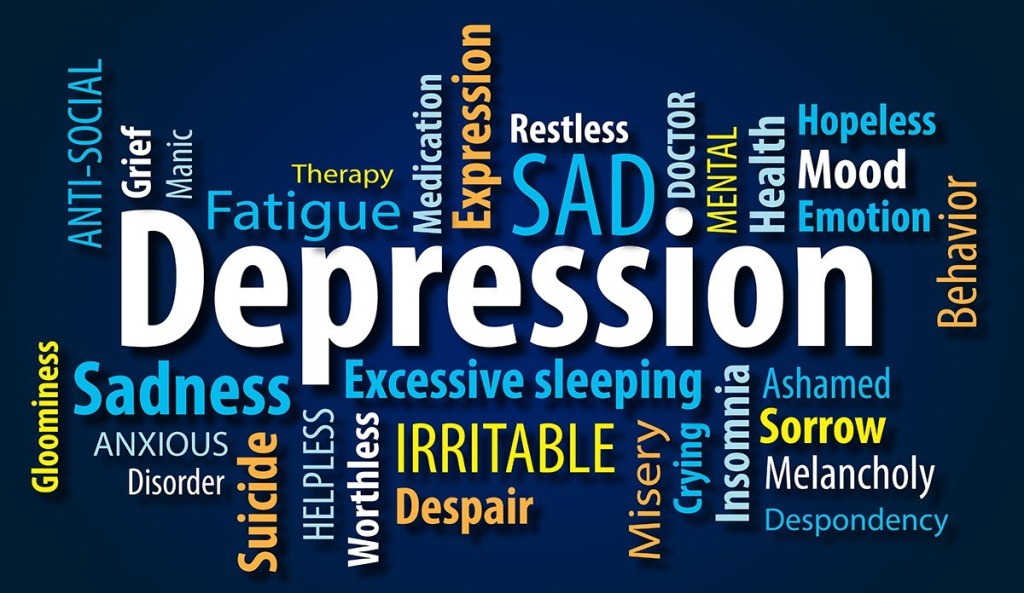
I can’t help but believe that INTELLECTUAL STIMULATION itself would at least help ward off much Anxiety and Depression. SLEEP has an interesting relationship to depression. Lack of sleep can be a CAUSE of Depression.

Recently, deprivation of sleep has been used to TREAT episodes of severe depression. Obviously there is a lot we don’t know. Another puzzlement is the several week delay in the effect of SSRI medications. I acknowledge that throughout history many great intellects have manic-depression, which may be key to their productivity.

Depression itself is credited with deep understanding. The “black Dog” of depression is best avoided, however. A HEALTHY LIFE STYLE SHOULD HELP WARD OFF DEPRESSION.
–Dr. C.

Reference #1

Reference #2

Reference #3

STUDY: “FRAGMENTED SLEEP” INCREASES INFLAMMATION & HARDENING OF THE ARTERIES

From UC Berkeley (June 4, 2020):

UC Berkeley Logo

“We’ve discovered that fragmented sleep is associated with a unique pathway — chronic circulating inflammation throughout the blood stream — which, in turn, is linked to higher amounts of plaques in coronary arteries,” said study senior author Matthew Walker, a UC Berkeley professor of psychology and neuroscience.

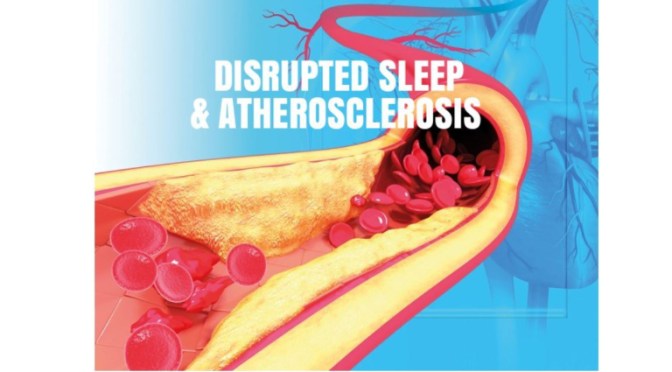
Disrupted nightly sleep and clogged arteries tend to sneak up on us as we age. And while both disorders may seem unrelated, a new UC Berkeley study helps explain why they are, in fact, pathologically intertwined.

Some tips to improve sleep quality

  • Maintain a regular sleep routine, going to bed and waking up at the same time each day.
  • As part of a nightly wind-down routine, avoid viewing computer, smartphone and TV screens in the last hour before bedtime, and keep phones and other digital devices out of the bedroom.
  • Engage in some form of physical exercise during the day.
  • Get exposure to natural daylight, especially in the first half of the day.
  • Avoid stimulants, like caffeine, and sedatives, like alcohol, later in the day.

UC Berkeley sleep scientists have begun to reveal what it is about fragmented nightly sleep that leads to the fatty arterial plaque buildup known as atherosclerosis that can result in fatal heart disease.

Read full article

COMMENTARY

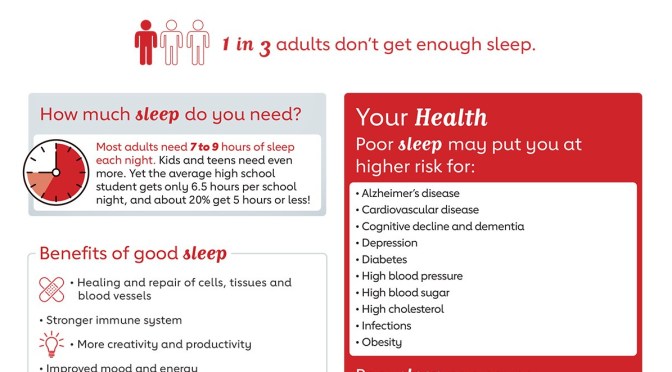
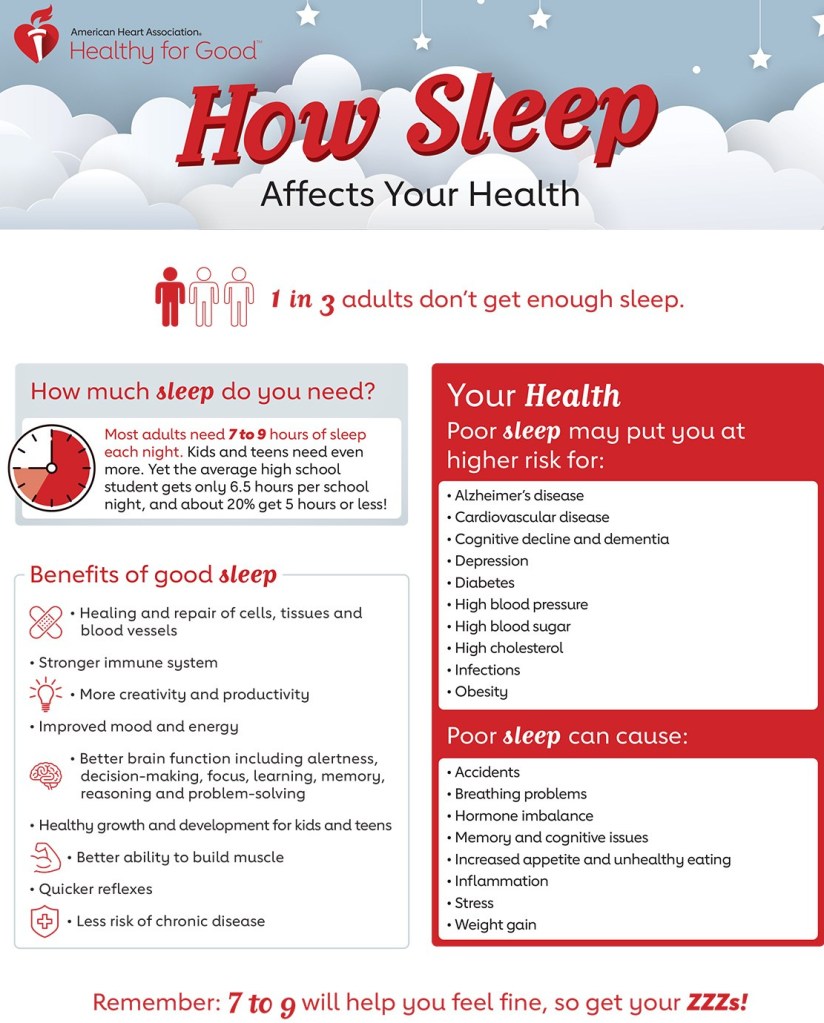
“How much sleep do we need”, and “Sleep Hygine” were past topics on this site, and my own sleep fragmentation was mentioned. This study correlates sleep fragmentation in the elderly with increased blood vessel disease compared to elderly people who have no interruptions in their sleep.

The elderly have several obstacles to a good, full night’s sleep, although a fair number of my friends claim the blessings of sleeping soundly. As we get older, we lose the deepest sleep we enjoyed as children, and there is some loss of REM sleep as well. The elderly sleep more lightly.

Diseases begin to accumulate as we get older, and These DISORDERS and their TREATMENT can disrupt sleep. I mentioned My BPH with it’s blockage of flow, leading to incomplete emptying of my bladder. This led to FREQUENT URINATION and frequent arousal at night.

With aging, the tissues in the throat become more flabby, and if you SLEEP on your BACK, your inhalation may be blocked. This may result in OBSTRUCTIVE SLEEP APNEA, where your breathing  and sleep are interrupted repeatedly. The associated SNORING may interrupt the sleep of your partner, or even the sleep of those in the next room.

GERD, where you choke on regurgitated stomach contents, is more common in the elderly.

Chronic Heart, lung and Kidney disease can interfere with sleep.
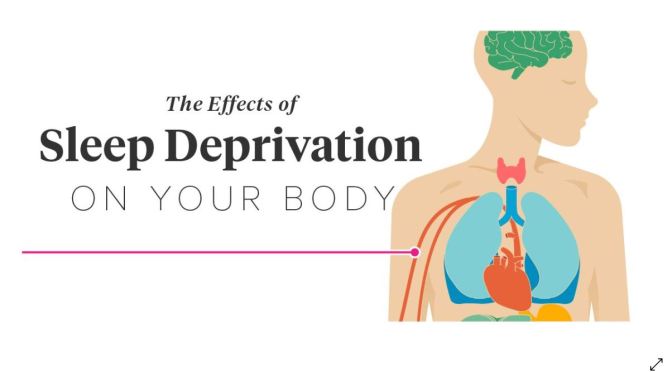
SLEEP DEPRIVATION leads to a variety of problems, such as the inflammation and Arterial blockage highlighted in the above article.

Sleep is intimately connected with DIET and EXERCISE. As one of the PILLARS of HEALTH,  It s well worth discussing with your Doctor and following her instructions.

—Dr. C.

STUDIES: CHRONIC SLEEP DEPRIVATION CAUSES TOXIC CHANGES IN GUT HEALTH, INCREASED EARLY MORTALITY

From Harvard Medical School (June 4, 2020):

“We took an unbiased approach and searched throughout the body for indicators of damage from sleep deprivation. We were surprised to find it was the gut that plays a key role in causing death,” said senior study author Dragana Rogulja, assistant professor of neurobiology in the Blavatnik Institute at HMS.

The first signs of insufficient sleep are universally familiar. There’s tiredness and fatigue, difficulty concentrating, perhaps irritability or even tired giggles. Far fewer people have experienced the effects of prolonged sleep deprivation, including disorientation, paranoia, and hallucinations.

Total, prolonged sleep deprivation, however, can be fatal. While it has been reported in humans only anecdotally, a widely cited study in rats conducted by Chicago-based researchers in 1989 showed that a total lack of sleep inevitably leads to death. Yet, despite decades of study, a central question has remained unsolved: Why do animals die when they don’t sleep?

Now, Harvard Medical School (HMS) neuroscientists have identified an unexpected, causal link between sleep deprivation and premature death.

Read full article

HEALTH: HOW SLEEP HAS CHANGED DURING COVID-19

From the Wall Street Journal (June 1, 2020):

The biggest problem has been staying asleep,” says Philip Muskin, a professor of psychiatry at Columbia University Medical Center in New York. “People aren’t exercising, their days have no structure at all.”

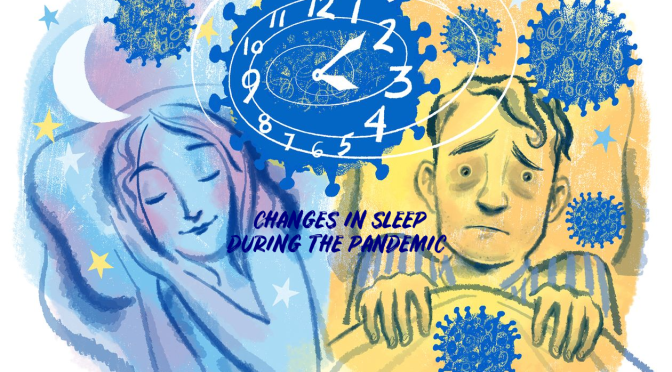
Preliminary results from a survey taken by around 1,600 people from 60 countries show that 46% reported poor sleep during the pandemic, while only 25% said they had slept poorly before it, according to Melinda Jackson, a senior lecturer at the Turner Institute for Brain and Mental Health at Monash University in Melbourne, who studies how stressful events affect people’s sleep. Forty percent also reported increased alcohol consumption.

The key is to prevent the sleep problem from becoming chronic, she says. It is important to avoid associating your bed or bedroom with a place where you are awake. Experts recommend that if you can’t fall asleep, or wake up in the middle of the night and are unable to go back to sleep after 20 minutes, get out of bed and do something relaxing.

Read full article

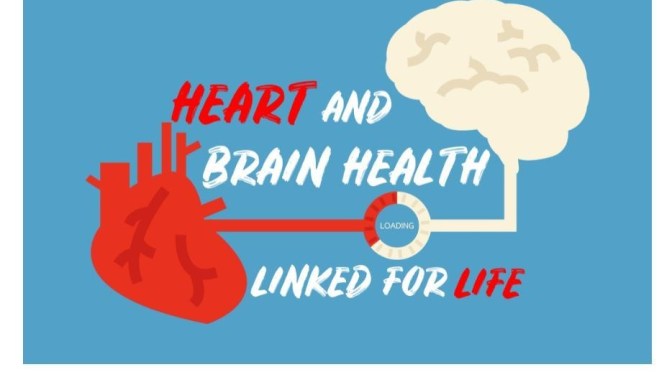
OPINION: HEART AND BRAIN HEALTH ARE LINKED FOR LIFE

Your heart and your brain are your two most vital organs, and if you enjoy life, they should be a top priority. These amazing structures are tethered to life-giving support by your arteries, just as the new you was tethered by your ubilical cord.

Life is fragile, hanging by a thread, or an artery. over the span of your life, These arteries can become plugged by fatty deposits called plaques. A healthy life style-SLEEP, DIET and EXERCISE– could slow down or prevent this atherosclerosis.

But everybody should know about the symptoms of HEART ATTACK and STROKE (1) and how to respond if the arteries sustaining your heart or brain become blocked.

You should be familiar with the hospitals in your area. How close are they? What are their capabilities? Are they Class 1 for heart attacks and stroke? Do they have a CATH LAB?

SPEED is important. Within minutes of the BLOCKAGE of an ARTERY to your heart or brain, vital cells start to die. The goal is to remove the blockage as soon as possible. CALL 911 as soon as you have heart attack or stroke symptoms. Don’t be afraid of the ER because of Covid, since almost all now use TELEMEDICINE SCREENING to keep infected patients segregated.

Alas, for many people, such PREVENTATIVE MEDICINE requires too much SELF DISCIPLINE AND CONVICTION. America has an epidemic of OBESITY and an avalanche of tasty FAST FOODS provided by a CONSUMER SOCIETY that is ever-attentive to the latest fads and trends.

DR. C

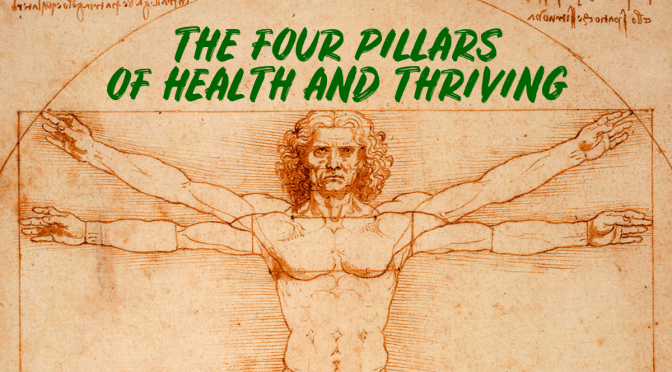
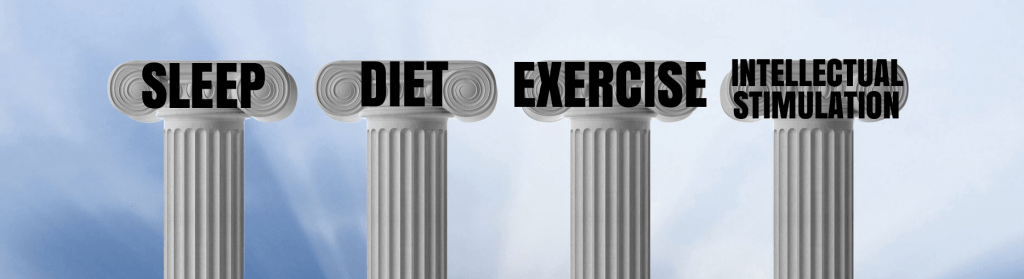
OPINION: THE ” FOUR PILLARS OF HEALTH AND THRIVING”

Homo sapiens have been around for upwards of 200,000 years and our bodies have evolved to deal with conditions far different than we experience in today’s life.

For about 95% of our species’ existence we have had:

  • Far more SLEEP. We were diurnal, going to bed at sundown, awakening at sunrise.
  • A more natural and varied DIET. We had to gather or kill what we ate.
  • Far more EXERCISE as we walked many miles on most days.
  • INTELLECTUAL STIMULATION. Well, here at least we moderns have an advantage, and our brains are better for it, If we get enough Sleep, Diet and Exercise.

Intellectual stimulation is really just a form of exercise. Exercise of the brain; as the brain is in a way like a muscle. If you don’t exercise your muscles, they waste away. If you don’t exercise your brain, your synapses waste away. To overwork a cliche : use it or lose it. Your muscles and brain are very energy-intensive and therefore expensive in evolutionary terms. Metabolic mechanisms have evolved to weed out that which is not needed and not used.

We could then say that there are the “Three Pillars of Health: Sleep, Diet, and Exercise, with the understanding that exercise refers to both muscles and brain. But they are exercised in such radically different ways, and each is prominent at different times in life. Children are reluctant to exercise their brains and are in constant motion. The elderly have much less muscle to exercise, but the aged brain still works quite well if you nurture and use it. So Intellectual Stimulation is best considered a separate category.

SLEEP, DIET, EXERCISE and INTELLECTUAL STIMULATION are then the “Four Pillars of HEALTH and THRIVING”.

These Four Pillars come as a package, reinforce each other, and are intricately interconnected. You can’t afford to neglect one without diminishing the others. But we will be discussing them separately, since they are separately researched and enacted.

Keep tuned.

—Dr. C.

Further reading