Tag Archives: New York Times

Women’s Health: Risks & Treatment Of Menopause

As levels of estrogen, a crucial chemical messenger, trend downward, women are at higher risk for severe depressive symptoms. Bone loss accelerates. In women who have a genetic risk for Alzheimer’s disease, the first plaques are thought to form in the brain during this period. 

February 4, 2023

About 85 percent of women experience menopausal symptoms. Rebecca Thurston, a professor of psychiatry at the University of Pittsburgh who studies menopause, believes that, in general, menopausal women have been underserved — an oversight that she considers one of the great blind spots of medicine. “It suggests that we have a high cultural tolerance for women’s suffering,” Thurston says. “It’s not regarded as important.”
Even hormone therapy, the single best option that is available to women, has a history that reflects the medical culture’s challenges in keeping up with science; it also represents a lost opportunity to improve women’s lives.

Read more

COMMENTS:

The New York Times, Sunday magazine, posted an article by Susan Dominus entitled “the vicious cycle”, in which was a long discussion of the disease burden of menopause. It is well worth reading.

“Forever Feminine” was a book by Robert Wilson, in 1966, which promoted hormone treatment for “enjoyment of sex” in menopausal women. The use of estrogen skyrocketed.

Alarming research in 1975, which linked estrogen usage to endometrial cancer, halted the rise of the drug’s popularity.

Without hormonal treatment, the many symptoms of  menopause were devalued and quietly suffered by women.

The medical profession has been slowly recovering from whiplash. New, better controlled research is being done and slowly a more nuanced approach is being taken. Women with a history of heart attack or stroke are still generally advised against hormonal therapy, but many others are being given birth control pills, which is a combination of estrogen and progesterone.

The average age of menopause is approximately 50 years of age, but symptoms can anticipate menopause by several years. An elevated FSH is the usual laboratory test to indicate perimenopause.

Early menopause can be associated with a decreased lifespan, increased likelihood of osteoporosis, cardiovascular disease and dementia, and is often treated with hormonal therapy. A delayed menopause is less likely to be treated with hormonal therapy, because of increased risk.

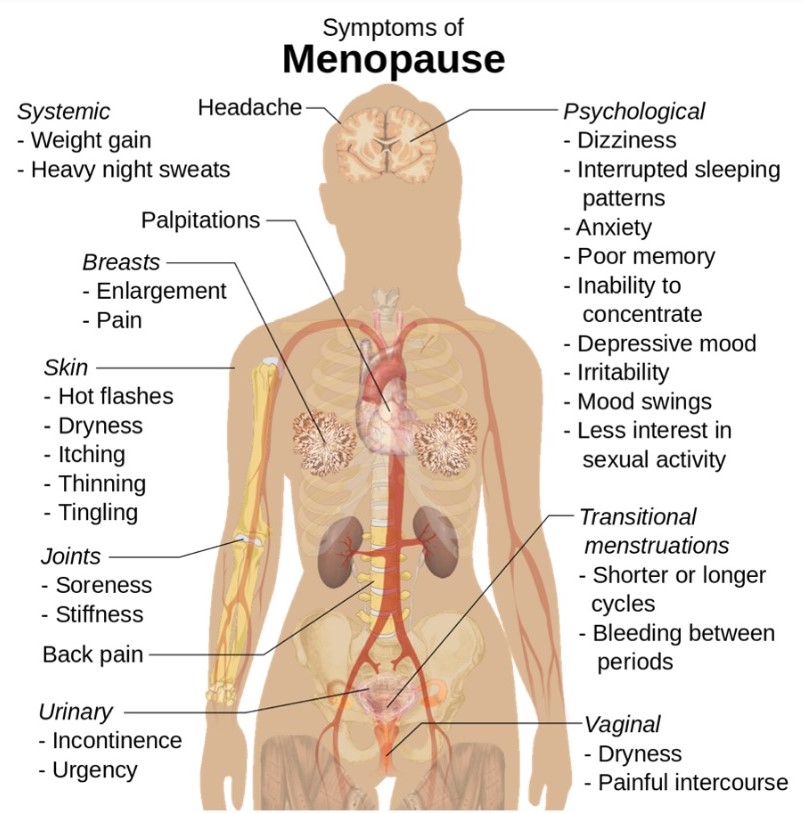
There are a lot of risk factors to be balanced against the symptoms involved, such as hot flashes and the entire panoplay of symptoms indicated in the infographic.

Some day, artificial intelligence will be used in order to make more explicit the benefits and risks involved. Until that time, the patient suffering from premenopausal or menopausal symptoms should find a Doctor Who would actually listen to her, a difficult task these days.

—Dr. C.
Covid-19: Patients Dying In Name Of Vaccine Freedom

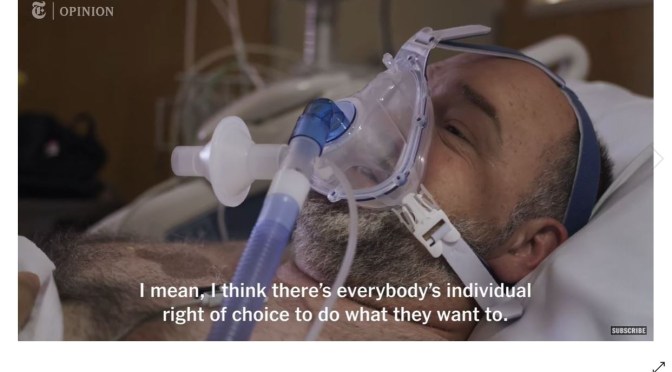
In the video above, Alexander Stockton, a producer on the Opinion Video team, explores two of the main reasons the number of Covid cases is soaring once again in the United States: vaccine hesitancy and refusal.

“It’s hard to watch the pandemic drag on as Americans refuse the vaccine in the name of freedom,” he says. Seeking understanding, Mr. Stockton travels to Mountain Home, Ark., in the Ozarks, a region with galloping contagion and — not unrelated — abysmal vaccination rates. He finds that a range of feelings and beliefs underpins the low rates — including fear, skepticism and a libertarian strain of defiance.

This doubt even extends to the staff at a regional hospital, where about half of the medical personnel are not vaccinated — even while the intensive care unit is crowded with unvaccinated Covid patients fighting for their lives. Mountain Home — like the United States as a whole — is caught in a tug of war between private liberty and public health. But Mr. Stockton suggests that unless government upholds its duty to protect Americans, keeping the common good in mind, this may be a battle with no end.

COMMENTARY:

I am a Doctor Who has studied the miracle of MRNA Covid vaccine, and who knows that it cannot get into the nucleus of any of my cells or long remain in my body.

I have studied the transmission and pathogenesis of Covid, and know how it works. The knowledge that it could affect my thinking, memory, my very essence, and the fact that it could last indefinitely after the initial illness has certainly made me a believer.

There is an element of truth in the concerns of anti-vaxers and anti-maskers. Unfortunately the problem is not black and white. No vaccine is 100% safe, although the mRNA vaccines come close. There is some worry about clotting problems with a few people, particularly the young. This risk is measured in terms of problems per million people getting the vaccine, and is vanishingly small compared to the alternative of exposing yourself to the ravages of Covid.

An intelligent friend of mine who is a nurse has auto immune disease, and vaccines tend to hit her hard. Unfortunately the fact that she is a nurse and is exposed a lot to the public make her more likely to get Covid, and her auto immunity would render her much more likely to have complications, should she get it. She has received her first injection of Covid vaccine, and had a lot of fatigue, headaches and symptoms that were relatively self-limited.

Masks are mainly useful in protecting other people from the mask-wearer and only slightly helpful in protecting the mask wearer from other people. Also, I have read a long article about some subtle disadvantages of forcing children to wear masks although I think it’s still a good idea, particularly when Covid is common in the community.

The main problem is that Americans have freedom of choice without the knowledge to weigh the benefits and hazards of receiving the vaccine, versus the hazards of getting the disease.

There are times when we should unload the making of such statistical decisions on people who know more about the vagaries of disease.
In my opinion, the states which allow hospitals to require their healthcare workers to receive vaccination, and allow schools to require their students and teachers to receive vaccination are in the right. Currently, there are less problems in those states.

Covid is certainly a nasty disease, and even doubly vaccinated people can be spreaders. As an elderly vaccinated person, I still treat everybody as if they are infected, and require masks when visitors come. When inside, I sit by an open door, with a fan behind me blowing air in the other direction.

At the age of 89, I cannot afford to get Covid-19.

—Dr. C.

HEALTH & RETIREMENT: A LOOK AT MEDICARE, MEDIGAP AND PART D DRUG PLANS

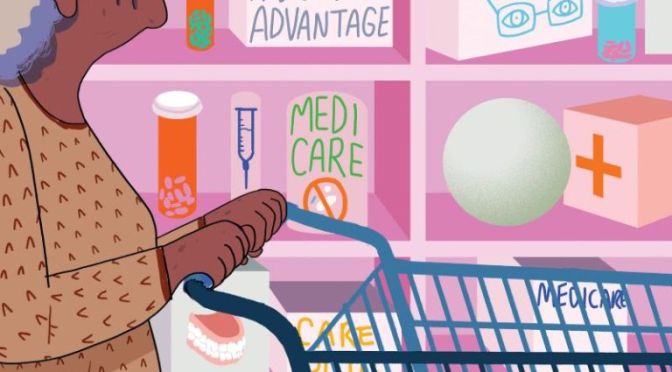
If you’re enrolled only in original Medicare with a Medigap supplemental plan, and don’t use a drug plan, there’s no need to re-evaluate your coverage, experts say. But Part D drug plans should be reviewed annually. The same applies to Advantage plans, which often wrap in prescription coverage and can make changes to their rosters of in-network health care providers.

“The amount of information that consumers need to grasp is dizzying, and it turns them off from doing a search,” Mr. Riccardi said. “They feel paralyzed about making a choice, and some just don’t think there is a more affordable plan out there for them.”

November 13, 2020

When creation of the prescription drug benefit was being debated, progressive Medicare advocates fought to expand the existing program to include drug coverage, funded by a standard premium, similar to the structure of Part B. The standard Part B premium this year is $144.60; the only exceptions to that are high-income enrollees, who pay special income-related surcharges, and very low-income enrollees, who are eligible for special subsidies to help them meet Medicare costs.

“Given the enormous Medicare population that could be negotiated for, I think most drugs could be offered through a standard Medicare plan,” said Judith A. Stein, executive director of the Center for Medicare Advocacy.

“Instead, we have this very fragmented system that assumes very savvy, active consumers will somehow shop among dozens of plan options to see what drugs are available and at what cost with all the myriad co-pays and cost-sharing options,” she added.

Advocates like Ms. Stein also urged controlling program costs by allowing Medicare to negotiate drug prices with pharmaceutical companies — something the legislation that created Part D forbids.

Read full article in NY Times

COMMENTARY

Medicare is a blessing. It is a great help to retired and elderly people and generally does the job it was intended to do. There are a great variety of Medicare supplement plans and pharmaceutical purchase plans, And they jockey and change every year.

I get a headache just thinking about how to compare these plans from my individual needs and and whether their cost is worth it. The take-home message from the New York Times article is that you can get individual attention from an advisor who presumably knows the field well.

The key acronyms are SHIP and HICAP, which stands for state health insurance assist program and California health insurance counseling and advisor program respectively.

The California number is 1-800-434-0222. Be sure to write down the medications that you are taking and Your diagnosed illnesses, as well as your financial status in order to make best use of the service.

—Dr. C.

HEALTH: ARE FACE SHIELDS THE BETTER PROTECTOR?

From a New York Times article (May 24, 2020):

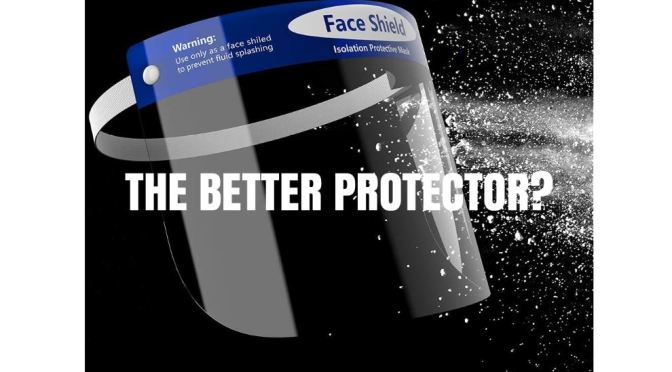
Dr. Perencevich believes that face shields should be the preferred personal protective equipment of everyone for the same reason health care workers use them. They protect the entire face, including the eyes, and prevent people from touching their faces or inadvertently exposing themselves to the coronavirus.

The debate over whether Americans should wear face masks to control coronavirus transmission has been settled. Governments and businesses now require or at least recommend them in many public settings. But as parts of the country reopen, some doctors want you to consider another layer of personal protective equipment in your daily life: clear plastic face shields.

Read more

COMMENTARY

When I take my walk, which currently is my only outing, I wear a face SHIELD for my personal protection against contracting Covid 19 from others.

I gave up on the face MASK because it is uncomfortable, especially when I am breathing heavily while walking rapidly up hills.

There isn’t much research supporting the self-protective use of face shields, but the video accompanying this article was enough for me; notice the aerosol-free area behind the face shield.

While walking, I breathe In deeply through my nose, and exhale through my mouth, using “pursed lips”, which aids in oxygen extraction by holding the alveolae open.

Exhaling through the mouth also clears the air behind the mask for subsequent nasal inhalation.

With nasal inspiration, any SARS CoV-2 aerosol particles would be deposited in the nasal passages, Which are that much farther away from your vulnerable lung.

It isn’t perfect. For one thing, it wouldn’t protect you much if someone coughed at you from the side or behind. I often hold my breath reflexes when I hear someone cough, or when I pass closely (even 6ft.) to someone.

The face shield holds promise for protecting you from viral infection, including the “flu”.

—Dr. C.

TELEMEDICINE “LANGUAGE” SKILLS WILL CONTINUE TO INCREASE AT A RAPID RATE

From a New York Times article (May 5, 2020):

Calling my patients at home, with or without video, has become my new normal. After 25 years of being a pediatrician, telemedicine is teaching me new ways to communicate with families.

I try to hear the mother above the babbling of her baby. And then to listen to the babbling of the baby. Is it joyful? Are there big breaths between the babbling?

A federal government waiver, issued early in March, expanded the use of federally funded health insurance — Medicaid, Medicare and the Children’s Health Insurance Program — to pay for telemedicine visits. The goal was to allow more people with symptoms of illness to be heard, and sometimes also seen, by a health care provider without the risk of exposure to coronavirus at a doctor’s office or hospital.

The federal government has been expanding the use of telemedicine for years — but like so many changes in this pandemic, what used to take years to transform, we are now doing within weeks.

Read more