Tag Archives: Medicine

Heart Disease: Thoracic Aortic Aneurysm Risks

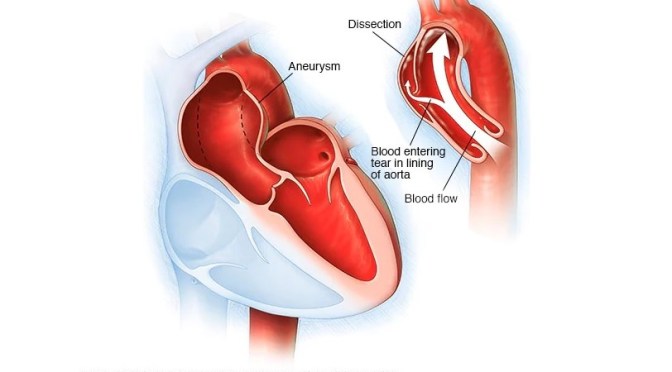
A thoracic aortic aneurysm is a weak spot in the aorta, the main pipeline for blood from the heart to the body. The weak spot has the potential to dissect or rupture, cutting off the supply of life-sustaining blood to the rest of the body. Thoracic aortic aneurysms are often harder to detect and diagnose compared to the more common abdominal aortic aneurysms. 

December 14, 2022

The aorta begins deep in the heart. It emerges from the top of the powerful left ventricle, curves up and over the heart in a gentle arch, then descends into the chest and through the muscular diaphragm into the abdomen (see “Thoracic aorta”). It ends around the belly button, where it splits into two smaller arteries, one for each leg.
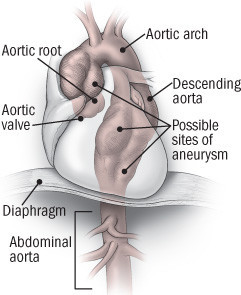
THORACIC AORTA

From start to end, arteries branch off to nourish the heart, brain, arms, kidneys, liver, stomach, intestines, and every other part of the body. The stretch of the aorta from its start in the heart to the top of the diaphragm is called the thoracic aorta; the section below the diaphragm is the abdominal aorta.

Some aneurysms are relatively harmless. Others can lead to the catastrophic problems known as dissection or rupture. For now, size is the best and only guide to the health threat posed by an aneurysm.

Dissection. The most common consequence of an aortic aneurysm, dissection occurs when a tear develops in the inner lining of the aortic wall. The inner and outer layers peel apart, creating an extra channel for blood inside the aorta. It may do no harm, or it may allow blood to bypass the outflow to certain organs or tissues, leaving them without a blood supply. This can cause a heart attack, stroke, kidney damage, and other problems.

Rupture. A break in all three layers of the aortic wall is termed a rupture. Blood pours from the aorta into the chest. This massive internal bleeding can quickly lead to shock and death.

READ MORE

Women’s Health: How To Ease & Manage Menopause

National Institute on Aging – Menopause is a point in time 12 months after a woman’s last period. The years leading up to that point, when women may have changes in their monthly cycles, hot flashes, or other symptoms, are called the menopausal transition or perimenopause.

The menopausal transition most often begins between ages 45 and 55. It usually lasts about seven years but can be as long as 14 years. The duration can depend on lifestyle factors such as smoking, age it begins, and race and ethnicity. During perimenopause, the body’s production of estrogen and progesterone, two hormones made by the ovaries, varies greatly.

The menopausal transition affects each woman uniquely and in various ways. The body begins to use energy differently, fat cells change, and women may gain weight more easily. You may experience changes in your bone or heart health, your body shape and composition, or your physical function

READ MORE

ANALYSIS: HOW TO MAKE HEALTHCARE AFFORDABLE

The cost of health care is unaffordable for many in the developing world. But while universal health care may sound like an impossible dream, it’s more achievable than you might think.

Video timeline00:00 – The argument for universal health coverage is clear 00:57 – Thailand’s path to universal health coverage 03:31 – Universal health care around the world 04:48 – How to finance universal health coverage? 05:30 – Rwanda: from genocide to public health exemplar 07:19 – What is a pooling finance system? 08:01 – Which services make the cut? 11:17 – The economic benefits of UHC 12:23 – Could covid-19 be a catalyst for reform?

Dr. C’s Journal: Some Facts Regarding Tuberculosis

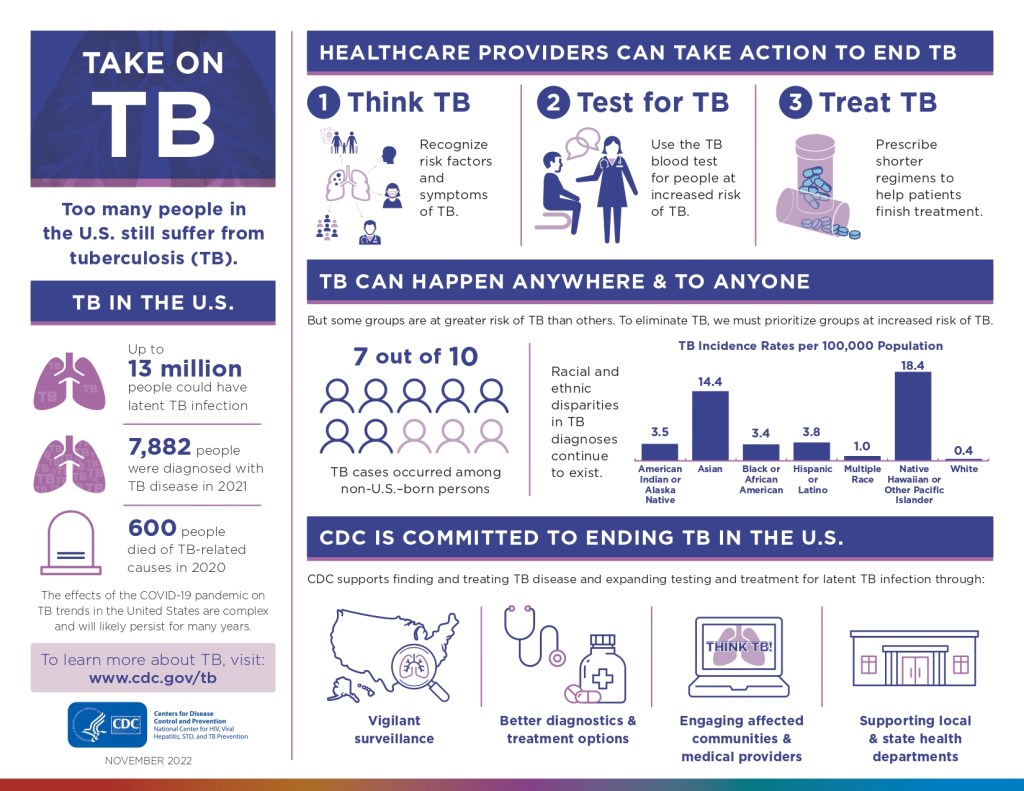
Tuberculosis is an ancient killer, and is one of the few diseases that has been traced back to Ancient Egypt and beyond. TB has ravaged humanity for millennia, and was commonly called consumption due to its tendency to produce weight loss.

Once thought to be under control, TB has received a new lease on life with the emergence of AIDS. All countries except North America, western Europe, and Australia have a problem with tuberculosis, which kills more than 1 million people each year.

The tuberculosis germ is unusual in that It has a cell wall high in the lipid, mycolic acid. This protects the germ when it is engulfed by first responders such as macrophages. The infected cell Is surrounded by other macrophages, lymphocytes and Fibroblasts to form a granuloma. This creates a standoff, where the tuberculosis germ is still alive, but walled off, and becomes an inactive or “latent” case of tuberculosis, a small percentage of which become active each year.

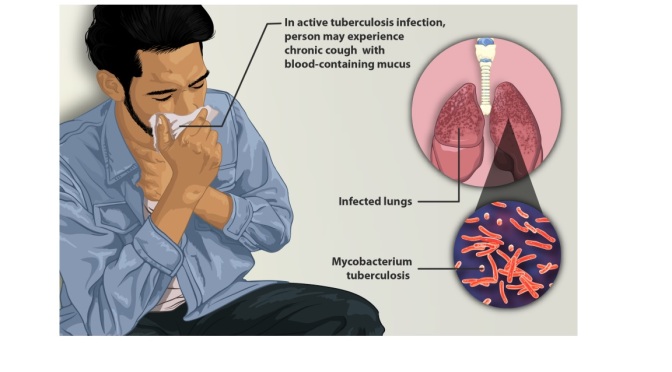
Active tuberculosis produces the usual infectious symptoms of fever, chills, and cough, often productive with blood. The tuberculosis germ multipliesu much more slowly than most other bacteria and the symptoms are long and drawn out; a cough lasting for more than a month, especially if accompanied by weight loss, should raise the suspicion of TB.

TB can spread to infect bones, kidneys, liver, and brain,  but prefers the lung.

A spot on the Lung, confirmed by a Tuberculin test, or a blood test called a T-spot, will confirm the diagnosis.

The slow multipication of the tuberculosis Germ requires much longer treatment, and the combination with AIDS has caused a  rapid development of resistant organisms. Fortunately, there are several drugs available.

Only one immunization is currently available, namely BCG. This has been used a lot in Europe and other countries . BCG produces a weekly positive tuberculin test.

A large number of conditions which reduce immunity, such as cigarette smoking, drug use, and immunosuppressive treatments associated with organ transplants and cancer will  predispose a person to catching tuberculosis. TV is transmitted in the tiny droplets from sneezing, coughing, or talking such as we were accustomed to thinking about during Covid. The same preventative measures, such as  masks and avoiding close contact with infected individuals should be practiced to prevent spread from an infected person.

If you follow a healthy lifestyle and are careful when traveling, you will most likely have no trouble with this nasty infection. Please check with the following reference or more complete information.

—Dr. C.

READ MORE

Survey: 85% Of Physicians Favor Telehealth To Treat Opioid Use Disorder (Yale)

Asurvey of more than 1,000 registered physicians who used telehealth services to treat patients with opioid-use disorder during COVID-19 found that an overwhelming majority favor making telehealth a permanent part of their practice.

Yale School of Public Health – The findings of the Yale School of Public Health (YSPH) study provide new support for the use of telehealth technology in treating opioid-use disorder. Policymakers currently are debating whether existing regulations allowing for telehealth during the COVID pandemic should be extended temporarily as the pandemic wears on — or made a permanent part of treatment practice options.

“Recent exposure to telehealth due to the COVID-19 pandemic has promoted the perspective among the physicians surveyed that it is a viable and effective treatment option for patients,” said the study’s lead author Tamara Beetham, MPH, a PhD student in health policy and management at YSPH. “Findings like these could have major implications for the future of telehealth regulation. Continued flexibility would allow more individuals to access life-saving treatment.”

A staggering 107,622 people in the U.S. died of drug overdose in 2021, a 15% increase from 2020, according to the U.S. Centers for Disease Control and Prevention. Physicians frequently prescribe buprenorphine to treat opioid-use disorder and reduce the risk of overdose. Patients must regularly follow up with their provider as part of their treatment.

READ MORE

C. diff Bacteria: What Is Clostridioides difficile

“C. diff is a severe, difficult-to-treat infection,” says family medicine specialist Daniel Allan, MD.
Studies show that you’re seven to 10 times more likely to get C. diff while you’re taking antibiotics or right after.”

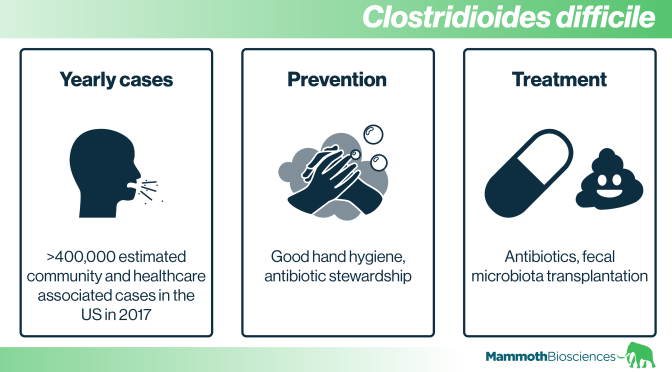
Cleveland Clinic – Clostridioides difficile (C. diff) is a type of harmful bacteria that causes inflammation in your large intestine (also known as pseudomembranous colitis). The main symptom of a C. diff infection is frequent, watery and sometimes bloody diarrhea. If diarrhea persists, it can lead to:

  • Dehydration.
  • Weight loss.
  • Sepsis.
  • Death.

C. diff is common in the environment. Some people even carry C. diff in their gut but don’t have any signs of illness. Most of the time, the “good” bacteria in your gut prevent a C. diff infection. But certain antibiotics can wipe out your gut bacteria. If you encounter C. diff while taking antibiotics, the bacteria can flourish and grow and make you sick.

“Think about your colon as a plush green lawn. The thick grass crowds out the weeds,” illustrates Dr. Allan. “But if your yard is mostly dirt, all kinds of weeds will grow. Antibiotics reduce the rich collection of bacteria in your gut (the thick grass). This gives C. diff (the weeds) an opportunity to take hold.”

C. diff is most dangerous for people age 65 or older or with a weakened immune system. People who are healthy can also develop life-threatening complications if they don’t receive prompt care.

Digestive: Gallstones VS Kidney Stones Symptoms

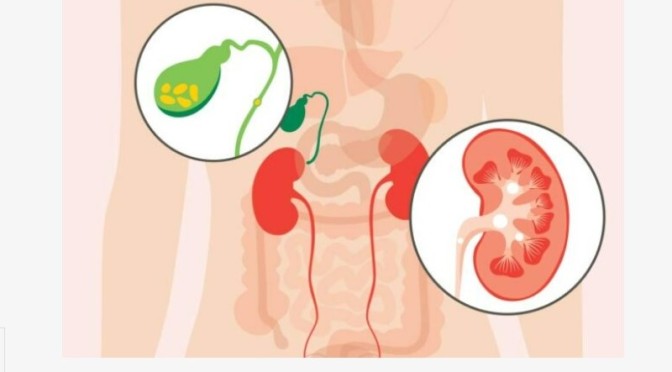
Gallstones (gallbladder stones) develop in your digestive tract and can be as small as a grain of sand or as large as a golf ball. Gallstones can cause a blockage in your gallbladder or bile ducts. A diet high in fat or cholesterol can contribute to the development of gallstones.

CLEVELAND CLINIC

Kidney stones develop in your urinary tract and can be as small as a grain of sand but can grow to several inches in diameter. Kidney stones move through your urinary tract into your ureter and block the flow of urine. A diet high in sodium, oxalates or animal protein can contribute to the development of kidney stones. An insufficient intake of fluids or calcium can also lead to the formation of kidney stones.

Symptoms of gallstones

If you have gallstones, you may experience the following symptoms:

  • Abdominal pain.
  • Back pain.
  • Chest pain.
  • Nausea and vomiting.
  • Fever and chills.
  • Jaundice.
  • Dark-colored urine.  

Where does it hurt?

Gallstones cause pain in your mid-upper abdomen that may radiate to your back or under your right shoulder.

Symptoms of kidney stones

If you have kidney stones, you may experience the following symptoms:

  • Severe back pain that may travel down to your groin.
  • Nausea and vomiting.
  • Blood in your urine.
  • Painful urination.
  • Increased frequency or urgency of urination.
  • Foul-smelling or cloudy urine.
  • Fever and chills.

Read more

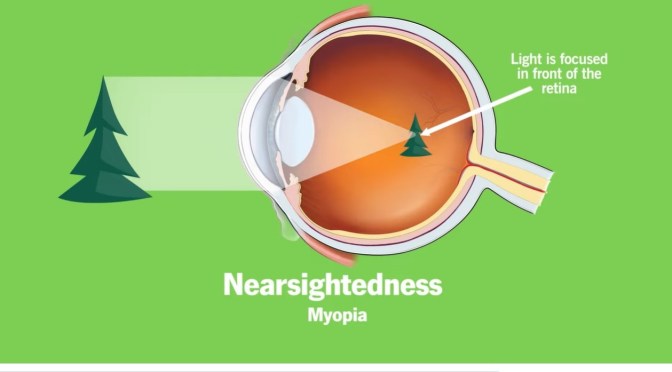
Eye Health: The Causes Of Nearsightedness (Myopia)

Cleveland Clinic – Nearly 1 out of 3 people have a vision disorder called myopia, or nearsightedness, which makes it difficult to view things in the distance. How does it happen? And is there a cure?

Chapters: 0:00 Intro 0:32 What causes nearsightedness? 1:01 Why can’t you see far? 1:20 When does nearsightedness usually begin? 1:42 What are symptoms of nearsightedness? 1:59 Can nearsightedness be corrected? 2:23 Is there a cure for nearsightedness?

Read more

GERD – Gastroesophageal Reflux Disease Diagnosis

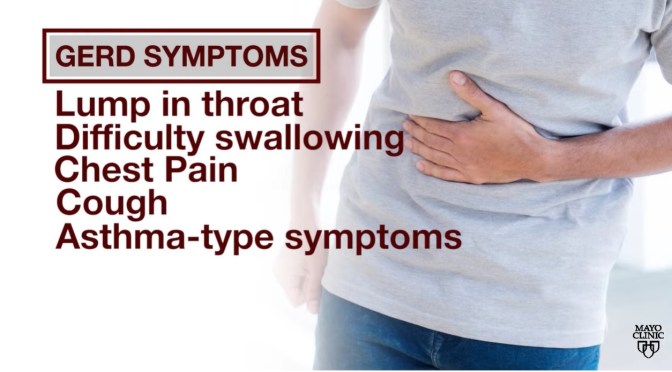
Gastroesophageal reflux disease (GERD) is one of the most common digestive disorders in the world. It happens when acid comes up from the stomach, which is acid-resistant, into the esophagus, which is less acid-resistant. Dr. James East, a gastroenterologist at Mayo Clinic Healthcare in London, says GERD may be common, but there can be potentially severe complications if it’s ongoing and left untreated.