
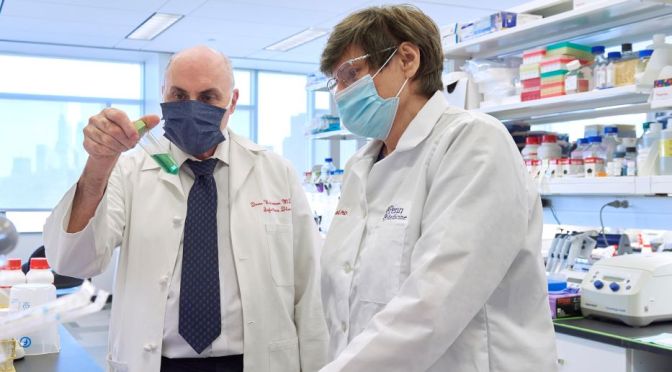
As mRNA-based COVID-19 vaccines are deployed to protect hundreds of millions of people across the world from the deadly global pandemic, the University of Pennsylvania scientists whose research breakthroughs laid the foundation for swift vaccine development have been awarded the 2021 Lasker-DeBakey Clinical Medical Research Award. Here, mRNA vaccine pioneers Drew Weissman, MD, PhD, and Katalin Karikó, PhD, share the story behind their development of this groundbreaking technology, and what it means for the future of medicine.
Tag Archives: Medicine
THE DOCTORS 101 CHRONIC SYMPTOMS & CONDITIONS #53: GRAVES’ DISEASE
Graves’ disease is the most common cause of hyperthyroidism. Hyperthyroidism is an over activity of the thyroid gland, and can also be produced by an overgrowth in the gland called an adenoma.
The thyroid gland is an H-shaped structure sitting astride the wind pipe. If a physician palpates the front of your neck, she is most likely trying to see if she can feel the thyroid gland. Enlargement of the grand can interestingly be produced by either overactivity or under activity.
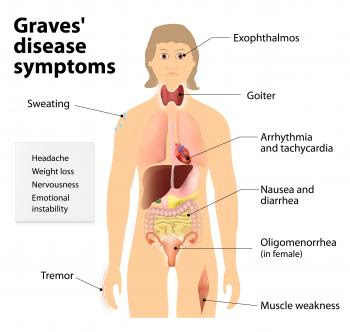
Graves’ disease is an auto immune disease, where the antibodies produced attach to the TSH receptor on the thyroid gland, stimulating overactivity.
Many metabolic processes are regulated by the thyroid gland, and increased activity produces difficulties like insomnia, fast irregular heartbeat, shaking of the hands, heat intolerance, and irritability. Other symptoms are protrusion of the eyes, fatigue, muscle weakness, and unexplained weight loss.
The doctor suspects the disease because of the symptoms, and must do blood tests and perhaps imaging tests to make the diagnosis. Treatment consists of decreasing thyroid activity, either by radiation techniques, anti-thyroid chemicals, or surgery.
It is very difficult to reduce thyroid activity in exactly the right amount, so that thyroid administration will be necessary. This can be tricky, and requires several visits for adjustment.
The ultimate cause of Graves’ disease is unknown. The immediate cause is thyroid stimulating immunoglobulin. Graves is an auto immune disease, and is more common in people who suffer from other autoimmune diseases, such as type one diabetes, rheumatoid arthritis, or inflammatory bowel disease. The doctor will question you about some of these diseases.
Both causes of hyperthyroidism have occurred in friends of mine. The friend with the adenoma had an easier time with medication adjustment, and had no other problems. The one with the Graves’ disease has had a difficult time getting a proper dose of thyroid medication, and she has other problems with auto immunity. Women typically have more autoimmune problems.
Interestingly, the commonest cause of low thyroid activity is also an autoimmune disease. Some of the symptoms of low thyroid are the opposite of excessive thyroid activity; sleeping is excessive, there is sensitivity to cold, unexplained weight gain, and sluggishness.
Check with the doctor if you have any of the symptoms mentioned.
There is a Cleveland clinic discussion of Graves’ disease following this article.
—Dr. C.
DR. C’S JOURNAL: AMBLYOPIA
Amblyopia is an example of how the body suppresses or gets rid of activity that is not used. Amblyopia “ex anopsia” is the leading cause of poor vision in children, and the most common reason is a “lazy eye”. If the eyes do not work together for binocular vision, the weaker of the two eyes has suppressed development and eventually eyesight is lost.
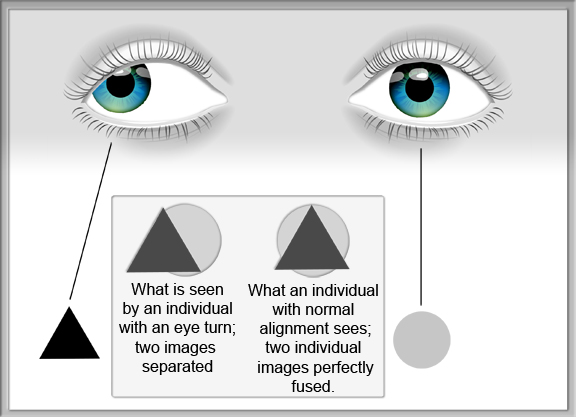
I have a friend who was going in the pilot training, it was found to lack good depth perception, and could not proceed. He now complains occasionally of double vision, and may be an example of the suppressed eye with lack of binocular vision.
I have a muscle in balance which causes a rotation of my eye so that it’s hard to fuse on a horizontal linear object. I was probably able to fuse when I was younger and avoid this loss of vision in the weaker eye.
So be on the alert for a squint, or wandering eye in children. Get them in early for treatment, the earlier the better, and it must take place before age 5 to 7.
—Dr. C.
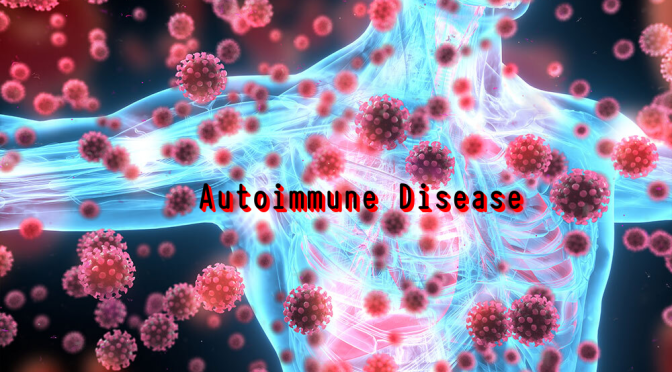
DR. C’S JOURNAL: WHAT IS AUTOIMMUNE DISEASE?
Our immune system contains cells that are part of us, and they evolved to protect us. They generally do a good job of this, as witnessed by our survival in a sea of viruses, microbes, and parasites.
However, just like our police force, occasionally the protective function goes awry and damage is done to our own body, in the protective act. For many years I was a practicing allergist, and observed this protective function misfiring. In allergic rhinitis and allergic asthma, tiny harmless particles in the air are interpreted by the body as a threat. The TH2 immune system, initially evolved to fight parasites, is activated, and causes considerable disease and misery.
Some of the antigenic determinants on the surface of the pollen, animal dander or dust particles are interpreted as being dangerous by the immune system, which causes chronic inflammation with acute allergy attacks.
Autoimmunity is a similar misreading, in which our own cells are deemed dangerous. In this case the immune agency is the more powerful Th-1 system, which often causes crippling or even fatal results.
Millions of people are sickened by an immune system that is supposed to defend them.
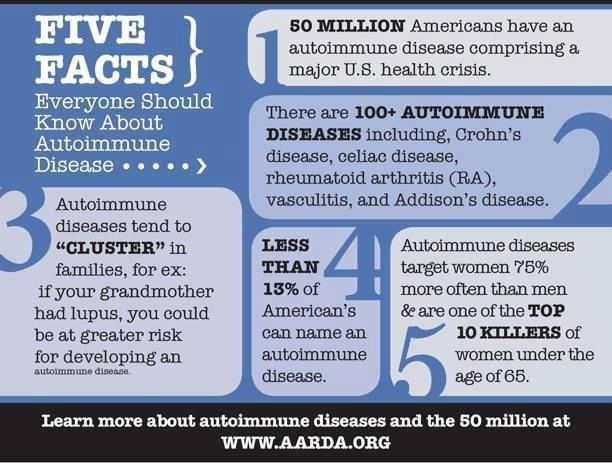
An article in the September 2021 issue of the Scientific American lists 76 of these disorders, and classifies them as to frequency, patient gender and age of onset. It is worth reviewing, at least for the listing on page 32 and 33.
Auto immunity must be considered as a possible cause in any illness that is not easily diagnosed, common, and well known to your doctor. Many patients have to be their own advocates, and persist in trying to get themselves diagnosed.
Celiac disease, Lupus, and Addison’s disease come to mind as tricky customers. Although “autoimmune disease” in toto is common, many of the individual diseases occur in less than one in 1000 patients, and are not high on the diagnostic list of most doctors.
The skin, nervous system, endocrine system, and digestive system are the most common areas involved. Recent advances in blood and antibody testing offers to give needed diagnostic help to the medical profession. These illnesses must be detected early to avoid functional loss in the tissues and organs affected.
Treatments are improving. In the past, immune suppressing cancer drugs and cortisone were the main drugs available. With increasing knowledge of the mechanisms of the separate diseases, treatment can be directed towards the specific causative antibody, receptor, or interleukin involved, hopefully with less side effects than the shotgun drugs previously available.
As with medicine in general, these modern treatments are excessively expensive as a rule, because much money and research went into their development. Prevention is obviously preferable. A healthy diet, with its attendant healthy microbiome comes to mind, as well as the avoidance of cigarette smoking and environmental toxins.
Proper sleep, exercise, and stress relief should also be helpful.
—Dr. C.
Read more
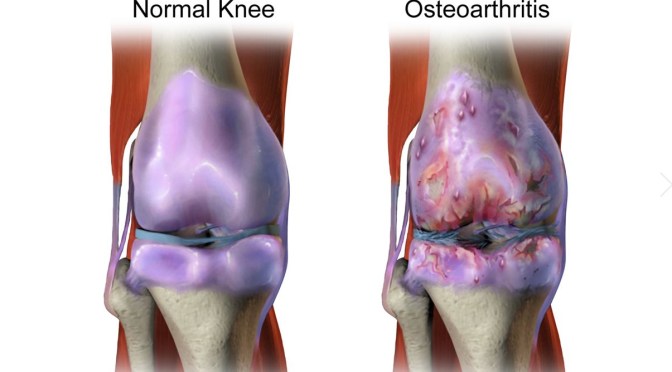
OSTEOARTHRITIS: SYMPTOMS & TREATMENT OPTIONS (UVA)
Osteoarthritis is a “wear-and-tear” form of arthritis. Over time, the protective tissue at the ends of the bones wears down, so simple tasks like standing up or taking the stairs becomes painful. Orthopedic surgeon James Browne, MD, discusses the causes of the disease, and the many treatment options available at UVA.
Find out more at: https://uvahealth.com/services/joint-..

COVID-19: WHAT TO KNOW ABOUT BOOSTER SHOTS
The Biden administration announced that Americans who have been fully vaccinated with a two-dose regimen against Covid-19 should receive a booster, citing the threat from the highly contagious Delta variant. WSJ breaks down what you need to know. Photo: Kamil Krzaczynski/Reuters
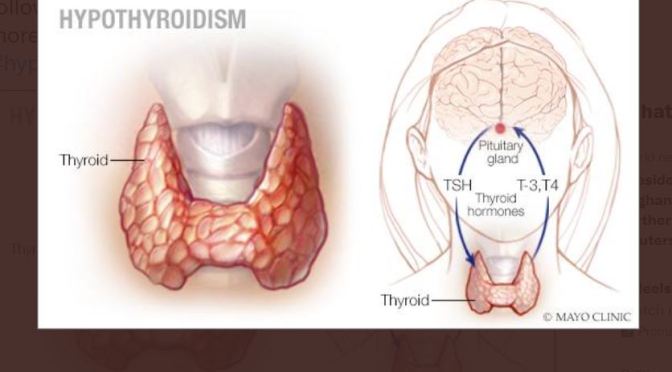
Hypothyroidism: TSH Test First, Then Hormone Test
THE DOCTORS 101 CHRONIC SYMPTOMS & CONDITIONS #48: URTICARIA (HIVES)
ALLERGY is a type of reaction that can vary from annoying to fatal. The question has always been: what possible utility to the body does the allergic reaction, which has survived evolution, provide? The best theory fingers parasitic infestations; not only can parasites cause allergic reactions, Indicate allergy by showing blood eosinophilia, but the allergic reaction seem to help us fight parasitic infestation, which was much more common in humanity’s past, and in present day underdeveloped societies.
URTICARIA consists of a number of little welts or bumps that pop up on the skin and are very itchy. This reaction is caused by little darkly-staining cells called MAST CELLS, which release Histamine and other irritants into the skin, causing hives. These mast cells are provoked into releasing their irritating cargo by IGE antibodies, the basis of true allergy.
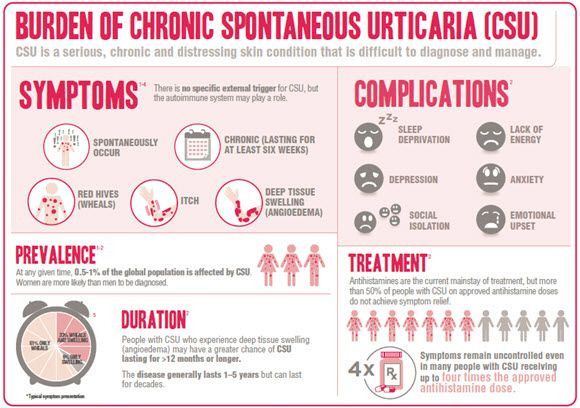
Treatment consist of removing the cause, blocking the action of the IgE antibodies, or giving medication to block the action of the histamine( anti-histamines).
There are multiple common causes, several giving its name to a type of Urticaria. Pressure urticaria can be caused by a belt or tight fitting clothing pressing on the skin to cause the hives. Solar urticaria can be caused by sunlight.
Cold urticaria can be caused by exposure to very cold objects. Hives can also be caused stress, exercise, different foods(seafood and strawberries are the most famous), different drugs(penicillin and aspirin are the most famous), and scratching on the skin(dermatographia).
Hives can occur as a feature of ANAPHYLAXIS. If the IgE-mast cell reaction is extensive, the blood pressure can drop, internal organs can be affected, and emergency treatment must take place to prevent death.
My only experience with hives was after a bee sting, when I broke out with itchy bumps. I had desensitization with honeybee venom, although this is not always done these days. Be sure to check with your doctor if you have such a reaction, however.
The biggest recent improvement in treating people who are incapacitated with frequently recurring and long lasting hives is anti-IGE, an expensive but very effective injection.
If you have hives, be sure to keep a record of events that immediately preceded the hives, including foods, activities,, and exposures. Although the recommended Mayo clinic article that follows suggests that you see a dermatologist or an allergist, I would reverse that and suggest the allergist first.
—Dr. C.
MEDICINE: TRANSCATHETER TREATMENTS FOR VALVULAR HEART DISEASE (JAMA VIDEO)
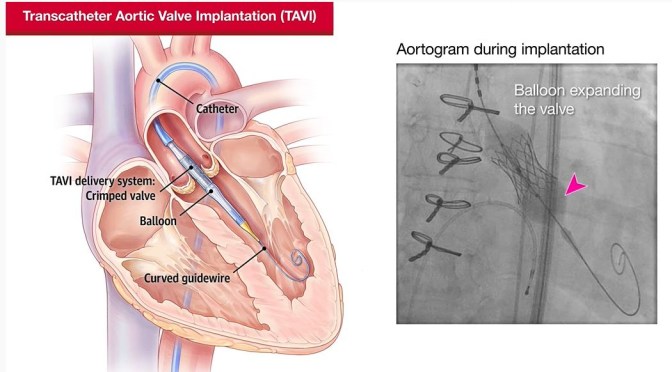
Transcatheter valvular repair and implantation has become increasingly common for treating patients diagnosed with valvular heart diseases.
0:00 This video summarizes the three transcatheter valvular therapies currently in use in the United States: transcatheter aortic valve implantation (TAVI), transcatheter valve-in-valve procedures, and transcatheter edge-to-edge mitral valve repair.
0:47 Transcatheter aortic valve replacement (TAVI) for patients with severe aortic stenosis regardless of surgical risk 2:47 Transcatheter valve-in-valve procedures for patients with bioprosthetic valve failure
3:35 Transcatheter mitral valve repair for high surgical risk degenerative mitral regurgitation and for severe functional mitral regurgitation regardless of surgical risk.
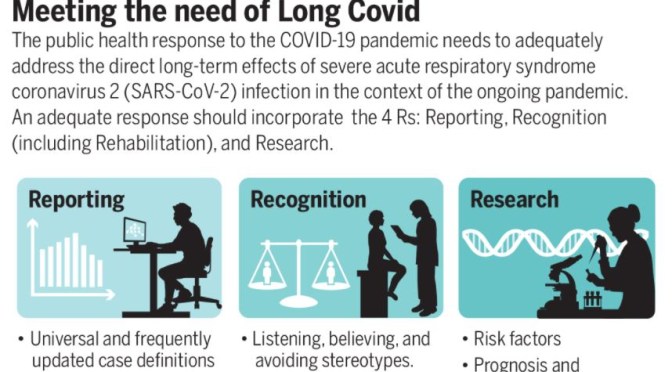
MEDICINE: UNDERSTANDING ‘LONG COVID’ SYNDROME
The risk of COVID-19 has been largely communicated only in terms of deaths and hospital capacity, with recovery and survival conflated with each other. Around one in three people with symptomatic COVID-19 still experience symptoms 12 weeks after onset (1). Long Covid can be experienced by all age groups and not only those with acute severe disease. The debilitating symptoms are wide-ranging, multisystemic, and predominantly fluctuating or relapsing. There is still much to understand about Long Covid, but what is not well understood should not be ignored.
Long Covid is likely the first illness in history that has been defined by patients through social media platforms such as Twitter and Facebook. People with Long Covid formed a movement that demanded recognition of what was happening to them. During the first wave of the pandemic in 2020, online testimonials of prolonged symptoms following severe acute respiratory syndrome coronavirus 2 (SARS-CoV-2) infection were the only source of reassurance to others with a similar experience, including this author (2). In the absence of any guidance or recognition about the possibility of a persistent illness, peer support is all that people with Long Covid had. Many previously healthy and active people described persistent symptoms of the acute illness that fluctuated, with new symptoms appearing weeks later. In many countries, most nonhospitalized people did not have lab confirmation of SARS-CoV-2 infection owing to lack of access to community testing, so their symptoms remained without a diagnosis.
By summer 2020, thousands were joining social media support groups. A common theme started to emerge: lack of recognition by the medical profession. Patients, including doctors, with Long Covid were consulting their health care providers, and their symptoms were commonly minimized, dismissed, or labeled as anxiety (3). A narrative emerged of people struggling to make sense of their symptoms and forming their own groups to understand and research what was happening to them in an international citizen science movement (4). The testimonials of people living with Long Covid demonstrated themes of stigma and discrimination.
 Doctors Without Waiting Rooms