

Heart Attack Infographic: Early Chest Pain Symptoms

A weekly podcast on the latest medical, science and telehealth news.
A weekly podcast on the latest medical, science and telehealth news.
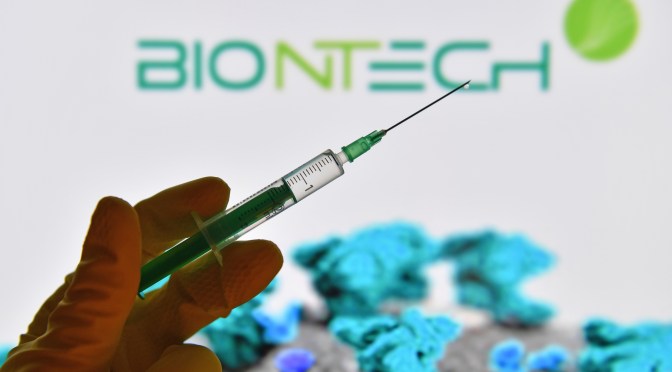
Over a month and a half before the World Health Organization officially declared a pandemic, BioNTech CEO Uğur Şahin met with his wife, BioNTech’s co-founder and chief medical officer Özlem Türeci, and together they agreed to redirect most of the company’s resources to developing a vaccine. Up until that point, BioNTech was little-known internationally and primarily focused on developing novel cancer treatments. The founders were confident in the potential of their mRNA technology, which they knew could trigger a powerful immune response. That confidence wasn’t necessarily shared by the broader medical community. No mRNA vaccine or treatment had ever been approved before. But the couple’s timely breakthrough was actually decades in the making. CNBC spoke with Şahin and Türeci about how they, along with Pfizer, created a Covid-19 vaccine using mRNA.
COMMENTARY:
This commentary concerns a video showing aspects of the development of MRNA vaccines. It is all about Pfizer’s German partner, BioNtech, which manufactures the vaccine. They have produced the bulk of the worlds mRNA vaccines, due to Pfizer‘s great financial strength and experience in marketing.
Moderna, a wholly American company and by comparison a small fry, has also been doing decades of work with mRNA platform technology, mainly on cancer treatment.
With $800 million from the U.S. government, Moderna was able to scale up their manufacturing process and deliver a vaccine, approved by the FDA, shortly after Pfizer did so.
These vaccines were made possible by two technical advances.
The first advance was in substituting pseudouridine for uridine in the mRNA, so that the target cells natural defenses would not destroy it. The second involves coating the mRNA with a nano size particle to get it into the target cell.
Each of these advances will probably receive a Nobel prize, and is an elegant example of the sophistication of modern biotechnology.
Spinal stenosis is a narrowing in the spinal canal. Constriction of the spinal nerves can produce pain that goes down one or both of the arms or legs, depending on the location of the stenosis. Malfunction of the nerves can cause numbness In the arms or legs, or weakness in muscles served by the affected spinal nerves.
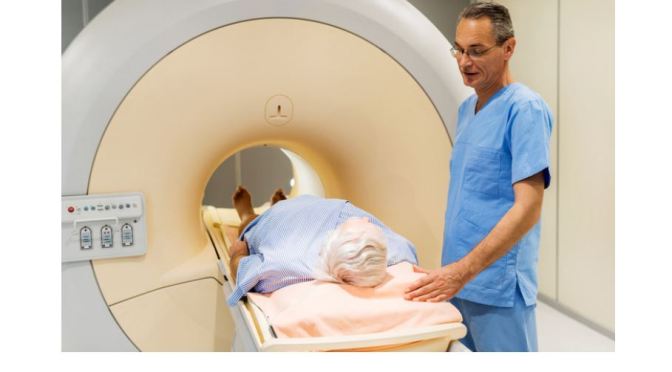
Your doctor can confirm the diagnosis with imaging techniques such as MRI or CT scan.
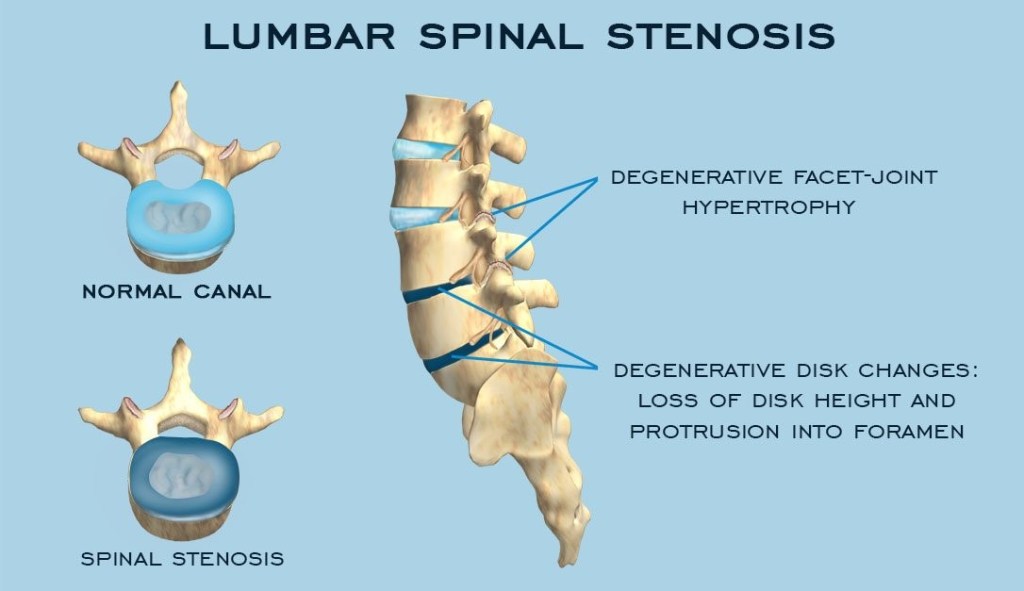
The interesting part of this condition to me is the tremendous advances in surgical techniques that have taken place in the past decade. Many surgeries are now done through an endoscope, which limits the surgical disruption in the area. There is even a needle guided procedure to remove part of the ligament that is causing compression of the nerve.
Depending on the exact problem, small amounts of bone or other tissues can be removed, especially if the exact site of compression has been identified. If the extent of compression is more extensive, increasing amounts of bone is removed from the lamina (bony arches), facets , or nerve outlets (foramina) to give the nerves more room.
If there is slippage of the vertebra, a fusion is sometimes done. My understanding is that fusion is becoming less common. That being said, the Cloward procedure in the neck, with its approach from the front, is still sometimes used with neck pain.
Pain in the neck or back without any associated nerve malfunction is often best treated with physical therapy, steroid injections, or other conservative methods.
In my opinion spinal surgery is best done by trained neurosurgeons, who are familiar with minimally invasive surgery.
A weekly podcast on the latest medical, science and telehealth news.
Lupus, which used to be called lupus erythematosus because of its butterfly rash and light sensitivity, is an auto immune disease, along with celiac disease and several other autoimmune diseases, it is the great imitator. It can affect almost any organ system.
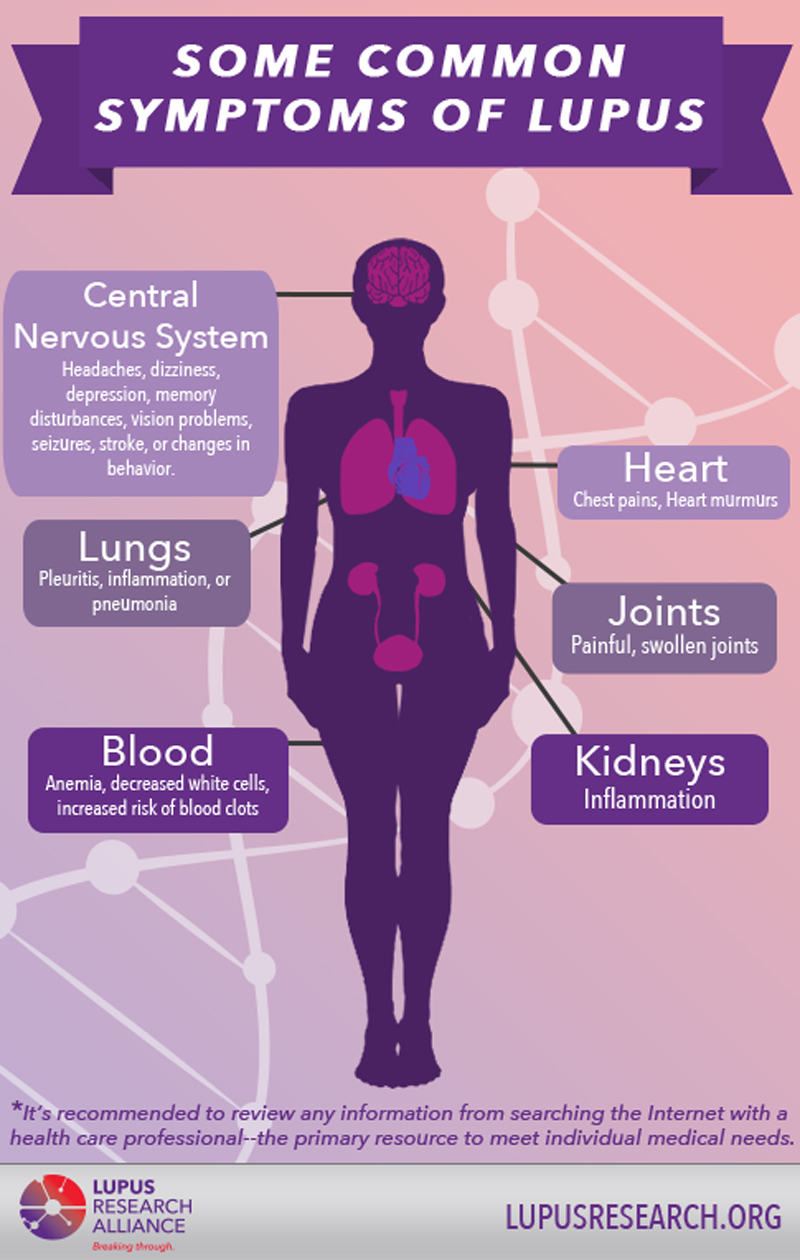
The great variety of symptoms, and relative rarity leads to a difficulty in establishing the diagnosis. Eventually, you may be lucky enough to find someone who figures it out.
The butterfly rash over the bridge of the nose and cheeks is the most typical finding but it’s not present in all patients. Rheumatoid symptoms, including fatigue fever and joint involvement is common. Chest pain and shortness of breath can occur. Headache confusion and memory loss occurs. Involvement of the kidneys can also occur, it is often the involvement that is life-threatening. These are symptoms maywax and wane over a number of years.
The cause of lupus may involve a black background of infection, the medication, or even sunlight. As with most auto immune diseases, the actual cause is obscure.
Laboratory findings may include an anemia, kidney or liver involvement, and especially anti-nuclear antibody’s. Most people with lupus have a positive ANA test, but not all people with these positive tests have lupus. Other test maybe necessary.
Treatment is usually with Drugs which diminish the immune system. Targeting the B-lymphocytes specifically with rituximab or bulimumab may be helpful.
Lupus, the wolf, can be stealthy and severe. Patients often have to be their own advocate in order to get properly treated.
Please see the following mail clinic article for more information.




 Doctors Without Waiting Rooms