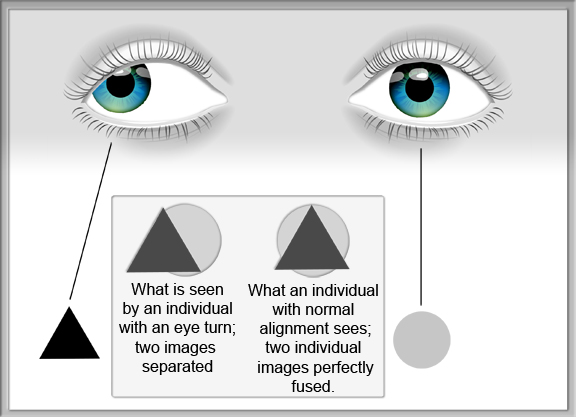
Amblyopia is an example of how the body suppresses or gets rid of activity that is not used. Amblyopia “ex anopsia” is the leading cause of poor vision in children, and the most common reason is a “lazy eye”. If the eyes do not work together for binocular vision, the weaker of the two eyes has suppressed development and eventually eyesight is lost.
I have a friend who was going in the pilot training, it was found to lack good depth perception, and could not proceed. He now complains occasionally of double vision, and may be an example of the suppressed eye with lack of binocular vision.
I have a muscle in balance which causes a rotation of my eye so that it’s hard to fuse on a horizontal linear object. I was probably able to fuse when I was younger and avoid this loss of vision in the weaker eye.
So be on the alert for a squint, or wandering eye in children. Get them in early for treatment, the earlier the better, and it must take place before age 5 to 7.
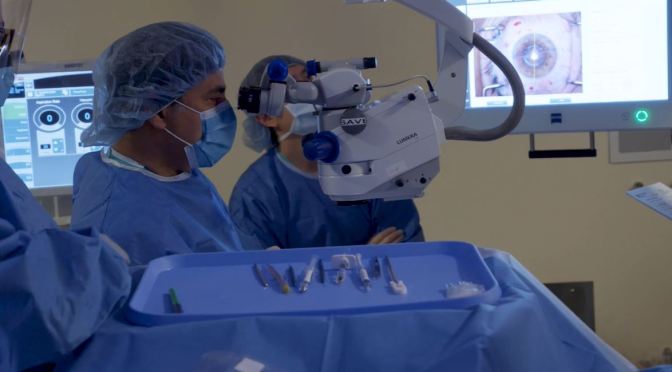
The patient is awake as a laser cuts her cataract into six pieces. Then, she heads into the operating room. When she wakes up, her cataracts and nearsightedness are gone.
‘Something is in my eye” is a feeling that everyone has had, and it doesn’t take much to create that sensation. A speck of dust, a grain of sand, a gnat or an ill-behaved eyelash will do it. Most of the time your eye will tear up and the offender is washed away.
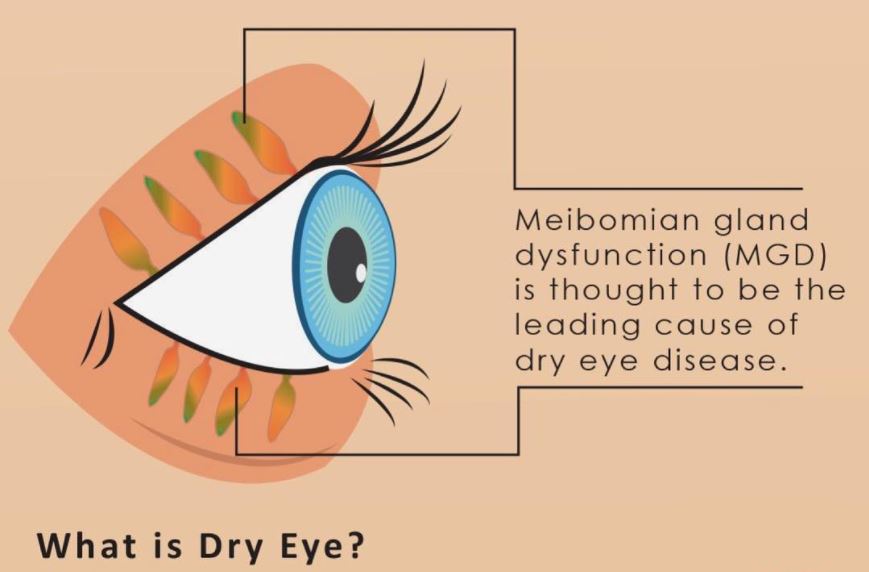
As I get older, this sensation is more frequent. I look at my eyes in the mirror, and there is no one-sided redness, displaced lash or anything else I can see. When I saw the doctor for my cataract surgery a couple of years ago, he took a sample of my tears, and found a deficit in the fatty component. He recommended twice daily, five minute warming of my eyes, but I stopped doing it after a while.
I have so many picky little things I do that this extra time didn’t see worth it. I know that my eyes are dry, which is common in older people, and often use “Refresh-plus” individual, preservative-free ampoules, which seems definitely worth the trouble. It makes my eyes feel better, alleviates the gritty sensation, and even clarifies my vision. I have also resumed warming my eyes with a clean washcloth, moistened with hot water, when I take my shower.
I fancy that I am stimulating my meibomian glands like the eye surgeon intended, to increase the lipid content of my tears. I’ll keep you posted. There are a number of other disorders which can cause the eye symptom, as the accompanying article indicates. Be sure that if the discomfort is more than trivial, or the affected eye is red, or if vision is affected, that you consult your eye doctor, or at least your primary care Physician.
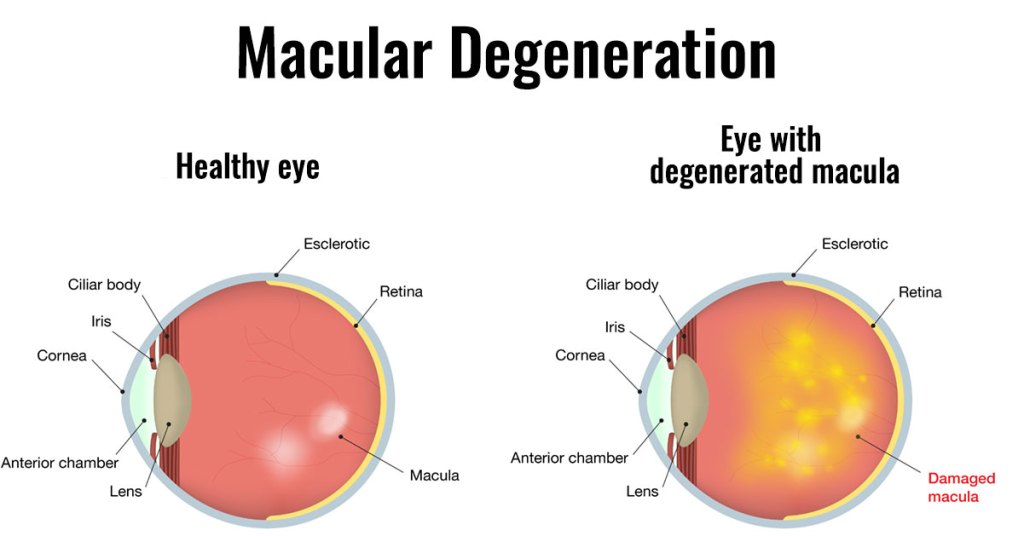
Macular degeneration is a leading cause of visual impairment in people over 65 and can lead to blindness. One in three people will eventually suffer some degree of macular degeneration, which is caused by abnormal blood vessels under the retina, the light-sensitive part of the eye. We treat both the more common “dry” as well as the more dangerous “wet” forms of macular degeneration. While there is currently no cure for this disease, we offer the latest treatments to reduce the risk of vision loss and blindness. These include anti-VEGF drugs—which attack proteins that create the abnormal blood vessels that cause macular degeneration—and photodynamic therapy, in which patients ingest medication that is then activated with a laser.
This high quality video shows several aspects of macular degeneration. It discusses treatments with stem cells that are in the research phase; in the future there may be replacements for the abnormal support cells, the vascular cells and pigmented epithelium, that are diseased in macular degeneration.
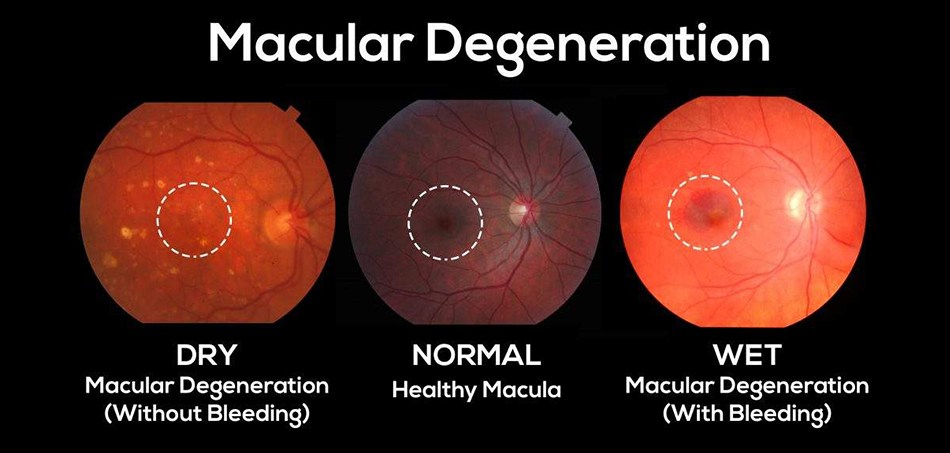
Current treatment centers on control of abnormal blood vessels either by photo active laser, laser coagulation, or anti-VEGF. Macular degeneration has two forms, wet and dry. The wet macular degeneration has accumulations, or Drusen, under the epithelium. There are also machines to check the thickness of the macula, which is an aid in diagnosis.
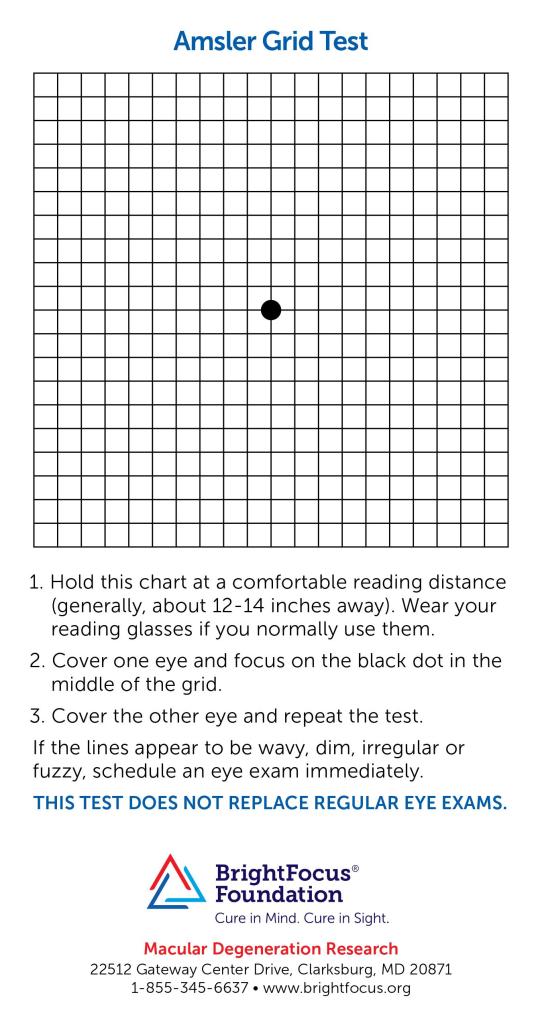
The main symptom of macular degeneration or loss of vision especially in The center of the visual field, which is essential for reading. As I mentioned in my podcast, I made a posting on macular degeneration that includes an amsler grid. Some early symptoms of macular degeneration include waviness of the lines of this grid. Certainly if you have any visual distortion or loss you should see an ophthalmologist.
If your medical plan permits it, I feel but a regular check buy an ophthalmologist approximately every 6 to 12 months, is very useful. My own ophthalmologist checks my retinal thickness, optic nerve, pressure and peripheral Field ( to pick up glaucoma) as well as my vision on each visit.
Macular Degeneration is the most common cause of blindness in the western world.as you get older, it becomes increasingly common, and almost 20% of people older than 85 years have this disease.
It comes in 2 types, dry and wet. Mostly it starts as the milder dry type, which develops slowly and has no definite treatment. The dry type can develop into the more rapidly progressive wet variety, however, and is important to notice and report to your ophthalmologist.
The MACULA is the center of the visual field, and has by far the most photoreceptors. It yields the sharpest vision, and is essential for reading, and even recognizing faces.
LOSS OF VISION is the commonest symptom, but is hard to notice in a slowly developing condition. A neurologist friend of mine alerted me to the AMSLER GRID, which helps in picking up the subtle distortions of this sneaky problem.
Checking your vision every few days-it takes only a few seconds- is a good idea as you age. You might be healthy in every other way, but if you are blind, the quality of life in your final years will suffer. The mechanics of the wavy lines generated by macular degeneration are deposits beneath the macula, raising it up.
The deposits are fatty in the case of the dry, and fluid in the case of the wet macular degeneration; and fluid from the abnormal blood vessels in the wet MD can collect very rapidly indeed.
Even though the cause of MD is unknown, prevention is by the same old healthy habits tiresomely mentioned in all my other postings: DIET and EXERCISE. I’m sure that good sleep doesn’t hurt either, No cigarette smoking of course, and there are some vitamins and minerals mentioned, such as lutein, zeaxanthin, zinc, and copper.
The wet MD does have a treatment to slow down the disease. Since blood vessel growth is important in causation, antibodies to VEGF, vascular endothelial growth factor, are injected into the macular area. I’m sure that more help is on the way. Some treatments to support the protective pigmented layer of the retina are currently in progress.
TELEMEDICINE is here to stay! With all its’ advantages Patients will demand It!
This video is one of the few to highlight WOMENS’ HEALTH as an appropriate field for Telehealth. A remote visit first may at least let the Doctor order some tests that will accelerate your care.
Urinary problems can also be appropriate for telemedicine; the MEDICAL HISTORY is such a VALUABLE DIAGNOSTIC TOOL!
Psychological and Psychiatric care could be completely remote, by telemedicine. The Doctor could save on expenses, and deliver care less expensively.
Distance disappears as a barrier to Consultations and second opinions. A University medical center or prestigious multi specialty Clinic are on your doorstep.
Of course, barriers remain in the form of regulations, litigation, bureaucracy, and Insurance, but these can be overcome, if the Will is there.
—Dr. C
Empowering Patients Through Education And Telemedicine





 Doctors Without Waiting Rooms