
This is a big one, and produces a lot of information.
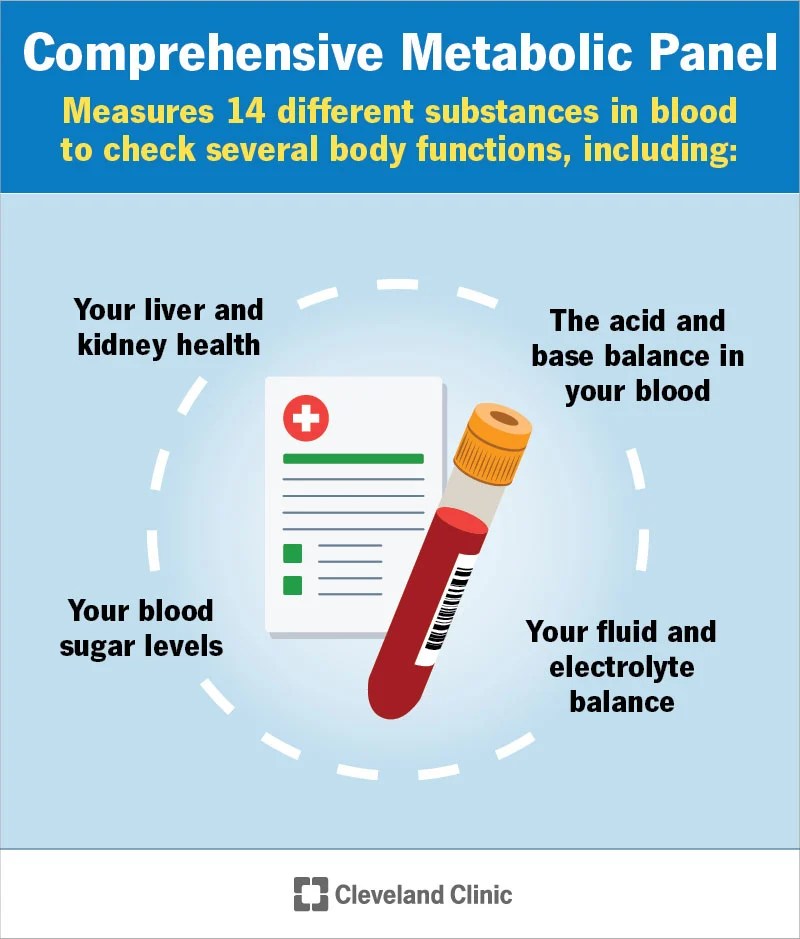
Your metabolism is the workhorse of your body, and this panel measures certain critical chemicals and waste products that make metabolism and life possible.
Sodium -The main element in the fluid outside your cells. It draws water into vessels, supporting blood pressure. Drinking water is critical to life, and a recent study used the serum sodium as a proxy to indicate whether you are drinking an adequate amount. If the level is below 142 mmol/dl, you are adequately hydrated and your life expectancy is higher.
Potassium – The main element in cells. There is a pump in the membrane of the cell that pumps potassium into the cell, and sodium out, to maintain a critical electrical charge across the cell membrane. Even small deviations in serum potassium can be worrisome.
Chloride – The anion that Electrically balances sodium and potassium. Can be important in acidosis.
Glucose – The major Energy source of the body. Too little, and you pass out. Too much is a long-term stress on the body, as in diabetes.
Carbon dioxide – As bicarbonate, important in adjusting the acidity of fluids outside the cell.
Anion gap – an important check for doctors.
BUN – A Measure of excess protein in the diet, and can be very elevated in kidney disease. I usually have an elevated BUN, because I eat a lot of protein due to my age. My creatinine is always normal.
Calcium – important for bones, and many other processes, including cellular signaling.
Albumin – An important blood protein that supports blood pressure.
Creatinine – A waste product that is used as a measure of kidney function.
AST (SGOT) – A liver enzyme used to measure inflammation of the liver.
ALT (SGPT) – A counter check to the AST.
Estimated GFR – Based on creatinine, it is a measure of kidney function.
Total protein – Includes albumin + the amount of globulin. The latter includes proteins involved in immunity, measured by subtracting the albumin from the total protein.
The metabolic panel is used to give clues to a whole host of diseases such as diabetes, liver disease, Kidney disease, immune deficiencies, endocrine diseases, vitamin and mineral deficiencies, and the like. It is so useful that Medicare pays for it, usually.
—Dr. C.



 Doctors Without Waiting Rooms