

Patient Experience and Satisfaction with #Telemedicine During #Coronavirus Disease 2019: A Multi-Institution Experience
— Telemedicine Journal (@Telemedicine_Jn) February 17, 2022
Read Now: https://t.co/GdkSISftBp pic.twitter.com/JslN4LPXl7
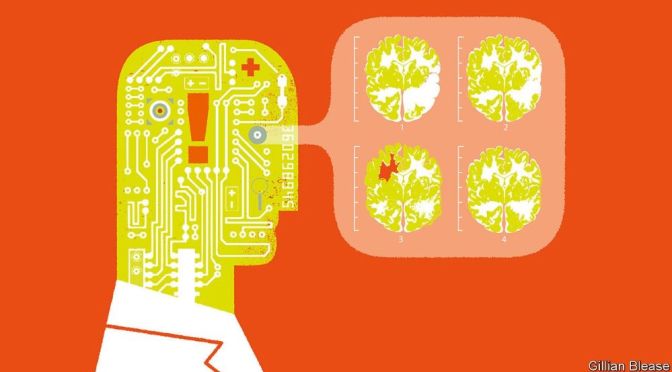
Technology: How AI Can Improve Health Care
AI has the power to transform health care. From more efficient diagnoses to safer treatments, it could remedy some of the ills suffered by patients. Film supported by @Maersk
Timeline: 00:00 – Can AI help heal the world? 00:45 – How can AI spot blindness? 04:01 – Protecting patients’ privacy 05:10 – How to share medical data safely 06:11 – Medical AI is rapidly expanding 08:02 – What do the sceptics say? 08.36 – Using AI for new medical devices 11:08 – What does the future hold for medical AI?

Clinical: Yale Women’s Heart Health Program
The Women’s Heart and Vascular Program provides state-of-the-art cardiac care for women with heart disease, as well as expert screening of women at risk for heart disease.
Heart disease remains the number one killer of American women and there is a great need for specialized care directed at women’s cardiac needs. The Women’s Heart and Vascular Program is dedicated to screening, educating and treating women at risk for, or with established heart disease.
Under the direction of Lisa A. Freed, MD, FACC, the Women’s Heart and Vascular Program incorporates not only her expertise in cardiology, but also collaborates with experts in diabetes, menopause, nutrition, exercise physiology, and smoking cessation. In addition, Dr. Freed consults with experts in sleep apnea and mental health professionals for intervention with co-existing depression and anxiety.
The program also focuses on clinical research in collaboration with Yale’s Women’s Health Research Center in order to advance the care of women with heart disease.
DOCTORS PODCAST: MEDICAL & TELEHEALTH NEWS (FEB 13)
A weekly podcast on the latest medical, science and telehealth news.
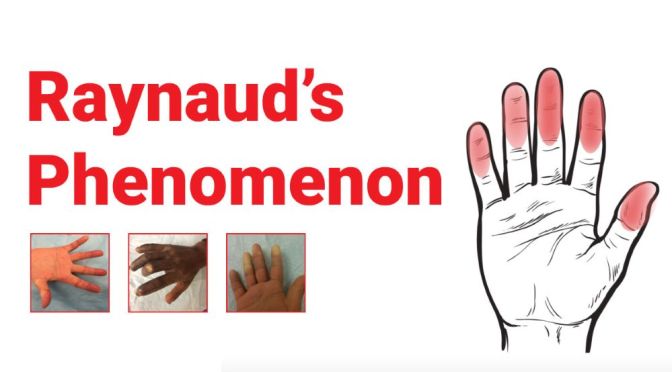
Blood Circulation: What Is Raynaud’s Phenomenon?
Raynaud’s phenomenon: Not just poor circulation
When you’re exposed to a cold environment, your body reacts by trying to preserve your core temperature. Blood vessels near the surface of your skin constrict, redirecting blood flow deeper into the body. If you have Raynaud’s phenomenon, this process is more extreme, and even slight changes in air temperature can trigger an episode, says rheumatologist Dr. Robert H. Shmerling, senior faculty editor at Harvard Health Publishing and corresponding faculty in medicine at Harvard Medical School.
“Cold weather is the classic trigger for Raynaud’s phenomenon. But it can occur any time of year — for example, when you come out of a heated pool, walk into an air-conditioned building, or reach into the freezer section at the supermarket,” he says. In addition to the hands, Raynaud’s can also affect the feet and, less often, the nose, lips, and ears. During an episode, the small arteries supplying the fingers and toes contract spasmodically, hampering the flow of oxygen-rich blood to the skin. Some of these vessels even temporarily collapse, and the skin becomes pale and cool, sometimes blanching to a stark white color.

Eye Health: ‘Cheater’ Glasses Vs Prescription
If you can go the over-the-counter route, here are some tips.
- Find the right power. Reading glasses will have signs or stickers noting their power. In most cases, they range from +1 to +4 diopter, in increments of +.25. Look for what matches your prescription. If you don’t have a prescription, try the lowest power (+1) first.
- Test-drive the glasses. If you’ve brought reading material with you, try reading it at a comfortable length. (Many eyeglass displays have an eye chart, too, to test the glasses.) Try different powers until you can read clearly at a distance that’s most comfortable for you.
- Go big the first time. While there are many styles and colors to choose from, you may want to start your reading glass journey with a bigger pair of specs. Larger lenses offer more of a “sweet spot” where the prescription is. It’s easier to use a smaller lens once you get used to wearing glasses.

Journals: Telemedicine And e-Health – FEB 2022
Original Research
Patient Experience and Satisfaction with Telemedicine During Coronavirus Disease 2019: A Multi-Institution Experience
Implementation and Evaluation of a Neurology Telemedicine Initiative at a Major Academic Medical Center
Telemedicine in Primary Care During the COVID-19 Pandemic: Provider and Patient Satisfaction Examined
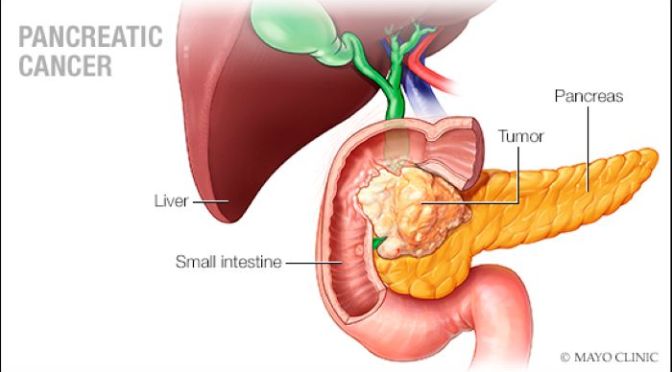
Diagnosis: The Early Signs Of Pancreatic Cancer
Lymphoma: Its Types And Causes (Cleveland Clinic)
Lymphoma is a cancer of the lymphatic system – our body’s immune system. The two main types of lymphoma are Hodgkin and non-Hodgkin. In this video, we break down how both types of lymphoma begin and the differences between them.
Chapters: 0:00 Intro 0:15 What are lymph nodes? 0:40 What is a cell mutation? 0:52 What is lymphoma? 1:15 What is the difference between Hodgkin and Non-Hodgkin lymphoma? 1:28 What are common symptoms of lymphoma?
DOCTORS PODCAST: MEDICAL & TELEHEALTH NEWS (FEB 6)
A weekly podcast on the latest medical, science and telehealth news.
 Doctors Without Waiting Rooms