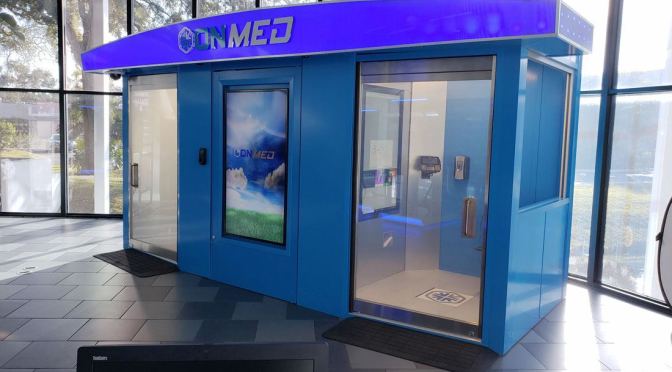
The OnMed® station is the only self-contained medical unit in the world currently using patented technologies to directly connect patients with doctors, nurse practitioners, and pharmacists for both consultative needs and on-site prescriptions.
The OnMed station utilizes advanced technology, including thermal imaging and facial recognition, to provide patients with a safe, private, and secure consultation with a licensed clinician. An ultra-high definition camera ensures the patient and clinician experience a real-time eye to eye connection. These same high-definition cameras also make it possible for the clinician to look down a patient’s throat or even examine a tiny skin lesion in detail.
If necessary, not only can the clinician provide a script, but the station itself can safely dispense hundreds of common prescription medications with the approval of a clinician or pharmacist through a secure, robotically automated vault.
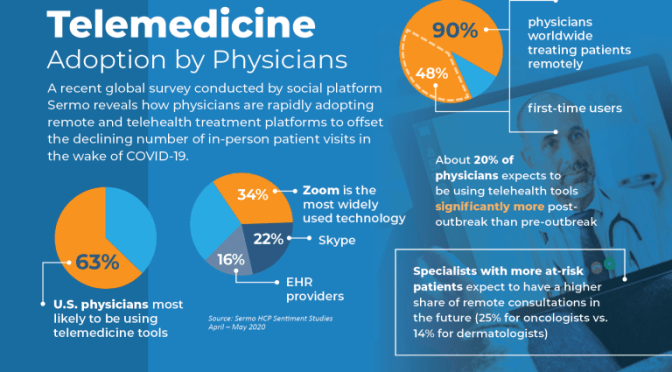
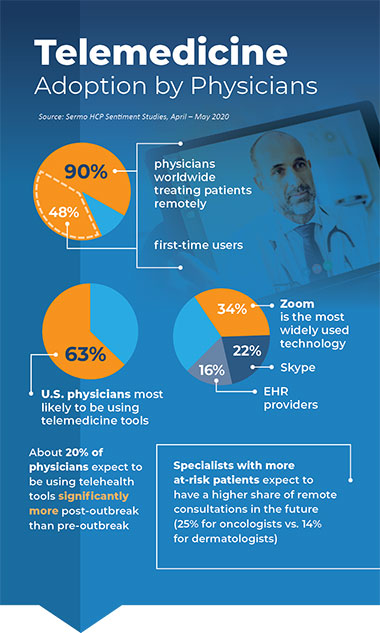
Diagnostics World (June 30, 2020): The shift from face-to-face patient visits to remote medical appointments is a worldwide phenomenon, but most especially in the U.S., finds a recent global survey conducted by the doctors-only social networking platform Sermo. Unsurprisingly, Zoom tops the list of most-mentioned technologies. About one-fifth of surveyed doctors say they expect to be using telehealth tools “significantly” more post-pandemic than before COVID-19 upended business as usual.
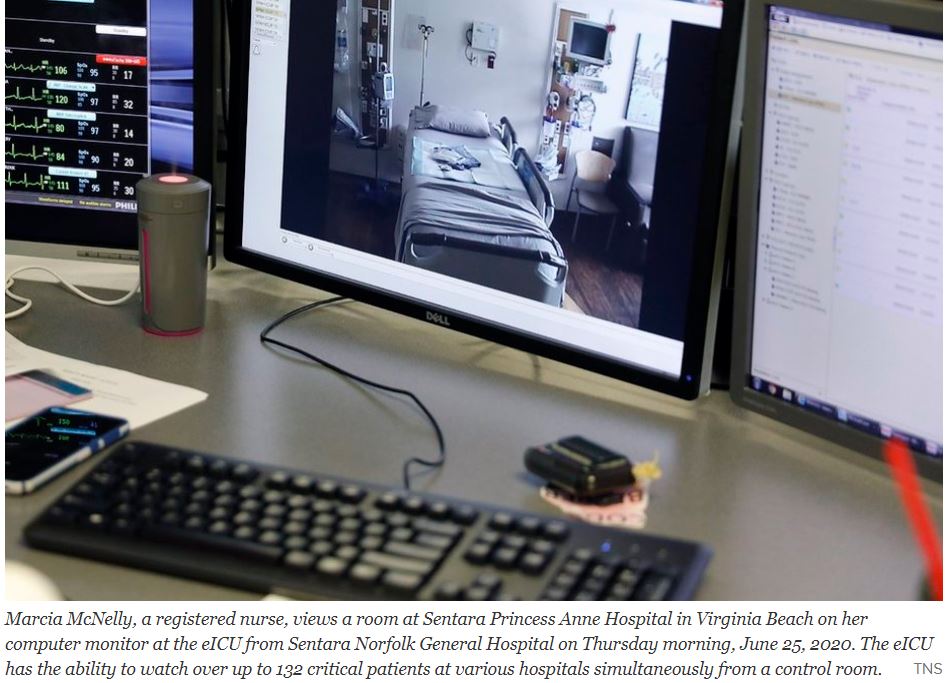
The hospital system — the first in the country — wired bedside video cameras and microphones on a secure network in 2000 so a medical team could monitor patients at multiple hospitals’ intensive care units from one command center around the clock.
When Sentara Healthcare first launched its “eICU,” the plan was to provide an extra set of eyes on critical patients, especially overnight when staffing was down to a skeleton crew.
Before the coronavirus arrived in Virginia, the average number of telemedicine visits within Sentara Medical Group was about 20 a day. Now, it is more than 2,000 a day, according to the company. Between March and June 21, its clinicians had 314,000 total patient visits, with about 51 percent of them happening virtually.
Telemedicine has been slowly developing for 10 or 20 years. The models have been developing according to the requirements of their local areas.
Dartmouth deals with a rural area and has sophisticated aid to it’s associated hospitals and transportation systems to bring Stabilized patients to the main hospital.
Sentara deals with a more urban area and has a central brain aiding the peripheral hospitals in the delivery of treatment locally.
The Tele intensive care unit system of Santara features a central ” Mission Control” With patients in multiple peripheral Intensive care units connected by telemetry. This efficient system allows the peripheral ICUs to operate at a higher level with less staff.
Such telemetry could allow convalescent hospitals and even nursing homes to improve medical care.
With such excellent models one can hope that American medicine will rapidly improve in the post Covid era, riding the wave of telehealth advances.
An increasing number of hospitals are now equipping emergency vehicles to treat stroke patients while en route to the ER. UCHealth is a health system in Colorado that has a tricked-out ambulance, the Mobile Stroke Treatment Unit. A neurologist at the hospital is connected wirelessly through telehealth to the vehicle. First responders’ gear includes portable CT scanners and tPA.
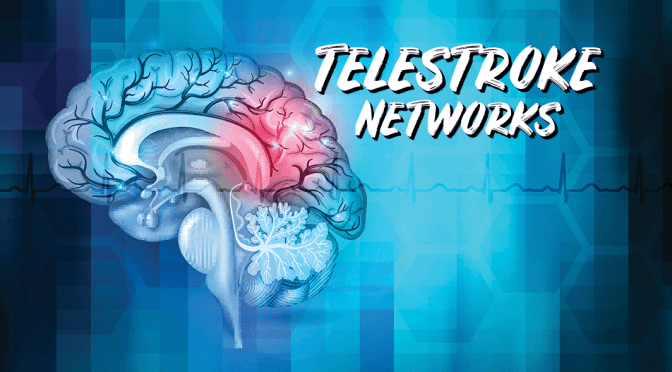
Currently, there are also more than two dozen telestroke networks in the United States. At the hub of each is a large hospital with on-call neurologists, and broadband that connects the hospital directly to satellite hospitals and clinics. There’s always a neurologist on call to guide the smaller hospital staffs’ treatment of a stroke patient.
When I had a stroke five years ago at 10:20 on a Saturday night, telehealth saved my life. At the time, only 3% to 5% of people in the United States were able to get the “clot-busting” drug called tPA in time to avoid brain damage.
In addition to offering telestroke capabilities, healthcare providers should equip emergency vehicles with portable ultrasound devices and defibrillators. Rural communities can consider strategically deploying high-powered wired and wireless hotspots in case patients need immediate medical attention while still en route to the hospital. Following natural disasters such as earthquakes or floods, mobile hotspots configured for telehealth could be helicoptered into isolated communities.
SPEED is especially important when a blood clot blocks an artery servicing an important organ. Our Heart and BRAIN top the list of vital organs. TELESTROKE showcases Telemedicine at its best.
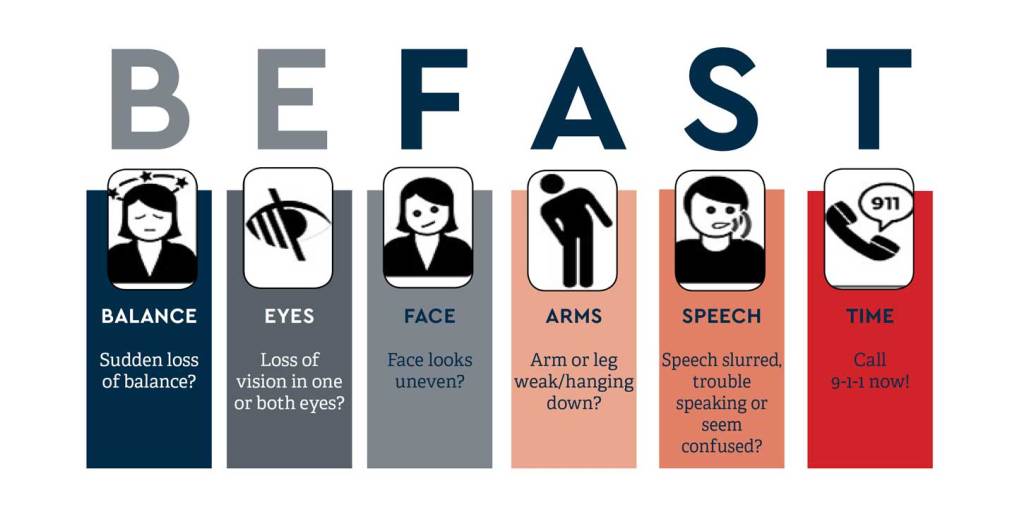
RECOGNITION of a stroke is a weak link in the chain of prompt Brainsaving treatment, and a Mnemonic helps.
—Facial assymetry or drooping —Arm or leg weakness on one side —Speech disturbance —Time is all important
FAST is a good mnemonic, and adding B for balance and E for Eye, or vision loss, for BEFAST gives 2 more parameters to think about.
Living alone adds to the challenge, so be as focused as you can. I was interested to hear that some TELESTROKE ambulances are adding mobile CT and drug (tpa) capabilities, in addition to TELECONFERENCING with a NEUROLOGIST. Treating a stroke within 15 minutes is becoming a possibility.
So particularly if you have risk factors such as hypertension, diabetes or obesity, be on the alert for symptoms of stroke.
After surveying almost 800 gastroenterology and hepatology patients and their physicians at Penn Medicine, 67 percent of both viewed their video and telephone appointments held during the peak of the COVID-19 pandemic as positive and acceptable substitutes to in-person appointments.
From March 16 to April 10, 2020, 94 percent of gastroenterology and hepatology appointments at Penn Medicine were performed using telemedicine in order to mitigate risks of COVID-19 spread while continuing to advance care as patients self-isolated at home. A telemedicine visit meant either a video visit (similar to FaceTime or Skype) or one via phone in which clinicians largely performed routine and non-urgent care.
Outpatient Virtual Visits connect patients and health care providers to Dartmouth-Hitchcock specialists via scheduled outpatient TeleHealth visits. Outpatient Virtual Visits increase access to specialty care services for patients located in rural or underserved areas and improves the patient experience via more convenient access to specialty care with reduced travel. D-H Outpatient Virtual Visit services currently offered including specialty clinic appointments, direct-to-patient home visits and inpatient consultations.
TeleEmergency
TeleEmergencyprovides a board-certified emergency medicine physician and an experienced emergency nurse to join the bedside team, on-demand, 24/7. Using high-quality, two-way audio-video communication, the TeleEmergency team assists by whatever means requested, including nursing documentation, direct patient care, consultation, a second set of eyes, assistance with transfer coordination, acceptance, and/or transport.
TeleICN
TeleICN allows D-H Neonatologists to join your bedside team to serve the needs of you and your patients for a wide variety of diagnoses. Some babies require a higher level of care as they adjust to life outside of the mother’s body. The 24/7 support of ICN services helps keep patients and families closer to home by supporting clinical decision making and providing expert evaluations and recommendations. If a transfer is necessary, our specialized ICN team will assist in transporting that patient.
TeleICU
TeleICU provides experienced intensive care physicians and critical care nurses to augment, not replace, the bedside team. In addition, the service provides behind-the-scenes, high-level monitoring and sophisticated analytical algorithms to identifying concerning trends prior to patient deterioration. Not only does this result in decreased mortality and length of stay; it also allows more patients to get their ICU care close to home.
TeleNeurology
TeleNeurologyprovides board-certified neurologists on-demand 24/7 for Emergency Department and inpatient consultations. This includes not only stroke (including evaluation and recommendations, and assistance with tPA administration), but also assistance with other adult neurologic emergencies. This allows a lower cost coverage option for hospitals with limited or no neurologist access, improved tPA administration rates and decreased transfers.
TelePharmacy
TelePharmacyconnects hospitals to a team of dedicated pharmacists who can provide medication order review and processing as well as clinical consultation, allowing hospitals to optimize their internal staffing while remaining compliant with order review regulations. D-H TelePharmacy improves medication efficacy, patient safety and staff satisfaction while also supporting the integration of pharmacy delivery within hospital systems and/or regions, including protocols and order sets.
TelePsychiatry
TelePsychiatryenables prompt assessment and management of patients in the Emergency Department or inpatient setting for locations that do not have around-the-clock psychiatric coverage. Board-certified psychiatrists provide 24/7, on-demand assessments including expedited admit vs. discharge decisions, early management recommendations, and assistance with medication management, while improving the ultimate patient trajectory.
TeleUrgent Care
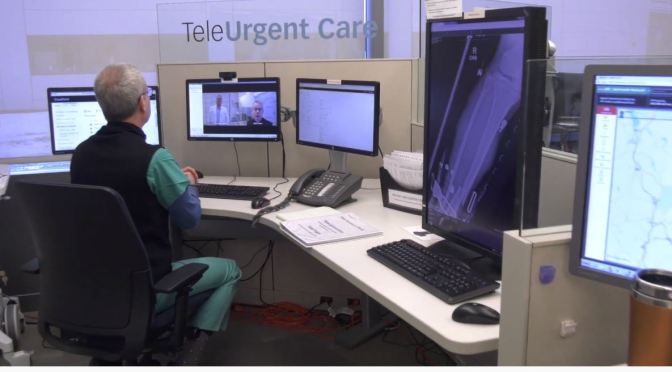
TeleUrgent Care provides back-up, support and consultation to Urgent Care providers by emergency medicine physicians via high-definition, two-way audio-video conferencing. TeleUrgent Care physician input can include general recommendations, real-time patient assessments, second opinions, advice regarding the need and timing of additional emergent or urgent evaluations, review of radiographic images, and assistance with volume surges.


 Doctors Without Waiting Rooms