Category Archives: Technology

Telemdicine: Growth Rate Peaked During April 2020, Then Stabilized In 2021

A year ago, we estimated that up to $250 billion of US healthcare spend could potentially be shifted to virtual or virtually enabled care. Approaching this potential level of virtual health is not a foregone conclusion. It would likely require sustained consumer and clinician adoption and accelerated redesign of care pathways to incorporate virtual modalities.
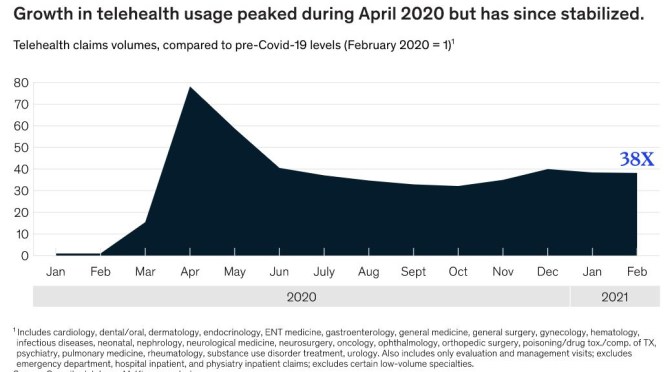
  • Telehealth utilization has stabilized at levels 38X higher than before the pandemic. After an initial spike to more than 32 percent of office and outpatient visits occurring via telehealth in April 2020, utilization levels have largely stabilized, ranging from 13 to 17 percent across all specialties.2 This utilization reflects more than two-thirds of what we anticipated as visits that could be virtualized.3
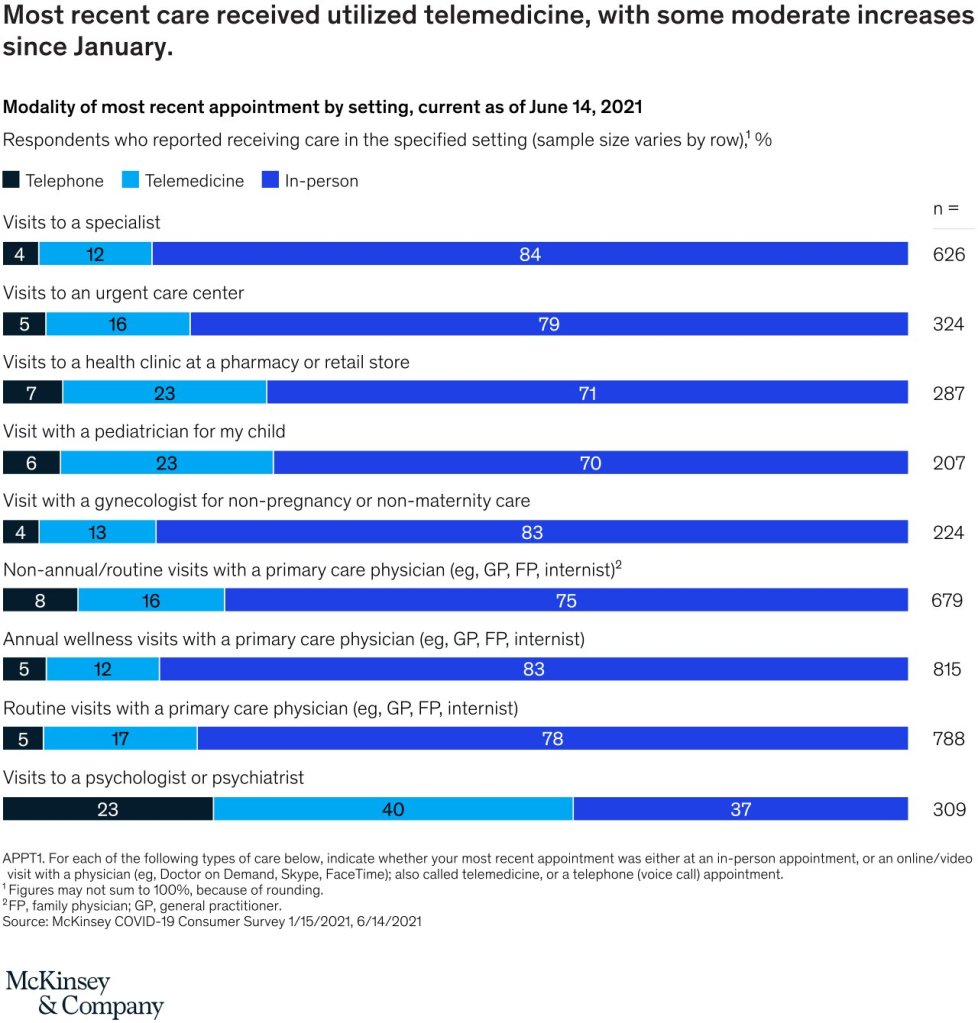
  • Similarly, consumer and provider attitudes toward telehealth have improved since the pre-COVID-19 era. Perceptions and usage have dropped slightly since the peak in spring 2020. Some barriers—such as perceptions of technology security—remain to be addressed to sustain consumer and provider virtual health adoption, and models are likely to evolve to optimize hybrid virtual and in-person care delivery.
  • Some regulatory changes that facilitated expanded use of telehealth have been made permanent, for example, the Centers for Medicare & Medicaid Services’ expansion of reimbursable telehealth codes for the 2021 physician fee schedule. But uncertainty still exists as to the fate of other services that may lose their waiver status when the public health emergency ends.
  • Investment in virtual care and digital health more broadly has skyrocketed, fueling further innovation, with 3X the level of venture capitalist digital health investment in 2020 than it had in 2017.4
  • Virtual healthcare models and business models are evolving and proliferating, moving from purely “virtual urgent care” to a range of services enabling longitudinal virtual care, integration of telehealth with other virtual health solutions, and hybrid virtual/in-person care models, with the potential to improve consumer experience/convenience, access, outcomes, and affordability.


Read more

HARVARD: ‘NANOBODIES’ EVOLVED FROM SYNTHETIC ANTIBODY FRAGMENTS

A new approach developed by Harvard Medical School researchers uses yeast to rapidly evolve synthetic antibody fragments called nanobodies with the aim to find variants that are effective at binding to selected antigens, including SARS-CoV-2. The antibodies are intended for use in diagnostic tests and disease treatments. Read the full story: https://hms.harvard.edu/news/antibody…SHOW LESS

MEDICINE: ‘AI’ CAN PREDICT RHEUMATOID ARTHRITIS

Cancer: High-Intensity Focused Ultrasound


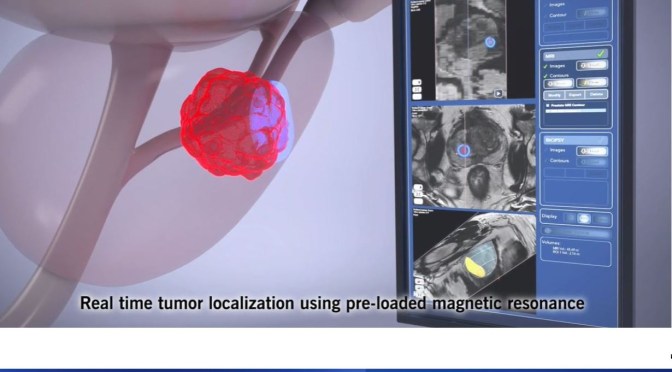
Focal One® high-intensity focused ultrasound uses high-intensity sound waves to destroy a cancer tumor. It’s delivered through a rectal ultrasound probe. There are no incisions. Most patients need no pain medication after treatment. And there are fewer side effects than with radiation therapy or prostate removal.

Read more

Procedures: Endoscopy Of Stomach & Intestine

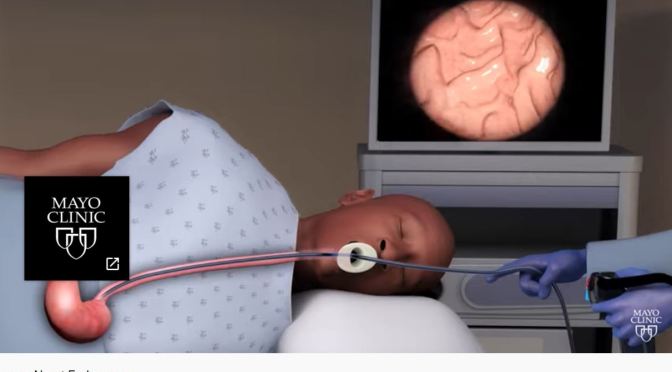
An endoscopy allows your doctor to view your esophagus, stomach and part of the small intestine. Here’s how it works.

An endoscopy procedure involves inserting a long, flexible tube (endoscope) down your throat and into your esophagus. A tiny camera on the end of the endoscope lets your doctor examine your esophagus, stomach and the beginning of your small intestine (duodenum).

Technology: Robotically Assisted Heart Surgery

Robotically assisted heart surgery is a minimally invasive option most often used for mitral valve repair. Cleveland Clinic cardiothoracic surgeons explain how it works and what to expect.

Read more

MEDICINE: HOW VACCINES ACTUALLY WORK (VIDEO)

Vaccines are medicines that train the body to defend itself against future disease, and they have been saving human lives for hundreds of years. Vaccines are medicines that train the body to defend itself against future disease.

TeleDentistry: Mobile Apps Improving Oral Health

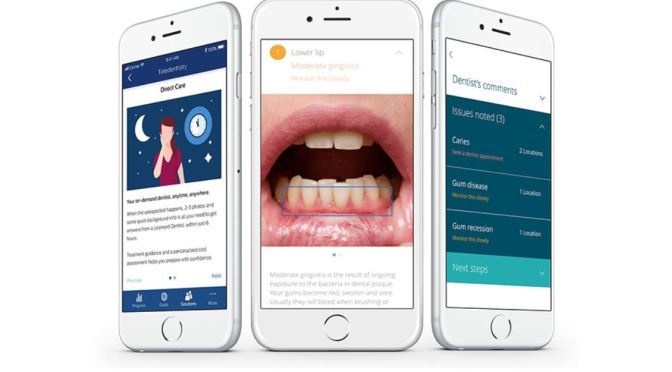
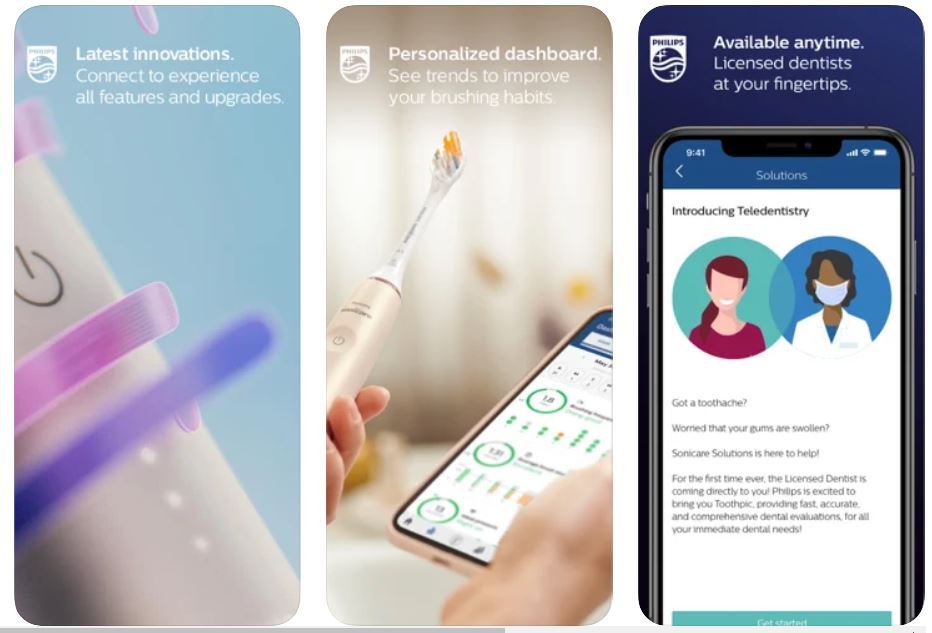
Tele-dentistry allows patients to consult a licensed dentist via a mobile app, without having to leave their home or make an appointment. By sharing high-resolution photos of their teeth and flagging specific concerns, they can get a personalized assessment and practical advice for ongoing improvement of their oral health.

What is Teledentistry?

Teledental health is a very broad category of solutions that service patients oral health at a distance by doing it remotely.  People who do not have a dentist, lack access to a dentist or live far from a dental office can be helped with this level of care – via telephone or videoconferencing capability or other means mentioned above.  It’s the idea that these technologies can be leveraged to improve access to care, gather and exchange information with a licensed dentist, to provide and support dental care delivery, diagnosis, consultation, treatment, transfer of dental information and education.

Defining Teledentistry

Telemedicine refers to the “virtual visits” that take place between patients and clinicians via communications technology — the video and audio connectivity that allows “virtual” meetings to occur in real time, from virtually any location.

teledental visit can be a videoconference between a dentist and a patient regarding an urgent dental or oral health problem, and it can also give patients improved access to information about the importance of oral health.

With evolving technology, urgent oral or dental issues can be remediated – helping people to avoid expensive, time-consuming visits to the hospital Emergency Room or urgent care clinic by scheduling them at a dental care facility the next day.