
A bi-weekly podcast on the latest medical, science and telehealth news.
Category Archives: Resources
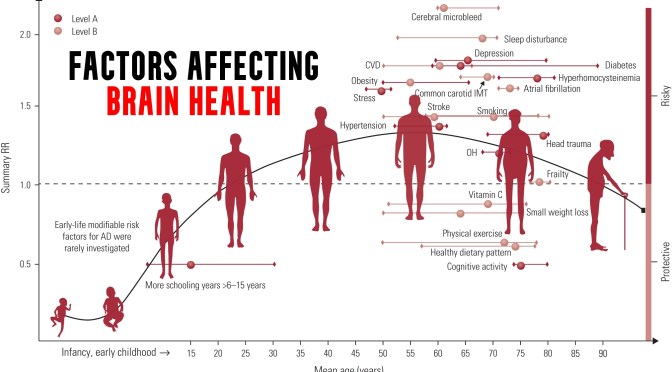
INFOGRAPHIC: ENHANCING BRAIN HEALTH ACROSS AN INDIVIDUAL’S LIFESPAN
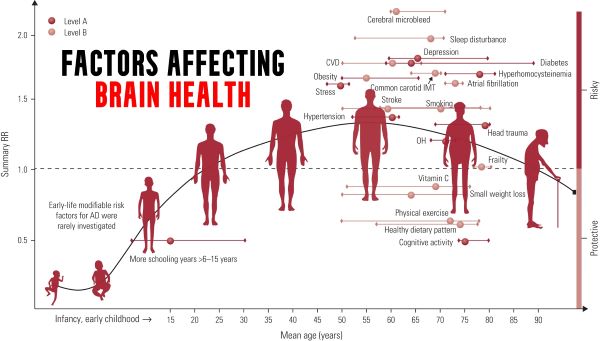
Opportunities for enhancing brain health across the lifespan
Published online by Cambridge University Press: 22 March 2021
Summary
As we age, there are characteristic changes in our thinking, reasoning and memory skills (referred to as cognitive ageing). However, variation between people in the timing and degree of change experienced suggests that a range of factors determine individual cognitive ageing trajectories. This narrative review considers some of the lifestyle factors that might promote (or harm) cognitive health. The focus on lifestyle factors is because these are potentially modifiable by individuals or may be the targets of behavioural or societal interventions. To support that, the review briefly considers people’s beliefs and attitudes about cognitive ageing; the nature and timing of cognitive changes across the lifespan; and the genetic contributions to cognitive ability level and change. In introducing potentially modifiable determinants, a framing that draws evidence derived from epidemiological studies of dementia is provided, before an overview of lifestyle and behavioural predictors of cognitive health, including education and occupation, diet and activity.
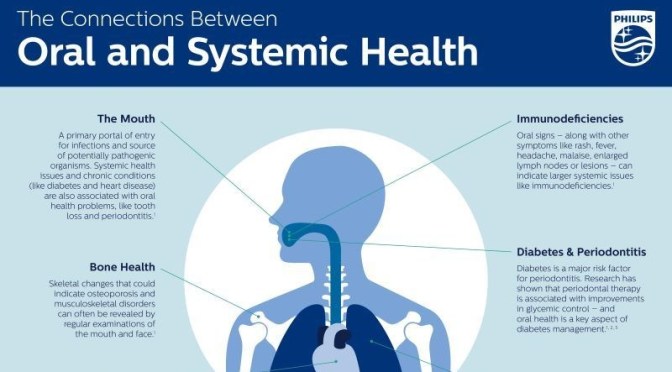
INFOGRAPHIC: POOR ORAL HEALTH LEADS TO CHRONIC AND SYSTEMIC DISEASE
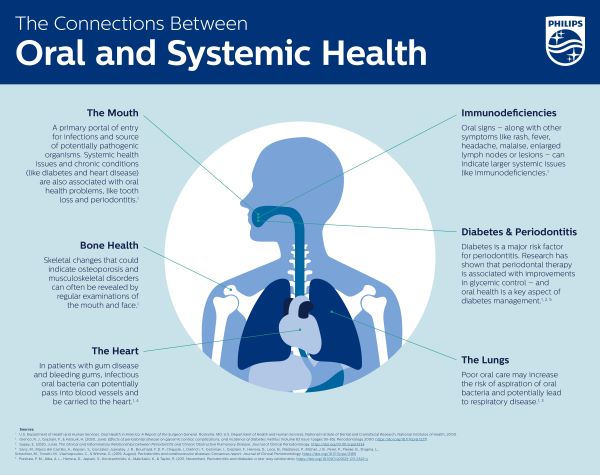
Good oral health leads to benefits beyond a healthy mouth
People today want to be more in control of their own health and are more attuned to getting the support and information they need online, from apps, and from connected products. Yet there are gaps in both their knowledge and daily commitment to good oral hygiene, and they need help along the way. Depending on lifestage, patient’s oral health concerns can evolve from plaque removal and aesthetics to larger concerns around gum health and disease. Too often, by the time they begin thinking about gum health, it’s too late. Multiple studies have revealed linkages between periodontal diseases and certain systemic diseases, such as diabetes, heart disease and kidney disease [4][5][6].
Prevention is key. Along with professional deep cleaning, good daily brushing and interdental cleaning are critical. It’s also important for patients to have regular conversations with their dentist about oral health issues and the linkage to their overall health.
DOCTORS PODCAST: MEDICAL & TELEHEALTH NEWS (MAR 17)
A bi-weekly podcast on the latest medical, science and telehealth news.
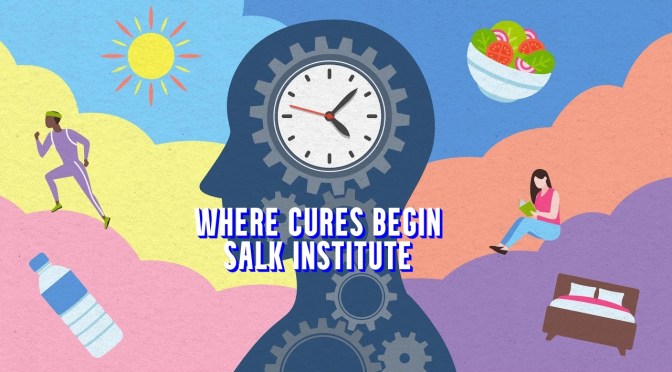
HEALTHY LIVES: LIVING IN SYCH WITH BIOLOGICAL CLOCKS (SALK INSTITUTE)
Satchin Panda is a professor in Salk’s Regulatory Biology Laboratory. He explores the genes, molecules and cells that keep the whole body on the same biological clock, also known as a circadian rhythm. On this episode of Where Cures Begin, Panda talks about what a biological clock is, how living in sync with your clock can improve your health, and how growing up in India informed his research.
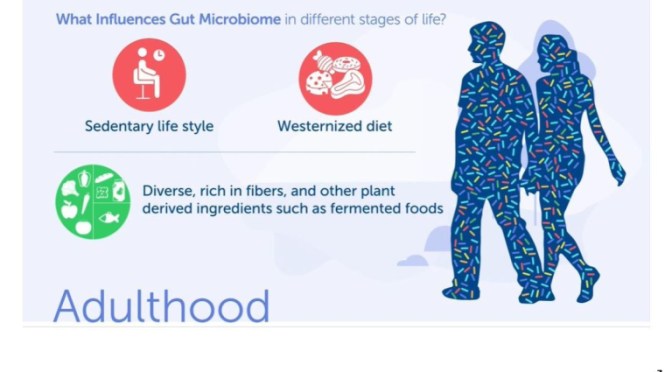
HEALTH: ‘WHAT INFLUENCES GUT MICROBIOME’ (VIDEO)
The microbiota is a dynamic community that evolves through the lifetime of an individual, being influenced by multiple factors. Nutrition is essential in the process of establishing a healthy gut microbiome, with a key role of breastfeeding in early months, and important role of diverse diet to stimulate maturation of diverse gut microbiome.
Prebiotics, probiotics and synbiotics are key tools to boost the development of an age-appropriate microbiota and its related benefits, like healthy immune development and a basis for a resilient microbiota throughout life.
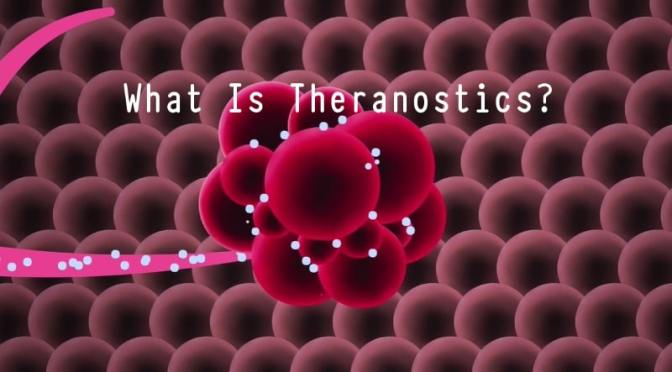
Radiotherapy: ‘What Is Theranostics?’ (Video)
What is Theranostics? Dr. Martin Pomper, Director of the Nuclear Medicine and Molecular Imaging division at Johns Hopkins, describes the mechanisms of a groundbreaking cancer treatment that combines imaging and molecular radiotherapy. With this method, radiopharmaceuticals can specifically target cancer cells while sparing most normal tissues. To learn more visit Nuclear Medicine Radiotheranostic Center: https://www.hopkinsmedicine.org/radio…
DOCTORS PODCAST: MEDICAL & TELEHEALTH NEWS (MAR 4)
A bi-weekly podcast on the latest medical, science and telehealth news.
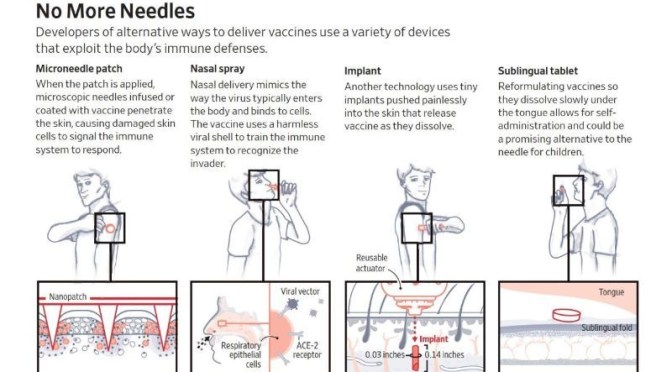
INFOGRAPHIC: ‘VACCINES WITHOUT NEEDLES’ (WSJ)
Technologies in development for delivering vaccines include Enesi’s dissolving implants, microneedle patches, electrical-pulse systems, nasal sprays and even pills.
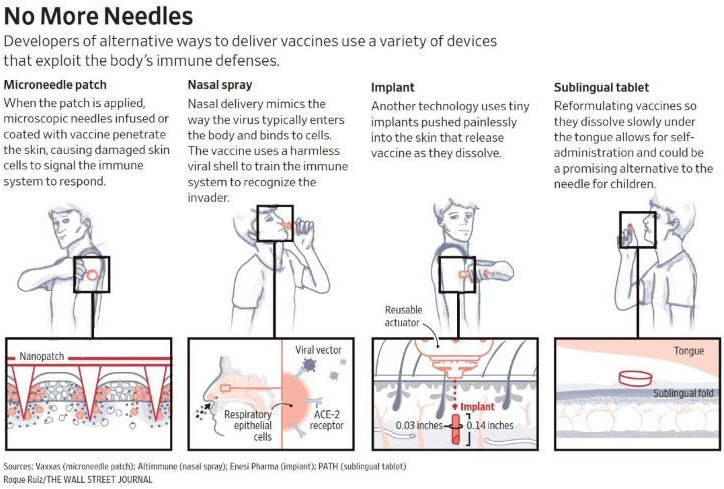
Some firms are developing their own vaccines against Covid-19, while others are aiming to reformulate some of the dozens already in development or being rolled out world-wide. Some are sitting this pandemic out in the hope of being ready for the next one.
All are in the early to mid-stages of development and clinical testing, suggesting it might be months if not years before they come to market. Big pharmaceutical companies have so far shown limited interest.
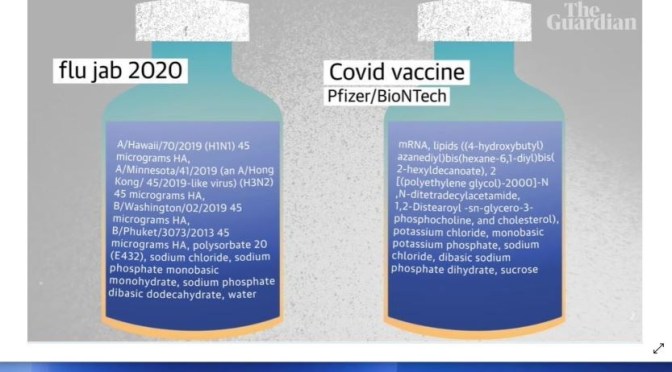
COVID-19: ‘WHAT ARE THE VACCINE’S INGREDIENTS?’
There are all sorts of different vaccines but many of them share specific types of ingredients. Josh Toussaint-Strauss talks to Professor Adam Finn to find out what is in most conventional vaccines, as well as what they do to our bodies when we take them – and why the mRNA Covid jabs from Pfizer/BioNTech, Oxford/AstraZeneca and Moderna work differently.
 Doctors Without Waiting Rooms