Category Archives: Resources

Dr. C’s Journal: What Is Huntington’s Disease?

Degenerative neurological diseases are particularly horrible. They affect the brain, the very essence of our humanity. Moreover, almost all of  these conditions have no satisfactory treatment. Alzheimer’s, Parkinson’s, and Huntington’s disease come to mind.
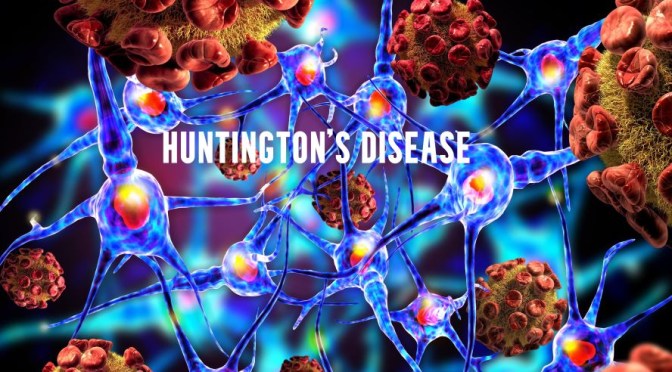
Much more is known about the genetics of Huntington’s  than any other aspect of the disease. The problem is due to CAG repeats, which either crowd out or distort the function of the Htt protein.

If a child of a Huntington family anticipates having children, intervention to prevent transmission, such as artificial insemination and eliminating any zygotes containing the Huntington Gene will prevent the children from inheriting the disease.

Huntington’s is considered to be inherited by a somatic dominant Gene. This gene codes for a number of CAG repeats in excess of the normal number, less than 35. However the number of CAG repeats tends to increase with each generation, and it is possible for parents with somewhat less than 35 repeats eventually to produce the disease in their offspring.

As in any degenerative brain disease, the focus of medical treatment is on neurotransmitters. This is because neurotransmitters can be studied and used as the basis of medical treatment that lessens the effects of the disease. In the case of Huntington’s, dopamine, glutamate and acetylcholine  have all been implicated, although transmitter balance is probably more important, and changes with time.

Neural malfunction, however, is where the true pathology lies, and all neurons, especially those of the Corpus stratum and Cerebral Cortex contain Htt and are eventually involved, Leaving a shrunken brain that loses much of its substance and function.

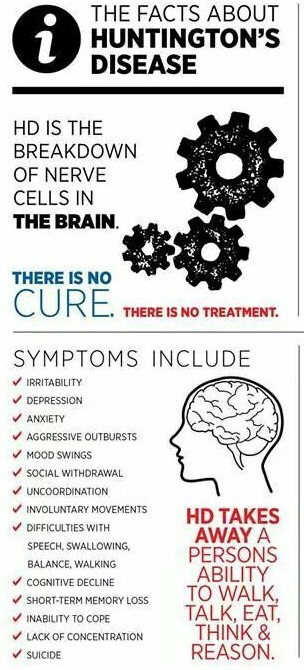
The symptoms begin as a movement disorder, and initially was called Huntington Chorea, because of the abnormal “Dance-like”  movements of affected individuals . Eventually, psychiatric, intellectual and other symptoms occur which  span all areas of the brain.

Today, after swimming, I encountered a man whose brother has Huntington’s disease. So far he has been spared. He is part of a study of Huntington’s Disease Families. He denies knowing anything about his genetics, and indeed does not want to know, Nor would I in his situation, since nothing can be done to affect the basic progress of the disease.

Please refer to the accompanying meal clinic article for more information about Huntington‘s disease.
—Dr. C.

Mayo Clinic Article

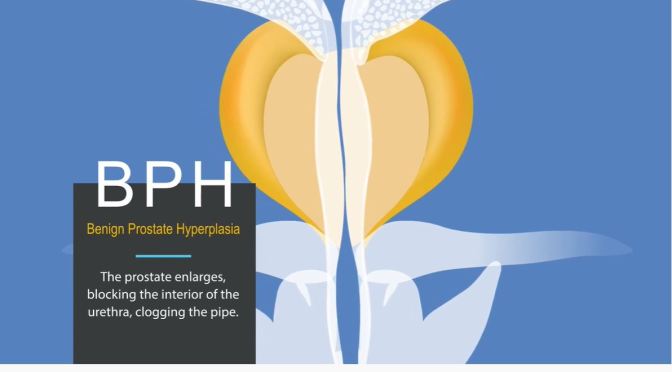
Medicine: What Causes Urinating Issues? (Video)

Trouble Urinating? There are many common causes for urinary issues in men. Learn about symptoms and treatment options offered by The Johns Hopkins Brady Urological Institute. https://www.hopkinsmedicine.org/brady…

Telehealth: Government & Regulatory Issues (Video)

In response to the COVID-19 pandemic, governments across the United States relaxed restrictions on telemedicine, allowing more patients to receive healthcare remotely than ever before. This development brought a number of questions about how telehealth should be regulated to the fore. Is remote care as effective as in-person care? Would long-turn expansion of telemedicine reduce costs for patients and healthcare providers? Might a greater reliance on telehealth actually reduce access to care for some patients?

HEALTH: HOW DEPRESSION AFFECTS THE BRAIN (YALE)

For many people, depression turns out to be one of the most disabling illnesses that we have in society. Despite the treatments that we have available, many people are not responding that well. It’s a disorder that can be very disabling in society. It’s also a disorder that has medical consequences.

By understanding the neurobiology of depression we hope to be able more to find the right treatment for the patient suffering from this disease. The current standard of care for the treatment of depression is based on what we call the monoamine deficiency hypothesis. Essentially, presuming that one of three neurotransmitters in the brain is deficient or underactive. But the reality is, there are more than 100 neurotransmitters in the brain. And billions of connections between neurons. So we know that that’s a limited hypothesis. Neurotransmitters can be thought of as the chemical messengers within the brain, it’s what helps one cell in the brain communicate with another, to pass that message along from one brain region to another. For decades, we thought that the primary pathology, the primary cause of depression was some abnormality in these neurotransmitters, specifically serotonin or norepinephrine. However, norepinephrine and serotonin did not seem to be able to account for this cause, or to cause the symptoms of depression in people who had major depression. Instead, the chemical messengers between the nerve cells in the higher centers of the brain, which include glutamate and GABA, were possibilities as alternative causes for the symptoms of depression. When you’re exposed to severe and chronic stress like people experience when they have depression, you lose some of the connections between the nerve cells. The communication in these circuits becomes inefficient and noisy, we think that the loss of these synaptic connections contributes to the biology of depression. There are clear differences between a healthy brain and a depressed brain. And the exciting thing is, when you treat that depression effectively, the brain goes back to looking like a healthy brain, both at the cellular level and at a global scale. It’s critical to understand the neurobiology of depression and how the brain plays a role in that for two main reasons. One, it helps us understand how the disease develops and progresses, and we can start to target treatments based on that. We are in a new era of psychiatry. This is a paradigm shift, away from a model of monoaminergic deficiency to a fuller understanding of the brain as a complex neurochemical organ. All of the research is driven by the imperative to alleviate human suffering. Depression is one of the most substantial contributors to human suffering. The opportunity to make even a tiny dent in that is an incredible opportunity.

DR. C’S JOURNAL: BENEFITS OF PARATHYROID HORMONE

Hormones, Vitamins, and minerals all have extensive interactions in the give-and-take of the bodies’ ballet of homeostasis. No where is this more clear-cut than the interplay of parathyroid hormone, vitamin D, and calcium.

Although it has many other actions in the body, calcium is best known as the prime component of our bones. It is essential for making them healthy and strong. The bones act as a storehouse or vault for the bodies calcium. The parathyroid hormone is the key that unlocks the vault to release the calcium so it can perform its many other roles in the body. An elevation of the calcium in the blood stream shuts down the parathyroid Glands.

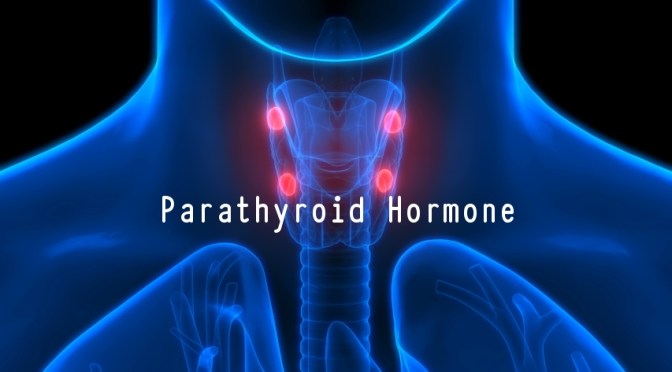
Parathyroid hormone also acts to instruct the body to absorb more vitamin D, just as the vitamin D causes the intestinal tract to absorb more calcium. The parathyroid glands are in the upper poles of the thyroid which as we mentioned before sits astride the windpipe.
Sometimes the parathyroid gland develops an adenoma which causes too much secretion of parathyroid hormone.

This results in an excess of calcium in the body and a variety of symptoms, such as joint pain muscle weakness, fatigue, nausea and vomiting. One of the technicians in my medical practice developed hyperparathyroidism. It was detected by a metabolic panel, which showed an elevation of serum calcium.

This discovery, early in my practice, made me a big fan of metabolic panels when patients have general symptoms. Her condition, a parathyroid adenoma, was cured by surgery. Conversely, surgery for an overactive thyroid can sometimes accidentally remove the parathyroid glands if the surgeon isn’t careful. The parathyroid glands are tiny, but they perform a huge function.

—Dr. C.

DR. C’S JOURNAL: THYROID STIMULATING HORMONE

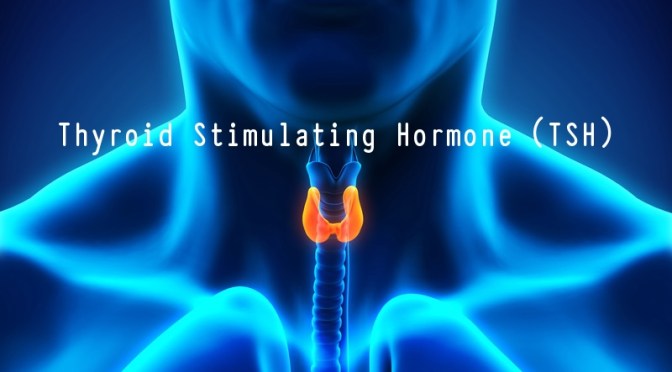
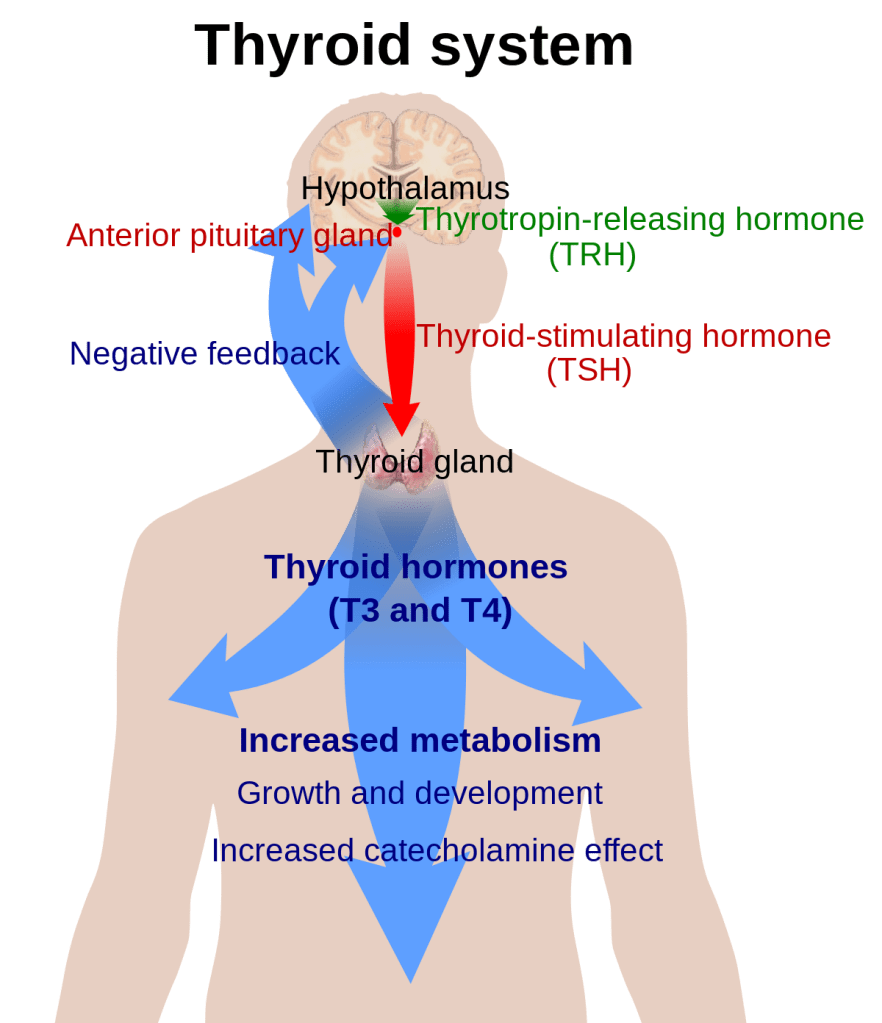
Thyroid stimulating hormone (TSH) is one of a series of regulatory hormones to come from the pituitary gland, often called the “master gland“ of the body. Most of the pituitary hormones are released upon signals from the hypothalamus, part of the real master coordinator of the body, the brain.

TSH Instructs the Thyroid gland to produce more Thyroid hormone. When more Thyroid hormone is produced, The increase of Thyroxin in the  bloodstream causes the TSH level to drop.

Our metabolism is full of these servomechanisms which control the level of critical substances. When the thyroid does not function properly, and the thyroid level drops, the TSH is increased. An elevated TSH it is presently the best test we have for hypothyroidism.

Conversely, when there is excessive thyroid activity (hyperthyroidism), the TSH level drops to vanishingly low amounts. Tomorrow the subject will be thyroxin.

—Dr. C.

Dr. C’s Journal: Effects Of Growth Hormone (GH)

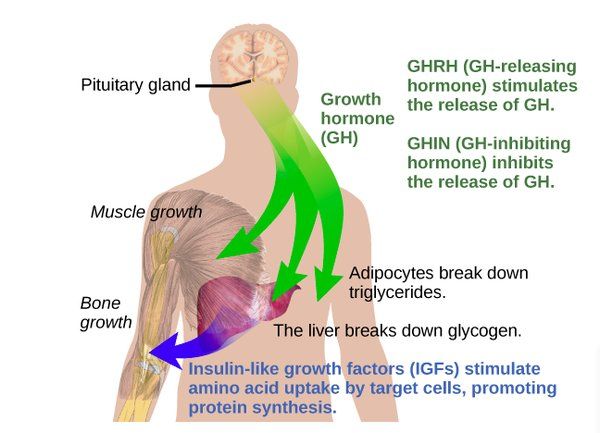
Most boys and perhaps some  girls would prefer to be taller. Human growth hormone is secreted by the pituitary gland with increased production during puberty. Pituitary growth hormone stimulates the liver to produce insulin like growth factor, and assay of IGF-1 is a test for GH deficiency.

Small stature and low growth velocity in children often benefit from growth hormone, But adults have closure of the growth plate and do not grow taller with GH.

Pituitary tumors require the removal of the pituitary gland, and this is the major cause of low growth hormone in adults. Replacement growth hormone is clearly indicated here. Most adult use of growth hormone is because of its apparent beneficial effects on vigor and aging, but this may be ill advised; please check the following Harvard article.

Since growth hormone is anabolic, and favors growth and protein synthesis, it enjoys some use in athletics and the health industry. Most likely, it is a two edge sword that should be regulated properly and not used in the absence of deficiency.

–Dr. C

Harvard Article

DR. C’S JOURNAL: STRESS & ADRENALINE (EPINEPHRINE)

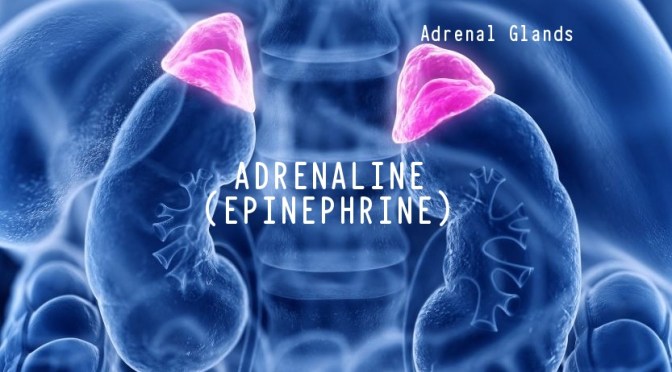
Adrenaline (epinephrine) was first discovered when the adrenal gland was ground up and injected, producing an increase in the pulse rate. it has a myriad of uses, and often In emergencies when speed of injection is of great importance. You may you recall the controversy when the price of EpiPen was jacked up to ridiculous levels.

Adrenaline is intimately involved with cortisol in emergency stress reactions. Adrenaline increases cortisol production, and cortisol increases the number of cell membrane adrenoreceptors. Adrenaline is much more rapidly acting, and cortisol sticks around for a while keeping the stress response going.

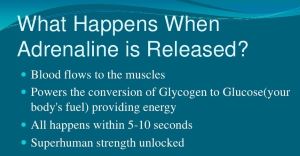
Adrenaline produces a myriad of responses that are beneficial when you’re trying to run away from that sabertooth tiger. Just like cortisol, it increases the pulse rate, blood pressure, blood sugar and heart rate. It opens up the bronchial tubes so you can breathe better, and also increases muscle strength and alertness, with a negative affect.

As mentioned in the article on cortisol, stress has a negative connotation at present, even though it was vital to our survival as a species. I can’t tell you how many shots of adrenaline I gave to my asthmatic patients. Medications to prevent asthma are much more numerous these days and adrenaline is rarely needed for Asthma any more.

Adrenaline  is still very useful, however, in cardiac arrest, and Anaphylactic reactions. You may recall having read about Anaphylactic reactions from the Propylene glycol in some Covid immunizations.
In the long run You will do better to keep your stress levels down. Try to avoid talking about family affairs, religion, and politics.

—Dr. C.