Category Archives: Opinion

THE DOCTORS 101 CHRONIC SYMPTOMS & CONDITIONS #33: The Common Cold’

The common cold is one of the most frequent of human diseases, and causes billions of dollars in lost work yearly. I haven’t heard of many cases of colds or flu recently, in the Era of Covid.

Distancing, mask wearing, and hand washing prevents colds too. The common cold spreads by AEROSOL transmission, and autoinnoculation into the nose from contaminated surfaces, just like Covid.

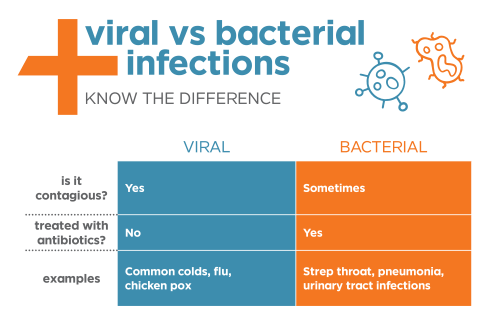
By far the most common cause of the Common Cold is the RHINOVIRUS, of which there are 100 serotypes. Coronaviruses, Influenza, Parainfluenza, RSV and enteroviruses also produce cold-like symptoms. The large number of viruses causing the Common cold makes developing an effective vaccine difficult.
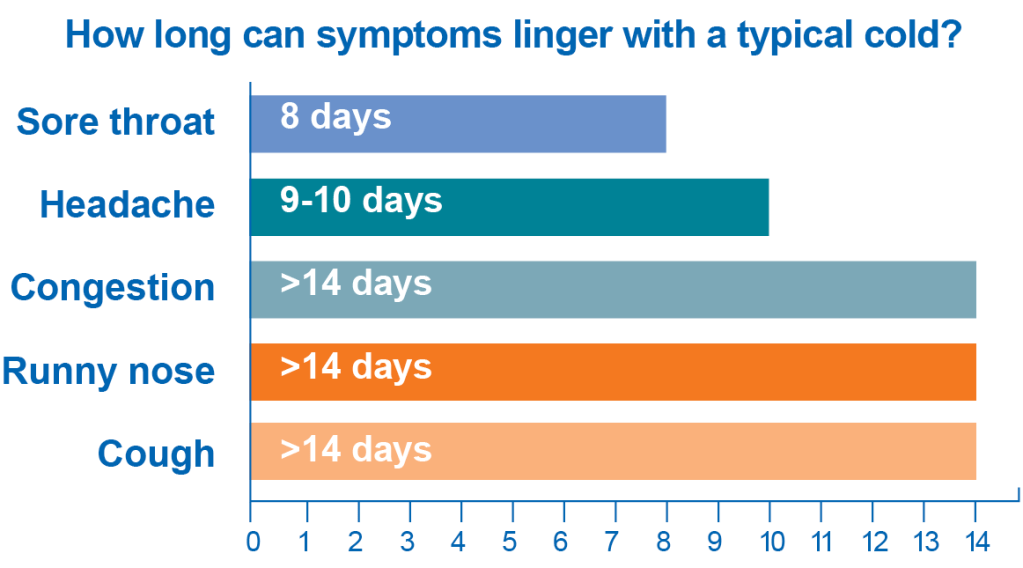
Adults eventually encounter most of the serotypes prevalent in their community, and don’t catch many colds. However, when adults travel, they experience a new, unfamiliar group of viruses endemic to their destination. How often do we take a trip and come back with a Cold, or worse. We lack immunity to the microorganisms we have not yet encountered, just like children.

When I was in pediatric allergy practice, I feared nothing so much as the cold temperatures in October. The kids would come back to school, and start getting colds, averaging 7-8 per year. It is commonly thought by researchers that cold symptoms are not produced so much by viral damage to the respiratory membranes, as by the body’s immune response to those viruses.
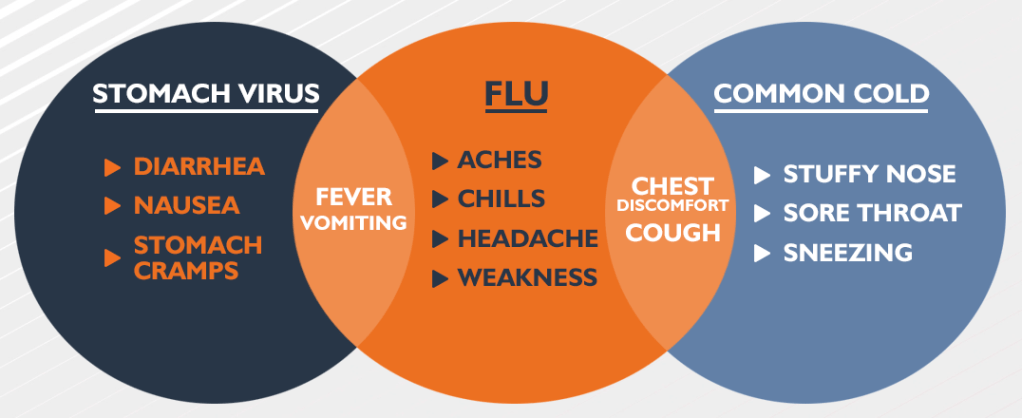
My experience confirms that opinion. A cold was a worry for my patients. Rhinovirus infection often triggered a severe ashmatic response, sometimes sending the children to the ER if not the Hospital ICU.

It was the allergic reaction to the virus that caused the severe wheezing. After the epidemic of Covid subsides, and becomes endemic, don’t give up all of your newly-acquired habits. Hand-washing, distancing, and even masks prevent other respiratory disease transmission too.
–Dr. C.

THE DOCTORS 101 CHRONIC SYMPTOMS & CONDITIONS #32: Normal Pressure Hydrocephalus (NPH)

Normal Pressure Hydrocephalus, NPH, is an important condition. Although uncommon, affecting less than 5% of the population, it is a TREATABLE form of DEMENTIA.

If you or a loved one has been suspected of having Alzheimers or Parkinsons disease, NPH should be considered. It can be ruled out by MRI. Problems with Walking (“ Gait”) is often the first symptom, followed by mild Dementia. Loss of urinary control, incontinence, is often a later symptom.

The classic 3 symptoms are gait problems, dementia and incontinence, Hakim’s triad. A politically incorrect MNEMONIC is “wet, wacky and wobbly”. Gait “deviations”, with a broad based, slow, “stuck to the floor” movement are present almost all the time, and often suggests the more common Parkinson’s disease.

Some difficulty in planning, attention and concentration is present more than half of the time. Frequency of urination and incontinence comes later, but is often present by the time the diagnosis is made. Block in the reabsorption of Cerebrospinal fluid is thought to be the cause.

This produces intermittent elevation of pressure in the brain cavities, the ventricles. Thinning of the cortex follows, and it is this loss of brain tissue that produces the symptoms the diagnosis, usually by a Neurologist, is made by a number of tests, including MRI, and measurements of CSF Pressure.

An interesting test is to remove 30-50 cc of CSF and see if the walking improves. Treatment is with a tube connecting the Ventricles to the abdominal cavity, which restores drainage of the CSF. One of my friends was diagnosed with NPH, and benefitted with treatment. I consulted a neurologist about another of my friends with dementia, and an MRI to rule out NPH was suggested.

Treatability is the main virtue of discovering NPH, rather than another cause of dementia.

–Dr. C.

Legal: ‘Regulation Of Telehealth Services In The Era Of Covid (Video)

Technology has made it possible for people to virtually access their healthcare providers. During COVID-19, this has enabled patients and doctors to avoid excess exposure and travel for non-emergency visits. However, state and local regulations frequently limit or ban telemedicine for health and safety reasons. Should telemedicine be considered as the same or different from traditional office visits, and what regulations should govern it? Anastasia P. Boden is an attorney at the Pacific Legal Foundation.

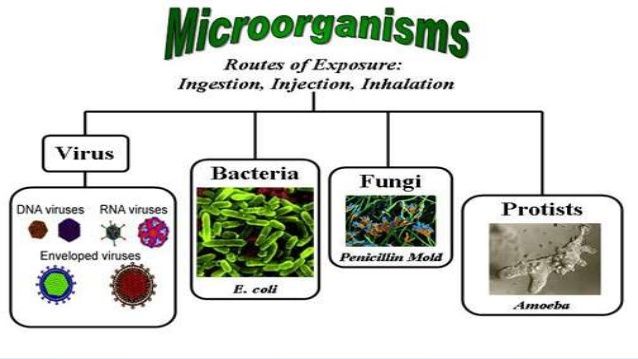
‘INFECTIONS’: HOW WE EXPERIENCE INTERACTIONS WITH MICROORGANISMS

The RNA molecule is central to life. It is the information molecule of the Pandemic SARS CoV 2 virus, whose Messenger RNA specifying Spike proteins is the basis of 2 recently-released vaccines.

“RNA Life” is the leading theory for the Origin of Life itself, more than 3 Billion years ago. DNA evolved as the blueprint information molecule in cellular life, but the ubiquitous RNA may well have become the first viruses.

The stage was set for the ongoing battle of life: Parasite vs. Host, Pathogen vs. Target, but recent research reveals a much more nuanced picture. Viruses and bacteria can be BENEFICIAL as well as deleterious. We now speak of the MICROBIOME, usually referring to our host of resident BACTERIA, and the VIROME referring to all of our indwelling VIRUSES.

INFECTION is how we experience our interaction with microorganisms, their benefits unseen. Bacteria, viruses and parasites have always been with us, increasing in impact as Paleolithic man crowded into agricultural settlements.

Enlarging cities became more dense, favoring spread of infection and PLAGUES. The Bacterium, Yersinia Pestis,emerged in Roman times,
causing the Justinian plague, and resurfaced in the 14th C. as the Black Death. Viral Plagues, including Smallpox, were devastating during European adventures into the New World.

Malaria, a one-cell Eukaryotic Parasite, may be the greatest killer of all time. Modern Sanitation and improving medication have lately pushed bacterial infections into the background.

Viral infections such as Influenza and most recently Covid have become the Modern face of infection. Many Viruses reduce Immunity, however, paving the way for bacteria to invade: Haemophilus influenzae, a bacterium, may have caused much of the mortality of the 1817-1918
Flu epidemic.

IV drug usage has facilitated the spreading of the viruses causing Hepatitis and AIDS. The immune-compromising nature of the latter has reinvigorated TB and Syphilis, both bacterial infections. Only a few years ago, bacterial infection was thought to be conquered by antibiotics, and viral infection contained by Vaccines.

Microorganisms are constantly evolving, however, and often share their resistance factors. Infection is no more a thing of the past than War. The Battle continues.

–Dr. C.

THE DOCTORS 101 CHRONIC SYMPTOMS & CONDITIONS #31: COLD SORES

“Fever Blisters”, or “Cold sores” are caused by infection, almost always, with the Herpes Simplex 1 virus. Herpesvirus infestations are present in 50% of the population, usually causing little disturbance. The symptoms on first exposure depend on the Age the virus is first acquired.

NEONATAL Herpes can be extremely serious, due to the immaturity of the infant immune system. Herpes acquired in CHILDHOOD, or Primary herpetic Gingivostomatitis, can cause very dramatic FEVER, with blisters in the mouth, that lasts for a week to 10 days, causing lots of misery and hand-wringing but having a good outcome.

I had one such case early in my pediatric residency at Walter Reed Army Hospital, a young French boy named Didier Dupont. He screamed with pain, and wouldn’t eat or drink. His parents thought that he was going to die, and that I saved his life, neither of which was true. My roommate and I lived in the same housing complex as the Duponts, and enjoyed many fine french meals with them, one of the few positive events to result from an encounter with Herpes Viruses.

The first acquaintance with Herpes in ADULTHOOD produces outcomes ranging from no symptoms at all, to a flu like syndrome with mouth blisters. Many people have positive blood tests for herpes, but cannot recall any mucosal burning, blisters or pain, so Herpes can enter the body without producing memorable symptoms.

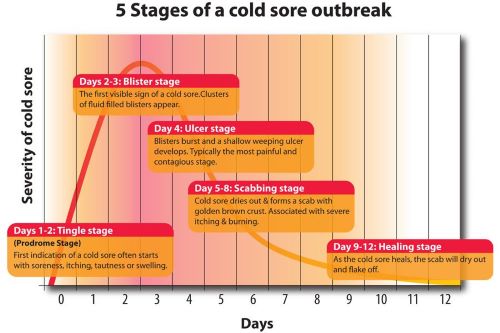
The Herpes 1 Virus gains entrance to the body through the lining of the lips, mouth or nose(or through broken skin), and travels up the local nerves to the cell body in the local Trigeminal ganglion. There it remains quietly, until some STRESS reduces the resistance, allowing it to awaken and travel back down the nerves to the “mucocutaneous junction”, where the skin thins out into the lining of the nose, mouth, or occasionally the eyes.

There it multiplies and forms painful blisters, or “cold sores”. Sunburning of the lips, a “cold”, or psychological strain are examples of the stresses that can trigger cold sores. Reduced resistance is the common factor.

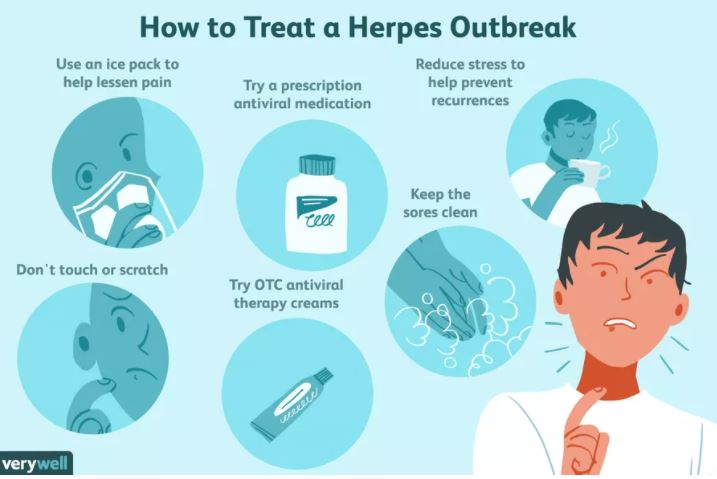
The Acyclovir family of drugs is usually effective in treatment, and works by inhibiting DNA Polymerase. These oral medications can be given to curtail each episode, if cold sores are infrequent, or continuously to reduce the number of outbreaks.

Herpes 1 is a double stranded DNA Virus in a family that includes Herpes 2, Chickenpox, the EB virus of mononucleosis fame, and Cytomegalovirus, which is the bane of organ transplant recipients. A nasty Clan indeed, and very successful in evolutionary terms.

–Dr. C.

THE DOCTORS 101 CHRONIC SYMPTOMS & CONDITIONS #30: ACNE (Vulgaris)

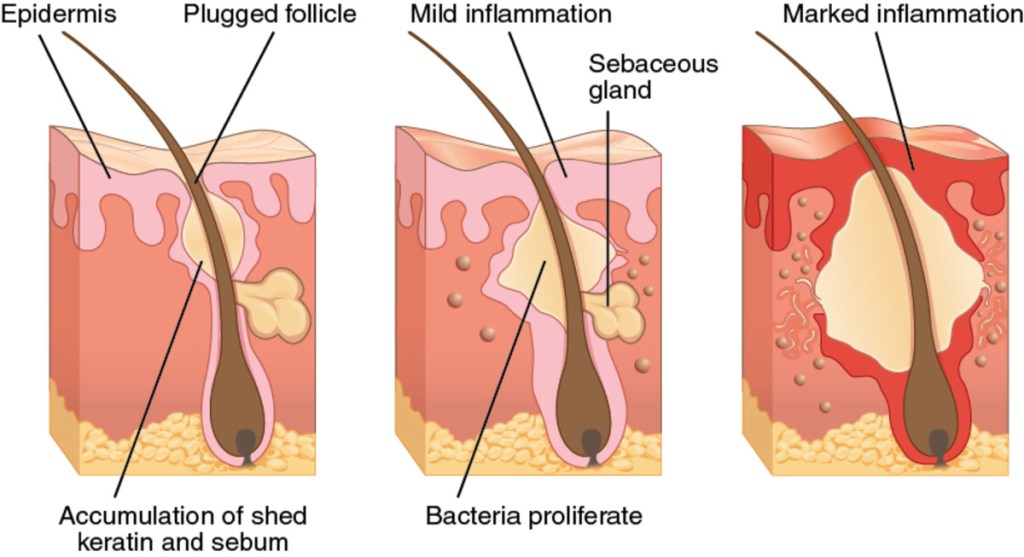
ACNE is almost a rite of passage in adolescents, although it is not totally restricted to the teen years; women may experience acne during pregnancy, or at the time of menopause. It afflicts about 90% of kids during their PUBERTAL growth spurt, though is moderate or severe in only 15%.

Acne is caused by PLUGGING of the sebaceous glands of the skin. Infection by certain skin BACTERIA follows. Check the accompanying video for a description of the battle between the “Good guys”, Staph epidermidis and Cutibacterium acnes, vs. the bad guy, Proprionibactrium
acnes.

Acne tends to run in families. The steroid HORMONES like Testosterone and Cortisone promote Acne. STRESS tends to chronically raise Cortisol and is a factor in Acne, and many chronic illnesses as well.

A person who is having trouble with Acne should avoid sweets and greasy foods, which is a good idea for everybody. Skin cleansers, using salicylic or azelaic acids and benzoyl peroxide may help, and creams containing retinoic acid derivatives may be useful..

The doctor may prescribe an antibiotic like tetracycline in resistant cases. Cystic acne may be scarring, but otherwise “the zits” depart with the pubertal years.

–Dr. C.

Further reading at Mayo Clinic

THE DOCTORS 101 CHRONIC SYMPTOMS AND CONDITIONS #28: CERVICAL POLYPS

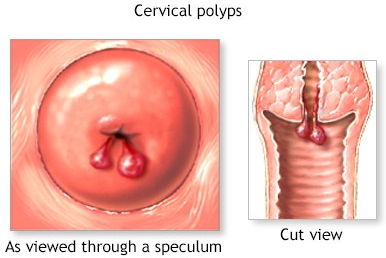
Cervical polyps are fairly common, particularly in young women who have had children. They are rare before periods start, and uncommon after menopause. Polyps are often silent, without symptoms.

Polyps are often silent, without symptoms. Polyps are often associated with INFLAMMATION, and may be discovered because of vaginal DISCHARGE. They may bleed and betray themselves by heavy periods, or BLEEDING between periods.

My Daughter, a Student Health Physician, recently saw a patient who presented with a foul discharge and examination revealed a large polyp. A blood count showed a severe ANEMIA.

Although cancer is rare, the polyp should be biopsied or removed and examined to be sure there is no malignancy. Cervical Polyps are often discovered on a routine Physical Examination. Preventative Physical and Vaginal examinations in young women are important to check for such conditions as Polyps, do PAP smears, and, in sexually active women, screen for STDs.

–Dr. C.

Read more