Tag Archives: Women's Health

Infographic: Why Women Have High Risks Of Stroke

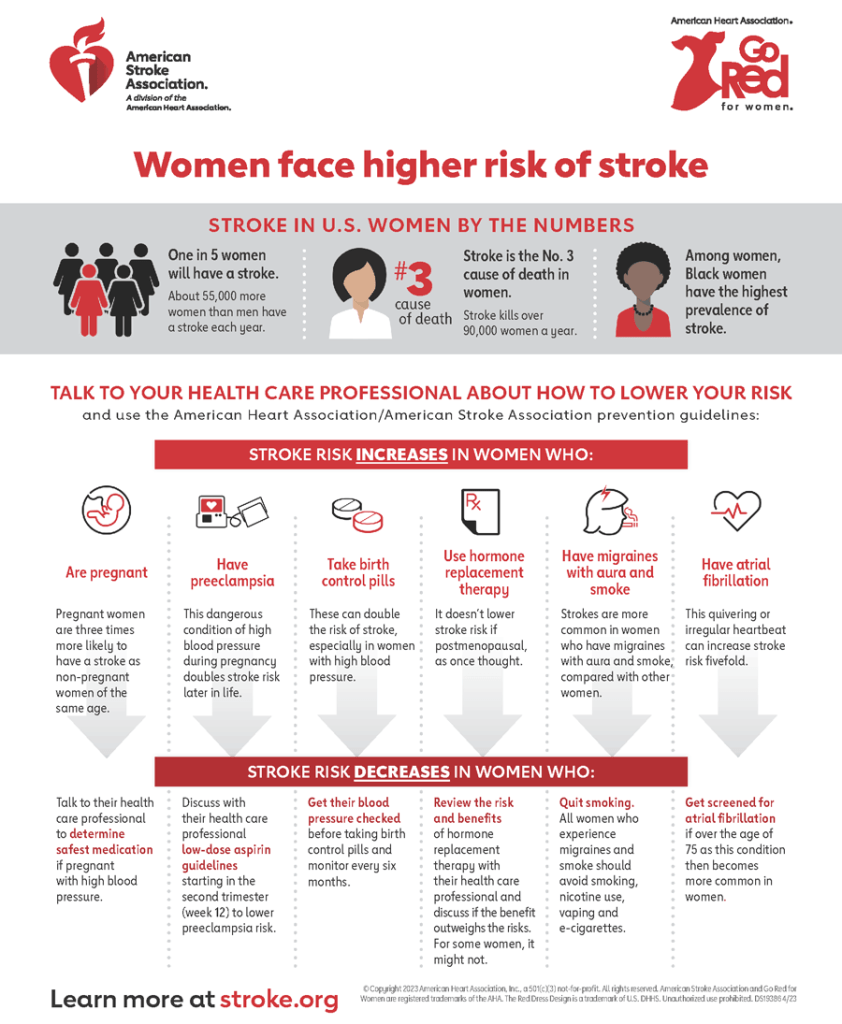
Stroke in U.S. Women by the Numbers

One in 5 women will have a stroke. About 55,000 more women than men have a stroke each year.

Stroke is the No. 3 cause of death in women. Stroke kills over 90,000 women a year.

Among women, Black Women have the highest prevalence of stroke.

Talk to your health care provider about how to lower your risk and use the American Heart Association/American Stroke Association prevention guidelines:

Stroke risk increases in women who:

  • Are pregnant. Pregnant women are three times more likely to have a stroke as women of the same age.
  • Have preeclampsia. This dangerous condition of high blood pressure during pregnancy doubles stroke risk later in life.
  • Take birth control pills. These can double the risk of stroke, especially in women with high blood pressure.
  • Use hormone replacement therapy. It doesn’t lower it, like once thought.
  • Have migraines with aura and smoke. Strokes are more common in women who have migraines with aura and smoke, compared with other women.
  • Have atrial fibrillation. This quivering or irregular heartbeat can increase stroke risk fivefold. After age 75, it’s more common in women than men.

Stroke risk decreases in women who:

  • Talk to their health care provider to determine safest medication if pregnant with high blood pressure.
  • Discuss with their health care provider low-dose aspirin guidelines starting in the second trimester (week 12) to lower preeclampsia risk.
  • Get their blood pressure checked before taking birth control pills and monitor every six months.
  • Don’t use hormone replacement therapy to prevent stroke if postmenopausal.
  • Quit smoking if they have migraines with aura.
  • Get screened for atrial fibrillation if over age 75.
READ MORE

Reviews: Menopausal Hormone Therapy Risks

Cleveland Clinic – The American College of Cardiology’s Cardiovascular Disease in Women Committee released guidance on hormone therapy, with a focus on caring for women with a risk of heart disease. Leslie Cho, MD, explains what women should know about hormone therapy, and options available for women with heart disease risk factors.

Women’s Health: Risks & Treatment Of Menopause

As levels of estrogen, a crucial chemical messenger, trend downward, women are at higher risk for severe depressive symptoms. Bone loss accelerates. In women who have a genetic risk for Alzheimer’s disease, the first plaques are thought to form in the brain during this period. 

February 4, 2023

About 85 percent of women experience menopausal symptoms. Rebecca Thurston, a professor of psychiatry at the University of Pittsburgh who studies menopause, believes that, in general, menopausal women have been underserved — an oversight that she considers one of the great blind spots of medicine. “It suggests that we have a high cultural tolerance for women’s suffering,” Thurston says. “It’s not regarded as important.”

Even hormone therapy, the single best option that is available to women, has a history that reflects the medical culture’s challenges in keeping up with science; it also represents a lost opportunity to improve women’s lives.

Read more

COMMENTS:

The New York Times, Sunday magazine, posted an article by Susan Dominus entitled “the vicious cycle”, in which was a long discussion of the disease burden of menopause. It is well worth reading.

“Forever Feminine” was a book by Robert Wilson, in 1966, which promoted hormone treatment for “enjoyment of sex” in menopausal women. The use of estrogen skyrocketed.

Alarming research in 1975, which linked estrogen usage to endometrial cancer, halted the rise of the drug’s popularity.

Without hormonal treatment, the many symptoms of  menopause were devalued and quietly suffered by women.

The medical profession has been slowly recovering from whiplash. New, better controlled research is being done and slowly a more nuanced approach is being taken. Women with a history of heart attack or stroke are still generally advised against hormonal therapy, but many others are being given birth control pills, which is a combination of estrogen and progesterone.

The average age of menopause is approximately 50 years of age, but symptoms can anticipate menopause by several years. An elevated FSH is the usual laboratory test to indicate perimenopause.

Early menopause can be associated with a decreased lifespan, increased likelihood of osteoporosis, cardiovascular disease and dementia, and is often treated with hormonal therapy. A delayed menopause is less likely to be treated with hormonal therapy, because of increased risk.

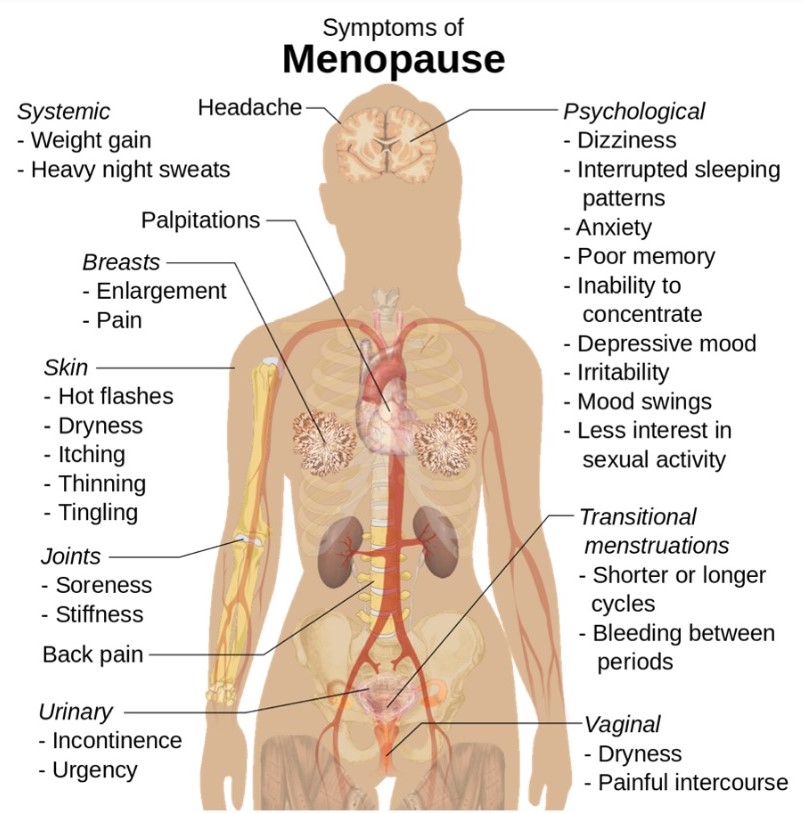
There are a lot of risk factors to be balanced against the symptoms involved, such as hot flashes and the entire panoplay of symptoms indicated in the infographic.

Some day, artificial intelligence will be used in order to make more explicit the benefits and risks involved. Until that time, the patient suffering from premenopausal or menopausal symptoms should find a Doctor Who would actually listen to her, a difficult task these days.

—Dr. C.

Women’s Health: How To Ease & Manage Menopause

National Institute on Aging – Menopause is a point in time 12 months after a woman’s last period. The years leading up to that point, when women may have changes in their monthly cycles, hot flashes, or other symptoms, are called the menopausal transition or perimenopause.

The menopausal transition most often begins between ages 45 and 55. It usually lasts about seven years but can be as long as 14 years. The duration can depend on lifestyle factors such as smoking, age it begins, and race and ethnicity. During perimenopause, the body’s production of estrogen and progesterone, two hormones made by the ovaries, varies greatly.

The menopausal transition affects each woman uniquely and in various ways. The body begins to use energy differently, fat cells change, and women may gain weight more easily. You may experience changes in your bone or heart health, your body shape and composition, or your physical function

READ MORE

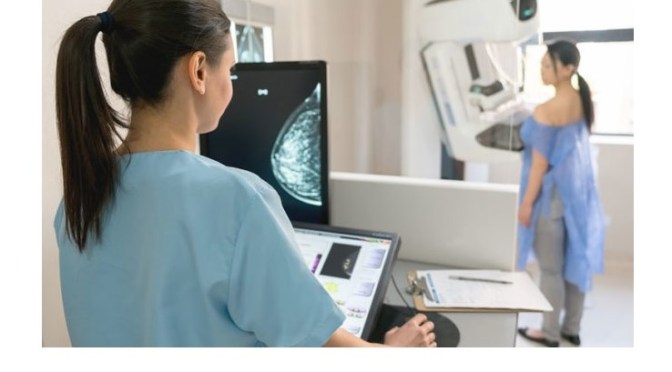
Women’s Health: Finding A Lump In Your Breast (JHM)

Johns Hopkins Medicine: What To Do When You Find a Lump in Your Breast? Breast imaging radiologist, Emily Ambinder discusses common questions one may have when discovering a lump in the breast.

Video timeline: 0:03 Why do lumps form in the breast? 026 What are the different types of lumps? 0:55 Can breast lumps form because of physical impact? Could those lumps become cancerous? 1:23 What do i do if i have found a lump? 1:47 What makes breast imaging at Johns Hopkins different? 2:01 What is a mammogram? 2:29 What is a breast ultrasound? 2:53 What else do I need to do if I have a lump?

Read more

Women’s Health: Benefits Of An Endometriosis Diet

If you have endometriosis, you’re all too familiar with the heavy periods, pain and nausea it can cause. Eating these foods might help control the pain and make all the difference.

Chapters: 0:00 Introduction 0:10 What is endometriosis? 0:45 Eating the right foods can help the body fight inflammation 1:01 Fiber rich foods 1:41 Omega-3 fats 2:10 Monounsaturated fats 2:30 Magnesium and zinc 3:25

It’s always important to eat good, healthy food Resources: The Best and Worst Foods for an Anti-Inflammatory Endometriosis Diet – https://cle.clinic/3VeYzyG

Endometriosis: Symptoms, Causes, Treatment & Tests – https://cle.clinic/31ntZLx

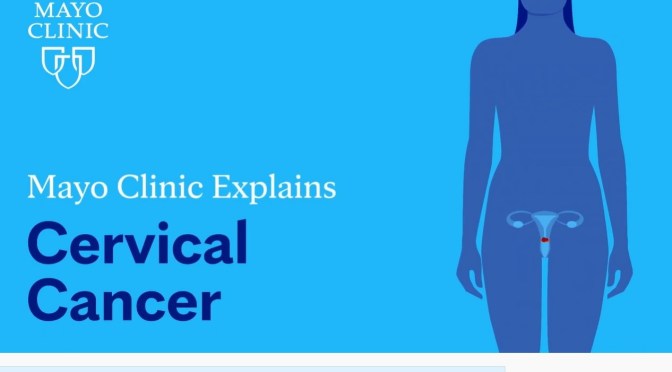
Cervical Cancer: Its Risks, Symptoms & Treatment

Learning about cervical cancer can be intimidating. Kristina Butler, M.D., a gynecologic oncologist at Mayo Clinic, walks you through the facts, the questions, and the answers to help you better understand this condition.

Video timeline: 0:00 Introduction 0:38 What is cervical cancer? 1:16 Who gets cervical cancer? / Risk factors 2:23 Symptoms of cervical cancer 3:03 How is cervical cancer diagnosed? 4:26 Treatment options 5:20 Coping methods/ What now? 6:10 Ending

Read more