Tag Archives: Wearable Devices

DIGITAL HEALTH: THE FUTURE OF WEARABLE DEVICES

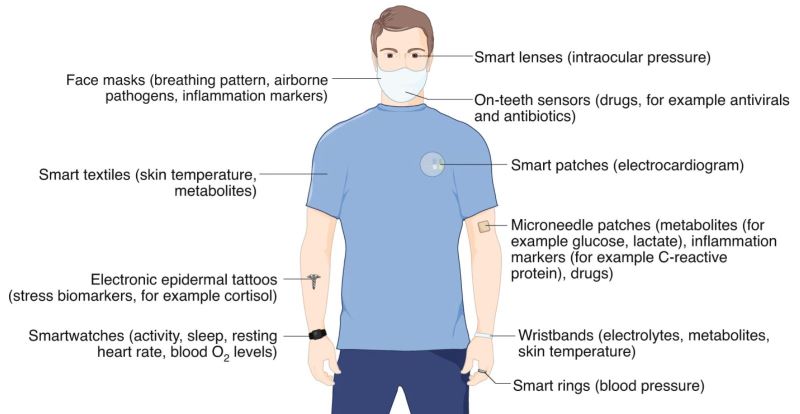
Currently, smartwatches provide information such as heart rate, sleep time and activity patterns. In the future, this could be augmented with new classes of wearable devices that monitor, for example, concentrations of cortisol for tracking stress (using electronic epidermal tattoos), biomarkers of inflammation and levels of blood O2 (microneedle patches), skin temperature (electronic textiles), blood pressure (smart rings), concentration of ions (wristbands), intraocular pressure (smart contact lenses), the presence of airborne pathogens and breathing anomalies (face masks), and the concentration of therapeutic drugs (on-teeth sensors)2,10,12,13,14,15,16. Such emerging low-cost wearable sensing technologies, monitoring both physical parameters and biochemical markers, could be used to identify symptomatic and pre-symptomatic cases in future pandemics. The devices could also be used to remotely monitor the recovery of individuals undergoing treatment or self-isolating at home.


Read more

Telecardiology: Wearable Devices Monitoring Heart Patients Using AI (Harvard)

In the future, remote monitoring of health data using wireless–enabled devices that measure a person’s weight, blood pressure, blood sugar, pulse, and heart rhythm could further advance telehealth’s promise.

“I imagine a world where we are continuously monitoring key health factors and using artificial intelligence to monitor those signals,” says Dr. Schwamm. 

From a patient’s perspective, virtual visits save a lot of time. You don’t need to take time off work or other commitments to drive, park, and sit in a waiting room before your visit. And even though you’re not in the same room, you may actually get more direct eye contact with your physician, thanks to the face-to-face nature of video calling.

Another advantage: you may be able to have another person — such as a family member who lives across town or across the country — join the video call. That could be especially helpful if you’re facing an upcoming procedure or discussing a serious health concern. Just as with in-person visits, it’s nice to have another person listening, asking questions, and taking notes.

Read more