Tag Archives: Trauma

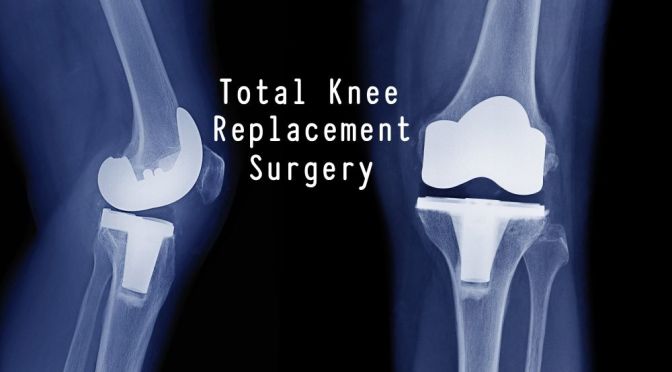
DR. C’S JOURNAL: PAIN FOLLOWING TOTAL KNEE REPLACEMENT SURGERY


Total knee replacement(arthroplasty) is one of the most successful orthopedic operations. Satisfaction rate varies between 75 and 90%. Even so, almost 10% of operated individuals will have anterior knee pain, the most common complication, 1 year after TKR.

I had an even greater appreciation of the knee after reading the following article, which explain the causes of knee pain more adequately than I can, and would be good to read.
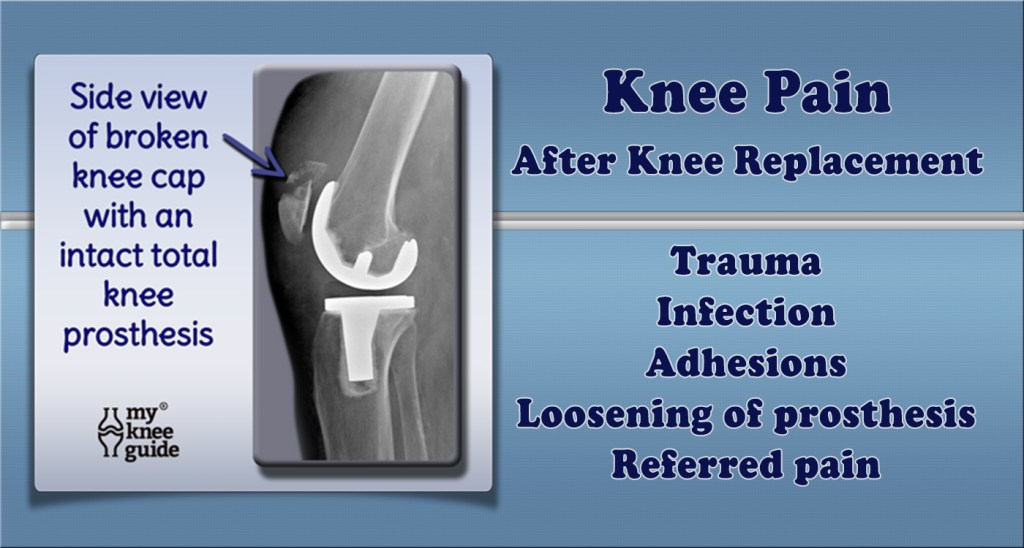
With knee replacement surgery, a great deal depends on the technical expertise and precision of the operating surgeon. A rotational error more than a degree or two can be critical, so important is proper tracking of the kneecap in the trochlea, or groove in the leg bone(femur). An imbalance in the pull  of muscles, or a knock knee, (Valgus) angulation of the knee, hip rotation, spinal problems, all can be important in generating pain as you get older.

There are psychological factors too. The knee pain after TKR average is only 1/3 of that suffered before the operation, on average. However if you expect that discomfort will disappear completely, or if your pain threshold is low, or if you have anxiety or depression, you may have more postoperative pain, and  be disappointed with the surgery.

My immediate reason to write this article was the anterior knee pain developing in a friend of mine, 15 years after surgery, at the age of 89. She had polio in childhood, and her right leg was severely affected. This caused her to overuse her left leg, resulting in a TKR 15 years ago. Just recently, she started developing anterior knee pain in the left knee. A thallium scan showed a lot of signal on the inside of the kneecap, most likely indicative of inflammation. She is not enthused about having another operation because of her age., and wondered about other things she might do.

An orthopedic friend of mine suggested that injections of a viscous lubricant might help, if the initial operation did not include resurfacing of the kneecap (patella). I would imagine that eventually the resurfacing of the patella with advanced materials, or perhaps stem cells might help.
I also thought of a special brace with a motor assist for her right leg, but the orthopedist said that this did not work very well in polio patients, who have a weak nerve signal.

Although my friends polio made her TKR almost inevitable, there are things that you can do, or avoid doing, that could help avoid TKR. Activities to reduce include squatting, deep lunging, running (particularly in deep sand), high impact sports, repetitive jumping, and running up stairs. Basketball, football, and volleyball come to mind as regular sports that are risky. Maintaining a healthy weight, controlling blood sugar, stoppage of smoking, avoidance of injury, and regular exercise, particularly walking and swimming ,are things that might help.

Remember that your knees are your wheels and are jewels to protect as you get older.
–Dr. C

Progressive Disorders: ‘Parkinson’s Disease’

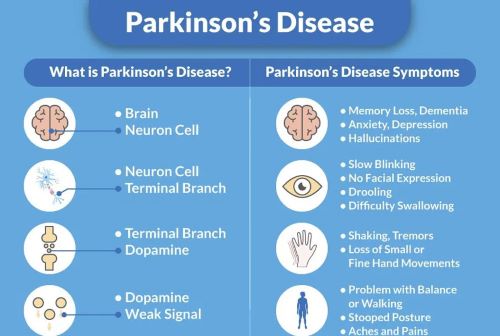
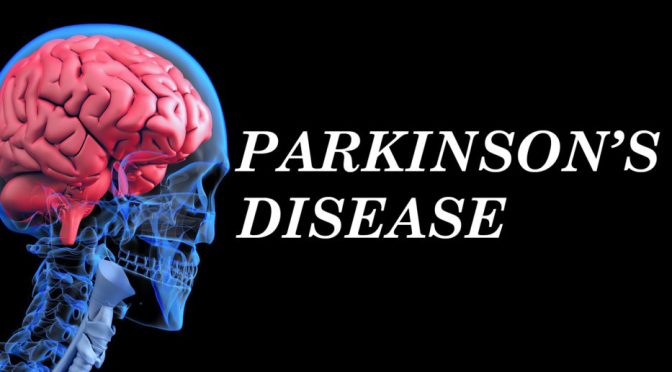
Parkinson’s Disease is a MOVEMENT DISORDER. It is grouped with a number of OTHER NEURODEGENERATIVE illnesses which can show similar symptoms. When Parkinson-like problems are present in other syndromes, it is called PARKINSONISM, to distinguish it from primary Parkinson’s disease.

There is no 100% reliable sign, symptom or diagnostic test; Rather, the gold standard of diagnosis rests on the ability of experienced neurologists to discern a PATTERN of findings which together support the likelihood of Parkinson’s disease. The accuracy is about 80-90%. The 3 characteristic symptoms of PD are BRADYKINESIA, TREMOR, and RIGIDITY. Bradykinesia means SLOW MOVEMENT.

The typical Tremor is a tapping, “pill-rolling” motion that is present at rest, and DISAPPEARS ON MOTION. The Rigidity is pervasive, and patients describe it as trying to move in thick molasses. A “lead-pipe resistance”, stiffness and PAIN in the shoulder may be a first system, and not uncommonly the patient will often go to an Orthopedist or Rheumatologist. Depression, constipation, anosmia and SLEEP Disorders are common in the years leading up to the diagnosis of Parkinson’s Disease, and DEMENTIA frequently develops.

Genetics play a role, and PD can run in Families. Environmental causes such as Trauma and anoxia can injure nerve cells, as can Toxins. MPTP contamination of a drug supply once caused a surge of Parkinsonism. Degeneration of DOPAMINERGIC nerve cells in the Substantia Nigra is the ultimate cause of PD, and accumulation of ALPHA SYNUCLEIN fibrils is a correlate of that degeneration.

Practical treatment at present aims to boost Dopamine. Administration of Levodopa, a DA precursor, if effective, a response helps to confirm the diagnosis. Magnetic and electrical stimulation of the brain have been used. Experimental injections of Dopaminergic cells into the brain is under investigation. Causing Astrocytes to differentiate into dopaminergic cells has been successful in animals.

With Celebrities such as Michael Fox and Robin Williams raising awareness, and the Mechanism understood, I am optimistic that a real cure may be found in a few years.

–Dr. C.

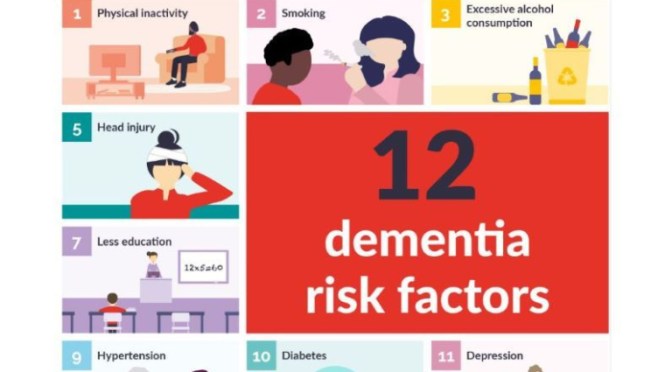
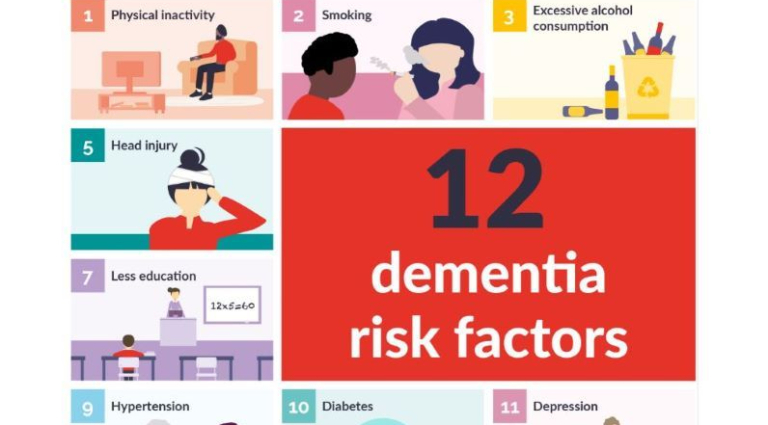
INFOGRAPHIC: ’12 DEMENTIA RISK FACTORS’ (THE LANCET)

Executive summary

The number of older people, including those living with dementia, is rising, as younger age mortality declines. However, the age-specific incidence of dementia has fallen in many countries, probably because of improvements in education, nutrition, health care, and lifestyle changes.

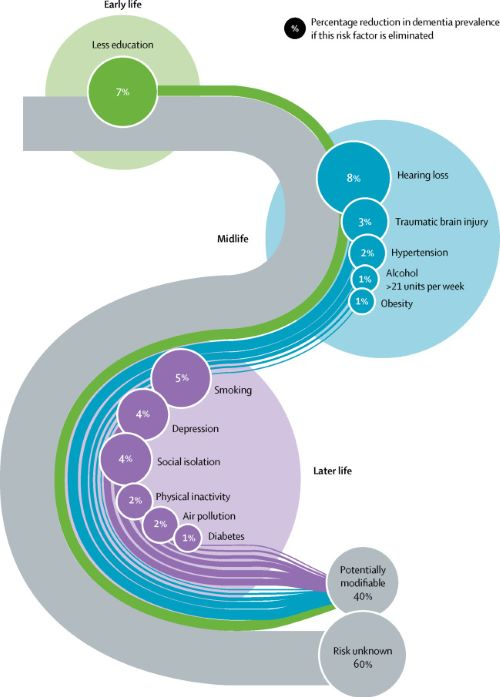
Overall, a growing body of evidence supports the nine potentially modifiable risk factors for dementia modelled by the 2017 Lancet Commission on dementia prevention, intervention, and care: less education, hypertension, hearing impairment, smoking, obesity, depression, physical inactivity, diabetes, and low social contact.

We now add three more risk factors for dementia with newer, convincing evidence. These factors are excessive alcohol consumption, traumatic brain injury, and air pollution. We have completed new reviews and meta-analyses and incorporated these into an updated 12 risk factor life-course model of dementia prevention. Together the 12 modifiable risk factors account for around 40% of worldwide dementias, which consequently could theoretically be prevented or delayed.

The potential for prevention is high and might be higher in low-income and middle-income countries (LMIC) where more dementias occur. Our new life-course model and evidence synthesis has paramount worldwide policy implications. It is never too early and never too late in the life course for dementia prevention. Early-life (younger than 45 years) risks, such as less education, affect cognitive reserve; midlife (45–65 years), and later-life (older than 65 years) risk factors influence reserve and triggering of neuropathological developments.

Culture, poverty, and inequality are key drivers of the need for change. Individuals who are most deprived need these changes the most and will derive the highest benefit.

Read full Dementia Study and Report

COMMENTARY:

Lancet’s 2017 Metanalysis mentions 9 Dementia risk factors. The 2020 Paper adds 3 additional factors. TRAUMATIC BRAIN INJURY, ALCOHOLISM, and AIR POLLUTION.

The inclusion of Trauma, with a 3% weighting, may be due to the increased awareness of TBE stemming from football injuries. The preventable 12 Factors are still in the minority. 60% of the factors are not preventable, since they are Genetically determined.

LESS EDUCATION, HEARING LOSS and SOCIAL ISOLATION, 3 of the original 9 factors,all lead to less brain stimulation, and can be unified under the idea of COGNITIVE RESERVE. If a person starts with less Cognition, it is reasonable to think he would be Demented sooner.

Together, less education, hearing loss, and social isolation account for almost Half of the correctable conditions. SMOKING is one of those things which impact almost every human disorder. It is amazing that cigarettes are still manufactured. In fact, their use is actually Increasing,especially the Far East, where they probably account for much of the escalating problem with Dementia in that region.

Our favorite causes, Sleep, Diet, and Exercise, apparently play only a minor role in Dementia. Sleep is completely dismissed in this report. The fact that both Sleeping less than the Ideal 7-8 hours, and more than that amount is thought to correlate with health problems is probably the main reason for the omission.

My own opinion is that people who are in poor health may need more sleep, and therefore sleep longer. My own sleep is interrupted 3-5 times per night, so it is not surprising that I need an hour extra to feel rested. Any less than 9-10 hours, and I need a nap, which in my opinion is a sign of insufficient nighttime sleep. Poor sleep may be a factor in metabolic syndrome, often leading to DIABETES, OBESITY, and HYPERTENSION, which are factors in Dementia, mentioned in the article as bit players.

PHYSICAL INACTIVITY is mentioned as a minor factor in Dementia, but exercise, studied as a treatment of dementia, was found to improve only strength. Diet is not mentioned, but does contribute to OBESITY, which is a minor factor. Dementia is a great emotional and economic burden, afflicting many otherwise happy families with misfortune.

The Lancet metanalysis is admirable. But don’t forget the healthy lifestyle emphasizing Sleep Diet and Exercise; and exercise includes cognitive exercise. Anything we can do to avoid dementia is worthwhile. –

–Dr.C.