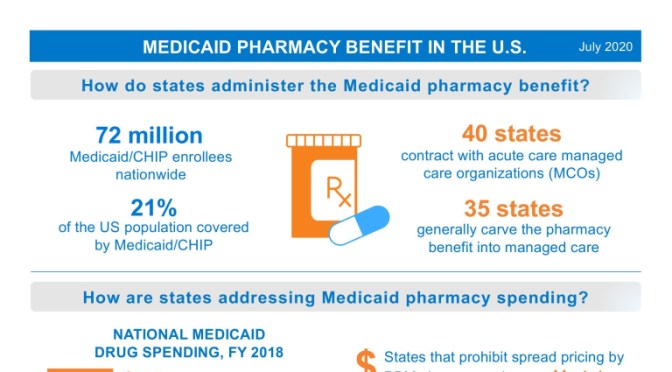
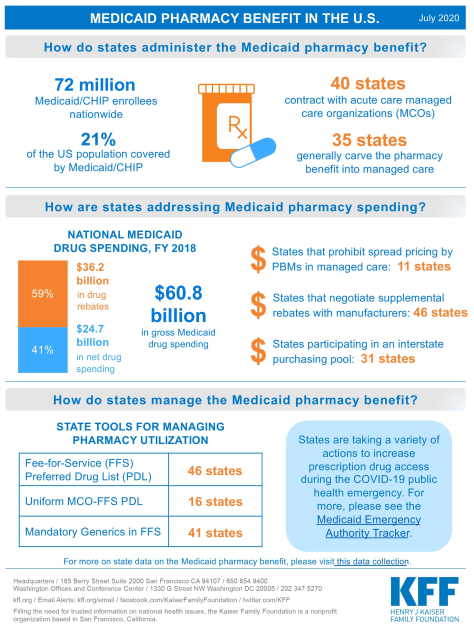
INFOGRAPHIC: “MEDICAID PHARMACY BENEFITS IN U.S.”

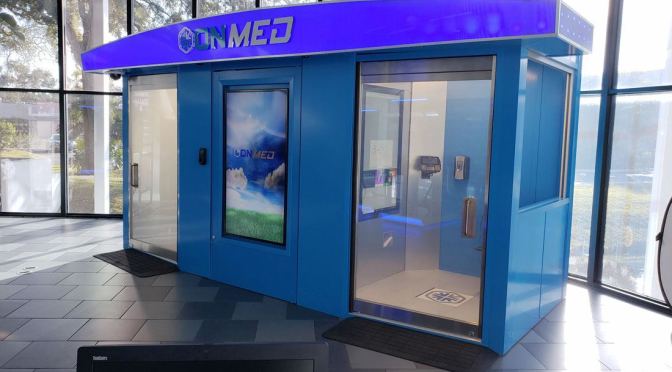
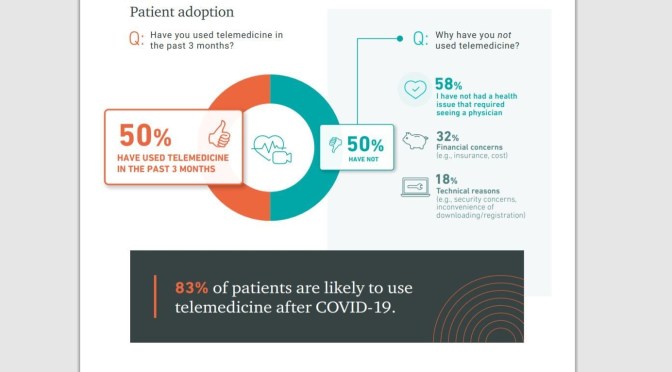
The OnMed® station is the only self-contained medical unit in the world currently using patented technologies to directly connect patients with doctors, nurse practitioners, and pharmacists for both consultative needs and on-site prescriptions.
The OnMed station utilizes advanced technology, including thermal imaging and facial recognition, to provide patients with a safe, private, and secure consultation with a licensed clinician. An ultra-high definition camera ensures the patient and clinician experience a real-time eye to eye connection. These same high-definition cameras also make it possible for the clinician to look down a patient’s throat or even examine a tiny skin lesion in detail.
If necessary, not only can the clinician provide a script, but the station itself can safely dispense hundreds of common prescription medications with the approval of a clinician or pharmacist through a secure, robotically automated vault.

Several ideas apply to ALL MEDICINES. Terminology should be clarified. Medicine, Pharmaceutical, and Drug, in my mind are equivalent.
The term “drug” is pejorative, and I try to use it so. The term “Pharmaceutical” is too long, leaving me with “medication”.
There are some Practical points. You should look at your prescription when you first get it, to make sure it is the right one. Yes, pharmacists rarely make some mistakes. They are human.
You should ask the Pharmacist if she knows WHERE the drug was manufactured. Foreign countries, especially China and India, are less reliable, and the USA is safer. The original Brand Name drugs are more often domestically produced, but even these are being “offshored”.
Next, check the prescription date and expiration date.You should get a ” SHELF LIFE” (the difference between the two) of about 2 years, otherwise, you might ask the pharmacist the next time to give you the “best dating” in his stock.
Store your medications in a cool, dark, dry place in order to prolong their life. Light, heat and moisture degrade most compounds. Remember the O.J. Simpson case? Part of the reason he was acquitted is that a critical DNA sample was stored in a plastic bag, which retained moisture, rather than a paper bag, which is recommended because paper is porous, and allows moisture to escape.
You should follow the suggested TIME to take the medication, because there is almost always an optimal time to take a given medication.
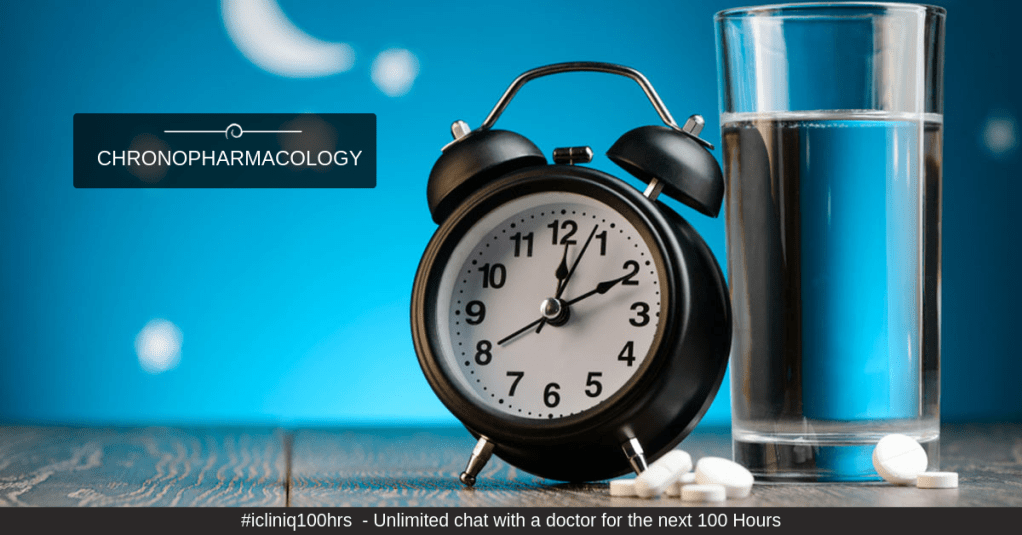
CHRONOPHARMACOLOGY is an emerging field, which is finding that more than 50% of medications are TIME SENSITIVE in their effect in the body. This is an unimportant, academic consideration for most Patients, given the high THERAPEUTIC WINDOW (dosage latitude) of most medications, the mild illness of most patients, and the disinclination of most Doctors to add one more detail onto their already heavy load.
In discussing the medicines in my cabinet and a few other important ones, I will be addressing TIMING.
What about OUTDATED MEDICATIONS? As discussed by the following article from Harvard, the dating is not critical except for liquids, and a few others, like Tetracycline.
This is fortunate, given the expense of medications today. What if I drop a pill on the floor, at home. I usually pick it up and take it. if i just dropped it, unless it is very inexpensive.
What if a pill sticks in your throat, like happens to me a lot? I drink water first, to moisten my throat to make it slipperier.
Next, I take a good sip of water, try to swish it back and go back with my head to accelerate the pill backward, and think confidence. Certain sizes of pills are my nemesis and i have to break them in two.
Please follow Dr. Cs Medicine Cabinet in future postings of DWWR.
12:12 Are we rushing science?
Coronavirus papers are being published extremely quickly, while normally healthy scientific debate is being blown up in the world’s press. Is there a balancing act between timely research and accurate messaging?
18:49 One good thing
Our hosts pick out things that have made them smile in the last week, including hedgerow brews and a trip into the past using AI.
Recipe: Elderflower ‘Champagne’
Video: Denis Shiryaev restores historic footage with AI
22:30 The latest coronavirus research papers
Noah Baker takes a look through some of the key coronavirus papers of the last few weeks.
News: Coronavirus research updates
medRxiv: Full genome viral sequences inform patterns of SARS-CoV-2 spread into and within Israel
Harvard Library: Reductions in commuting mobility predict geographic differences in SARS-CoV-2 prevalence in New York City
Science: DNA vaccine protection against SARS-CoV-2 in rhesus macaques

In this episode:
01:10 Can contact-tracing apps help?
Governments around the world are banking on smartphone apps to help end the spread of the coronavirus. But how effective might these apps might be? What are the risks? And how should they fit into wider public health strategies?
Editorial: Show evidence that apps for COVID-19 contact-tracing are secure and effective
13:30 Antiviral remdesivir shows promise
Early results from a US trial of the antiviral drug remdesivir suggest it shortens recovery time for patients with COVID-19. We unpick the findings.
News: Hopes rise for coronavirus drug remdesivir
16:52 One good thing
Our hosts pick out things that have made them smile in the last week, including blooming trust in scientists, cooking experiments, and a neighbourhood coming together to clap for healthcare workers.
21:34 Unexpected opportunities
We hear from three researchers making the most of lockdown, studying tiny earthquakes, building balcony-based citizen science projects, or enlisting gamers to fight the coronavirus.



 Doctors Without Waiting Rooms