
Tag Archives: Obesity

THE DOCTORS 101 CHRONIC SYMPTOMS & CONDITIONS #5: SCIATICA & BACK PAIN

Chronic back pain and sciatica are very common, and increasing in prevalence. The human back does not seem to have been designed for obesity coupled with sedentary habits. I have had both back pain and sciatica . My wife had surgery in an attempt to control her back pain, my son successfully controlled his back pain with medical treatment, and an 87 year old friend recently had successful micro-neurosurgical treatment.
I will summarize these stories and will finish with some generalizations I believe will help those wanting to avoid a lot of misery. The sooner you start the better.

My back pain developed after an ill-advised use of a shovel to get rid of some grass intruding on my asphalt driveway, and caused me to miss work for the only day in 35 years of practice. Sciatica then developed on my left side. I could not sleep flat, and would sit all night in a comfortable chair. A hospital bed helped me outlast the impressive calf pain.

My wife developed severe back pain eventually leading to a “laminectomy and fusion”. Some level of back pain and incapacity plagued her the rest of her life.

My son developed severe sciatica and went to an Orthopedist. After a CAT scan revealed a rupture disc, he was penciled in for surgery. When asking about alternative treatments, the doctor told him, half laughingly, to lose 20% of his body weight and to start swimming. He went on a 30 day, 1000 calorie/day diet and lost 30 lbs. He has been swimming daily for the past 10 years. He has had no more back pain.
My 87 year old friend developed sciatica on his right side, had no luck with PT and pain meds including opioids. Microsurgery by a neurosurgeon successfully removed his ruptured disc, and he has had little or no pain after the first week.

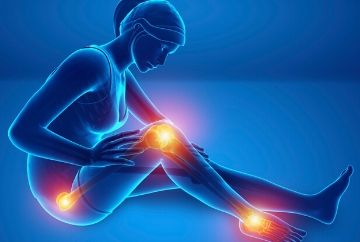
Sciatica at least has a well defined cause: something is irritating that long nerve which starts in the small of the back and travels to its’ destination in the foot. That something is often an extrusion from an intervertebral disc, a cushion between the block-like vertebral bodies.

This herniation can be confirmed by a CAT scan or MRI, and removed by minimally invasive microsurgery. Beyond that model problem, down through spinal stenosis and ending in chronic back pain, the understanding gets progressively more fuzzy, treatment ever more contrived.

Prevention sounds better and better. The most important thing in preventing back pain is to MAINTAIN A NORMAL WEIGHT. Our backs were not designed for vertically compressive forces. The lock-step increasing incidences of obesity and back/sciatic problems support this idea.

REGULAR EXERCISE is very important. Swimming and walking are 2 of the best forms of exercise. Exercises like running on hard surfaces, jumping in volleyball, and weight lifting seem less optimal.

The ABDOMINAL MUSCLES stabilize the spine, and prevent excessive motion. Walking and swimming both exercise and strengthen the abdominals.
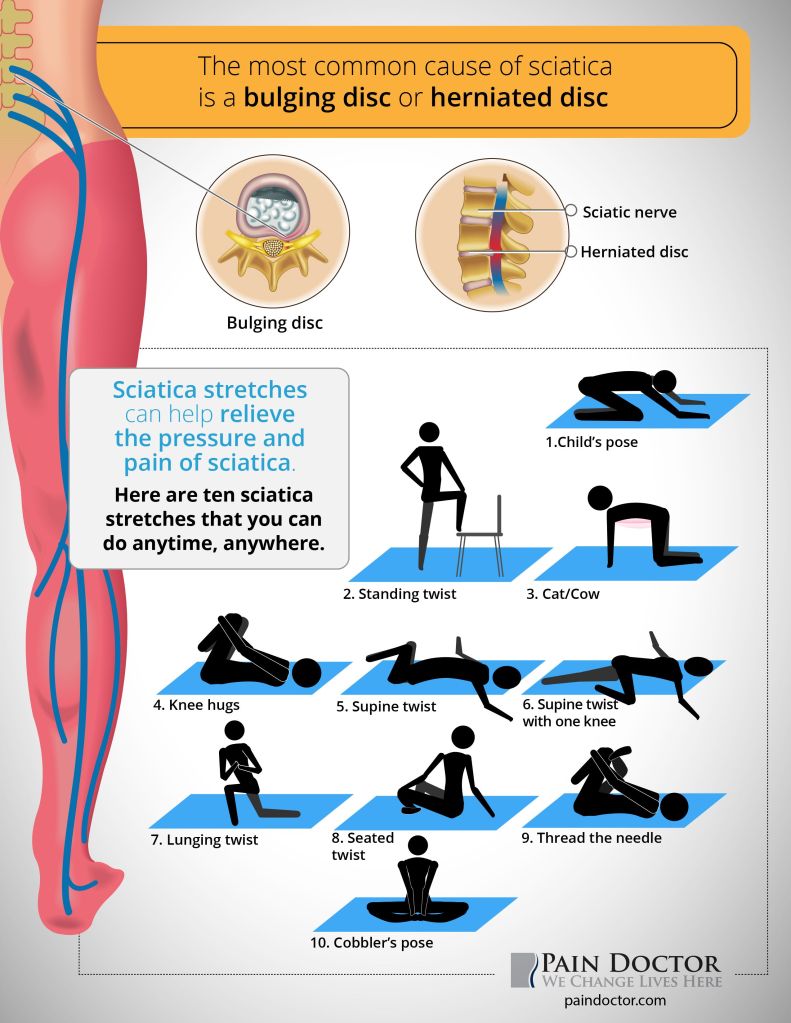
Maintaining FLEXIBILITY and RANGE OF MOTION are important. flexibility will help prevent those unplanned, sudden motions from throwing your back out of alignment, or maybe generating a painful muscle tear.

Finally, getting into the habit of BENDING YOUR LEGS and tensing the stabilizing abdominals when you pick up something on the floor is a help.

I question the wisdom of back surgery for back pain alone, especially if accompanied by spinal fusion. Even when there is sciatica, the statistics show that treatment with surgery is no better than medical therapy after 2 years.

The development of microsurgical techniques may give surgery an edge, however. At the risk of cliche, AN OUNCE OF PREVENTION IS WORTH A POUND OF CURE.

–Dr. C

DIET STUDIES: HIGH-SUGAR DIETS SUPPRESS DOPAMINE, LEADING TO OVEREATING

From Phys.org/Univ. of Michigan (June 9, 2020):

High-Sugar Diet Dampens Release of Dopamine Causing Overeating - Univ of Michigan - Credit Christina May and Monica Dus

“On a high-sugar diet, we find that the fruit flies’ dopaminergic neurons are less active, because the high sugar intake decreases the intensity of the sweetness signal that comes from the mouth,” Dus said. “Animals use this feedback from dopamine to make predictions about how rewarding or filling a food will be. In the high-sugar diet flies, this process is broken—they get less dopamine neuron activation and so end up eating more than they need, which over time makes them gain weight.”

It is well known that consuming food and drink high in sugar is not great for us, but scientists are continuing to unravel the intricacies of how the sweet stuff drives negative health outcomes. The latest finding comes from researchers at the University of Michigan, who through studies in fruit flies have found that excess amounts of sugar can shut down crucial neural circuits linked to regulating satiety, possibly leading to overeating in humans.

Read entire article

COMMENTARY

SUGAR IS A POISON.

A novel illustration of sugars’ lethality was the Georgia sugar refinery explosion in 2008, which killed 14 people. Finely ground sugar is flammable.

Sugar appeared early in civilization, but it was expensive, sparing all but the wealthy of its’ depredations, mainly tooth decay.  Only with the post WWII expansion of wealth was it consumed excessively to produce the diseases of overeating. The developed world now consumes over 70 pounds of sugar per person, amounting to over 250 CALORIES PER DAY!

This  article shows how SUGAR acts like a DRUG In its INTERFERENCE with the DOPAMINERGIC Reward system. The neurons send less signal, so you need MORE SUGAR to satisfy.

The metabolic systems through which overeating and sugar causes the OBESITY, DIABETES, VASCULAR DISEASE and Early DEMENTIA are convoluted.The best detailed explication is in the NEJM article in intermittent fasting, a healthful practice that is the polar opposite of overeating.

Two very important metabolic mechanisms are discussed, the mTOR system and the Sirtuin system. These systems are important for NUTRIENT SENSING and repair, and conserved in all animals. They worked just fine in our early ancestors.

It seems that primitive man was not blessed (or is it cursed) with easy overabundance or food, and actually spent hours or days in Hunger. When times were good, his body put on muscle, and stored fat against the hard times to come. This is called ANABOLISM. When times were bad, his body went into repair mode, and used the fat for energy. This is called CATABOLISM.

Anabolism has evolved expressly for Young Animals, where extra food is welcome for Growth. After the growing and Reproductive years, our Bodies’ evolutionary “warrant” expires, since the genes it carries have already been spread. Our older bodies are left to deal with machinery more suited to an earlier vibrancy. Our metabolism didn’t evolve to deal with the calories we shove into our aging Bodies. Many mechanisms beneficial in the young prove harmful later on. This divergence has been called “ antagonistic pleiotropy”.

Whatever the explanation, the observation remains: if adults eat more than they can use, they gain weight. With insufficient exercise, this weight is fat. With excessive fat, the joints, blood vessels, liver, heart and brain suffer,  and lifespan is shortened.

RETHINK YOUR LIFESTYLE AS SOON AS POSSIBLE. AVOIDING SUGAR, and ALL THINGS CONTAINING SUGAR is as good a place as any to start. You will be rewarded by being able to fully taste and enjoy the natural sweetness of many REAL FOODS, and afforded a longer life to partake in this pleasure.

—Dr. C.

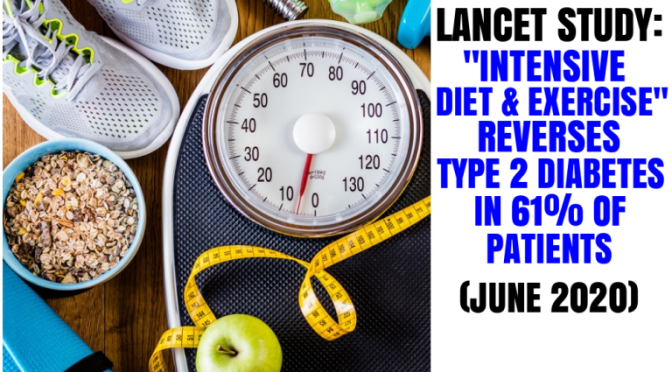
STUDY: “INTENSIVE DIET AND EXERCISE” REVERSES TYPE 2 DIABETES IN 61% OF PATIENTS

From The Lancet Diabetes & Endocrinology (June 2020):

Our findings show that the intensive lifestyle intervention led to significant weight loss at 12 months, and was associated with diabetes remission in over 60% of participants and normoglycaemia in over 30% of participants. The provision of this lifestyle intervention could allow a large proportion of young individuals with early diabetes to achieve improvements in key cardiometabolic outcomes, with potential long-term benefits for health and wellbeing.

The Lancet Diabetes & Endocrinology

Type 2 diabetes is affecting people at an increasingly younger age, particularly in the Middle East and in north Africa. We aimed to assess whether an intensive lifestyle intervention would lead to significant weight loss and improved glycaemia in young individuals with early diabetes..Between July 16, 2017, and Sept 30, 2018, we enrolled and randomly assigned 158 participants (n=79 in each group) to the study. 147 participants (70 in the intervention group and 77 in the control group) were included in the final intention-to-treat analysis population. Between baseline and 12 months, the mean bodyweight of participants in the intervention group reduced by 11·98 kg (95% CI 9·72 to 14·23) compared with 3·98 kg (2·78 to 5·18) in the control group (adjusted mean difference −6·08 kg [95% CI −8·37 to −3·79], p<0·0001). In the intervention group, 21% of participants achieved more than 15% weight loss between baseline and 12 months compared with 1% of participants in the control group (p<0·0001). Diabetes remission occurred in 61% of participants in the intervention group compared with 12% of those in the control group (odds ratio [OR] 12·03 [95% CI 5·17 to 28·03], p<0·0001). 33% of participants in the intervention group had normoglycaemia compared with 4% of participants in the control group (OR 12·07 [3·43 to 42·45], p<0·0001)

Read full study

DR. C’S MEDICINE CABINET: “WHY PATIENTS TAKE ELIQUIS”

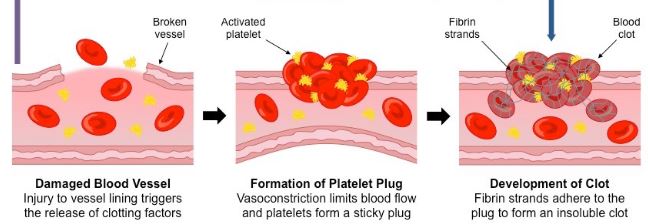
Eliquis nicely illustrates my contention in the Overview of Metabolism, that the body is a vast collection of pathways, or “supply chains”. Eliquis blocks a critical enzyme in the pathway leading to coagulation, or clotting” as the product.

Why in the world you want to block clotting? The staunching of blood flow, clotting, has saved countless hordes of early, Paleolithic humans, and continued useful through the bloody Roman and Medieval times, right through the violent 20th Century.

Recently, however, wars are becoming somewhat less popular, and eating excessively more popular, leading to a strange situation. Our evolutionarily-preserved CLOTTING mechanism is now leading to MORE problems than it is solving.

Obesity and type 2 Diabetes are leading to the production of so much fat, that it has to be stored in our arterial walls, clogging the blood flow to our Hearts and Brain, among other areas. This, and the somewhat surprising trend towards longer lives has led to an increase in a variety of age-related illnesses.

When I reached 80 years of age I developed Atrial Fibrillation, a condition leading to a tendency to form clots in my quivering atria, the upper chambers of my heart. To decrease the likelihood of clots getting into my blood stream, lodging in my brain and causing STROKE, my cardiologist started me on Eliquis, an anti-coagulant/blood thinner.

Drugs have three names. The proprietary name, Eliquis in this case, is given by the patenting company to be memorable; q,z,and x are popular letters. The second is the FDA drug name, Apixaban. The drug name often gives the doctor a clue as to its type: xaban refers to inhibiting (banning) of factor 10a (Xa). The third name is a chemical name of interest to biochemists and drug researchers.

When I started the Eliquis, at first unknown to me, I started to bleed internally, leading to a drop in my hemoglobin down to 8.6. I will go into this story when I start going through “how to read your laboratory report”.

I found that reducing my Eliquis from 5mg. to 3.75 mg. allowed me stabilize my hemoglobin by taking extra iron, which I will discuss later.

The doseage selected when the drug company markets a drug is fairly arbitrary, and usually involves round numbers. Interestingly, there is a 2.5mg. Eliquis, which is given if you meet 2 out of 3 criteria. I meet only one and am only 5 pounds shy of the second, in case you think (like my cardiologist does) that I’m taking a risk.

I believe that, whenever you are given a medication, you should be educated about the medicine, and the problem it is intended to benefit. Today’s physician often does not have the time to do this. The internet, including this website, offers a corrective.

I am trying my best to be helpful to you as a Patient Advocate. You and I both must have a doctor to rely upon. But to get the most out of our care, WE MUST BE INFORMED.

–Dr. C