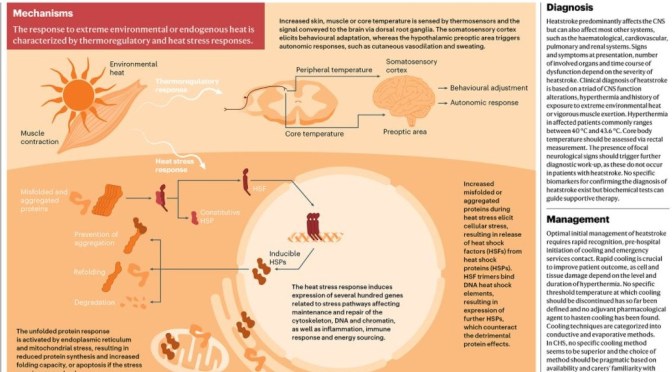
#Heatstroke is a life-threatening illness that is categorized as classic when it results from exposure to extreme environmental heat and as exertional when it develops during strenuous exercise.https://t.co/Dbq4K8oeqmpic.twitter.com/gxNi0W1Rfp
— Nature Reviews Disease Primers (@DiseasePrimers) June 18, 2022
Heatstroke is a condition caused by your body overheating, usually as a result of prolonged exposure to or physical exertion in high temperatures. This most serious form of heat injury, heatstroke, can occur if your body temperature rises to 104 F (40 C) or higher. The condition is most common in the summer months.
Heatstroke requires emergency treatment. Untreated heatstroke can quickly damage your brain, heart, kidneys and muscles. The damage worsens the longer treatment is delayed, increasing your risk of serious complications or death.
Lyme disease has infected more than 14% of the world’s population, according to a new study. “It’s significant,” says Dr. Bobbi Pritt, director of the Clinical Parasitology Laboratory at Mayo Clinic.
“If you look at the numbers and how it breaks down in regions across the United States, in some areas, that exceeds 50% seropositivity. That means people are walking around with antibodies in their blood that are detectable. That shows they’ve been exposed to Lyme disease at some point in their life,” says Dr. Pritt. “Now whether it was in the past and they’ve been successfully treated, or whether they have it right now, you can’t tell by that result, but it’s a marker of exposure.”
A normal pulse rate is between 60 and 100 beats per minute. Possible causes of an elevated pulse include fever, anemia, #anxiety, or an overactive thyroid. Other possibilities include too much caffeine, decongestants, or being out of shape: https://t.co/tnOAvGksXZ#HarvardHealth
In otherwise healthy people, a heart rate at rest should be less than 100 beats per minute at rest. Heart rates that are consistently above 100, even when the person is sitting quietly, can sometimes be caused by an abnormal heart rhythm. A high heart rate can also mean the heart muscle is weakened by a virus or some other problem that forces it to beat more often to pump enough blood to the rest of the body.
Usually, though, a fast heartbeat is not due to heart disease, because a wide variety of noncardiac factors can speed the heart rate. These include fever, a low red blood cell count (anemia), an overactive thyroid, or overuse of caffeine or stimulants like some over-the-counter decongestants. The list goes on and includes anxiety and poor physical conditioning.
— Nature Reviews Disease Primers (@DiseasePrimers) June 10, 2022
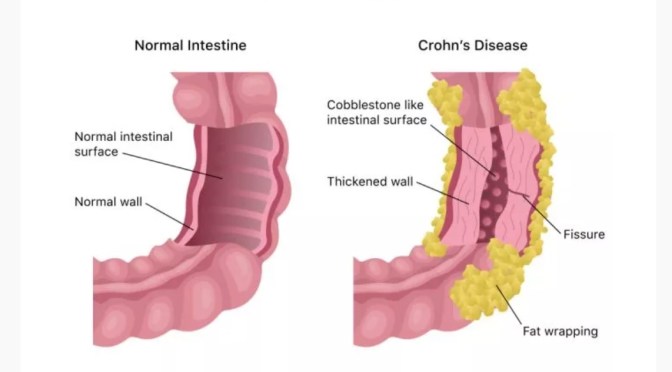
Crohn’s disease is an inflammatory bowel disease that is characterized by chronic inflammation of any part of the gastrointestinal tract, has a progressive and destructive course and is increasing in incidence worldwide. Several factors have been implicated in the cause of Crohn’s disease, including a dysregulated immune system, an altered microbiota, genetic susceptibility and environmental factors, but the cause of the disease remains unknown. The onset of the disease at a young age in most cases necessitates prompt but long-term treatment to prevent disease flares and disease progression with intestinal complications. Thus, earlier, more aggressive treatment with biologic therapies or novel small molecules could profoundly change the natural history of the disease and decrease complications and the need for hospitalization and surgery. Although less invasive biomarkers are in development, diagnosis still relies on endoscopy and histological assessment of biopsy specimens. Crohn’s disease is a complex disease, and treatment should be personalized to address the underlying pathogenetic mechanism. In the future, disease management might rely on severity scores that incorporate prognostic factors, bowel damage assessment and non-invasive close monitoring of disease activity to reduce the severity of complications.
— Nature Reviews Disease Primers (@DiseasePrimers) June 9, 2022
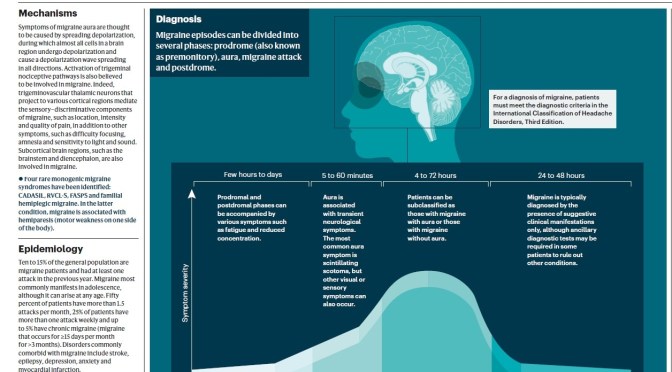
#Migraine is a common, chronic disorder that is typically characterized by recurrent disabling attacks of headache and accompanying symptoms, including aura.
Rabies has been known since ancient times, and continues to produce thousands of deaths each year, primarily in Asia and Africa, almost invariably from the bite of an infected animal. There is usually at least a 2-3 week incubation period, while the virus is traveling up the nerves to the brain. This allows a period of time for a prophylactic vaccine treatment. Once symptoms actually develop, however, the disease is almost universally fatal.
Rabies is present as a Reservoir in wild animals. For this reason, flavorful baits laced with oral rabies vaccine are often sprinkled throughout endemic areas near human settlements, an expensive, although cost effective treatment. A bite from any wild animal is worrisome, but, in the United States, Bats are the main source of infection. The last fatal case of rabies in the United States occurred in an Illinois man who awakened with a bat on his neck. He refused Rabies vaccine and was dead within two weeks.
Dog bite used to be the most common source of rabies in America, but this is no longer the case, due to almost universal Rabies vaccination in American dogs. In India, however, the biggest problem is still dogs, which amazingly have recently been protected by law. India accounts for approximately 1/3 of the worlds rabies fatalities.
The development of rabies vaccine is an interesting story. It was first developed by Louis Pasteur and given in 1885 to a 12-year-old boy who had been mauled by a rabid dog.
The vaccine was prepared from the spinal cord of a rabbit who had the virus growing in his nervous system. Rabbits are very susceptible to rabies, and repeated rabbit passage increases the virulence of the virus. The virulence can be diminished by drying out infected tissue in the air, and Pasteur used a piece of spinal cord from an infected animal which was dried in the air for several days. The boy was given multiple doses of the vaccine over as many days, and survived. This technological achievement occurred before anybody even knew what a virus was. These invisible, infectious sources were called “filterable viruses”, since the infectious agent could not be strained out of the blood plasma by passing it through a filter which effectively removed bacteria, much larger entities.
The Rabies virus has been very clever over the millennia. It modifies the behavior of its victim towards irritability and aggression, which makes transmission of the virus more likely. It is highly concentrated in the salivary glands, increasing the likelihood that the aggressive animal’s bite will transmit the virus.
If you or an acquaintance are bitten under suspicious circumstances, be sure to get the vaccine, which is now been perfected and inactivated so that side effects are most acceptable, considering the almost universal fatality of the disease.
THE DIFFICULTY in treating cancer lies in its deadly ability to evolve. Picked up early, however, much can be done to avert death, so unusual changes to a body’s functioning should never be ignored. Acid reflux – a known precursor for oesophageal cancer – may present warning signs before turning cancerous, according to experts.
England’s health service handles 10m clinic appointments for eyes every year. Artificial intelligence could help speed up and improve diagnoses for patients. Film supported by @Maersk.








 Doctors Without Waiting Rooms