
Tag Archives: Medicine

Dr. C’s Journal: Types Of Cancer Screening Tests

There are a number of recommended screening tests for cancer.
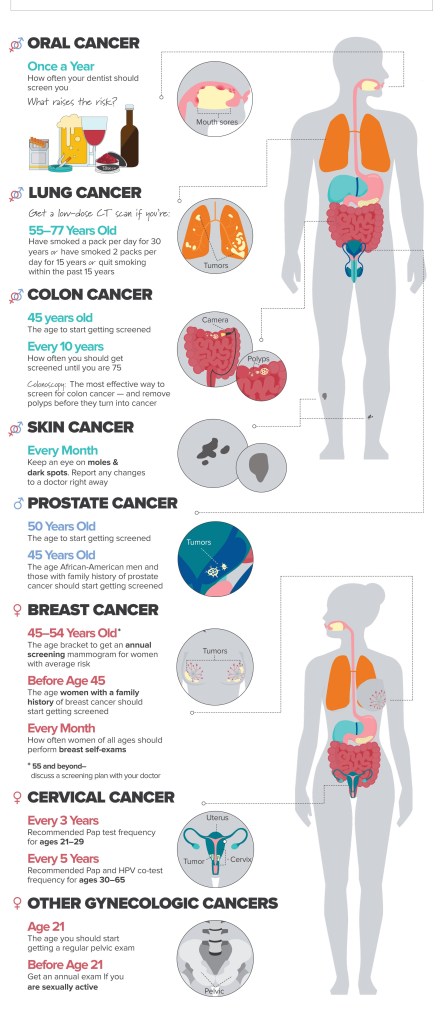
Mammography has been shown quite effective in reducing deaths from breast cancer, it is recommended for women ages 40 to 74.

HPV and PAP tests are recommended for cervical cancer screening in women. Testing should begin at age 21 and end at age 65.

Colonoscopy is recommended for colorectal cancer screening for both men and women ages 45 through 75.

HCT, a type of CT, is recommended for heavy smokers at ages 15 to 80.

Where the risks are high, there are other tests not generally recommended for everybody. Tests are available for liver cancer, prostate cancer, skin cancer, and ovarian cancer where are the risk is high. In women with BRCA1 And BRCA2  mutations, breast MRIs are recommended.

Personally, I get a yearly PSA test, mainly because a good friend, a physician, died within 3 years of prostate cancer when he stopped taking the test.

I also get a skin examination by a dermatologist every six months, because I have a very fair skin, probably caused by the freckle variant of the MC1R gene.

There are a number of symptoms and signs that suggest cancer,  particularly when they don’t go away, such as fatigue, weight loss or gain for no apparent reason; trouble swallowing, nausea, or abdominal pain; swelling or lumps anywhere in the body; cough or hoarseness; unusual bleeding; change in bowel habits; fevers or night sweats; bleeding areas in the mouth. Protracted headaches or vision problems can be worrisome.

In short, any distressing or unusual symptom that doesn’t improve on its own should be watched very carefully, and reported to your doctor; but it is far better to pick them up early with a test or a doctors routine examination than to wait for symptoms to develop.

—Dr. C.
Dr. C’s Journal: Recent Gains In Cancer Care

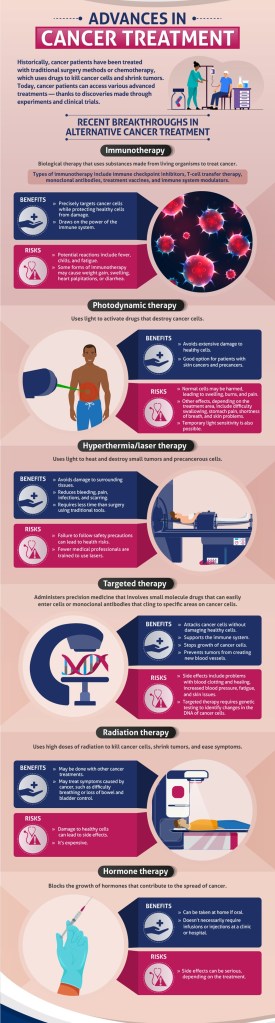
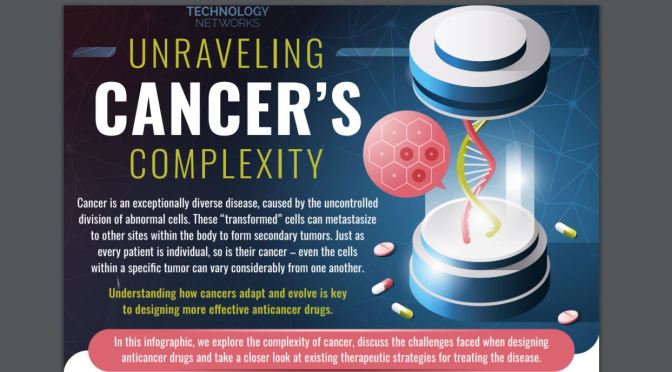
Recent medical advances in the treatment of cancer you have been amazing. Many of these advances have taken advantage of our own immune system‘s and fighting the cancer. If you or a loved one have had the recent diagnosis of cancer, there are several general things that you should know.

MVU MHA 2021 Q4 Infographic_ Advances, Breakthroughs, and Innovations in Cancer Treatment

The amazing technological advances in medicine have a come with a price tag, more than just the astronomical cost.

Preventative medicine it is given little attention in the medical profession these days, it wasn’t that great in the past either. The reason? Doctors don’t get paid to prevent disease; they get paid for treating it, and doctors are merely human beings like the rest of us and have a fondness for making money. Besides, the individual patient never knows whether he would’ve gotten the disease, had he not tried to prevent it. It takes a large number of people in a planned study to discern that.

Sleep, diet and exercise have all been casualties.

If you have established cancer, your tendency will be to give up on any exercise that you have been doing. This is an error. Depression is very common in patients with cancer, and inactivity makes it worse. Exercise is the one of the best things you can do for depression, and it may well  benefit cancer itself. To be sure to ask your doctor directly about this.

Diet is also extremely important. Many Cancers produce substances that kill the appetite. Weight loss in cancer is one of the hallmarks of the disease. It becomes very important to maintain a good diet.

Sleep is also very important. Just a day or two with poor sleep can harm the Immune cells, and with immune system damage, cancer can only worsen.

Drug studies improve medical care. They also deliver care free of charge, except for your time in taking part in the study. The usual Cancer study compares the new drug with established treatment. There is minimal worry that you are going to be getting a sham treatment.

Certain medical centers are known to specialize in certain areas of cancer treatment. For instance, in Southern California, the University of San Diego is known to be a Center that treats pancreatic cancer. The city of Hope in Los Angeles is known to be a center specializing in CAR-T cell treatment, A promising if expensive treatment for pancreatic cancer. 

It is very definitely worth your while to check into the availability of specialized care centers and drug studies in your area.

One of my friends developed melanoma and was told by his doctor to get his affairs in order. This absurd statement was made by a cancer doctor in one of the best hospitals in our area. In checking with an oncologist of my acquaintance, I found that a mere 30 miles away was a center specialized in the treatment of Malignant Melanoma. He went to the center for treatment, and was given a drug called a checkpoint inhibitor. He was virtually asymptomatic in a year. Unfortunately, patients can rarely expect such dramatic results.

In the history of the world, it has never been easier to learn about your disease, in this case cancer, and participate in its treatment. Especially in medicine, the best is none too good; it pays to do your homework, or at least find a medical advocate who will pursue your cause.

—Dr. C.

Insights: The Lucrative Business Of Diabetes (2022)

In our modern consumer society, Type 2 diabetes has become a widespread disease. Companies are developing drugs that are increasingly expensive, but not necessarily more effective. Health authorities are powerless. Diabetes is spreading rapidly, all over the world.

The disease destroys lives and puts a strain on public budgets. The UN is calling on governments to take action. Diabetes is proof that modern societies are incapable of adequately treating chronic disease. It affects around 430 million people worldwide, with two main metabolic disorders falling under the name diabetes.

Type 1 is an autoimmune disease that must be treated with lifelong doses of insulin, while type 2 can develop when a person’s diet is too high in fat and sugar and they do not engage in enough physical activity. With turnover of $46 billion, diabetes is a massive and extremely lucrative market. Constantly promised miracle cures have not led to satisfactory treatment, with patients either taking too many drugs or no longer being able to afford them.

It’s a desperate situation, and the only ones benefiting seem to be pharmaceutical companies. A medical focus on blood glucose levels has led to an overreliance on medication, sometimes without due concern for dangerous side effects. Patients become trapped in a cycle of treatment, which in many cases still does not halt the disease’s progression. This can lead to amputations, blindness and heart attacks.

And yet there are alternatives that could flatten the curve of the type 2 diabetes epidemic, while reducing health care spending. Improved diet can be a preventative measure, and a strict adherence to diet can also bring about remission in the case of Type 2 diabetes. But these solutions require effort, as well as a complete rethinking of chronic disease management. Filmed on three continents, this documentary features industry whistleblowers, patients, researchers and medical professionals. It also confronts pharmaceutical companies about their responsibility for the situation.

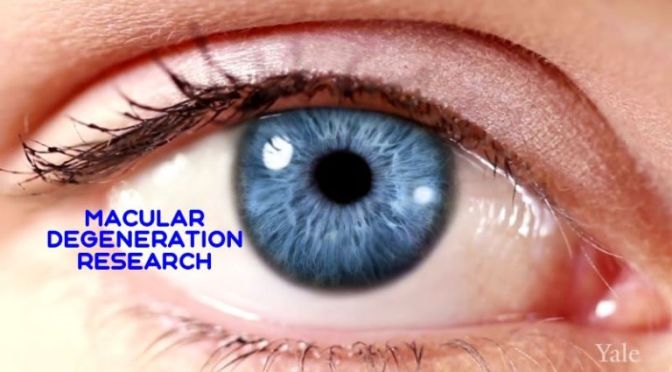
Infographic: Age-Related Macular Degeneration

An eye disease that causes vision loss.

Macular degeneration causes loss in the center of the field of vision. In dry macular degeneration, the center of the retina deteriorates. With wet macular degeneration, leaky blood vessels grow under the retina.

Blurred vision is a key symptom.

A special combination of vitamins and minerals (AREDS formula) may reduce disease progression. Surgery may also be an option.

Diagnosis: Age-Related Hearing Tied To Dementia

Age-related hearing loss may be linked to an increased risk of cognitive decline. And according to two large studies, … Dr. Ronald Petersen, a Mayo Clinic neurologist, says the exact reason why is not known. It also could be that hearing loss leads to social isolation, which can lead to an increased risk in dementia.

Dr. Petersen recommends getting your hearing assessed every two to three years, especially if you’re noticing signs that your hearing may be deteriorating. The fix could be as simple as needing to get earwax removed.

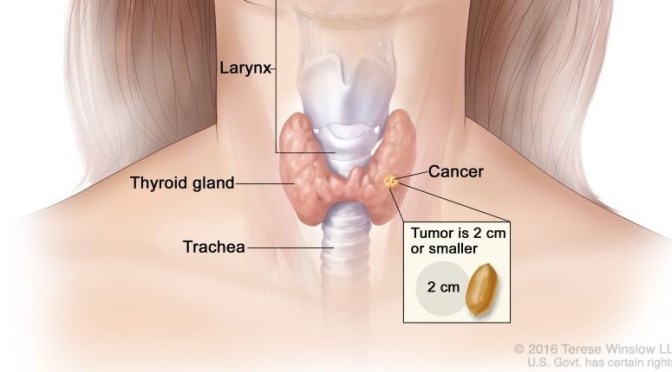
Mayo Clinic: Thyroid Cancer Explained (Video)

Learning about thyroid cancer can be intimidating. Let our experts walk you through the facts, the questions, and the answers to help you better understand this condition.

Chapters: 0:00 Introduction 0:25 What is thyroid cancer? 1:29 Who gets thyroid cancer? / Risk factors 2:44 Symptoms of thyroid cancer 3:18 How is thyroid cancer diagnosed? 4:14 Treatment options 5:40 Coping methods/ What now? 6:36 Ending

For more reading visit: https://mayocl.in/3ys82Jv. When it comes to your health, Mayo Clinic believes credible and clear information is paramount. There’s a lot to learn about thyroid cancer.

Women’s Health: Warning Signs Of Endometriosis

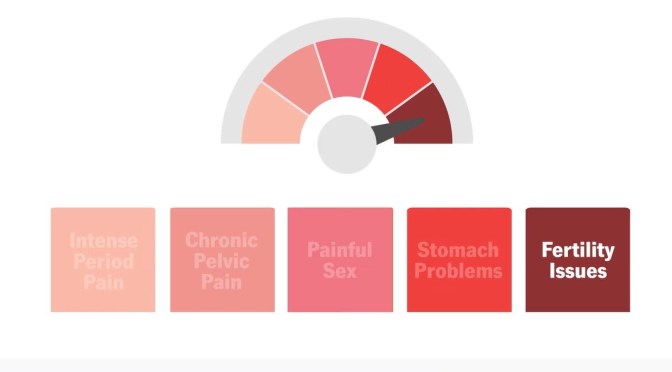
Really painful period cramps aren’t normal. They could mean you have endometriosis. Endometriosis is a gynecological condition affecting the lower abdomen or pelvic area. While some people don’t have symptoms, there are a few red flags that you should look out for. Here are 5 warning signs of endometriosis.

Chapters: 0:00 Introduction 0:15 What is endometriosis 0:44 5 warning signs of endometriosis 3:15 When should you see a medical professional?

Journals: Telemedicine And e-Health – June 2022

What Works Best to Engage Participants in Mobile App Interventions and e-Health: A Scoping Review

Enhancing participant engagement is considered a key priority for wellness and health care, especially as health care undergoes a shift toward the integration of digital technologies (e.g., mobile apps, health care monitors, and online portals with their consumer interfaces).1,2 Technological systems play a critical role in enhancing participant engagement.1,2 Among urban and low-income mothers, the use of smart-device technology for communication was a particularly important contributor to higher retention in longitudinal studies.3 Providing digital health tools has not only led to an increase in study participation adherence rates,4 but it has also contributed to measurable improvements in health care outcomes across several conditions. For instance, greater patient activation in their health care improved patient adherence to treatment prescriptions.5 Participants’ use of web portals to augment treatment of diabetes demonstrated improved glycemic control across multiple studies.6–8 Other studies have seen improvements in participants with HIV,9 with coronary artery disease,10 and with depression,11–13 highlighting how impactful the implementation of these tools can be across different clinical populations.

Schoeppe et al.14 emphasized common strategies that successful mobile interventions often use, such as goal setting, self-monitoring, and performance feedback in their app design. To our knowledge, however, there has not been a scoping review of the specific components of mobile intervention apps that increase engagement. Common across all digital health tools are the focus on increased patient engagement and “empowerment,” which is a result of several qualities inherent in these tools. Most of these technological systems improve patients’ communication with and access to health care providers,1,2,15 and provide patients with more comprehensive information about their health on demand.2,15 While these qualities are common across successful tools and play a large part in improving patient self-management and decreasing stress,2 improved engagement is no guarantee.

Furthermore, measuring engagement is a challenge that has likely contributed to our lack of knowledge on app components that effectively increase this important metric. There are now several measures that quantify the amount of engagement that patients feel toward the digital tools and apps that are being developed,2,15 but these are not widely used and engagement measurements are not standardized across studies. Some examples of such measures are the Patient Activation Measure (PAM16), Mobile App Rating Scale (MARS17), and the Patient Health Engagement scale (PHE-s18). These measures create a quantifiable standardized method by which researchers can measure the phenomenon of user engagement during program development, and are important considerations when creating new digital tools for patients and clinical research participants.

Men’s Health: How Serious Can Blood In The Urine Be?

Blood in your urine can be a startling sight, one that prompts concern over your health. While it doesn’t always mean something serious, several serious things can cause it. And that means you should contact your doctor right away.

It’s also important to understand what’s going on in your body. You may see a range of colors — from pink or slightly dark urine to bright red or cola-colored liquid. You may also see clots, which can come from your prostate, urethra, kidneys or ureters (tubes connecting your kidney to your bladder).

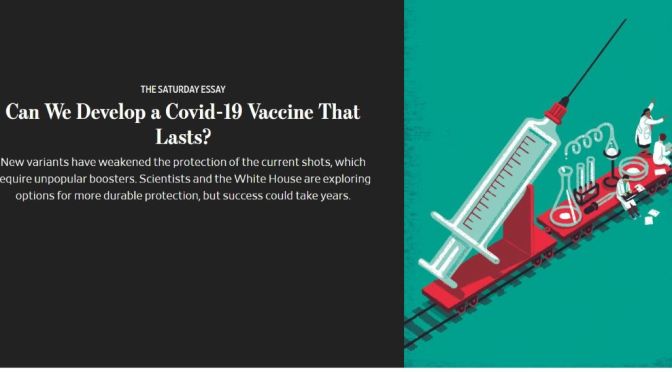
Covid-19: Can A Vaccine Be Developed That Lasts?

“Roughly two and a half years into the pandemic, White House officials and health experts have reached a pivotal conclusion about Covid-19 vaccines: The current approach of offering booster shots every few months isn’t sustainable.

Though most vaccines take years to develop, the Covid shots now in use were created in record time—in a matter of months. For health authorities and a public desperate for tools to deal with the pandemic, their speedy arrival provided a huge lift, preventing hospitalizations and deaths while helping people to escape lockdowns and return to work, school and many other aspects of pre-Covid life.”