Tag Archives: Medicine Cabinet

DR. C’S MEDICINE CABINET: ‘CELEBREX’ (NSAID)

NSAIDs are a  common pain medication. Younger people with no underlying diseases take them all the time for headaches, sprained ankles, and other injuries.
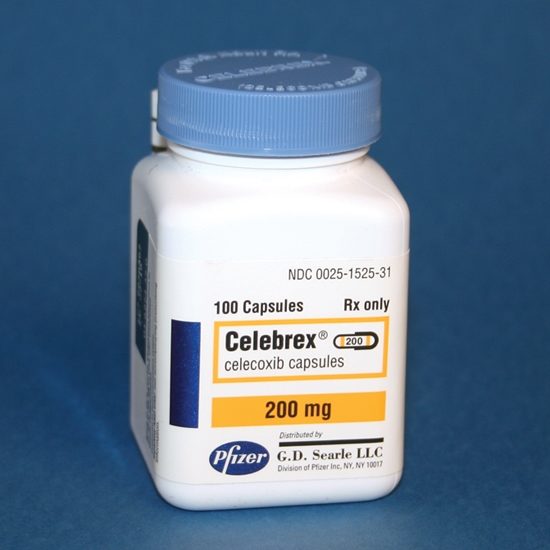
I have an underlying stomach problem that makes me want to minimize the gastrointestinal side effects when I need an NSAID medication, and for that reason I have 100 mg Celebrex, or celecoxib in my medicine cabinet.

I am fortunate not to have much severe pain, although I do have osteoarthritis in my hand, and infrequent abdominal pain from a small bowel surgery.

Celebrex is my magic bullet whenever I have pain from diverse causes such as in my legs; I do have a very active exercise program of an hour a day in the morning and a half an hour in the evening.

The Cox 2 inhibitor‘s were initially touted as being able to avoid the stomach problems caused by the non-selective  NSAIDs. Unfortunately, several of them, such as vioxx, were associated with more heart attacks, a 45% increase, and they were removed from the market . Celebrex was a survivor from this group, but it still tends to cause an increase in blood pressure.

Whenever you take any medication, it’s always a trade-off;  relief from the problem at hand, traded for the inevitable side effects. There is no powerful medication that has only the desired activity, and  most people are better off with a healthy lifestyle than taking medication.

Another advantage with medication avoidance is that when you take the medication, it tends to work a whole lot better. At least I have found that to be true, and celecoxib is my magic pain medication, which has salvaged countless nights of sleep.
—Dr. C.

DR. C’S MEDICINE CABINET: BENEFITS & RISKS OF ‘STATINS’

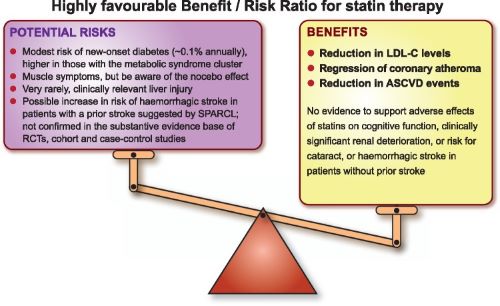
The STATIN medications are one of medicine’s greatest achievements, in my opinion. They REDUCE blood CHOLESTEROL and HEART ATTACKS in very low doses and have a good safety profile. They truly deserve to be the Best Selling class of drugs. 13 Nobel prizes have been awarded during the centuries of cholesterol research.

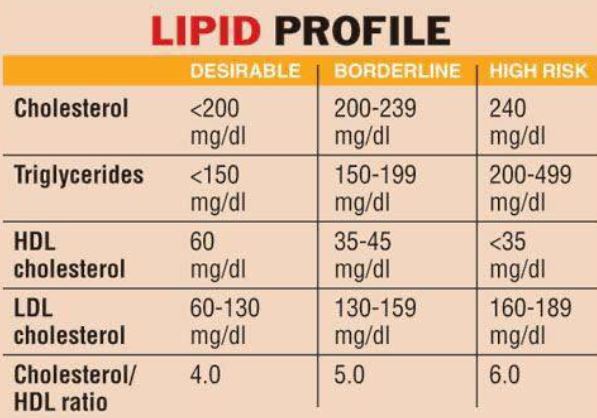
I have never had a heart attack, but do have some calcification in my Coronaries. Moreover, I have an untreated serum cholesterol level of 220 mg/dL. This is above the recommended level of 200 mg/dL, so I read up on the statins. The only concerning side effect from my viewpoint was MUSCLE PAIN.

I already have some muscle soreness from my exercise program, and did not want more, so I started at ½ of the 5 mg. dose of the statin suggested by my family doctor. This tiny dose of Rosuvastatin produced a dramatic 40 mg. Drop in my Cholesterol, and I am still hovering around the recommended level of 200 mg./dL. Instead of breaking the 5 mg. tablet in half, I now take 5 mg. every other day, since Rosuvastatin has a long half life.

One of my friends took a higher dose, and drove his cholesterol down to 100 Mg./dL. Apparently there is no serum level of cholesterol where further reduction fails to help.

Total cholesterol is divided into HDL and LDL components. My HDL, the “good” cholesterol, is thought to offset some of the cholesterol-plaque-causing effects of the LDL, or “bad” cholesterol. This makes me less than eager to raise my cholesterol and risk muscle pain.

My HIGH HDL is probably due to a combination of EXERCISE, FISH OIL and Genetics. Many of my friends “don’t tolerate” the statins, meaning that they developed muscle pain. Since they were taking the drug on faith, and not because of already-developed heart problems, they just don’t take the medication any more.

If your doctor has recommended one of the Statin drugs because of an elevated cholesterol, you might ask her to start at a lower dose. You can always work up to a higher dose if necessary. If you develop muscle pain at the higher dose, you can drop back to the dose you tolerated. Enjoy “Personalized” Medicine.

–Dr. C.

PRESCRIPTION DRUGS: “ON MEDICATIONS IN GENERAL”

Several ideas apply to ALL MEDICINES. Terminology should be clarified. Medicine, Pharmaceutical, and Drug, in my mind are equivalent.

The term “drug” is pejorative, and I try to use it so. The term “Pharmaceutical” is too long, leaving me with “medication”.

There are some Practical points. You should look at your prescription when you first get it, to make sure it is the right one. Yes, pharmacists rarely make some mistakes. They are human.

You should ask the Pharmacist if she knows WHERE the drug was manufactured. Foreign countries, especially China and India, are less reliable, and the USA is safer. The original Brand Name drugs are more often domestically produced, but even these are being “offshored”.

Next, check the prescription date and expiration date.You should get a ” SHELF LIFE” (the difference between the two) of about 2 years, otherwise, you might ask the pharmacist the next time to give you the “best dating” in his stock.

Store your medications in a cool, dark, dry place in order to prolong their life. Light, heat and moisture degrade most compounds. Remember the O.J. Simpson case? Part of the reason he was acquitted is that a critical DNA sample was stored in a plastic bag, which retained moisture, rather than a paper bag, which is recommended because paper is porous, and allows moisture to escape.

You should follow the suggested TIME to take the medication, because there is almost always an optimal time to take a given medication.

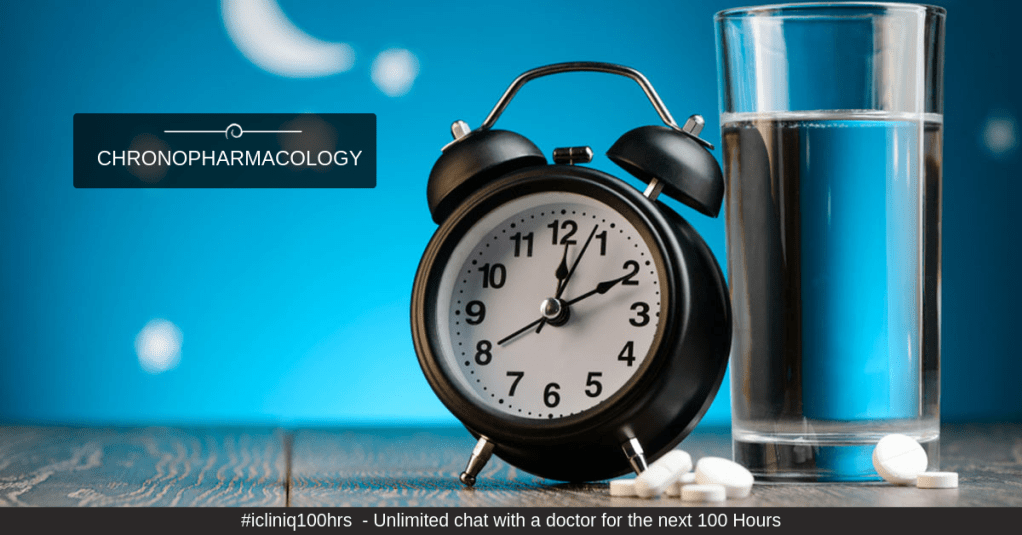
CHRONOPHARMACOLOGY is an emerging field, which is finding that more than 50% of medications are TIME SENSITIVE in their effect in the body. This is an unimportant, academic consideration for most Patients, given the high THERAPEUTIC WINDOW (dosage latitude) of most medications, the mild illness of most patients, and the disinclination of most Doctors to add one more detail onto their already heavy load.

In discussing the medicines in my cabinet and a few other important ones, I will be addressing TIMING.

What about OUTDATED MEDICATIONS? As discussed by the following article from Harvard, the dating is not critical except for liquids, and a few others, like Tetracycline.

This is fortunate, given the expense of medications today. What if I drop a pill on the floor, at home. I usually pick it up and take it. if i just dropped it, unless it is very inexpensive.

What if a pill sticks in your throat, like happens to me a lot? I drink water first, to moisten my throat to make it slipperier.

Next, I take a good sip of water, try to swish it back and go back with my head to accelerate the pill backward, and think confidence. Certain sizes of pills are my nemesis and i have to break them in two.

Please follow Dr. Cs Medicine Cabinet in future postings of DWWR.

–Dr.C.

Further reading

DR. C’S MEDICINE CABINET: “WHY PATIENTS TAKE ELIQUIS”

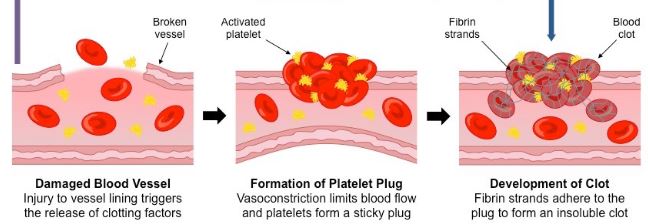
Eliquis nicely illustrates my contention in the Overview of Metabolism, that the body is a vast collection of pathways, or “supply chains”. Eliquis blocks a critical enzyme in the pathway leading to coagulation, or clotting” as the product.

Why in the world you want to block clotting? The staunching of blood flow, clotting, has saved countless hordes of early, Paleolithic humans, and continued useful through the bloody Roman and Medieval times, right through the violent 20th Century.

Recently, however, wars are becoming somewhat less popular, and eating excessively more popular, leading to a strange situation. Our evolutionarily-preserved CLOTTING mechanism is now leading to MORE problems than it is solving.

Obesity and type 2 Diabetes are leading to the production of so much fat, that it has to be stored in our arterial walls, clogging the blood flow to our Hearts and Brain, among other areas. This, and the somewhat surprising trend towards longer lives has led to an increase in a variety of age-related illnesses.

When I reached 80 years of age I developed Atrial Fibrillation, a condition leading to a tendency to form clots in my quivering atria, the upper chambers of my heart. To decrease the likelihood of clots getting into my blood stream, lodging in my brain and causing STROKE, my cardiologist started me on Eliquis, an anti-coagulant/blood thinner.

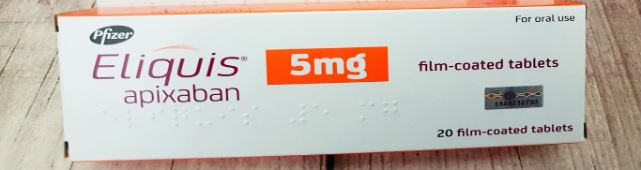
Drugs have three names. The proprietary name, Eliquis in this case, is given by the patenting company to be memorable; q,z,and x are popular letters. The second is the FDA drug name, Apixaban. The drug name often gives the doctor a clue as to its type: xaban refers to inhibiting (banning) of factor 10a (Xa). The third name is a chemical name of interest to biochemists and drug researchers.

When I started the Eliquis, at first unknown to me, I started to bleed internally, leading to a drop in my hemoglobin down to 8.6. I will go into this story when I start going through “how to read your laboratory report”.

I found that reducing my Eliquis from 5mg. to 3.75 mg. allowed me stabilize my hemoglobin by taking extra iron, which I will discuss later.

The doseage selected when the drug company markets a drug is fairly arbitrary, and usually involves round numbers. Interestingly, there is a 2.5mg. Eliquis, which is given if you meet 2 out of 3 criteria. I meet only one and am only 5 pounds shy of the second, in case you think (like my cardiologist does) that I’m taking a risk.

I believe that, whenever you are given a medication, you should be educated about the medicine, and the problem it is intended to benefit. Today’s physician often does not have the time to do this. The internet, including this website, offers a corrective.

I am trying my best to be helpful to you as a Patient Advocate. You and I both must have a doctor to rely upon. But to get the most out of our care, WE MUST BE INFORMED.

–Dr. C