Tag Archives: Harvard Medicine

Heart Disease: Thoracic Aortic Aneurysm Risks

A thoracic aortic aneurysm is a weak spot in the aorta, the main pipeline for blood from the heart to the body. The weak spot has the potential to dissect or rupture, cutting off the supply of life-sustaining blood to the rest of the body. Thoracic aortic aneurysms are often harder to detect and diagnose compared to the more common abdominal aortic aneurysms. 

December 14, 2022

The aorta begins deep in the heart. It emerges from the top of the powerful left ventricle, curves up and over the heart in a gentle arch, then descends into the chest and through the muscular diaphragm into the abdomen (see “Thoracic aorta”). It ends around the belly button, where it splits into two smaller arteries, one for each leg.
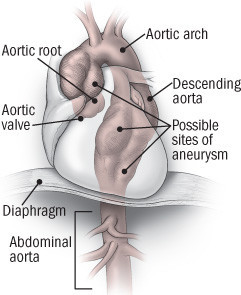
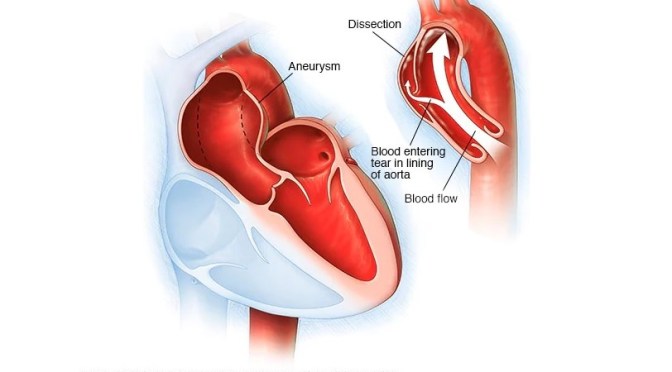
THORACIC AORTA

From start to end, arteries branch off to nourish the heart, brain, arms, kidneys, liver, stomach, intestines, and every other part of the body. The stretch of the aorta from its start in the heart to the top of the diaphragm is called the thoracic aorta; the section below the diaphragm is the abdominal aorta.

Some aneurysms are relatively harmless. Others can lead to the catastrophic problems known as dissection or rupture. For now, size is the best and only guide to the health threat posed by an aneurysm.

Dissection. The most common consequence of an aortic aneurysm, dissection occurs when a tear develops in the inner lining of the aortic wall. The inner and outer layers peel apart, creating an extra channel for blood inside the aorta. It may do no harm, or it may allow blood to bypass the outflow to certain organs or tissues, leaving them without a blood supply. This can cause a heart attack, stroke, kidney damage, and other problems.

Rupture. A break in all three layers of the aortic wall is termed a rupture. Blood pours from the aorta into the chest. This massive internal bleeding can quickly lead to shock and death.
READ MORE

Glaucoma: The Risks Of Ocular Hypertension

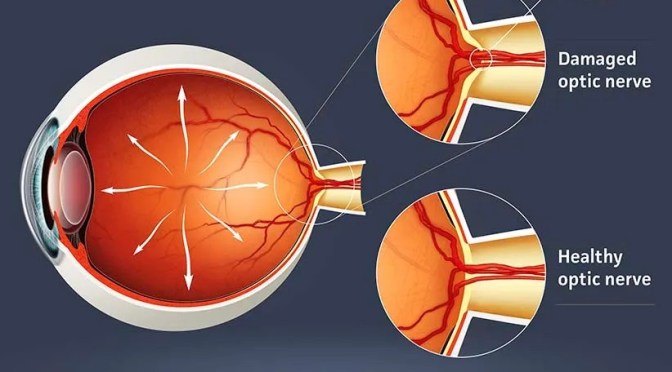
Often described as the silent thief of sight, glaucoma is the most common cause of irreversible blindness in the world. High pressure in the eye damages the optic nerve, first stealing peripheral vision (what you see at the corners of your eyes) and later harming central vision (what you see when looking straight ahead). Usually, people notice no symptoms until vision loss occurs.

Close up photo of a brown eye; black pupil in the center, irish is many shades of brown, white of eye shows tiny veins

Lowering high eye pressure is the only known treatment to prevent or interrupt glaucoma. But does everyone with higher-than-normal eye pressure need to be treated? A major long-term study provides some clues, though not yet a complete answer.

Does everyone with high eye pressure develop glaucoma?

In the US, glaucoma affects an estimated three million people, half of whom do not know that they have it. An ophthalmologist can perform a comprehensive eye exam to determine if someone has glaucoma, or is at risk for developing it in the future due to high eye pressure (ocular hypertension). Research from the long-running Ocular Hypertension Treatment Study (OHTS) shows that some people with high eye pressure may never develop glaucoma, while others will.

Read more

Inflammation: Treating Ulcerative Colitis (UC)

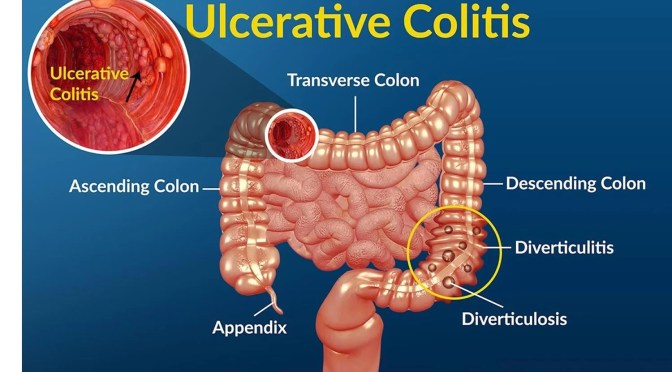
Since ulcerative colitis (UC), a condition that causes inflammation in the colon and rectum, is never medically cured, certain lifestyle behaviors can help you manage symptoms and better cope with your condition. In addition to managing stress, paying attention to what you eat can have a big impact on your quality of life.

A notepad with "ulcerative colitis" printed on it and a stethoscope laying next to it.

You should eat a well-balanced, healthy diet rich in fresh fruits and vegetables, such as a Mediterranean style diet. Avoid preservatives and emulsifiers, such as carrageenan, carboxymethylcellulose, and polysorbate-80.

If you have inflammatory bowel disease and also irritable bowel syndrome (IBS), a low-FODMAP diet may be helpful. FODMAP stands for the short-chain carbohydrates known as fermentable oligosaccharides, disaccharides, monosaccharides, and polyols. Some people who eat high-FODMAP foods have an increased risk of problems like diarrhea, bloating, abdominal pain, and flatulence. FODMAPs include the following:

  • disaccharides, such as lactose (in milk and other dairy products)
  • monosaccharides, such as fructose (for example, in apples and honey)
  • oligosaccharides, such as fructans (in wheat, onions, and garlic, for example) and galactans (commonly found in beans, lentils, and soybeans)
  • polyols, such as sorbitol and mannitol (in some fruits, vegetables, and artificial sweeteners).

A low-FODMAP diet can help reduce abdominal pain, bloating, and diarrhea and improve stool consistency in people with IBS who also have well-controlled IBD. Consult with your doctor and a nutritionist about how FODMAP reduction may fit into your dietary plan.

Read more

Health: Four Tests For Chronic Inflammation

These are four of the most common tests for inflammation:

  • Erythrocyte sedimentation rate (sed rate or ESR). This test measures how fast red blood cells settle to the bottom of a vertical tube of blood. When inflammation is present the red blood cells fall faster, as higher amounts of proteins in the blood make those cells clump together. While ranges vary by lab, a normal result is typically 20 mm/hr or less, while a value over 100 mm/hr is quite high.
  • C-reactive protein (CRP). This protein made in the liver tends to rise when inflammation is present. A normal value is less than 3 mg/L. A value over 3 mg/L is often used to identify an increased risk of cardiovascular disease, but bodywide inflammation can make CRP rise to 100 mg/L or more.
  • Ferritin. This is a blood protein that reflects the amount of iron stored in the body. It’s most often ordered to evaluate whether an anemic person is iron-deficient, in which case ferritin levels are low. Or, if there is too much iron in the body, ferritin levels may be high. But ferritin levels also rise when inflammation is present. Normal results vary by lab and tend to be a bit higher in men, but a typical normal range is 20 to 200 mcg/L.
  • Fibrinogen. While this protein is most commonly measured to evaluate the status of the blood clotting system, its levels tend to rise when inflammation is present. A normal fibrinogen level is 200 to 400 mg/dL.

Commentary:

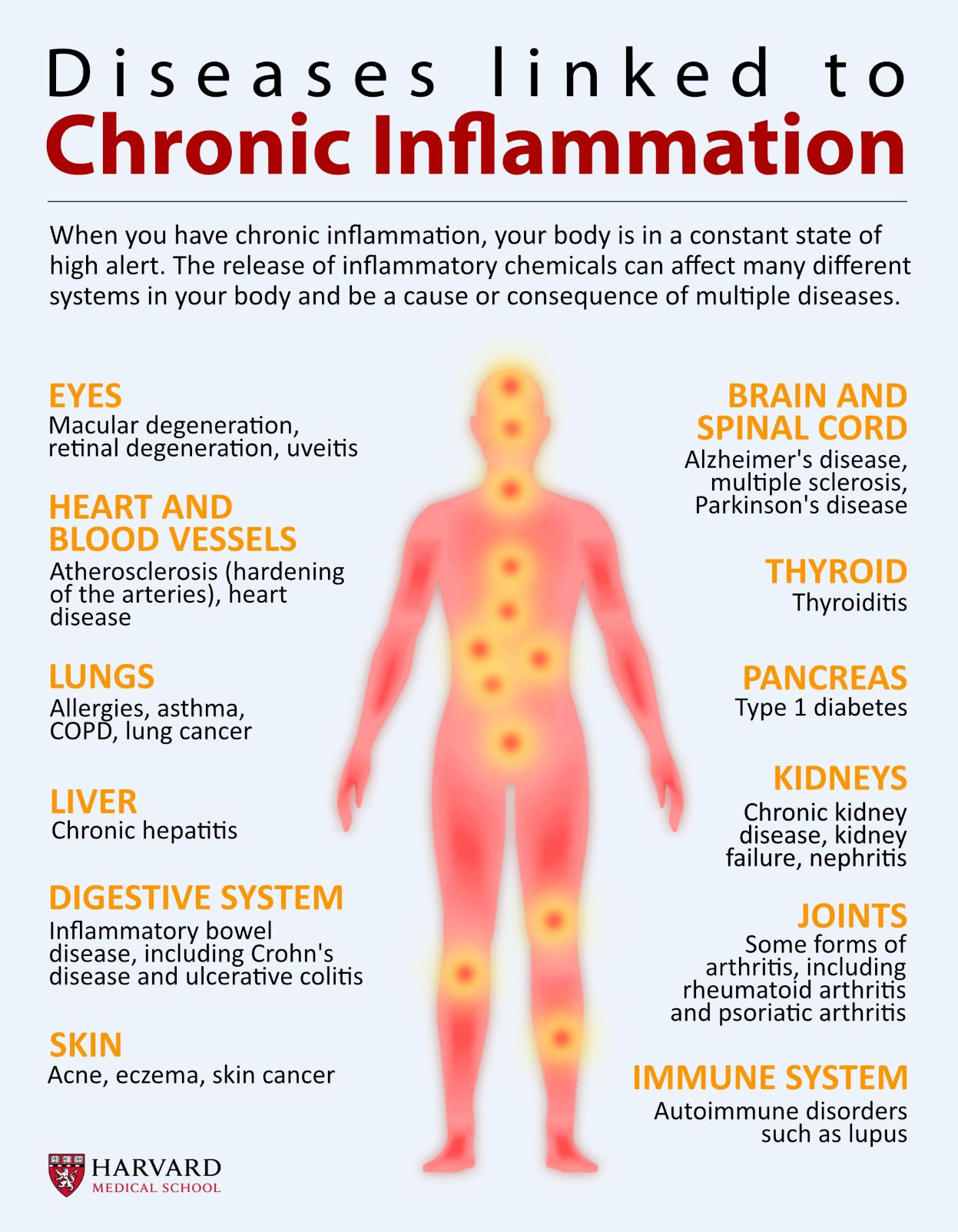
Inflammation is an essential, evolutionarily conserved mechanism that our bodies have developed for excluding infections, toxins, and damaged or cancerous cells.

Acute inflammation in response to infections is almost always beneficial, except where it is disproportionate to the danger that it fights; the common cold is  probably innocuous, but we develop symptoms from our bodies’ response. Covid has been found to incite disproportionately severe inflammation, which can lead to severe disease, and the need for corticosteroids.

Chronic inflammation is a different animal, and is usually undesirable. Sometimes it is due to an infection, such as tuberculosis, which won’t go away. Sometimes the bodies immune system develops a disordered communication system, and fights its own cells, called auto immunity.

Chronic inflammation can also be caused by obesity, chronic stress, cigarette smoking, alcohol in excess, and cancer, which can also be CAUSED BY chronic inflammation.

Chronic inflammation is also associated with Alzheimer’s, heart disease, rheumatoid arthritis, and type two diabetes. Asthma is a chronic inflammatory disease of the airways. IBD, inflammatory bowel disease, is a chronic inflammatory disease of the intestinal tract.

The symptoms of chronic inflammation very widely depending on the area involved. Abdominal pain, chest pain, joint pain, skin rashes, fatigue, and fever are some of the symptoms.

You can reduce your likelihood of chronic inflammation by maintaining normal weight, having regular exercise, eating a diet rich in natural vegetables and fruits (antioxidants),  avoiding alcohol and cigarette smoke, and by reducing or handling your stress.

—Dr. C.

Read more

Stomach Health: What Is Gastroparesis? (Harvard)

‘HARVARD MEDICINE’: THE AGING ISSUE – AUTUMN 2021

HARVARD: ‘NANOBODIES’ EVOLVED FROM SYNTHETIC ANTIBODY FRAGMENTS

A new approach developed by Harvard Medical School researchers uses yeast to rapidly evolve synthetic antibody fragments called nanobodies with the aim to find variants that are effective at binding to selected antigens, including SARS-CoV-2. The antibodies are intended for use in diagnostic tests and disease treatments. Read the full story: https://hms.harvard.edu/news/antibody…SHOW LESS