Tag Archives: Fever

Diagnosis: The Causes Of Fever Of Unknown Origin

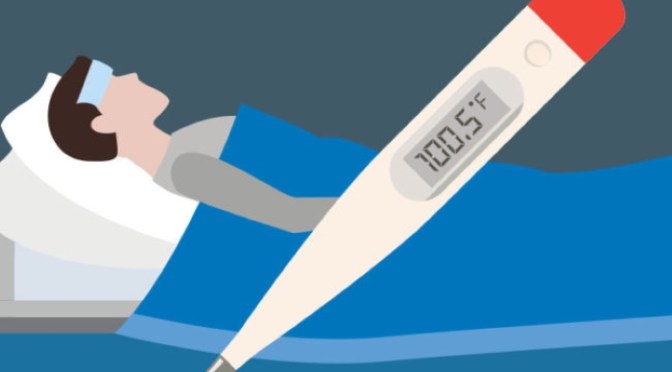
Fever is just one of the number of symptoms that accompany most infections such as Covid and  influenza. When doctors can’t find a diagnosis for the fever, and it lasts for a few weeks, however, it is called fever of unknown origin, or FUO.

There are a bewildering number of illnesses that produce fever, and the mixture of these illnesses is different depending on geographic location, the type of hospital, and socioeconomic conditions.
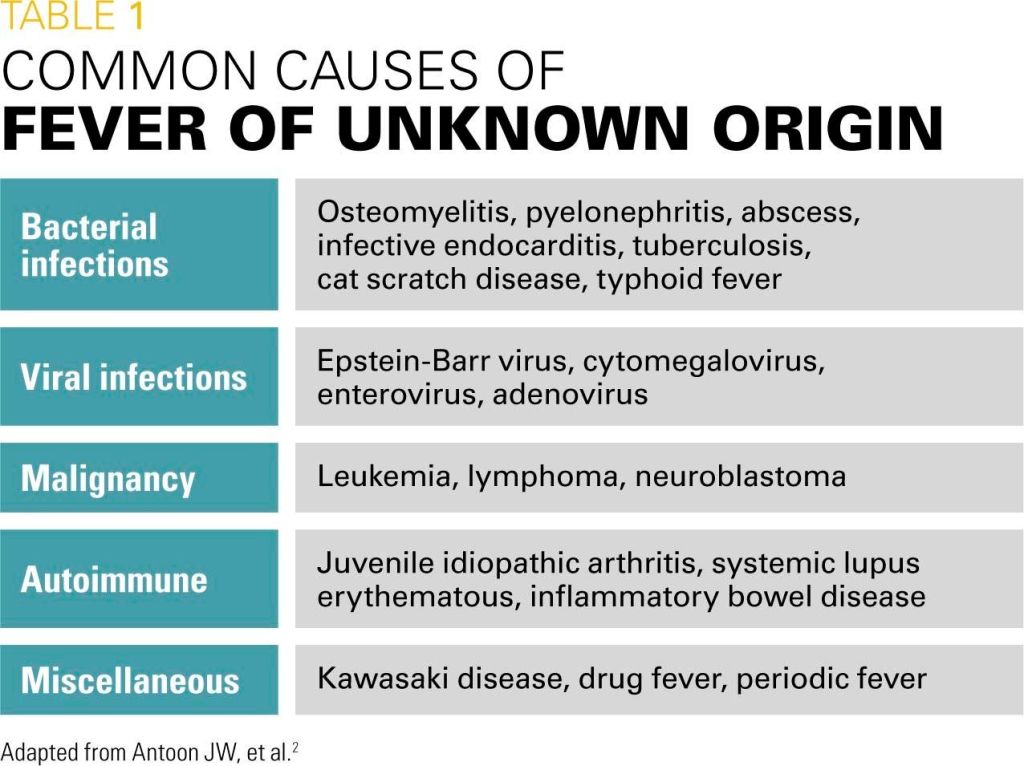
Just like weight loss of unknown origin, or abdominal discomfort of unknown origin, fever without obvious cause is quite possibly be due to cancer in affluent America, and if you go in early you might have better outcomes with your treatment.

Fever has been known since earliest times, and was often considered a diagnosis on its own. In the past, the great majority of the fevers were infectious, and the outcome grave. In the mid 20th century, when I went to medical school, fevers were still mostly infectious. Antibiotics were the magic bullet, and were unfortunately overused. In underdeveloped countries, infections are still the most common cause, but in the developed world difficult to treat viral infections, autoimmune conditions, and cancer have been gaining in prominence.

When fever becomes excessive, and medication is needed, NSAIDS may be used, and works better on fever from infection than on fever from cancer. The take-home message for me is that if you use Naprosyn for a persistent fever, and isn’t effective, you might notify the doctor.

The motivation for me writing this article came from a very good posting in the New England Journal of medicine. They used a little humor, stating that modern FUO might be called “fever of too many origins”, what with all the indwelling catheters, implanted medical devices, shunts and long hospital stays. There is a separate category made for fever acquired in the hospital.

In people with AIDS, the evaluation is different depending on whether or not they are on treatment.

Tuberculosis is still a very common cause of fever.

Drugs are becoming increasingly responsible for troublesome fevers. In the early days of antibacterial therapy, sulfa  was the only drug available, frequently caused fever.  Now, sulfa is less used, and the penicillin derivatives are more common causes of fever.

If you have a fever, and have been traveling recently, be sure to tell the doctor. Your fever might be due to a tropical parasite such as malaria, particularly if you’ve been to West Africa.

Fever is an evolutionarily conserved body defense reaction and helps a person recover from an infection. The normal body temperature cycles according to the time of day; it is lowest first thing in the morning, and is higher later in the afternoon. The average body temperature used to be 37°C, or 98.6 F., but has been declining in recent decades, and is now about 36.5°C or 97.6°F. The use of electronic thermometers has cut down the amount of time needed to assess the body temperature, but added variability. I still prefer the old-fashioned thermometer.

Taking your temperature by whatever means you have available still remains a good idea when you don’t feel well.

—Dr. C.

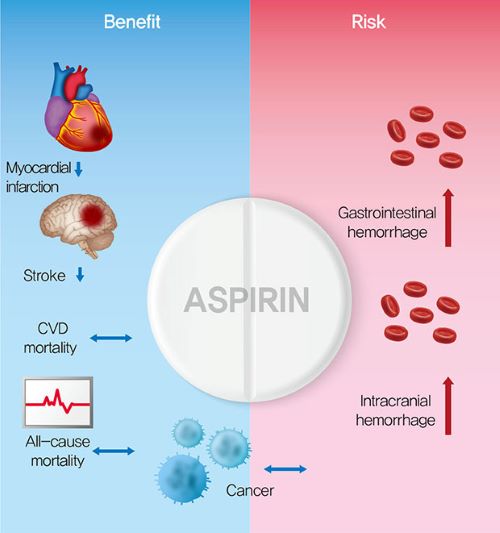
DR. C’S MEDICINE CABINET: Benefits & Risks Of ‘Aspirin’

Aspirin (acetylsalicylic acid) was one of the first medicines constructed, or synthesized, in a chemical laboratory. After 40 years ( medical progress wasn’t too fast in the 19th Century), Bayer investigated it as an alternative to Salicylates, which had been used since antiquity in the form of Willow bark for medical treatment, especially of FEVER and PAIN relief.

It is an understatement to say that it was successful. After almost another century, in 1982, a nobel prize was awarded for the discovery of its mode of action. Its multiplicity of effects, some of them bad, are only now becoming appreciated. My practice in medicine was in Allergic diseases, and I treated many people with nasal, sinus and asthmatic diseases.

It became apparent that, in certain people, aspirin could worsen all 3 conditions, and rhinitis (with Polyps), sinusitis and asthma became known as “Samter’s Triad”, or simply ASPIRIN DISEASE. Believe it or not, the condition can be helped by “aspirin desensitization”, where the Patient was started on tiny doses of aspirin by mouth, which over a period of hours was gradually increased to a normal dose.

I would not try this at home. I sent my patients to a specialized medical center for treatment, Other undesirable effects induce bleeding disorders, stomach ulcers, and, in children, a very serious disease called Reye’s syndrome. The latter is so serious that aspirin is not often given to children; except when it is needed, such as in a condition called Kawasaki’s Disease, where it is very helpful.

I mention these details to counteract the blase attitude created by long use. No longer does the doctor say “Take an aspirin and call me in the morning”. For a long while, low-dose Aspirin was used in most Patients with coronary artery disease, as a method of preventing sudden clot formation. I took 65 mg. Of aspirin for years, even though I had no narrowing of my arteries.

Now it is found that aspirin can cause an excess of Hemorrhagic stroke, and it is not recommended in my age group and risk profile. Aspirin is a powerful medication with a wide variety of effects. Most of its beneficial effects have safer alternatives. Acetaminophen- Tylenol- is now used in place of Aspirin for Pain and fever relief. I suggest not using aspirin unless prescribed by a Doctor.

–Dr. C

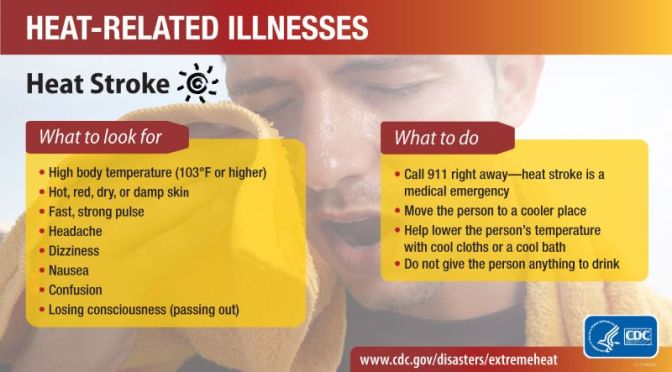
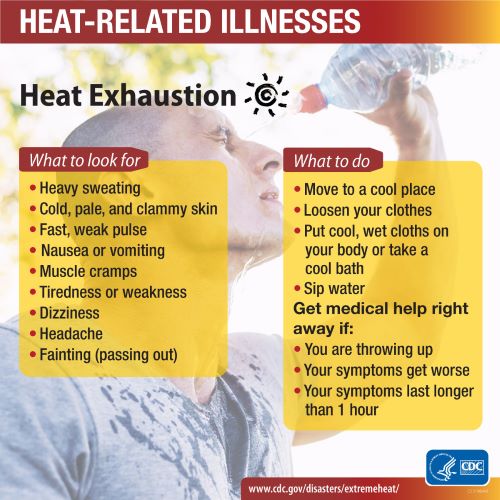
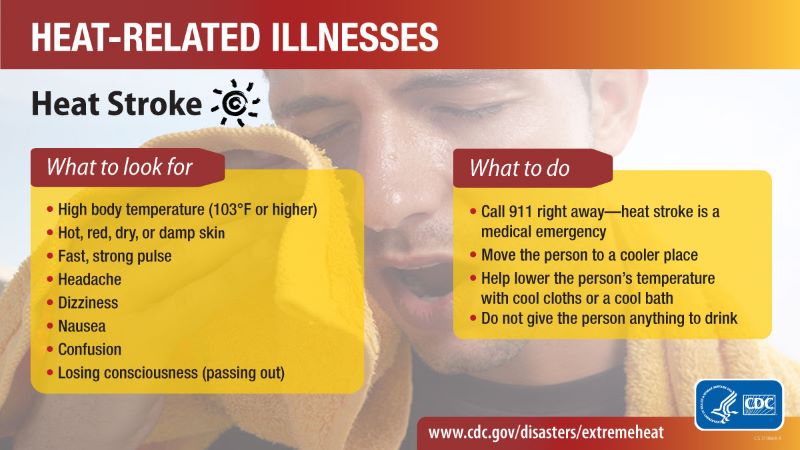
CDC INFOGRAPHICS: ‘HEAT STROKE & HEAT EXHAUSTION’

COMMENTARY:

THERMOREGULATION, preservation of the normal body temperature, is well developed in humans, and monitoring the body temperature has been useful since the development of thermometers.

Indirect measurement by Infrared detectors is being widely used today to detect FEVER as a sign of Covid in gatherings such as schools. Reactive increase of body temperature in a cool environment is a body defense mechanism that I have discussed earlier. Contrary to general practice, Fever, in my opinion, should be left untreated unless excessive, such as above 103 degrees F., or even 104 degrees.

Excessive environmental temperature, such as in a closed car, Jacuzzi, or heat wave can defeat the body’s ability to defend the normal temperature. Children, with their high body surface to mass ratio, are particularly at risk, as periodic newspaper articles testify. HEAT STROKE is the most serious of heat-related illnesses, leading to high and increasing body temperature, mental symptoms, even convulsions, and is a MEDICAL EMERGENCY.

The treatment is to call 911, and to lower the body temperature by removing insulating clothing, and immersing in cold water. There are a variety of other conditions based on excessive exertion, water or salt loss.

These include HEAT EXHAUSTION. Older Workers are particularly susceptible, and medical clinic attention may be needed for fluid and electrolyte replacement. MUSCLE CRAMPS and even damage( Rhabdomyolysis), FAINTING (this has been discussed before) and Heat Rash can result from too hot an environment. Furry Animals Pant instinctively to get their highly vascular Tongue to “air condition” their bodies. Humans should dress and exercise appropriately when the environment requires it.

–Dr. C.