Tag Archives: Digital Health Devices

DIGITAL HEALTH: THE FUTURE OF WEARABLE DEVICES

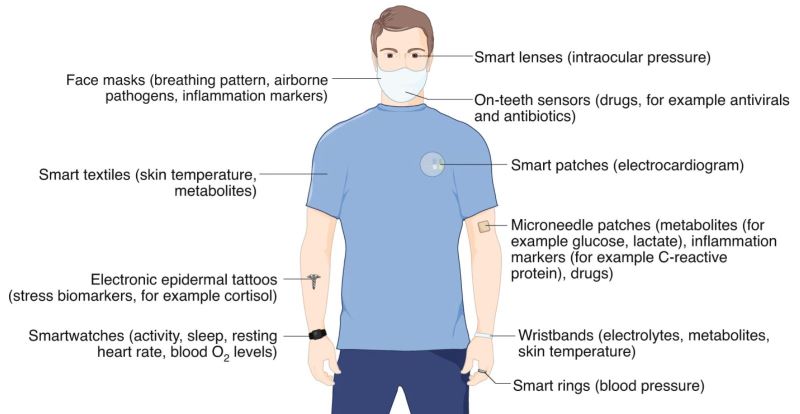
Currently, smartwatches provide information such as heart rate, sleep time and activity patterns. In the future, this could be augmented with new classes of wearable devices that monitor, for example, concentrations of cortisol for tracking stress (using electronic epidermal tattoos), biomarkers of inflammation and levels of blood O2 (microneedle patches), skin temperature (electronic textiles), blood pressure (smart rings), concentration of ions (wristbands), intraocular pressure (smart contact lenses), the presence of airborne pathogens and breathing anomalies (face masks), and the concentration of therapeutic drugs (on-teeth sensors)2,10,12,13,14,15,16. Such emerging low-cost wearable sensing technologies, monitoring both physical parameters and biochemical markers, could be used to identify symptomatic and pre-symptomatic cases in future pandemics. The devices could also be used to remotely monitor the recovery of individuals undergoing treatment or self-isolating at home.
Read more

HEALTHCARE: TOP DIGITAL TECHNOLOGY TRENDS (2020)

From MD+DI (June 17, 2020):

MD+DI Logo

Remote-care solutions like telehealth and wearable devices are included in the new approach that healthcare professionals will be embracing as they position their businesses to best serve patients in a COVID-19 world. Digital healthcare product solutions address critical issues for the remote delivery of care or the “hospital at home” that have been resonating long before we began looking at all our interactions through a social-distancing lens.

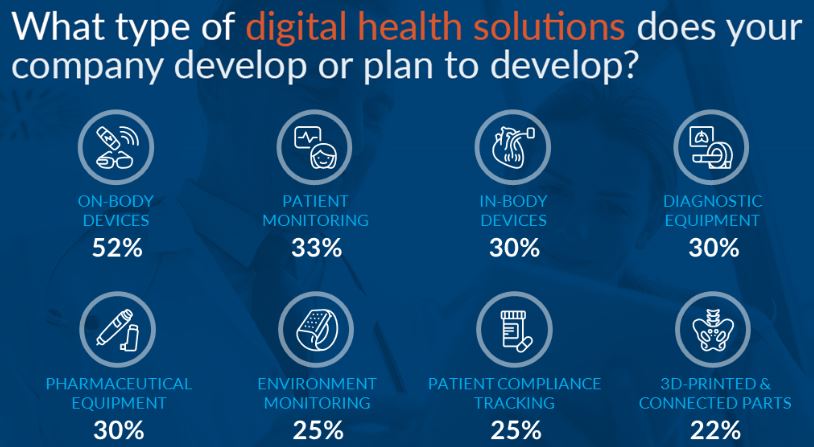
Wearables and On-Body Devices – Real-time data collection and communication are critical to digital health initiatives. More than half of survey respondents—52%—said they are currently developing or planning to develop wearable or on-body devices as part of their strategy. Another 33% said the same for patient-monitoring solutions.

Miniaturization, flexible circuitry, and biometric capturing sensors are leading to exciting new devices that will help patients in recovery or with chronic issues. The data communicated from these solutions will equip healthcare providers and patients with the data that can transform healthcare.

Seamless technology integration – A range of emerging technologies, including artificial intelligence (AI), 5G, cloud-based applications, and a growing roster of IoMT devices. 

More than nine in 10 healthcare solution providers agree that the collection and purposing of data should be standardized to enable interoperability between devices and within product platforms, according to the survey.

2020 Digital Health Technology Trends survey

Read more