
Tag Archives: Bacteria

THE DOCTORS 101 CHRONIC SYMPTOMS & CONDITIONS #30: ACNE (Vulgaris)

ACNE is almost a rite of passage in adolescents, although it is not totally restricted to the teen years; women may experience acne during pregnancy, or at the time of menopause. It afflicts about 90% of kids during their PUBERTAL growth spurt, though is moderate or severe in only 15%.
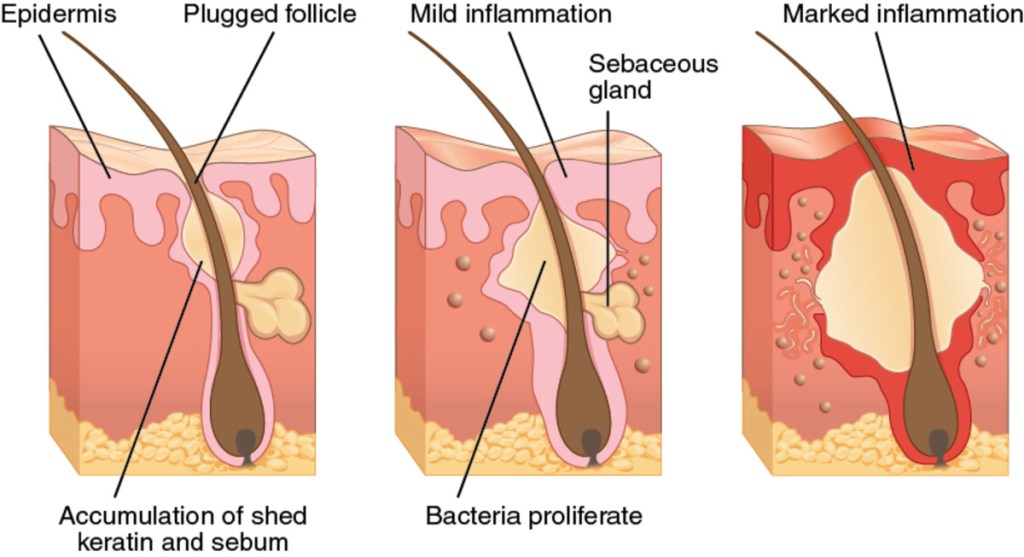
Acne is caused by PLUGGING of the sebaceous glands of the skin. Infection by certain skin BACTERIA follows. Check the accompanying video for a description of the battle between the “Good guys”, Staph epidermidis and Cutibacterium acnes, vs. the bad guy, Proprionibactrium
acnes.

Acne tends to run in families. The steroid HORMONES like Testosterone and Cortisone promote Acne. STRESS tends to chronically raise Cortisol and is a factor in Acne, and many chronic illnesses as well.

A person who is having trouble with Acne should avoid sweets and greasy foods, which is a good idea for everybody. Skin cleansers, using salicylic or azelaic acids and benzoyl peroxide may help, and creams containing retinoic acid derivatives may be useful..

The doctor may prescribe an antibiotic like tetracycline in resistant cases. Cystic acne may be scarring, but otherwise “the zits” depart with the pubertal years.
–Dr. C.

Further reading at Mayo Clinic

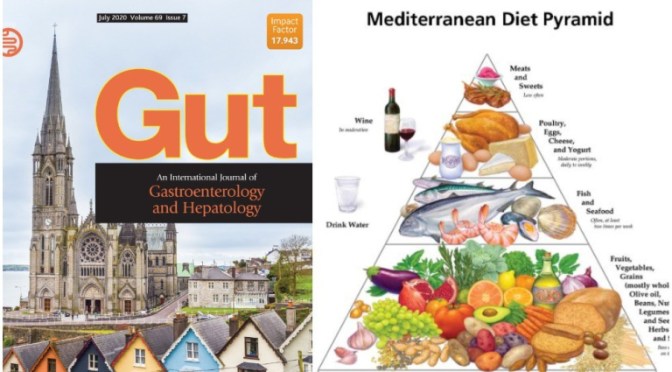
PODCAST: “MEDDIET” ALTERS GUT MICRIOBIOME IN OLDER PEOPLE, IMPROVES FRAILTY, COGNITION, INFLAMMATION

We observed that increased adherence to the MedDiet modulates specific components of the gut microbiota that were associated with a reduction in risk of frailty, improved cognitive function and reduced inflammatory status. 

Dr Philip Smith, Digital and Education Editor of Gut and Consultant Gastroenterologist at the Royal Liverpool Hospital interviews Professor Paul O’Toole; who is Professor of Microbial Genomics, Head of School of Microbiology and Principal Investigator in APC Microbiome Ireland, an SFI funded centre at University College Cork, Ireland, on “Mediterranean diet intervention alters the gut microbiome in older people reducing frailty and improving health status: the NU-AGE 1-year dietary intervention across 5 European countries” published in paper copy in Gut in July 2020.

Read full study

COMMENTARY

Diet is one of the 3 pillars ( or 4, if you don’t consider intellectual stimulation a form of exercise) of health. And there are 3 prime dimensions to diet: Quality, Quantity, and Timing. This excellent study addresses the Quality of the diet. Vegetables, fruits and whole grains are the foundation.

Dietary Fiber is the main difference between the healthful Mediterranean diet and the highly processed diet so common in America.

How can you be sure you are eating enough fiber? Read on.
On almost all cans and boxes, you will find a nutritional statement, by law. Assuming that the contents are “real food”, and preferably “organic”, look for the “fiber” in grams, and the “calories” in 100’s, and mentally divide the grams of fiber by 100s  of calories, and you get a number. Let’s say that your fiber for the day totals “25” gms. and your calories for the day Totals 2500; that is “25” hundred calories. Divide the 25 grams by the 25 hundred calories, and you get “1”. Anything less than 1 is low in fiber.

25 grams of fiber is about the daily recommendation for fiber. 25 hundred calories is a ballpark figure for an average diet.
PORTION SIZE DOESN’T MATTER, since your dividend is a ratio.
The bacteria in your MICROBIOME feed on the fiber, and the higher and more diverse the fiber ( within reason. Hay is high in fiber) the healthier the food.

Blueberries are good for a fruit at 4-5 gms. of fiber per hundred calories. Broccoli is a good vegetable at 10 gms fiber per hundred calories, carrots about 3, and so on.

Sugar is the perfect “bad” food, at no fiber for as many calories as you can pack in. It makes you Want more, and “desensitizes” your taste buds to the natural sweetness of fruit, or even vegetables.

HIGH FIBER foods are MORE FILLING, leading you to eat less.
Civilization and Capitalism pushes too much food and too many calories at us. Overeating , obesity, and many of the modern illnesses is the result.
Generally, fresh fruits and vegetables are preferred, though cooking doesn’t do much harm, other than some vitamin loss that can be replaced.

Whole grain cereals have fiber in addition to other nutrients. Also, the complex carbohydrates in whole grains  are released more slowly than wIth refined cereals. This floods your blood less rapidly with glucose, and elicits a Less precipitous insulin response. This results in a lower, healthier  “glycemic Index”.

Vegetables, fruits Legumes, seeds, nuts and their oils are the mainstay of the Vegan diet, which is healthful If enough protein and essential fats are ingested.

Fish, eggs, milk and cheeses are other components of the Mediterranean diet.

I take many of my daily Vegetable and fruits and  liquefy them in a food blender. Drinking my daily vegetables and fruits is a tasty and convenient way to improve my diet. I Savor individually those items I find most tasty, like nuts, apples, avocado, And fruit in season. This exercises my jaws, which is probably healthy.

YOUR MICROBIOME helps you in many ways that science is just beginning to understand. A healthy Microbiome is a DIVERSE Microbiome. FIBER is the food of the Microbiome, and a diversity in dietary fiber leads to a diverse Microbiome. A diverse, happy Microbiome produces many biological substances, like neurotransmitters, and probably communicates with the brain directly through the gut-brain Axis.

The Podcast on the 1 year Meddiet showed how directly a diet can BENEFIT HEALTH STATUS.

-Dr. C.