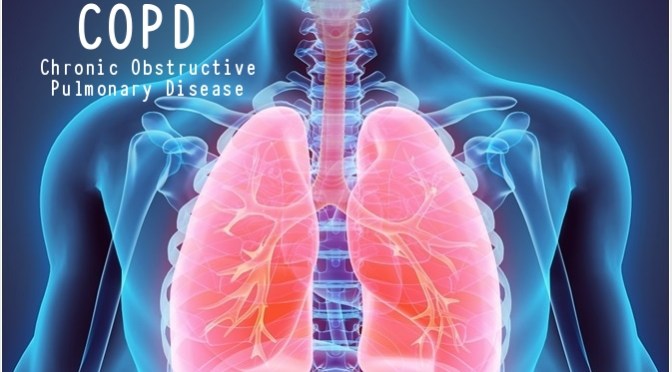
DR. C’S JOURNAL: COPD -CHRONIC OBSTRUCTIVE PULMONARY DISEASE

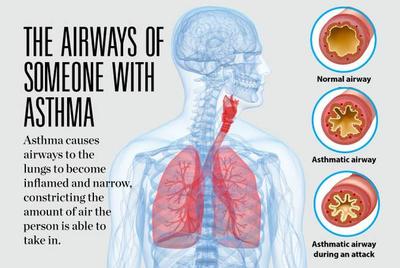
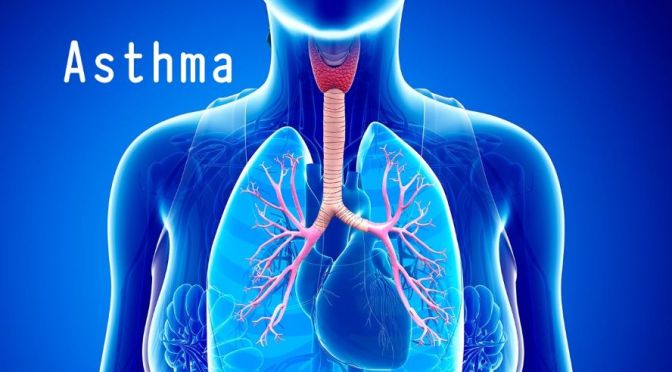
COPD is the brother of asthma. Both can cause shortness of breath and wheezing. Asthma is the more Treatable of the two, and is due to muscle spasm around the airways which narrow those airways making it more difficult to breathe in and especially out.
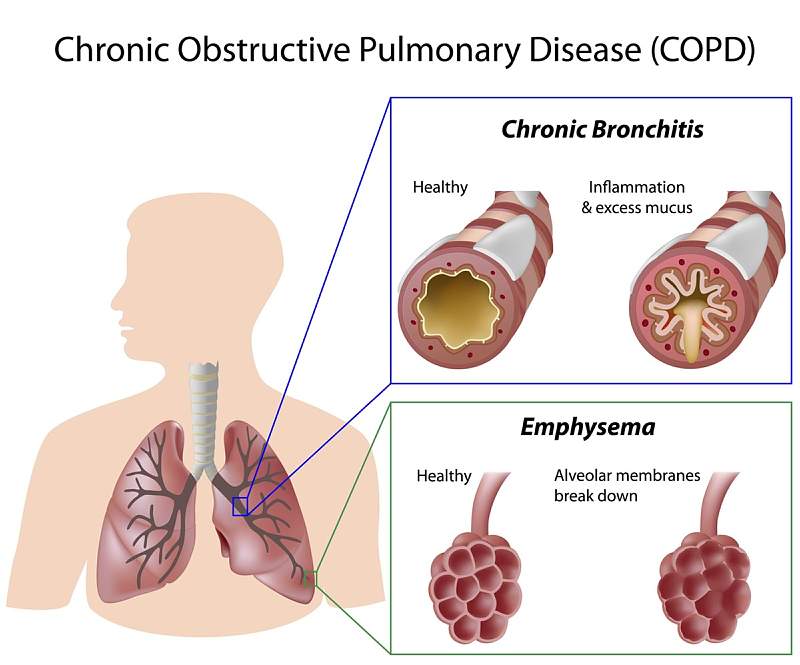
COPD comes in 2 general forms,  Chronic bronchitis and emphysema.
Chronic bronchitis is an inflammation of the airways, which differs from the usual allergic asthmatic TH2 type of inflammation. The inflammation of chronic bronchitis is the more common TH1 inflammation that comes from the likes of bacteria and viruses.

The second type of COPD is usually caused by cigarette smoke or other fumes which lead to the destruction of the air sacs and associated elastic tissue, allowing a check valve type of obstruction to occur on breathing out.

COPD is rarely a pure type of chronic bronchitis or emphysema, and is usually an admixture of the two. In fact there can be an “asthmatic element” mixed into COPD, which allows for a better response to the myriads of medication that we now have for asthma.

The symptoms of COPD include shortness of breath, wheezing, chest tightness and chronic cough with production of sputum. Coughing up a significant volume of phlegm from your chest suggests chronic bronchitis rather than emphysema.

The symptoms of COPD come on rather slowly and are usually not noticed until the problem is severe. After all, the cigarette smoker is EXPECTED to cough isn’t he?

As COPD becomes very advanced, fatigue, lack of energy, and unintended weight loss may occur. Swelling of the legs may be a problem and could indicate involvement of a heart; with COPD the right side of the heart has a hard time moving blood through the diseased lungs.

We’ve all seen people pushing around a cart with an oxygen tank. These people most often are smokers who developed COPD. One particularly disgusting advertisement against cigarette smoking showed a person with a hole in the windpipe (tracheostomy) through which he was smoking his cigarette.

Pulmonary function testing it’s often helpful in diagnosing asthma and COPD. In pulmonary function testing, the amount of air in the lungs  and the rapidity with which it can be expelled from the Lungs is measured and graphed. it is the rate of flow on exhalation that is diminished in COPD and asthma, the slower the rate the worse the blockage.

In the case of asthma the test is repeated after a bronchodilating adrenaline type medication has been given. The REVERSIBILITY of the airway obstruction is shown by comparing the airway function before and after treatment  With no improvement, usually COPD is usually the culprit.

In both asthma and COPD, respiratory infection is a big problem. The compromised lung is usually very vulnerable to these inflammatory reactions. There are a score of medications  that are commonly used in asthma which also benefit COPD to a certain degree. Doctors have a large armamentarium for respiratory disease these days.
As mentioned, asthma is more treatable. However if it is poorly treated or neglected, a condition known as REMODELING can occur which will render treatment less effectual.

Please check with the Mayo clinic article on COPD for more information.
—Dr. C.

Mayo Clinic article

DR. C’S JOURNAL: ASTHMA – DIAGNOSIS & TREATMENT

Asthma is a lung condition with narrowing of the airways, especially on exhalation, or breathing out. This narrowing leads to the musical sound on breathing the air out of the lungs that I heard so often with  my stethoscope and over the phone, when I was in active allergy practice. With an asthma attack, the blockage to airflow can become severe enough to dangerously raise the carbon dioxide concentration in the blood stream, and lower the oxygen content.

Many attacks occurred at night .Over the phone, I had older kids and adults take a deep breath, and count from 1 to 30 as rapidly as they could. If they could count out loud to 30 with one breath, at least the obstruction and attendant blood gas changes were not usually serious at that moment in time. That helped me decide whether or not I had to see them in the emergency room.

Asthma is an inflammatory condition of the lining of the airway that stimulates the smooth muscle surrounding the airway to constrict and obstruct flow of air, particularly on exhalation. Early on in my medical practice the main pathology was thought to be overactive airway muscles, and the main effort was to relax those muscles so that breathing could be easier. This was typically done with adrenaline injections, or the inhalation of adrenaline-like agents such as albuterol.

More sustained opening the airway was accomplished by oral theophylline. As time went on, it became  known that its effectiveness required a certain blood level. We had an HPLC machine in the office to measure this. 5 to 10 µg per milliliter was required for relief, and anything over 20 µg per milliliter was dangerous. Many cases of convulsions have been recorded in people with excessive blood levels.

We were always aware of the fact that cortisone medications would relieve asthma, but regular use of these drugs caused worrisome side effects such as interference with growth in children, osteoporosis, weight gain and loss of sleep or other problems. Most worrisome was the possibility of adrenal insufficiency and sudden death. We used Cortisone only as a last resort.

There was a group of young children especially 1 to 6 years of age that developed extreme asthma a few days after they developed a common cold. I found that giving prednisolone for two or three days at the start of a runny nose would block the advent of this asthma, without suppressing the adrenal gland. Three days of prednisone was also used to blunt severe attacks.

The excellence of Cortisone in the treatment of asthma should’ve told us that inflammation was a particularly important factor. It is now known that Asthma is not a disease of airway smooth muscle sensitivity per se, but rather a chronic inflammation of the airways that causes the muscles to be irritable.

Asthma is more common in allergic individuals, particularly when they are young. For this reason, the allergies are treated by avoidance of exposure to such things as cats, dogs, house dust and pollen.  Allergy injections to the skin test positive items is also useful.
Currently,  asthma is treated by inhaling special cortisone  preparations and long acting bronchodilators.

The chain of chemical reactions that cause asthmatic airway inflammation has become apparent over the years. Drugs to block these are available, and include special antibodies can be exceptionally expensive; but very effective.

The youngest of my former partners is still practicing Allergy, and almost never has to deal with acute severe asthma.
The beast has been tamed, if not conquered.

—Dr. C.

Mayo Clinic Article

DIABETES: HOW TO AVOID HEAT-RELATED ILLNESSES

MEDICINE: ‘AI’ CAN PREDICT RHEUMATOID ARTHRITIS

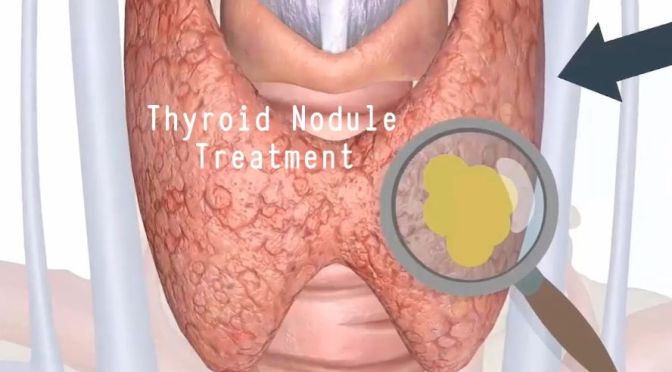
Endocrinology: Thyroid Nodule Treatment (Video)

The Endocrine Surgery Program at Massachusetts General Hospital provides multidisciplinary, specialized treatment for thyroid nodules, a lump that commonly occurs in the thyroid. If you think that you may have a thyroid nodule, you should be evaluated by a physician. In this video, Sareh Parangi, MD, endocrine surgeon at Mass General, shares more about what to expect for diagnosis and treatment of thyroid nodules.

Dr. C’s Journal: Rib Fractures & Cracks

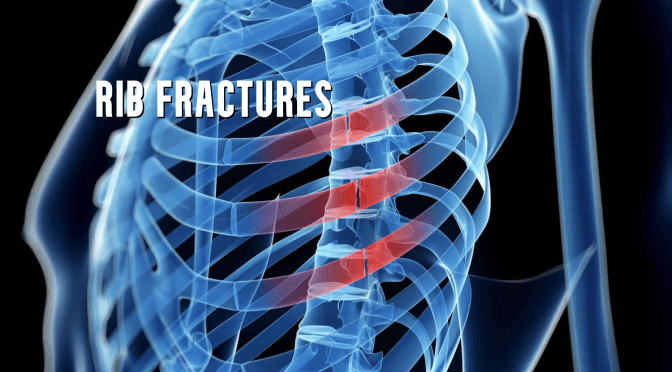
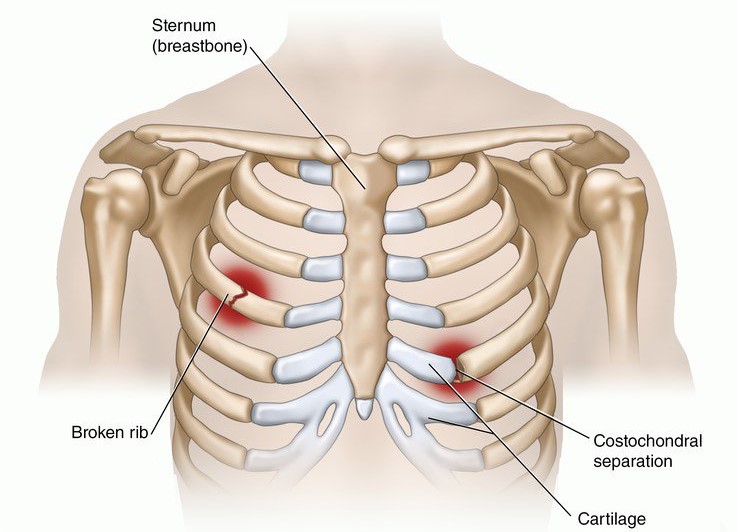
Broken ribs are fairly common, and if you’ve ever had one, you don’t want another. A rib fracture causes lots of pain, which is worse when you take a deep breath, press on the area, or twist your body.

The pain on taking a deep breath creates a catch 22, because taking a deep breath every few minutes is a good idea, if not essential to keep your lungs open and functioning, yet you don’t want to do it because it hurts a lot.

A rib fracture is usually caused buy a direct trauma to the chest from a fall, automobile accident, or sport.

Repetitive minor injury can also cause rib fractures. This can occur when you escalate your exercise to rapidly and stress a bone, like in the foot, or when you have a chronic cough that’s violent and continuous, which could cause a stress rib fracture.

Interestingly, children age 10-12 can stress their chests enough with a heavy backpack to cause a problem where are the ribs meet the breastbone, called the costochondral junction.

Any severe chest pain raises concern for heart disease, and the fact that it is worsened by pressure on a certain area, or by taking a deep breath can be reassuring. The doctor should be contacted depending on the severity of the pain and how certain you are it is related to trauma.

Of course, if the pain in the middle of the chest, feels like pressure or radiates, You would be foolish not to go to emergency room. The treatment for a rib fracture no longer includes taping the chest, but rather continuing to take occasional deep breaths and use medication if needed for pain.

Of course you need a doctor’s diagnosis in order to continue doing this. If the Fracture was due to a fall, you should definitely educate yourself on how to avoid falls in the future. In July 2020, I posted an article on falls that you could access by typing “falls” into the question box.

There are a variety of things you can do to prevent falling: remove clutter in the house, strengthen your muscles, check your eyesight, hearing, proprioception, and balance. There are even programs for teaching the elderly HOW to fall.

Please refer to the mayo clinic article on broken ribs for more detail.

—Dr. C.

Mayo Clinic Article

Empowering Patients Through Education And Telemedicine