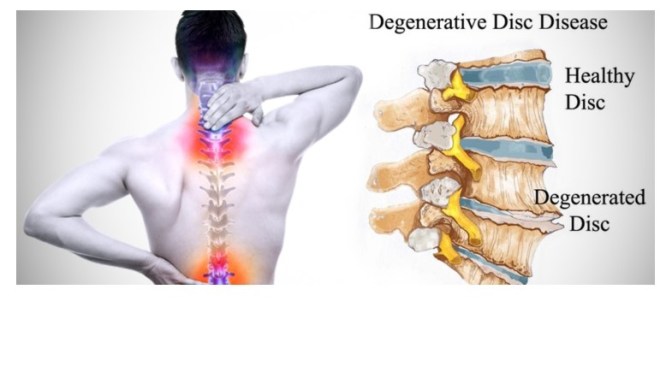
Aging: Degenerative Disk Disease Surgical Options

#DegenerativeDiskDisease is a common disorder linked to aging and years of wear and tear on the spine. Long-term therapies have so far eluded medical science.
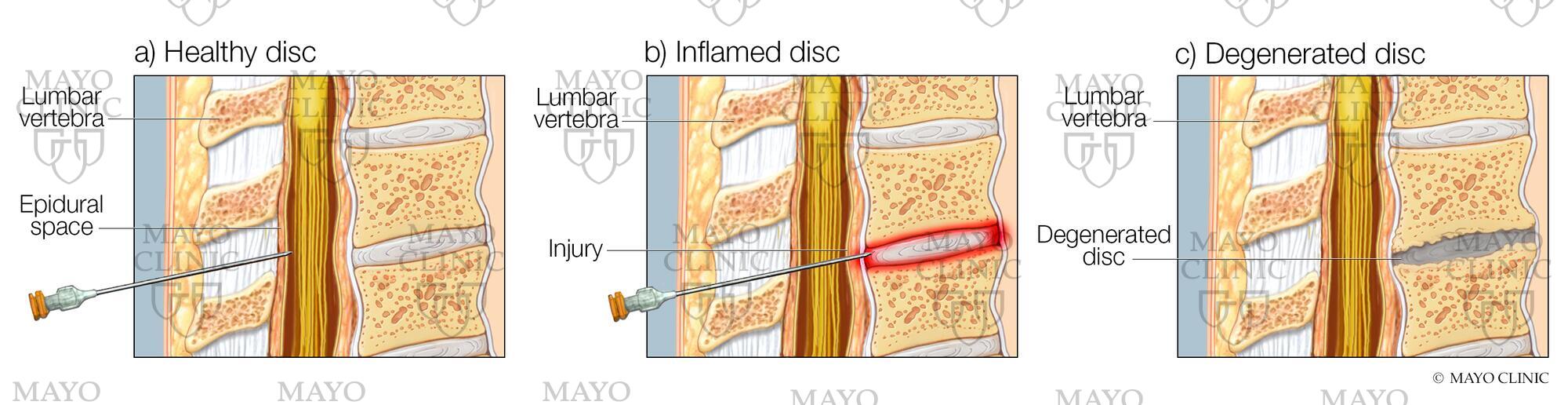
Image

LAMINECTOMY

Lumbar laminectomy

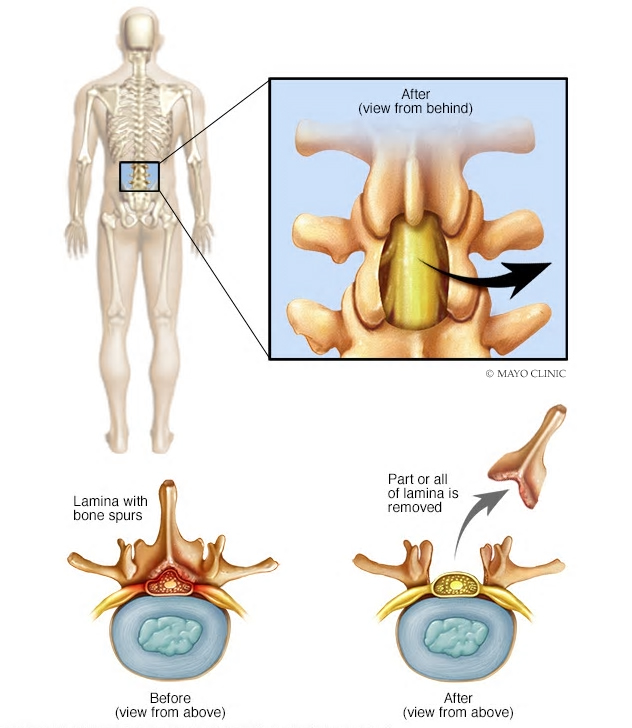
Laminectomy is surgery that creates space by removing the lamina — the back part of a vertebra that covers your spinal canal. Also known as decompression surgery, laminectomy enlarges your spinal canal to relieve pressure on the spinal cord or nerves.

This pressure most commonly is caused by bony overgrowths within the spinal canal, which can occur if you have arthritis in your spine. These overgrowths sometimes are referred to as bone spurs, but they’re a normal side effect of the aging process in some people.

Some patients are able to have a same-day laminectomy, which means they do not need to stay in the hospital following surgery and are able to go home to recover. The procedure is performed using minimally invasive techniques resulting in smaller incisions, lower risk of infection and, for many people, a quicker recovery.

SPINAL FUSION
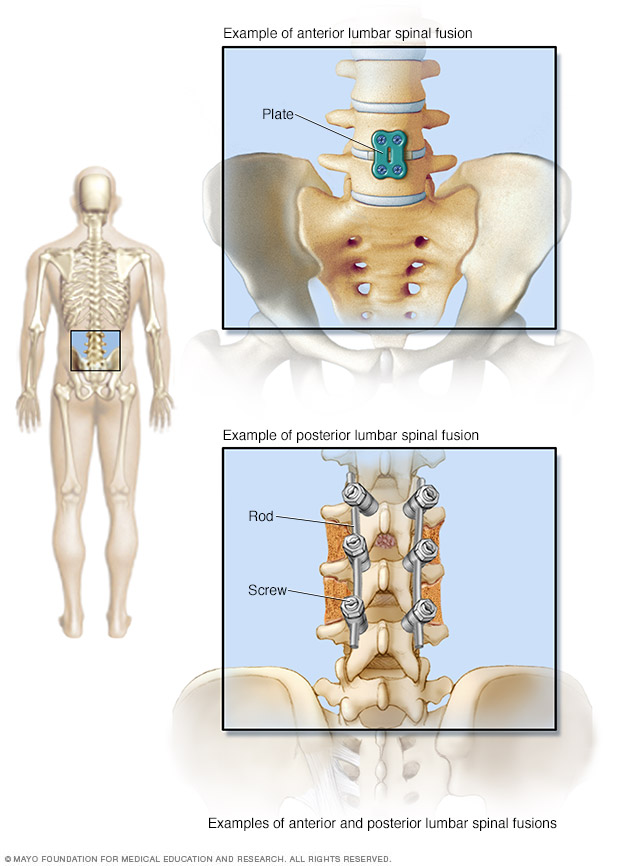
Spinal Fusion, Lower Back

Spinal fusion is surgery to permanently connect two or more vertebrae in your spine, eliminating motion between them. Spinal fusion involves techniques designed to mimic the normal healing process of broken bones. During spinal fusion, your surgeon places bone or a bone-like material within the space between two spinal vertebrae. Metal plates, screws and rods may be used to hold the vertebrae together, so they can heal into one solid unit.

Because spinal fusion surgery immobilizes parts of your spine, it changes the way your spine can move. This places additional stress and strain on the vertebrae above and below the fused portion, and may increase the rate at which those areas of your spine degenerate.
Read more at Mayo Clinic

Insulin Resistance: Risk Factors And Treatment

Learning about insulin resistance, or prediabetes, can be intimidating. Eleanna De Filippis, M.D., Ph.D., an endocrinologist at Mayo Clinic, walks you through the facts, the questions, and the answers to help you better understand this condition.

Video timeline: 0:00 Introduction 0:41 What is insulin resistance? 1:32 Who gets insulin resistance? / Risk factors 2:38 Symptoms of insulin resistance 4:04 How is insulin resistance diagnosed? 4:34 Treatment options 5:21 Coping methods/ What now? 5:41 Ending

COMMENTARY:

The (developed) world just has too much food. Food producers race with each other to make It tastier, to advertise it widely, and make it available on demand. As a consequence of their success, at least 1/2 of the developed world is overweight and has decreased insulin sensitivity, prediabetes or diabetes. This leads to severe health consequences in the form of hypertension, arteriosclerosis, heart disease, brain disease, liver disease, and a variety of back and joint problems.

Mankind did not evolve in an environment of chronic nutritional oversupply, but rather it’s reverse. Mankind did not develop in a sedentary environment, but rather it’s reverse.

Insulin resistance is caused by overfilled energy stores (excess fat), increased inflammation from distended, dying fat cells, excess fatty acids and stresses to some of the important micro structures in our cells, such as mitochondria and endoplasmic reticulum, not to mention metabolic pathways such as the mTOR and Sirtuin systems.

Eating is a pleasure, and turning down food takes self-discipline, which is a pain, and is becoming increasingly unpopular. “Maybe a pill will come along to get rid of fat and prevent its accumulation”. but don’t count on it. The main hope for avoiding the danger of overnutrition is being discriminating about what and how much you eat.

Exercise is inconvenient and uncomfortable, but is the second necessity for a healthy life. Two of its many benefits is to increase adiponectin, which increases burning of the fatty acids which are so toxic to the body, and to increase insulin sensitivity, counteracting type two diabetes.

The third necessity is getting enough sleep.

Replay the old record. Diet, exercise and sleep, sleep  diet and exercise.

Please excuse me, it’s time for my evening exercise.

—Dr. C.

For more reading visit: https://mayocl.in/3waShVV.

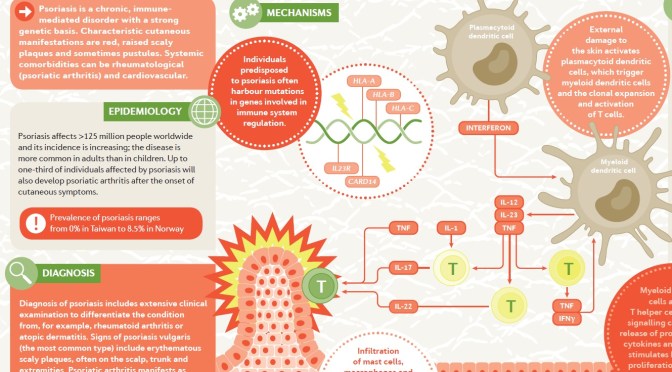
Infographic: Diagnosis & Treatment Of Psoriasis

Psoriasis is a skin disease that causes a rash with itchy, scaly patches, most commonly on the knees, elbows, trunk and scalp.

Psoriasis is a common, long-term (chronic) disease with no cure. It can be painful, interfere with sleep and make it hard to concentrate. The condition tends to go through cycles, flaring for a few weeks or months, then subsiding for a while. Common triggers in people with a genetic predisposition to psoriasis include infections, cuts or burns, and certain medications.

Treatments are available to help you manage symptoms. And you can try lifestyle habits and coping strategies to help you live better with psoriasis.

Website

COMMENTS ON ‘PSORATIC ARTHRITIS’:

My practice was restricted to allergy, but I saw many patients with psoriasis. The red scaly patches made them think they had allergic dermatitis, eczema. Psoriasis on the arm is usually located on the elbow, and atopic dermatitis on the opposite side, in the flexural area. Thick, pitted fingernails are also common in psoriasis. It’s combination with arthritis is worrisome.

Psoriasis will usually develop first, and the psoriatic arthritis will follow years later, but 10% of the time the arthritis Is the first problem. This form of arthritis can be very painful, and cause deformities. It is often worse than rheumatoid arthritis, although does not affect as many joints, and is often asymmetrical. It inflames the area where tendons attach to the bone, which is one of the reasons that it can be more painful than rheumatoid arthritis.

Psoriasis is an autoimmune problem and can involve practically any organ in the body.

It is often associated with metabolic syndrome and diabetes.

Psoriatic arthritis does not have the rheumatoid serum markers that can help diagnose rheumatoid arthritis, and unless psoriasis is also present on the skin, it can be hard to diagnose.

Symptomatic treatment with NSAIDs, physical therapy, phototherapy and topical treatments can be helpful, but very expensive biologics are sometimes needed to help out methotrexate and other first line DMARDs (Disease modifying antirheumatic drugs).

This condition can be  progressive.  If you develop scaly red patches on your skin, be sure to check with the doctor about the possibility of psoriasis.

—Dr. C.

Rotator Cuff: Operative & Non-Operative Treatment

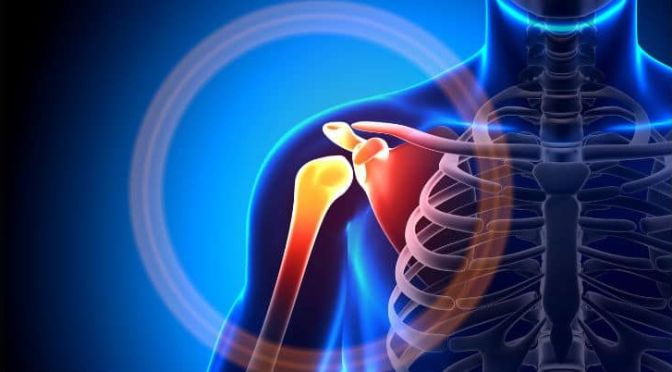
The rotator cuff is a group of muscles that attach via tendons to the head of the upper arm bone (the humerus). The function of the cuff is to center the head of the humerus in the socket and move the arm. These tendons are in a constant state of rebuilding and breaking down.

When the rate of breaking down exceeds the ability of the tendon to rebuild, micro tears occur causing pain and inflammation. This inflammation is known as tendonitis. In the extreme case, this inflammation can result in the failure of the tendon known as a rotator cuff tear. Repetitive overhead activity or heavy lifting can irritate or weaken the tendon.

Sometimes this can also lead to a gradual tear in the rotator cuff tendon making it difficult to raise or rotate your arm. Acute tears can also happen with a sudden force that overwhelms the tendon such as a shoulder dislocation. This results in an immediate inability to raise or rotate the arm.

Dr. C’s Journal: Bee Sting Allergies And Reactions

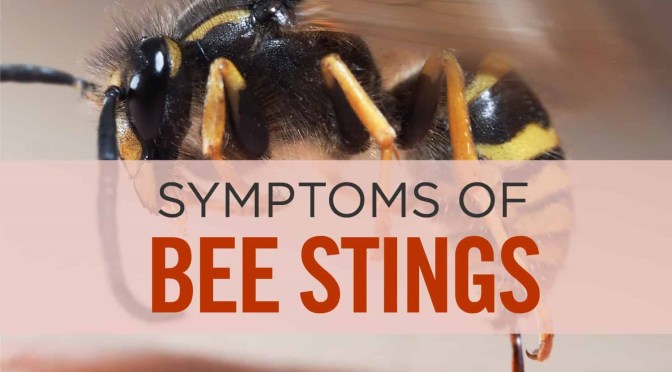
Almost everybody experiences a bee sting sometime in their life, although only a few people have more than a mild reaction to the stings. Adults react more commonly than children, and old people more seriously than young.

Anaphylaxis, which is potentially fatal, is the main worry about bee stings, although if you get stung in your throat, or by 10 or more insects there is risk of problems from the venom alone.

The usual reaction to a bee sting is sudden pain, a small swelling that lessens later in the day, after which there is recovery. A large local reaction can occur where the swelling increases over a 2-3 day period and can last for 7 – 10 days. This is called a large local reaction, and considered to be an allergy, but carries no increased likelihood for anaphylaxis.

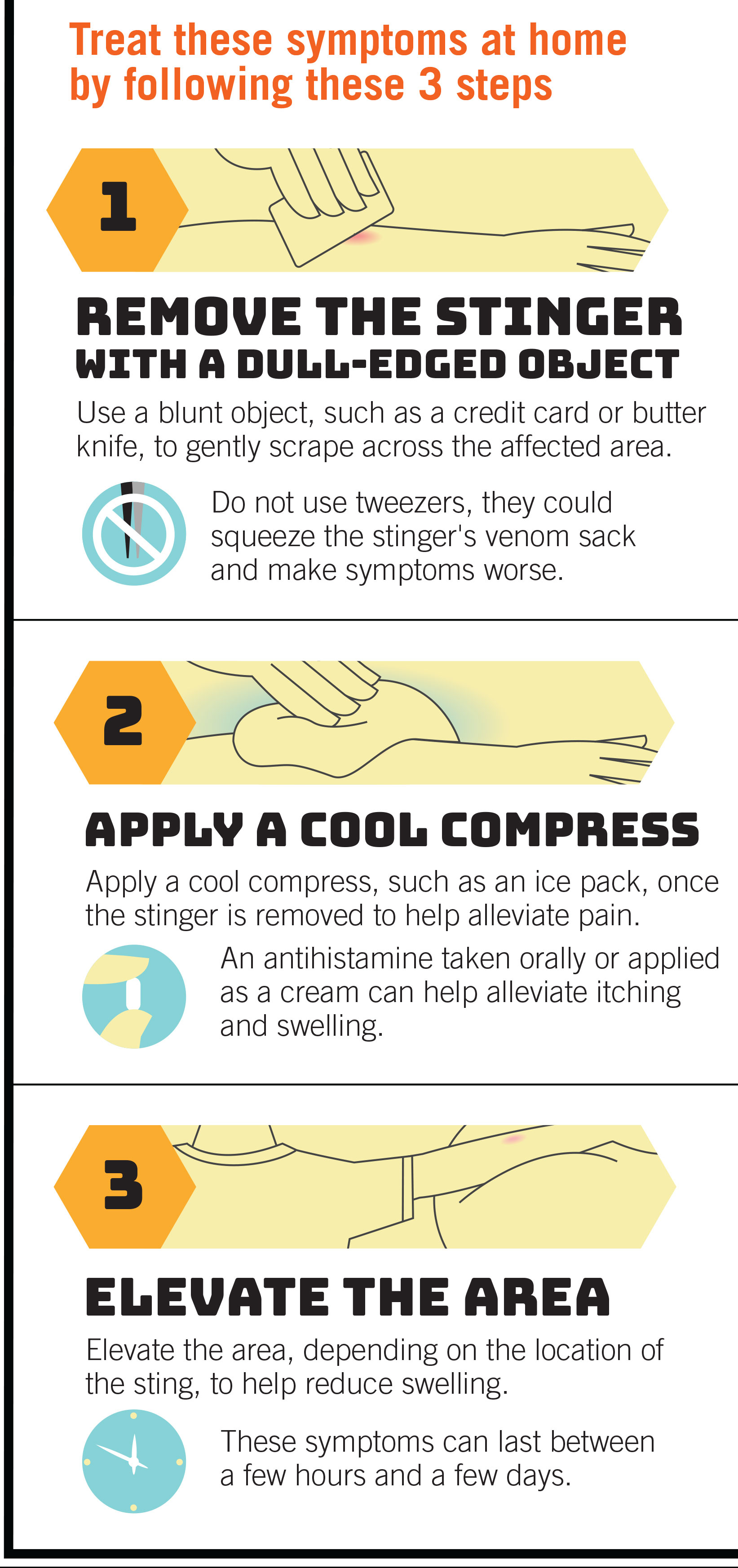
A bee sting with hives developing on the skin but no other symptoms usually requires nothing more than an antihistamine. Interestingly, I had a bee sting on my foot after walking on the beach, became itchy all over and developed hives, received desensitization, and had no more trouble with the several stings I had later.

Anaphylaxis is defined as a reaction distant to the site of the bee sting that involves more than one organ system. For instance you might have hives and wheezing, hives and dizziness, or any number of other combination of organ involvements or sickness.

If anaphylaxis results from the sting, it is best to be referred to an allergist.

Interestingly, bee sting allergy is NOT more common with allergic individuals, even though they may have more severe reactions. Apparently, the sting reactions are dependent upon an excess number of a cell called the mast cell, and this is determined by a serum test for tryptase.

The allergist usually performs skin or blood tests to determine whether there is sensitivity to insect stings; in addition to the Honeybee, yellow jackets and to a lesser degree other stinging insects called Hymenoptera can produce analyphaxis.

Desensitization is the only curative treatment for anaphylactic reactions to stinging insects. In addition, rapidly administered epinephrine or adrenalin, such as an EpiPen, as well as antihistamines, are usually kept on hand for use in case of a bee sting.

When I first started practice, we made our own extracts using the whole bee. Unfortunately, the digestive tract enzymes in the bee destroyed the protein of the venom so that our materials were not sufficiently active. Even after pure venom extracts became available, we also would give injections to individuals who developed hives as the only reaction other than the pain and swelling of the sting. A large study showed that  desensitization for a large local reactions, or hives only, was not warranted.

Medical science continues to advance, and you are well advised to go to the best-trained specialist you can find for bee sting anaphylaxis. Your life may depend on it.

—Dr. C.

Bacteria: The Risks Of Pseudomonas Aeruginosa

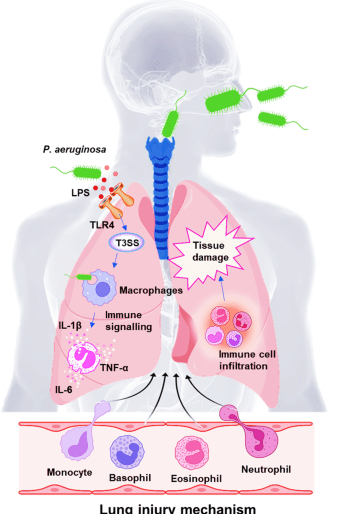
Bacteria have long been classified according to how they are stained by the chemical dye called the Gram stain. Pseudomonas aeruginosa is Gram-negative, compared to the Staph aureus which is gram-positive.

Being Gram negative, Pseudomonas has an extra membrane, the outer membrane, and a shell of a nasty material called Lipo polysaccharide. These extra structures act as a barrier to entrance of antibiotics. In addition, the Pseudomonas has many more genes than the average bacterium and uses these genes for adaptation. For instance, it is good at forming a raft of mutually supporting cells called a biofilm, which enables it to become particularly entrenched. In a condition of the lung called cystic fibrosis, this biofilm contains specialized cells, one of which is called the Persister cell. When Pseudomonas senses that a critical number of bacteria is present, called quorum sensing, the persister cell multiplies to become around 10% of the bacterial population, and slows down their metabolism massively, becoming a sort of “zombie cell”. These cells are very hard to kill and persist through an antibiotic treatment that kills other Pseudomonas cells, only to rev up their metabolism and become active again once treatment is withdrawn.

In addition, Pseudomonas has all of the other resistant talents mentioned in the previous article on Staphylococcus aureus, such  as plasmid acceptance, ability to destroy penicillin, efflux pumps, and rerouting of metabolism.

In trying to control Pseudomonas, techniques other than antibiotics are being tried out of desperation, including interference with a quorum sensing, use of bacteriophages and chemical  elements such as Gallium which masquerades as the iron this bacterium requires.

Pseudomonas is not as actively pathogenic as Staphylococcus aureus, but it has made a great niche for itself in the respiratory tract, especially in people with a compromised immune system, or pulmonary abnormality such as cystic fibrosis. Ventilation tubes and other hospital equipment can become contaminated and spread the infection, unless thoroughly cleansed of Pseudomonas; it is very sensitive to acidic solutions, and those who need nasal CPAP for sleep apnea may recall that they have to rinse their equipment in vinegar, or acetic acid. Swimmers can get an external ear infection with this organism, and the drops for swimmers ear often contains acetic acid.

The next rogue to consider is a frightful yeast called Candida auris.

—Dr. C.

Diet: Benefits Of Eating Blueberries (Mayo Clinic)

Blueberries might be the best example of how good things come in small packages. Dietitian Anya Miller says that includes protection for your heart, thanks to something called an anthocyanin – a compound in these berries that gives them their deep blue hue. Studies have shown eating foods high in these anthocyanins can help lower your risk of developing coronary heart disease. Besides the heart-healthy perk, that serving of blueberries will get you some vitamin C, dietary fiber and natural sweetness. That makes them blueberries a boost for physical and mental health.

COMMENTARY;

Anthocyanins are a member of the flavonoid plant-chemical family and are responsible for the red and purple colors of many fruits and vegetables. They are pleiotropic (Multi faceted )In their health benefits, and are good for diabetes and metabolic syndrome, obesity, cardiovascular disease,  inflammation, dementia and cancer. If this sounds almost too good to be true, the OPTIMAL AMOUNT of anthocyanins has not yet been determined. let’s hope that you cannot ingest too much of these marvelous substances, and that they don’t follow the path of vitamin C, an excess of which can prove detrimental to inflammatory defenses..

On the optimistic side, it’s been stated multiple times in the literature that antioxidant and free radical effects are just part of the benefits conferred by anthocyanins, and that the mechanism of benefit remains to be discovered.

Anthocyanins are present in blueberries, blackberries, bilberries, cherries, red cabbage and so many other fruits and vegetables. The benefits of a fruit and vegetable-based diet have been extolled for a long time, and I am buying into this narrative.

The large amount of fiber present in fruits and vegetables is an independent benefit, not to mention taking up space in the stomach that could displace red meat, saturated fat, and that great enemy of modern civilization, sugar.

Be sure to eat your fruits and vegetables as such, and not in the form of juices, which have the habit of being sweetened, or in the case of tomatoes, loaded with salt.

With fall coming on, also remember that anthocyanins form the basis for much of the brilliant reds and oranges present in the fall leaves; They nourish the eyesight along with the rest of the body.

—Dr. C.

Infographic: Acute Heart Failure (Nature Reviews)

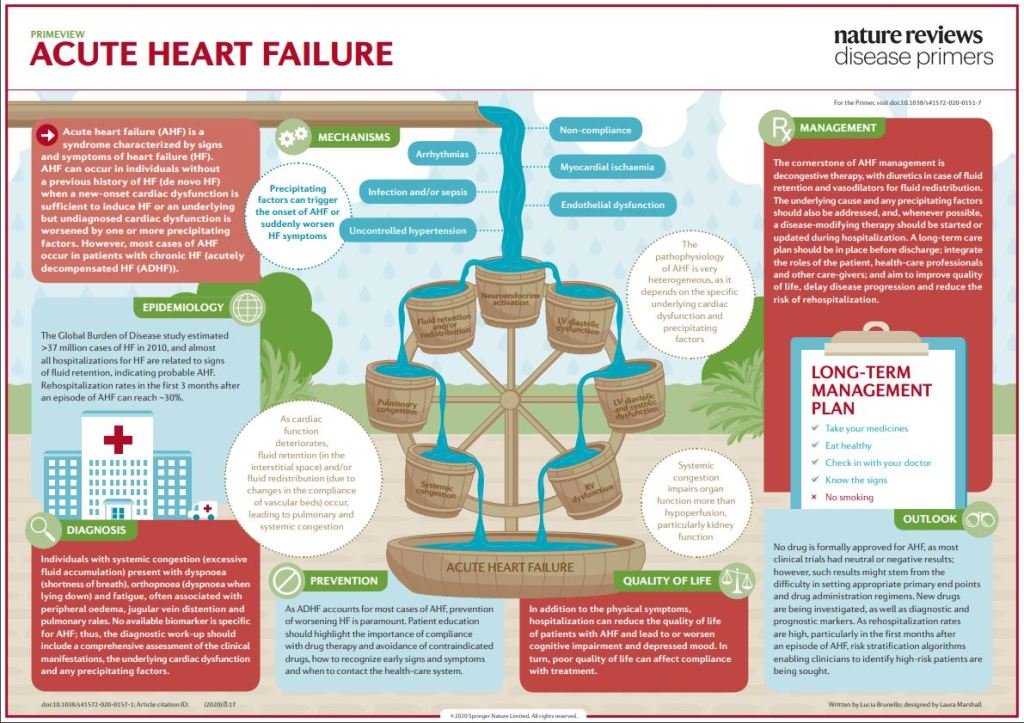
Acute heart failure (AHF) is a syndrome defined as the new onset (de novo heart failure (HF)) or worsening (acutely decompensated heart failure (ADHF)) of symptoms and signs of HF, mostly related to systemic congestion. In the presence of an underlying structural or functional cardiac dysfunction (whether chronic in ADHF or undiagnosed in de novo HF), one or more precipitating factors can induce AHF, although sometimes de novo HF can result directly from the onset of a new cardiac dysfunction, most frequently an acute coronary syndrome.

Despite leading to similar clinical presentations, the underlying cardiac disease and precipitating factors may vary greatly and, therefore, the pathophysiology of AHF is highly heterogeneous. Left ventricular diastolic or systolic dysfunction results in increased preload and afterload, which in turn lead to pulmonary congestion. Fluid retention and redistribution result in systemic congestion, eventually causing organ dysfunction due to hypoperfusion. Current treatment of AHF is mostly symptomatic, centred on decongestive drugs, at best tailored according to the initial haemodynamic status with little regard to the underlying pathophysiological particularities.

As a consequence, AHF is still associated with high mortality and hospital readmission rates. There is an unmet need for increased individualization of in-hospital management, including treatments targeting the causative factors, and continuation of treatment after hospital discharge to improve long-term outcomes.

COMMENTARY:

High frequency sound (ultrasound) bounces off of tissues, like an echo,  and allows an electronic look at the heart. Doppler echocardiography is the doctors method of choice for evaluating a heart failure. One of the most important numbers determined by this method is the EJECTION FRACTION, which is a measure of heart efficiency. If the ejection fraction is low, let’s say below 45%, the heart is pumping out only 45% of its volume with each stroke, which means it must work harder to produce the same amount of circulation. The normal is about 60%.

This is the basis of SYSTOLIC Heart failure.

The test can also tell about blood coming into the heart; the early part of the blood entering is usually 80% of the total. If it drops, let’s say below 50%, it means the heart is stiff and resists blood coming in, which is the basis of DIASTOLIC heart failure.

FACES Is an acronym-mnemonic for the symptoms of heart failure. F is for FATIGUE.

A is for ACTIVITY LIMITATION. C is for CONGESTION in the lungs.  E is for EDEMA, or swelling, usually of the ankles and legs. S is for SHORTNESS of BREATH.

If you want to remember a bit about heart failure, think about echoes and faces. If your Doctor orders an ultrasound with Doppler, be sure to ask about your ejection fraction and percent of blood that enters early, before the “atrial kick”. Being informed is always a good thing.

To be honest, I have never encountered a person who was given a Doppler echocardiogram and could tell me what his ejection fraction was, but I am eternally hopeful.

—Dr. C.

Empowering Patients Through Education And Telemedicine