
Category Archives: Surveys

Survey: 85% Of Physicians Favor Telehealth To Treat Opioid Use Disorder (Yale)

Asurvey of more than 1,000 registered physicians who used telehealth services to treat patients with opioid-use disorder during COVID-19 found that an overwhelming majority favor making telehealth a permanent part of their practice.

Yale School of Public Health – The findings of the Yale School of Public Health (YSPH) study provide new support for the use of telehealth technology in treating opioid-use disorder. Policymakers currently are debating whether existing regulations allowing for telehealth during the COVID pandemic should be extended temporarily as the pandemic wears on — or made a permanent part of treatment practice options.

“Recent exposure to telehealth due to the COVID-19 pandemic has promoted the perspective among the physicians surveyed that it is a viable and effective treatment option for patients,” said the study’s lead author Tamara Beetham, MPH, a PhD student in health policy and management at YSPH. “Findings like these could have major implications for the future of telehealth regulation. Continued flexibility would allow more individuals to access life-saving treatment.”

A staggering 107,622 people in the U.S. died of drug overdose in 2021, a 15% increase from 2020, according to the U.S. Centers for Disease Control and Prevention. Physicians frequently prescribe buprenorphine to treat opioid-use disorder and reduce the risk of overdose. Patients must regularly follow up with their provider as part of their treatment.
READ MORE

Technology: How AI Can Improve Diagnostics (GAO)

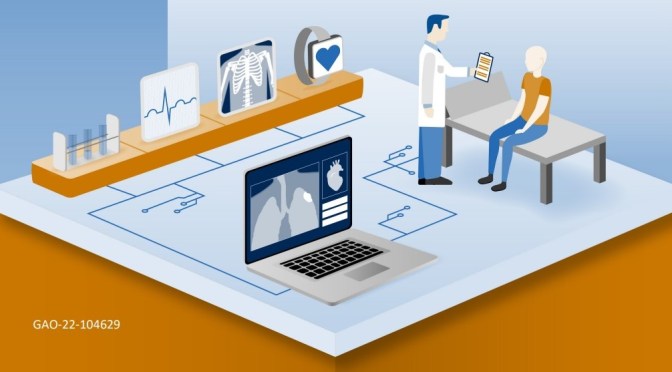
Each year, medical diagnosis errors affect the health of millions of Americans and cost billions of dollars. Machine learning technologies can help identify hidden or complex patterns in diagnostic data to detect diseases earlier and improve treatments.

Several machine learning (ML) technologies are available in the U.S. to assist with the diagnostic process. The resulting benefits include earlier detection of diseases; more consistent analysis of medical data; and increased access to care, particularly for underserved populations. GAO identified a variety of ML-based technologies for five selected diseases

  • Certain cancers,
  • Diabetic retinopathy,
  • Alzheimer’s disease,
  • Heart disease,
  • COVID-19

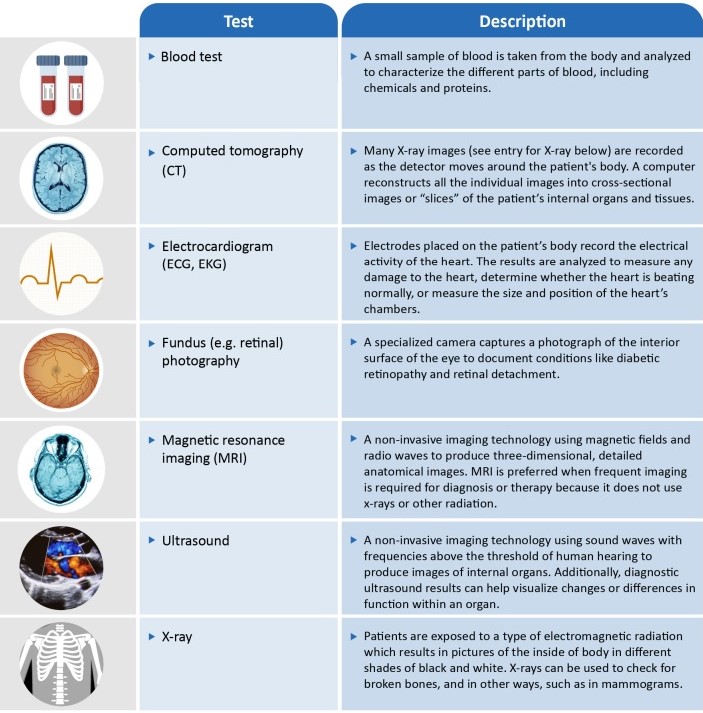
Most technologies relying on data from imaging such as x-rays or magnetic resonance imaging (MRI). However, these ML technologies have generally not been widely adopted.

Read more

Telemedicine: New Survey Finds Virtual Care Is Now Mainstream Care Delivery

“Telemedicine is here to stay,” said Dr. Rahul Sharma, professor and chair of emergency medicine at Weill Cornell Medicine and co-author of a commentary on the results. “Health care organizations really need to think about the next steps regarding the future of virtual care, such as how we integrate it into our systems, and how to make sure we are meeting the needs of both our clinicians and our patients.”

The survey, conducted in March, polled members of NEJM’s Catalyst Insight Council who are clinicians, clinical leaders and executives in organizations that deliver care. The survey received 984 responses from around the world, 609 from the United States. Dr. Sharma, who is also emergency physician-in-chief at New York-Presbyterian/Weill Cornell Medical Center and executive director of the Center for Virtual Care at Weill Cornell Medicine, helped formulate the questions with his co-author Dr. Judd E. Hollander, senior vice president of health care delivery innovation at Sidney Kimmel Medical College at Thomas Jefferson University in Philadelphia.

Of U.S. respondents, 71 percent reported that telemedicine has improved patient health, while a similar proportion said it provides at least moderate quality specialty or mental health care. For primary care, that share was 81 percent. When responses across all countries are included, the results differ only slightly from those of U.S. respondents.

Read more