Category Archives: Resources

Dr. C’s Journal: Pain Without Treatable Cause

Pain is useful to survival, and therefore is evolutionarily conserved. There is a very rare syndrome with the congenital inability to experience pain that Is caused by mutations in the SCN9A gene, which codes for a sodium channel (Nav 1.7). Research on this channel has apparently produced some advances in pain medication, but not as much as expected.
Individuals with insensitivity to pain have many accidental injuries which can cause blindness, mutilations of the extremities, and other severe problems. Lack of ability to feel pain is serious handicap.

Pain is generally a useful red flag that warns us to stop the painful activity, or guides us into the doctors office; about half of all medical visits involve pain of some sort.

Considered as a symptom, pain helps guide the physician into the proper diagnosis and treatment. Normally the pain stops when the condition that produced it is corrected. Pain sometimes outlives it’s usefulness, however, and becomes a major problem on his own. The most obvious condition is “phantom limb pain”. Most people who have had an amputation will continue to experience pain in the extremity that is no longer present.

Back pain that has no valid surgical treatment will sometimes drive individuals to surgeons who will operate on them unsuccessfully. A second opinion, preferably by a medical doctor like a neurologist, is always a good idea with back pain without sciatica, numbness, or other localizing symptom to tell the doctor where to operate.

Neuropathic pain is another conundrum. I know of an individual who was bitten on the foot by a dog, and continued to have severe foot pain for many years after the original injury healed.

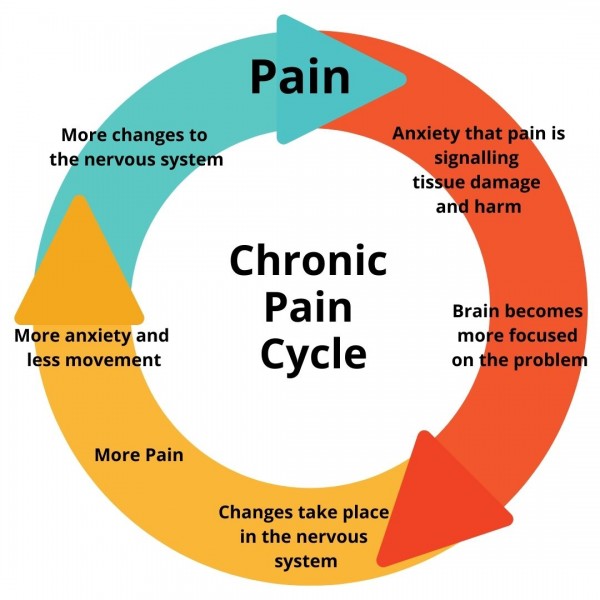
All pain is interpreted in the brain, and continuing circles of central nerve activation is the leading theory of phantom limb and neuropathic pain. Pain is not objectively measurable; there is no meter that you can attach to the patient and find how much pain they are actually having. The doctor must assume that the patient has the pain they are describing, and ask the patient to rate it on a 0 to 10 scale, describe its severity, time course, quality, and any factors that will make it better or worse. Most often this produces an avenue to treatment, but sometimes not.

A few decades ago, busy doctors would label the pain that they could not diagnose as “psychological”, and dismiss the patient to suffer in silence. Much of the pain, however, was very real to the patients, who joined in patient advocacy groups and produced a political backlash which induced doctors to overtreat the pain, often with opioids.

The over-prescribing  doctors, and unscrupulous drug companies led to the flooding of the market with opioid medication, leading to the opioid crisis that is now being addressed. There is difficulty in making scientific progress on an adversary that cannot be measured properly.

Some doctors, usually anesthesiologists, specialize in treating the chronic, severe pain that standard medical practice has been unable to diagnose or alleviate.

They may use nerve blocks, antidepressants and combinations of different pain medication. Judicious propofol has been used also not only for chronic undiagnosed pain, but also depression.

My wife had a pain problem which responded to a combination of two simple medications, motrin and acetaminophen. The suggested overall approach is to get the best medical care available to diagnose the cause of the pain, and ask for a pain management referral if a solution is not found.

More information can be found in the appended Wikipedia article.

—Dr. C.

Read more

CANCERS: DIAGNOSING CARCINOID TUMORS

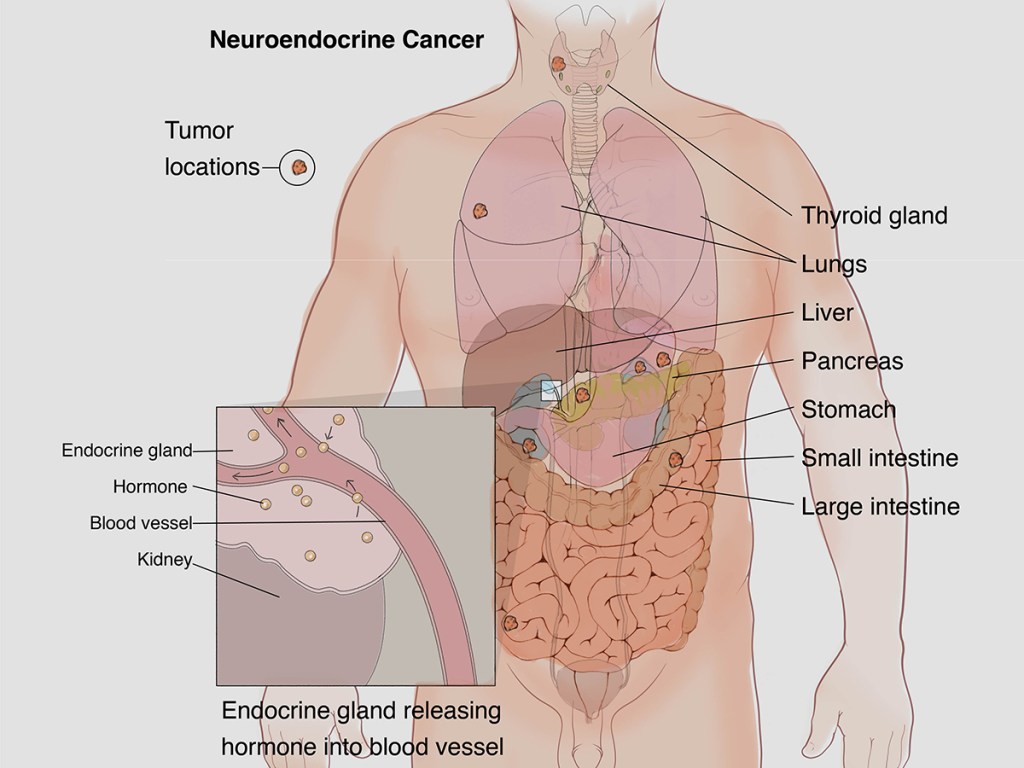
Cancer is a huge problem, since it is actually a collection of a lot of different diseases in different places, resulting from mutation of the genes and invasiveness as the common characteristic. All cancers are different.

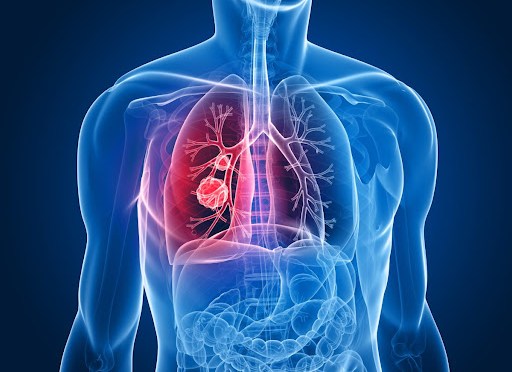
Carcinoid tumor is a good illustration. These are so called neutoendocrine tumors. They are slow growing, and are usually not detected until they are quite advanced. They can be located in different organs such as the gastrointestinal tract and the lung.

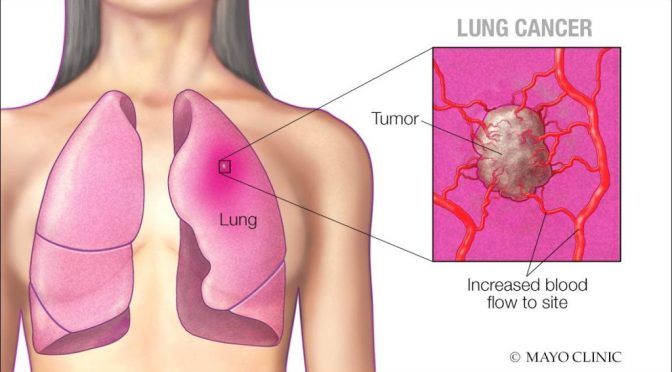
In their vicinity they produce symptoms characteristic of the area; trouble swallowing, nausea, vomiting, constipation and abdominal pain for gastrointestinal carcinoid, and cough, wheezing, shortness of breath and chest pain for those located in the lung.

Many advanced cancers can produce weight loss, muscle pain and fatigue In addition to symptoms characteristic of their location. The special characteristic of carcinoid tumors is that they may secrete substances that produce diverse symptoms such as  flushing of the skin, sudden diarrhea and vomiting and, strangest of all, heart valve leakages.

Diagnosis of carcinoid tumors is often made by checking for serotonin or chromogranin-A in the blood, and 5-Hydroxy indolacetic acid ( 5-HIAA) in the urine, and locating the tumor with Imaging such as CT and MRI.

It is usually treated best for surgery, but cell surface somatostatin can be targeted for hormone therapy, and targeted radiotherapy with PRRT. It is very much to the advantage of the patient if she has a tumor with specific hormone or other marker that can be targeted for treatment, such as a breast cancer with estrogen receptors that can be targeted by tamoxifen.

Please check the accompanying mayo clinic article for more information.

—Dr. C.

Read more

DR. C’S JOURNAL: CAUSES & SIGNS OF COLON CANCER

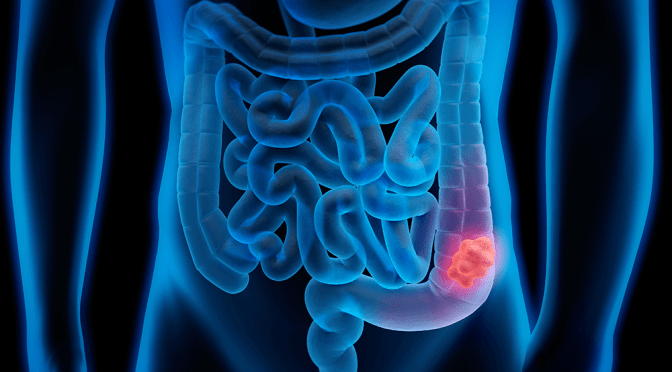
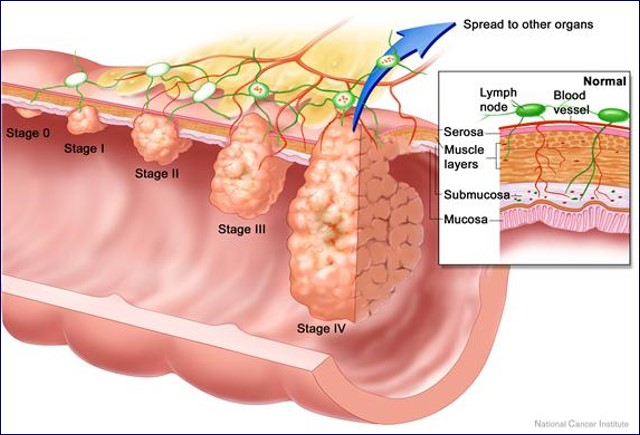
Colon cancer is one of the most common of all cancers, and one of the deadliest. Occurring out of sight in your intestinal tract, it often becomes advanced before it is first detected.

Any bowel symptoms, such as persistent diarrhea, constipation, or abdominal discomfort might be a warning symptom and indicate a trip to the doctor. Blood in the stools, either bright red or black and tarry, must be diagnosed. Unexplained weakness, fatigue, or weight loss might indicate cancer that is too far advanced for simple treatment, and of course requires a trip to the doctor.

The most satisfactory way to pick up the cancer is by a screening test called a colonoscopy. A virtual colonoscopy by x-ray is also used, but it still requires the most uncomfortable part of the procedure, the preparation; The bowel must be washed out in order to properly visualize the cancer, or more likely pre-cancerous polyps or growths.

Due to the increase in frequency of colon cancer in young people, the age at which screening colonoscopy is medically advisable has been lowered from 50 to 45. A tendency to get colon cancer, or more commonly colon polyps, can run in families. These are best discovered by colonoscopy starting at an earlier age.

Increased age, or chronic inflammatory conditions such as ulcerative colitis can predispose to colon cancer.  If you eat a lot of junk food (low fiber diet), or a lot of fat, You may be more susceptible. If you have a sedentary lifestyle, diabetes, smoke  or drink alcohol, you may be more likely to develop this problem.

As usual, preventative measures are the best advice. Eating a lot of fruits, vegetables and whole grains might protect you. Exercising most days of the week and maintaining a healthy weight are good ideas. Limiting your alcohol and stopping smoking is always good advice.

I was a good boy and had colonoscopies every two years for a long time. I would have been happier had there been a blood test to pick up this dreaded disease. There are some simple tests like carcinoembryonic antigen, and a stool test for occult(hidden) blood, but these are not very accurate.

For treatment of colorectal cancer and other more complete information, please check with the following mayo clinic article.

—Dr. C.

Read more

THE DOCTORS 101 CHRONIC SYMPTOMS & CONDITIONS #61: EDEMA (SWELLING)

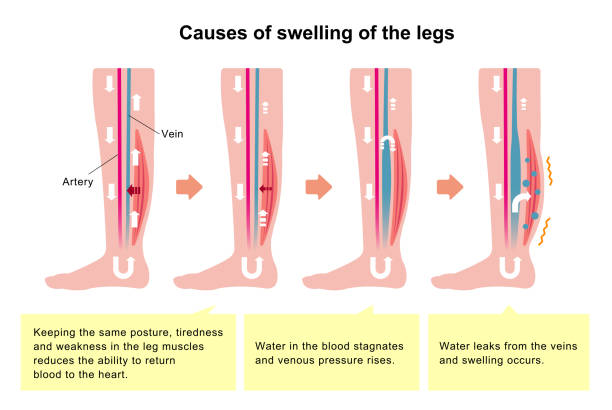
Swelling of the ankles becomes increasingly common as you get older. This swelling can be caused by thrombophlebitis, or skin infections which have been discussed in previous articles. Otherwise it is usually part of a condition called edema.

Edema is commonly caused by problems in the cardiovascular system, kidneys, or liver. Edema can occur in the face and abdominal cavity or elsewhere, But because of gravity and the fact that we are  usually upright-on our feet, it is usually is most prominent in the legs, especially the ankles. Edema can be caused by a normal pregnancy. The developing baby puts quite a strain on the heart and circulatory system.

Chronic accumulation of fluid in the tissues usually occurs because of heart and blood vessel problems, liver disease (albumin lack), diet (excess salt intake), kidney disease (deficient salt excretion), vein problems (valve malfunction), and lymphatic problems (surgical lymph node excision).

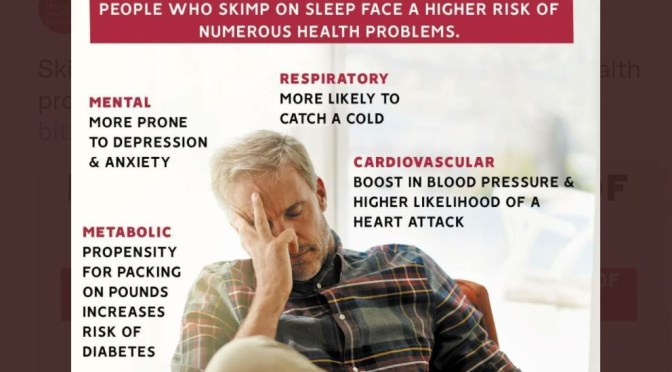
Obesity contributes by impacting the heart and liver primarily. Proper sleep, diet and exercise help in most of these areas, and edema is rare in healthy people.

I have always considered sugar(obesity, cardiovascular effects) and salt(hypertension, cardiovascular and  kidney load) as poisonous. I discovered the valve incompetence in the veins of my left leg because it became more blue than my right leg. With good exercise, sleep, diet program and compression stockings, edema never occurred.

The swelling and stretched shiny skin in the ankles that I see in many of my overweight friends makes a tempting target for germs of all kinds. and small skin sores often follow.

If you developed swelling in your ankles or other areas, it’s best to check with your doctor to get an explanation.

—Dr. C.

DR. C’S JOURNAL: VITILIGO

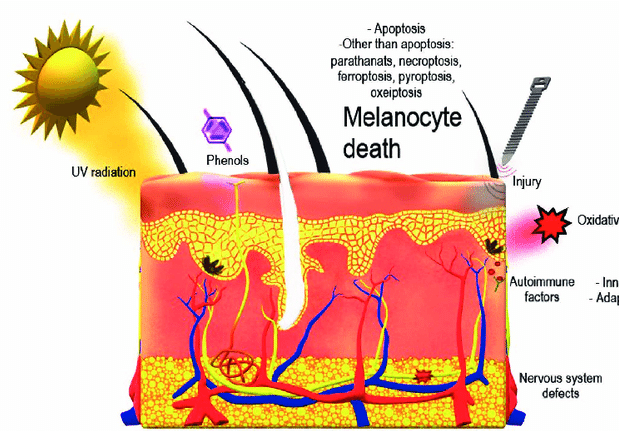
Vitiligo is the loss of skin color in patches. Most often it is widespread. It tends to occur on the hands, or around the mouth, and can start where there are irritations or injuries to the skin, such as with tattoos. This generalized Vitteligo begins in middle age, but a more localized, or segmental Vitelligo can start earlier, and affect one area or side of the body.

Well-tanned skin, and skin with a darker color make the vitiligo stand out more prominently and give more trouble.

When I was a kid, I had a sort of reverse vitiligo, namely freckles. With freckles, the pigment gathers into small spotty areas, and leaves the rest of the skin without sunburn protection. I can attest to the fact that ANY kind of skin difference will lead to social problems; the main suffering  with vitiligo is social.

Vitiligo is considered an autoimmune condition, and carries with it an increased likelihood of other autoimmune conditions, primarily thyroid and other endocrine.

Mimicking vitelligo, skin pigment can also disappear in areas of irritation or surface infection, such as in tinea versacolor and pityriasis alba. There is often a “halo” around a pigmented negus.

There are various treatments which aim to lighten up the surrounding skin area, or Increase pigmentation of the affected area. Such techniques use ultraviolet light, in combination with various various creams and medicines. Even surgery is sometimes used, so great it is the suffering of affected individuals.

Please refer to the accompanying article for more information.

—Dr. C.

Read more

Health: Consequences Of Too Little Sleep (Harvard)

Medicine: Symptoms & Signs Of Lung Cancer