Category Archives: Opinion

DR. C’S JOURNAL: EFFECTS & SYMPTOMS OF LONG COVID

COVID-19 is admittedly a pandemic and has caused much economic and social disruption in the world. Now we learn that it may not be over after a few of weeks of illness. LONG COVID is now an accepted syndrome.

You can tell because of the many clinics for handling it being set up by the NHS in England, and millions in research money being directed towards a solution.
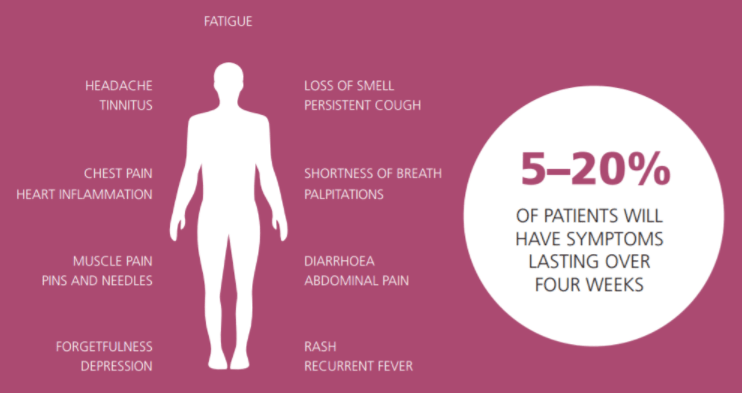
The most disturbing thing to me is that infected but asymptomatic or mildly ill people may get this condition, and have one or more symptoms for a long time .Certainly, those more seriously ill develop long Covid symptoms more commonly.

Long Covid is taking its place with chronic fatigue syndrome, posttraumatic stress disorder and post ICU syndrome as poorly understood conditions. They may in fact be taking place simultaneously, even if they are not identical.

The cause  can  be due to continuing viral infection in older or immune compromised individuals. Vascular damage is another reason that could account for the widespread involvement of practically any organ system that doesn’t go away after a few weeks.

Structural damage to the alveoli of the lungs and other organs can also play a role, which would account for shortness of breath as a prominent persistent symptom. Although it has not been highlighted in the articles that I have read, auto immunity can also be playing a role in long Covid.

This would go along with The myocarditis rarely caused by the mRNA vaccines; perhaps some of the protein sequences of the spike proteins have similar shapes to some human tissues. Name a symptom, and you’ll probably find it listed among the 50 odd symptoms mentioned in the Wikipedia article on long Covid, which is appended to the end of this article.

The most prominent symptoms include extreme fatigue, mental fog, and shortness of breath. Treatment is mainly supportive and general. After ruminating on this condition, it’s going to be quite a while before Yours truly wants to breathe in other peoples air spaces; I plan to continue masking in public, distancing and avoiding large groups.

That being said, I am planning to go out to eat dinner tonight, and can hopefully be placed at the edge of the room. I will inquire as to the vaccination status of our waiter. The people at my table will all be doubly vaccinated, which is not complete assurance of safety, but will help make me feel relatively comfortable.

I also plan on getting a booster shot as soon as it is available. Hopefully, the vaccine incorporating the special mutations of the delta virus will be soon available. You don’t want to be infected by this nasty, promethian shape-shifter. Take care.

–Dr. C

Read more
THE DOCTORS 101 CHRONIC SYMPTOMS & CONDITIONS #45: SLEEP APNEA

Sleep apnea and obesity are bound together as Charles dickens observed in his Pickwick papers. The Pickwickian syndrome is obesity associated with alveolar hypoventilation(insufficient breathing) with an increase in CO2 in the bloodstream which causes narcosis, or SLEEPINESS, in the daytime.

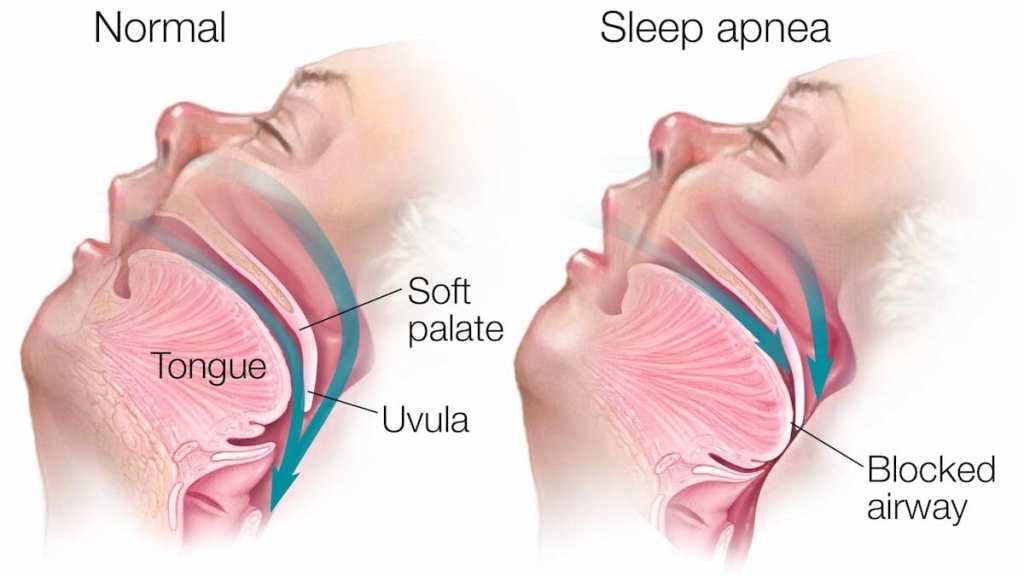
When I went in for my sleep apnea study, I noticed a number of double wide chairs available for the usual clientele there. OBESITY is one of the major risk factors for sleep apnea. Depositions at the base of the tongue and throat interfere with breathing, and causes snoring to the point of tracheal blockage and apnea at night.

Some people with normal “ BMI”, have sleep apnea. Sleep apnea can run in families, occur when you are older, or have a thick neck. So no matter what your weight, if you have daytime sleepiness after an apparently full night of sleep, you should be considered for a sleep study.

A SLEEP STUDY requires that you go into a sleep center overnight, get hooked up to an electroencephalogram machine, oxygen monitor, chest straps, and the like. This is the gold standard for a diagnosis of sleep apnea, but a recording pulse oximeter will let you know a lot less expensively if you have the critical problem, a drop in oxygen saturation. The type of sleep apnea I have been discussing so far is obstructive sleep apnea. Of course there are other types such as central, or complex sleep apnea.

Most sleep apnea responds to nasal CPAP, if you can tolerate it.
My own sleep apnea was diagnosed as moderate, 15% central and 85%  obstructive in type.  I have a stuffy nose which I believe to be the main problem setting me up for sleep apnea, and I could not tolerate the positive nasal CPAP. There is also a dental apparatus that I tried unsuccessfully. I wound up sleeping on my side, and propping myself in that position with pillows .This seems to help me, but I still wake up several times a night, usually at the end of a 90 minute sleep cycle, and with a full bladder.

I sleep through better on days when I have had more physical or mental exercise. Avoiding a full stomach at bedtime is also helpful with both sleep apnea and GERD.

I do use Afrin on the left side of my nose, which is more obstructed. I restrict the use to every third day, although I have heard that you can use it every other day, alternating sides, if you have a stuffy nose that has resisted other treatments .I have also heard that using corticosteroid nasal sprays makes Afrin better tolerated. Be sure to get clearance with your doctor before trying this.

— Dr. C

Read more at Mayo Clinic

DR. C’S JOURNAL: A WORD ABOUT DREAM THEORIES

Dreams are very egalitarian. I really believe that one person knows just about as much about dreams as another person, since almost all of us do a lot of it, and no two theories about dreaming are the same. However, I would like to give you some of what I have learned from my own dreams and readings about them. In addition, I have included a reference that discusses Scientific dreams studies in some detail.

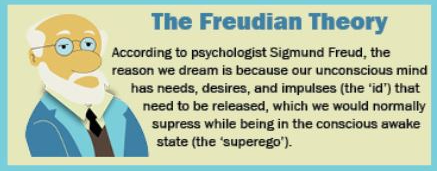
When I was about 14 years of age, and burning up with a desire to learn more about medicine, I bought the only “medical” book I could find in Grass Valley, California: The interpretation of dreams, by Sigmund Freud. I vividly remember being amazed at how Freud could  figure out the symbolisms in the dream case studies he published. The interpretations were not at all clear to me, even after I was told the answer, and chewed on them a bit. I subsequently read the opinion that a lot of them were made up. The essence of Freuds theory of dreams is that they were wish fulfillments, which is patently not always true.

REM sleep was linked to dreams in 1953, a couple of years before I graduated from medical school. For years, dreams were studied in a unitary context of REM sleep, and in the opinion of some, this has slowed down progress on the knowledge of dreams immeasurably. We now know that dreams are not always linked to REM sleep. Dreaming can be neurologically interrupted, while REM sleep goes on. REM sleep can be eliminated while dreaming goes on.

So we go back to the starting block; what are dreams?

The Ancients put a lot of stock in dreams, such as Joseph’s dreams predicting a seven-year drought, which earned him a place on the pharaohs Staff. Martin Luther thought they were the work of the devil. My son Michael thinks they are a good thing, since when you dream you are sleeping, and sleep is a wonderful restorative.

My own theory is that they are random fragments of experience which are ordered and supplemented to form a story. These random fragments can either be from recent experiences, perhaps being consolidated in memory, or old experiences that are being pruned as unnecessary. These snippets are then aggregated under the influence of mood neurochemicals, and flow out in the dream narrative.

Sensations coming in from the environment can play a role. I will always remember the story of a sleep study patient, who was slapped on the back of his neck by a wet towel. He awakened immediately, and vividly remembered a dream about the French Revolution, in which he was guillotined. I read that dreams take 5 or10 minutes of time to develop, however.

I dream almost every night, and most are  forgotten rapidly. Some have enough detail and meaning for me too mull over before I get up. Some of my more common dreams are of flying, or getting lost. The pleasant dreams are definitely in the majority. Only rarely, a sinister one will wake me up.

The following reference details about 50 of the most common dreams that people experience. Much other pertinent information is contained. What is your theory on the causes and meaning of dreams? You probably have as good an idea as anybody else.

—Dr. C

Read more

THE DOCTORS 101 CHRONIC SYMPTOMS & CONDITIONS #44: SYPHILIS (STD)

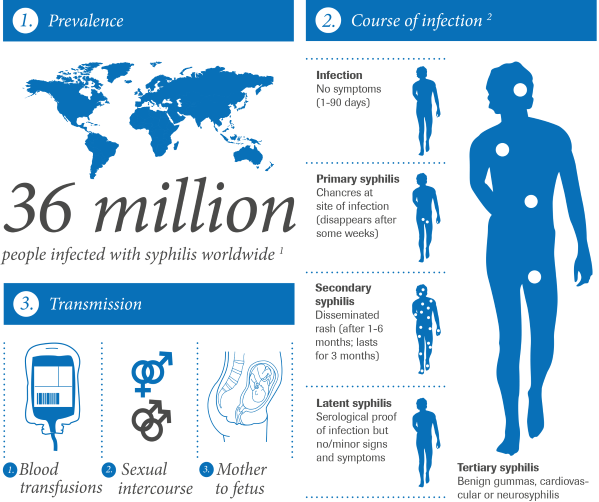
Syphilis is a venereal disease, or STD, that is unusual,  unique in many ways. First of all, it is one of the few major diseases to have originated in the Americas, the New World, and carried back to Europe most likely by Columbus; Popularized by “guns germs and steel”, the infectious disease traffic was almost all the other way, most famously smallpox which decimated the Native Americans.

A second unusual characteristic is that it’s treatment(penicillin) is known, cheap, easy, and yet Syphillis infects millions of people yearly, most commonly to be sure in the developing world, but also large numbers in America where is helped by AIDS, and spread by men having sex with men.

A third unusual characteristic  is that syphilis can mimic practically any disease. There are three stages.  The first stage is a painless ulcer, usually on the genitals.  After a few weeks, the second stage develops, showing a widespread rash and other symptoms.  After a few more months, problems develop in the heart, brain, or growths ( gummas) in many other areas .

When I was in medical school we used to go to an old peoples home to listen for aortic regurgitation, and observe the neurologic symptoms of syphilis patients. Syphilis is still a cause of aortic  insufficiency, if untreated.

Treponema pallidum, The causative agent, is also unusual. It has a very small geome, and has many missing cellular mechanisms, making it dependent upon Homo sapiens, it’s only known Reservoir. The fragile but very active organism will die in a few hours outside of its human host. Like it’s confederate,AIDS, The infection can easily spread from mother to child with devastating consequences. It is one of the major diseases for which pregnant mothers are tested.

Syphilis is one of the best arguments for being monogamous. If this can’t be, remember that syphilis is easily treatable, and that you should report any unusual illnesses to your doctor.

—Dr. C

VIEWS: IS U.S. HEALTHCARE SYSTEM BROKEN? (HARVARD)

Here’s a question that’s been on my mind and perhaps yours: Is the US healthcare system expensive, complicated, dysfunctional, or broken? The simple answer is yes to all.

Below are 10 of the most convincing arguments I’ve heard that our system needs a major overhaul. And that’s just the tip of the iceberg. Remember, an entire industry has evolved in the US just to help people navigate the maddeningly complex task of choosing a health insurance plan.

The cost is enormous

  • High cost, not highest quality. Despite spending far more on healthcare than other high-income nations, the US scores poorly on many key health measures, including life expectancy, preventable hospital admissions, suicide, and maternal mortality. And for all that expense, satisfaction with the current healthcare system is relatively low in the US.
  • Financial burden. High costs combined with high numbers of underinsured or uninsured means many people risk bankruptcy if they develop a serious illness. Prices vary widely, and it’s nearly impossible to compare the quality or cost of your healthcare options — or even to know how big a bill to expect. And even when you ask lots of questions ahead of time and stick with recommended doctors in your health insurance network, you may still wind up getting a surprise bill. My neighbor did after knee surgery: even though the hospital and his surgeon were in his insurance network, the anesthesiologist was not.

Access is uneven

  • Health insurance tied to employment. During World War II, healthcare was offered as a way to attract workers since employers had few other options. Few people had private insurance then, but now a layoff can jeopardize your access to healthcare.
  • Healthcare disparities. The current US healthcare system has a cruel tendency to delay or deny high-quality care to those who are most in need of it but can least afford its high cost. This contributes to avoidable healthcare disparities for people of color and other disadvantaged groups.
  • Health insurers may discourage care to hold down costs. Many health insurance companies restrict expensive medications, tests, and other services by declining coverage until forms are filled out to justify the service to the insurer. True, this can prevent unnecessary expense to the healthcare system — and to the insurance company. Yet it also discourages care deemed appropriate by your physician.

Read full article

Dr. C Commentary:

Please refer to the DWWR Posting on “concierge doctors” for my rant on the current healthcare system, which I will not repeat.

The truth is more nuanced. All countries are having trouble of one sort or another with their healthcare systems. This is due to the inherent expense of today’s top flight medicine. The very best care requires costly high technology and drugs that are intrinsically hard to produce. And you have to know where to look. I am very thankful for my medical degree, and that I have kept up with current advances.

You would probably need a Government entirely of physicians to develop the willpower to do something for health, which always starts with PREVENTATIVE MEDICINE, A hard sell, given that you must spend money and effort to block something which will probably, but may not always, occur.

There is low hanging fruit. Why are sugary drinks not heavily taxed, since they produce obesity which causes a lot of costly medical disorders, such as diabetes, inflammatory diseases, and cancer, but not everybody all the time?

Why is efficiency of telehealth not more widely embraced, but stymied by moneymaking lobbiests and lawyer powered difficulties, in addition to Patient’s and doctor’s old habits?

And then there are the jealously guarded  American freedoms to do stupid things, such as avoid vaccines and masks, even in a prodigiously expensive and dangerous Covid  epidemic.

Given human nature, a complete solution would seem to be impossible, and we should content ourselves with minor victories wherever they can be attained.

Embrace sleep, diet, and exercise, and KEEP HEALTHY.

–Dr. C

DR. C’S JOURNAL: YEASTS – CANDIDA ALBICANS

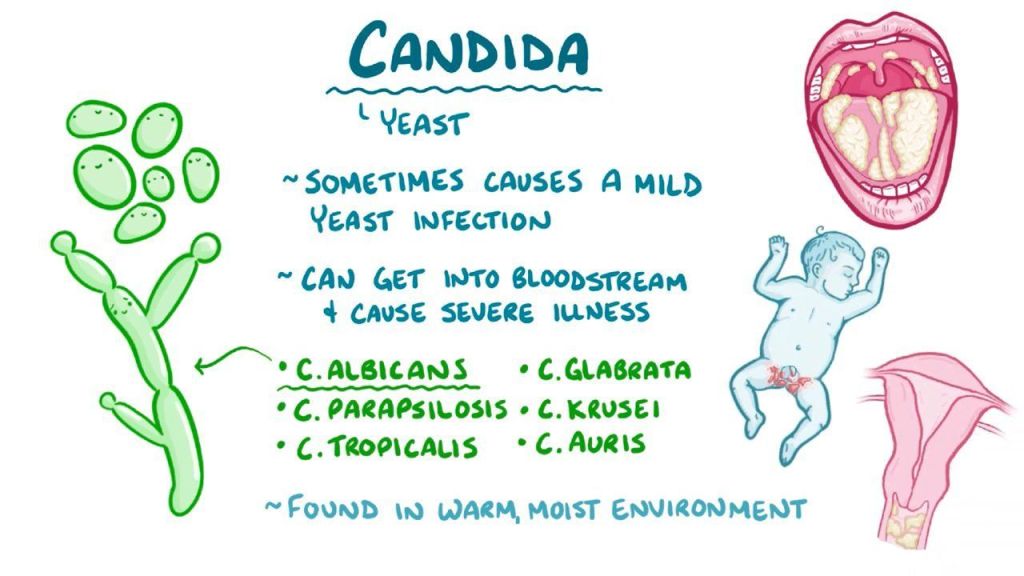
Candida albicans is a ubiquitous yeast that has evolved the ability to stick to mucocutaneous linings, e.g. mucous membranes and  skin. When present  in the mouth it is called thrush, and on the skin intertrigo, or diaper rash among other names.

Almost everybody is infested by candida in low amounts, as indicated by the common incidence of a whitish membrane (thrush)  in the mouth of people who regularly use inhaled corticosteroids for asthma. The Cortisone lowers the resistance, enabling the fungus to grow more profusely. The use of broad-spectrum antibiotics also facilitates the growth of Canada by killing off the competition.

Diabetes is a risk factor that commonly increases difficulties that people have in controlling candida growth in their oral and genital areas. Certainly anything that affects the immune system such as very young or very old age, viral infections especially AIDS, organ transplants, and chemotherapy will increase the incidence of Canada.

Due to it’s widespread presence in the body, Candida albicans is the fourth most common cause of bloodstream infections among hospitalized patients, where it grows on indwelling catheters and other in certain devices, which act as avenues for the yeast to invade the bloodstream.

Candida Auris  is a member of the same genus, Candida,that has developed some gain of function mutations to allow it to infect the body much more readily. It is very hard to get rid of, and at least one emergency room has been shut down because of a Candida Auris infestation. Another little trick that  it has evolved is resistance to most antifungal agents; The mortality rate of systemically infected people is very high.

The combination of greater infectivity and resistance to treatment makes it formidable indeed, but still it is mainly a problem for immuno suppressed individuals. C. Auris is not  as widespread as Candida albicans, and the number of cases is currently nowhere near as great. But if you get it, watch out!

As with so many other problems, it is better not see them. In other words, stay healthy with sleep, diet and exercise.

–Dr. C

THE DOCTORS 101 CHRONIC SYMPTOMS & CONDITIONS #42: HIP JOINT PAIN

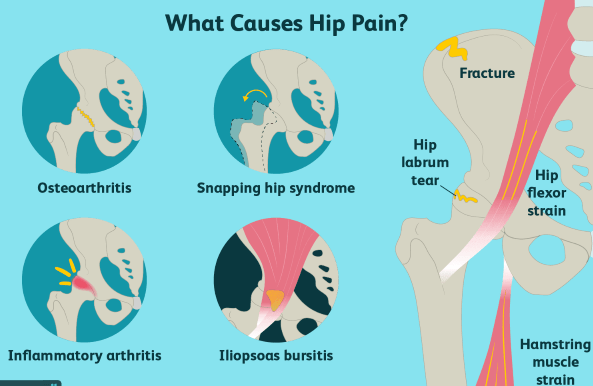
Hip pain is a very common condition as one gets older, though it can also occur in younger people. The most common cause of hip pain is OSTEOARTHRITIS , a condition that I discussed a little more than a year ago, mainly in the context of pain in the joints of the hand:  press the search button and type in “osteoarthritis”. I think you’ll enjoy reading it, as I did upon rereading.

Large joint arthritis seems to be a different animal as compared to small joint arthritis, to which I can personally attest; I have had significant arthritis in the joints of my hand and somewhat in my feet for a long time now, while I am fortunate enough not to have any problem with my hips or knees. It may be a coincidence, but I have been taking glucosamine and chondroitin  for sometime now.

It is also of interest that I have stood without sitting down in much of my medical career, and I have continued walking for exercise 1 to 1 1/2 hours a day. This would be against the idea that it is only ordinary wear and tear on the joints that determine the loss of articular cartilage so characteristic of osteoarthritis.

Unusual wear and tear, such as in football, soccer and Long term running on a hard surface, is a different matter, however. Pain in the groin is the most characteristic location for hip-joint arthritis. Pain in the side of the hip joint may be trochanteric bursitis, and that in the buttocks area could be from the nerve root compression of sciatica. Knee pain can refer to the hip. Rheumatoid arthritis, and even rheumatic fever in younger people can also cause hip inflammation and pain.

Sports injuries and falls can cause a hip fracture or a tear in the hip labrum that can declare as pain, but here’s the problem is more about how to treat it, rather than the diagnosis. As you get older, remember to take your calcium and vitamin D to prevent osteoporosis, and maintain your muscle strength and balance to prevent falls. Please type in “falls” for a discussion on how to prevent this often devastating problem in the elderly.

The hip joint can actually get infected with a septic arthritis, which is more typical of younger individuals, and those with immune deficiency. Cancer and infection of the hip bone can also be quite painful. The hip bone can suffer a loss of arterial supply, causing avascular necrosis in the process. Adolescents can get a slipped epiphysis.

When hip pain interferes with your exercise routine and ordinary life activities, it is time to check with the doctor to see what is going on and what can be done about it. If you have not already decided upon surgery, I would suggest a family practitioner or internist as your first stop.

Please refer to the mayo clinic article for more information.

—Dr. C.

Read Mayo Clinic article

THE DOCTORS 101 CHRONIC SYMPTOMS & CONDITIONS #41: COCCIDIOIDOMYCOSIS

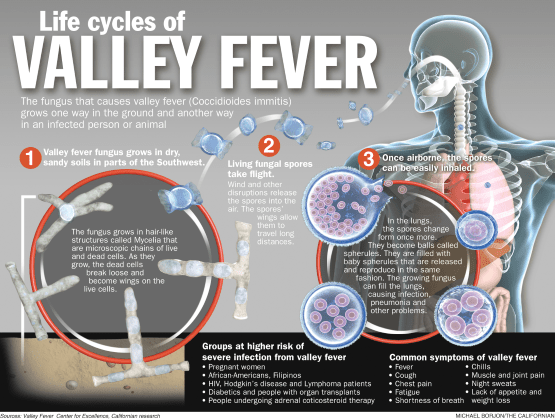
Coccidioidomycosis, also called Valley Fever, is a silent epidemic in the western hemisphere between 40° north and 40° south. Hot summers and mild winters with an annual rainfall of 10 to 50 cm is typical.

The Fungus grows in the soil that is moist, but the soil must dry out and Be disturbed, such as  by digging, and the wind speed must pick up before you can get the arthrospores into the air so that they can be taken into the lungs.

Most infected people have minimal symptoms. Among those infected, some get a fever and a cough and recover promptly. 3 to 5% of individuals develop a chronic infection. Infected patients with a weak immune system can have disseminated coccidiomycosis affecting virtually any tissue in the body.

Notable coccidiomycosis symptoms include a profound feeling of tiredness, fever, cough, headaches, rash, muscle and joint pain. A loss of the sense of smell is also described, raising some confusion with COVID-19.

Coccidiomycosis can cause a characteristic painful bump in front of the lower leg called erythema nodosum. People with a combination fever, joint pain, and erythema nodosum are said to have “desert rheumatism”.
20% of community acquired pneumonia can be due to coccidiomycosis in endemic areas such as Phoenix Arizona and the San Joaquin Valley.

Immunizations have been evaluated for cost-effectiveness, and the results were not encouraging. More recently, A modification of the coccidiomycosis genome which prevents growth and multiplication of the spore has been tried as a vaccine in mice and found effective.

It is planned to try this noninfectious spore on dogs, who are also very susceptible to the disease. Dogs are a good choice because Government  restrictions and requirements are not so severe, and because people would do almost anything to protect their animals, promising a good market for the vaccine.

A year ago last spring, my brother had a protracted problem which involves his lungs and even his heart, and was admitted to a hospital in Phoenix. Apparently COVID-19 was ruled out, and Coccidiomycosis was diagnosed. The Doctors declined to give him amphotericin or an Azole, the  usual treatments. He recovered, was discharged, and currently is doing well with no residual symptoms.

I was planning to visit him last spring, but I’m glad I stayed home; our immune system‘s are too similar.

–Dr. C

Mayo Clinic article