Category Archives: Conditions

Skin Conditions: A Review Of Urticaria (Or Hives)

One out of five people experience hives in their lifetime. These are itchy bumps, which are surrounded by a field of redness, and itch like crazy.

Hives are caused by the release of histamine from mast cells in the tissues, or basophiles in the bloodstream.
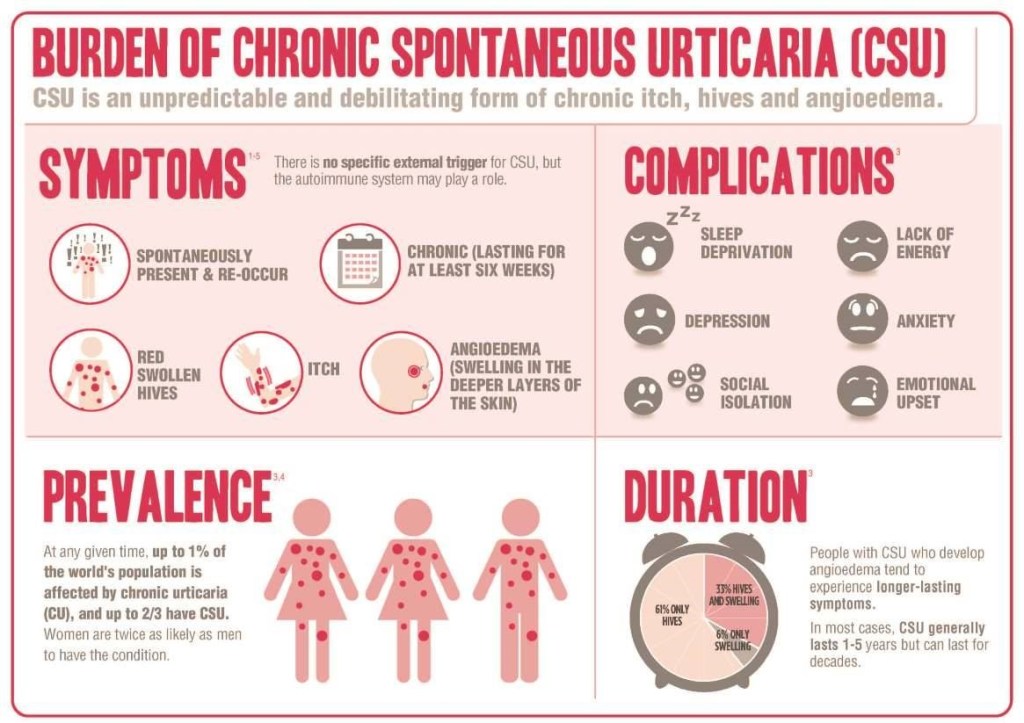
Itching is the chief annoyance, which can cause sleep loss, as well as misery severe enough to distract from normal activities. Hives are sometimes associated with angioedema, which is swelling in certain areas, such as the throat and windpipe, which can be fatal. Extensive hives, with leaking of fluid out of the blood vessel’s can also cause low blood pressure, which can be fatal, especially if you’re in a precarious situation, such as swimming.

The topic has been increasingly understood, and therefore growing increasingly complex, and I will only touch on some high points. I would recommend the review of Dermnet from New Zealand, which is included below if you want more complete and reasonably understandable information.

I have had hives only one time, after being stung by a bee for the third or fourth time. Within a few seconds, I started itching all over my body, but had no dizziness so apparently didn’t lose much fluid from my blood vessels. The hives went away after taking an antihistamine. I sometimes get itchy after wearing a tight belt, which is probably caused by histamine release due to “ pressure urticaria. As mentioned in previous articles, I also get itchy skin without hives if I let my skin get too dry, helped by lubricants, and have itchy ears for which I take drops of mineral oil into my ears, and wash the wax out every few months.

Urticaria, or hives, can be in a limited  area or all over the body, can last a few days or come and go indefinitely, and can be mild or incapacitating. They can be caused by a huge variety of known things, from infections, such as upper respiratory infections, foods such as peanut, drugs such as antibiotics, contactants, such as latex gloves, and stings or other injectants, which  can generalize into severe and sometimes fatal anaphylaxis.

Adrenaline, and antihistamines, are needed immediately in these situations. You may have heard of the rapidly injectable EpiPen, which you must carry with you if at risk.

Often with chronic urticaria, the cause remains unknown or “idiopathic”. As an allergist, this used to drive me almost as crazy as my patients, A lot of progress has been made in the last few decades. About half of the unknown causes turns out to be antibodies directed towards the allergic antibody, IGE, which can be treated by yet another antibody, omalizumab, or some other expensive new medications.

If you have urticaria that continues, and interferes with your enjoyment of life, You can help your doctor out by carefully remembering the circumstances, under which the hives occur, and the places on your body where they are the most annoying. Ask your relatives if they have any autoimmune diseases, like lupus, or vitiligo. Know exactly what medication you are taking, and bring a list with you.

Angioedema can be fatal due to blockage of breathing and demands immediate attention. ACE Inhibitors can cause these swellings, which often occur without itching.

Once again, go to the excellent and understandable article by Dermnet/urticaria/an overview.

—Dr. C.

Infographic: Systemic Arterial Hypertension

Systemic arterial hypertension is the most important modifiable risk factor for all-cause morbidity and mortality worldwide and is associated with an increased risk of cardiovascular disease (CVD).

Fewer than half of those with hypertension are aware of their condition, and many others are aware but not treated or inadequately treated, although successful treatment of hypertension reduces the global burden of disease and mortality. The aetiology of hypertension involves the complex interplay of environmental and pathophysiological factors that affect multiple systems, as well as genetic predisposition.

The evaluation of patients with hypertension includes accurate standardized blood pressure (BP) measurement, assessment of the patients’ predicted risk of atherosclerotic CVD and evidence of target-organ damage, and detection of secondary causes of hypertension and presence of comorbidities (such as CVD and kidney disease). Lifestyle changes, including dietary modifications and increased physical activity, are effective in lowering BP and preventing hypertension and its CVD sequelae.

Pharmacological therapy is very effective in lowering BP and in preventing CVD outcomes in most patients; first-line antihypertensive medications include angiotensin-converting enzyme inhibitors, angiotensin II receptor blockers, dihydropyridine calcium-channel blockers and thiazide diuretics.

READ MORE

Bipolar Disorder: How It Is Diagnosed & Managed

Cleveland Clinic (April 6, 2023) – About 5.7 million adults in the U.S. have bipolar disorder. The lifelong mental health condition, which includes four different types, is known for the maniac and depressive episodes someone experiences.

Chapters: 0:00 Intro 0:26 What is bipolar disorder? 0:50 What does a manic episode feel like? 1:18 What does a depressive episode feel like? 2:00 How to manage bipolar disorder

What is bipolar disorder?

Bipolar disorder (formerly known as manic-depressive illness or manic depression) is a lifelong mood disorder and mental health condition that causes intense shifts in mood, energy levels, thinking patterns and behavior. These shifts can last for hours, days, weeks or months and interrupt your ability to carry out day-to-day tasks.

There are a few types of bipolar disorder, which involve experiencing significant fluctuations in mood referred to as hypomanic/manic and depressive episodes. However, people with bipolar disorder aren’t always in a hypomanic/manic or depressive state. They also experience periods of normal mood, known as euthymia.

READ MORE at Cleveland Clinic

Circulatory Conditions: Peripheral Artery Disease

April 4, 2023: Peripheral Artery Disease (PAD) is a chronic circulatory condition, which, if not treated, can lead to limb amputations. PAD affects nearly 20 million Americans. An estimated 200,000 people, disproportionately from minority communities, suffer avoidable amputations every year.

What is peripheral artery disease?

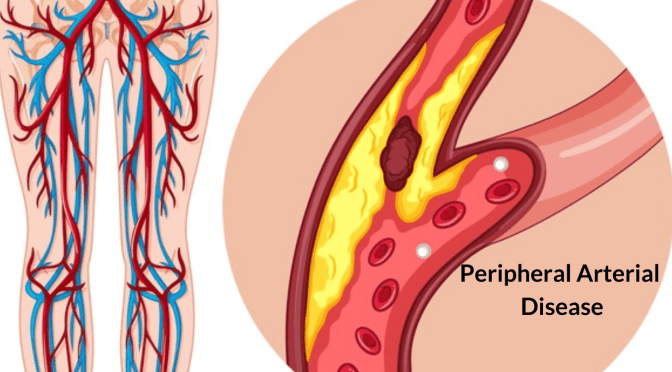
Peripheral artery disease (PAD) is plaque buildup in your leg arteries. Your leg arteries carry oxygen and nutrient-rich blood from your heart to your arms and legs. Other names for this are peripheral vascular disease or peripheral arterial disease.

Shaped like hollow tubes, arteries have a smooth lining that prevents blood from clotting and promotes steady blood flow. When you have peripheral artery disease, plaque (made of fat, cholesterol and other substances) forms gradually inside your artery walls. Slowly, this narrows your arteries. This plaque is also known as atherosclerosis.

Many plaque deposits are hard on the outside and soft on the inside. The hard surface can crack or tear, allowing platelets (disc-shaped particles in your blood that help it clot) to come to the area. Blood clots can form around the plaque, making your artery even narrower.

If plaque or a blood clot narrows or blocks your arteries, blood can’t get through to nourish organs and other tissues. This causes damage ― and eventually death (gangrene) ― to the tissues below the blockage. This happens most often in your toes and feet.

PAD can get worse faster in some people more than others. Many other factors matter, including where in your body the plaque forms and your overall health.

READ MORE

Diverticulitis: Diagnosis And Testing (Mayo Clinic)

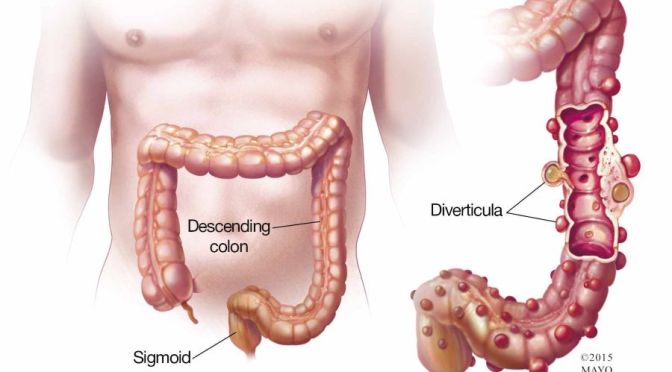
Mayo Clinic – Diverticulitis is usually diagnosed during an acute attack. Because abdominal pain can indicate a number of problems, your doctor will need to rule out other causes for your symptoms.

Your doctor will start with a physical examination, which will include checking your abdomen for tenderness. Women generally have a pelvic examination as well to rule out pelvic disease.

After that, the following tests are likely:

  • Blood and urine tests, to check for signs of infection.
  • A pregnancy test for women of childbearing age, to rule out pregnancy as a cause of abdominal pain.
  • A liver enzyme test, to rule out liver-related causes of abdominal pain.
  • A stool test, to rule out infection in people who have diarrhea.
  • A CT scan, which can identify inflamed or infected pouches and confirm a diagnosis of diverticulitis. CT can also indicate the severity of diverticulitis and guide treatment.

READ MORE

Conditions: Diagnosis & Care Of Osteoarthritis

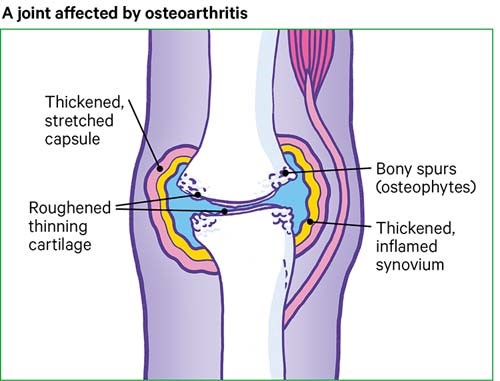
Osteoarthritis is the most common form of arthritis. It is more common in women than in men, with incidence increasing sharply around the age of 50.

January 30, 2023 – And it can cause complications – including the inability to perform activities of daily living and spinal stenosis in cervical and lumbar osteoarthritis.

So it is vital that we get the diagnosis and management of this condition right. In this BMJ Best Practice podcast on osteoarthritis, Kieran Walsh talks to Fadi Badlissi, Assistant Professor at Harvard Medical School and Director of the Musculoskeletal Medicine Unit at Beth Israel Deaconess Medical Center in Boston. 

Ear Health: Diagnosing And Managing ‘Tinnitus’

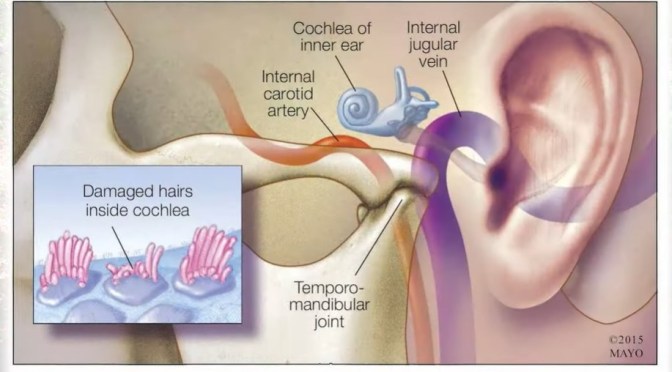
Mayo Clinic – About 1 in 5 people experience the perception of noise or ringing in the ears. It’s called tinnitus. Dr. Gayla Poling says tinnitus can be perceived a myriad of ways. Hearing loss can be age-related, come from a one-time exposure, or exposure to loud sounds over a lifetime.

Dr. Poling says the tiny hairs in our inner ear may play a role. Dr. Poling says there’s no scientifically proven cure for tinnitus, but there are treatment and management options. Other options include using a sound generator or using a fan at night. If ringing in your ears bothers you, start by seeing your health care provider for a hearing test.

Read more

Hand Conditions: What Causes Trigger Finger?

Typically, people 45 and older and those with diabetes or rheumatoid arthritis may be predisposed to trigger finger. It’s rare in children. Usually, the tendon sheath becomes irritated due to overwork or injury, so people who do repetitive movements, heavy squeezing or lifting in their work can be prone to the condition. It can happen at any time and is more common than people realize.

How is it treated?

Mayo Clinic – If you’re experiencing mild symptoms, such as a small, tender lump at the base of a finger or your thumb on the palm side of your hand but can straighten or bend your finger without it locking, take an over-the-counter anti-inflammatory medication, such as ibuprofen, every day for two weeks. If your finger or thumb is locked, you may be able to use gentle pressure to force it straight or bent.

If your finger or thumb is locked, you’re not able to force it straight or bent, and you’re feeling catching or popping, the next level of treatment is a steroid injection to calm the irritation and swelling. Performed in the clinic, the injection is done in the palm of your hand. A cold spray is used to numb the area.

READ MORE