DR. C’S MEDICINE CABINET: “WHY PATIENTS TAKE ELIQUIS”

Eliquis nicely illustrates my contention in the Overview of Metabolism, that the body is a vast collection of pathways, or “supply chains”. Eliquis blocks a critical enzyme in the pathway leading to coagulation, or clotting” as the product.
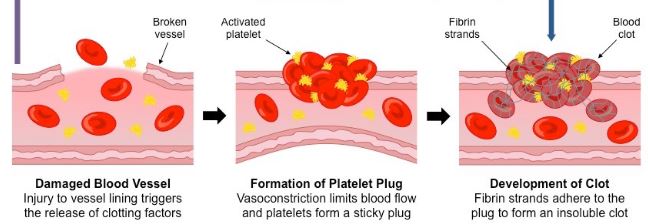
Why in the world you want to block clotting? The staunching of blood flow, clotting, has saved countless hordes of early, Paleolithic humans, and continued useful through the bloody Roman and Medieval times, right through the violent 20th Century.

Recently, however, wars are becoming somewhat less popular, and eating excessively more popular, leading to a strange situation. Our evolutionarily-preserved CLOTTING mechanism is now leading to MORE problems than it is solving.

Obesity and type 2 Diabetes are leading to the production of so much fat, that it has to be stored in our arterial walls, clogging the blood flow to our Hearts and Brain, among other areas. This, and the somewhat surprising trend towards longer lives has led to an increase in a variety of age-related illnesses.

When I reached 80 years of age I developed Atrial Fibrillation, a condition leading to a tendency to form clots in my quivering atria, the upper chambers of my heart. To decrease the likelihood of clots getting into my blood stream, lodging in my brain and causing STROKE, my cardiologist started me on Eliquis, an anti-coagulant/blood thinner.
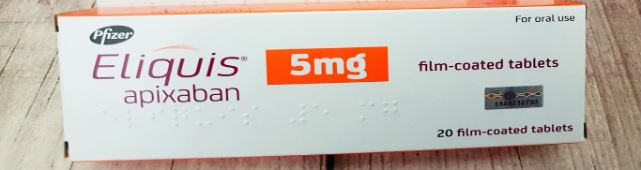
Drugs have three names. The proprietary name, Eliquis in this case, is given by the patenting company to be memorable; q,z,and x are popular letters. The second is the FDA drug name, Apixaban. The drug name often gives the doctor a clue as to its type: xaban refers to inhibiting (banning) of factor 10a (Xa). The third name is a chemical name of interest to biochemists and drug researchers.

When I started the Eliquis, at first unknown to me, I started to bleed internally, leading to a drop in my hemoglobin down to 8.6. I will go into this story when I start going through “how to read your laboratory report”.

I found that reducing my Eliquis from 5mg. to 3.75 mg. allowed me stabilize my hemoglobin by taking extra iron, which I will discuss later.

The doseage selected when the drug company markets a drug is fairly arbitrary, and usually involves round numbers. Interestingly, there is a 2.5mg. Eliquis, which is given if you meet 2 out of 3 criteria. I meet only one and am only 5 pounds shy of the second, in case you think (like my cardiologist does) that I’m taking a risk.

I believe that, whenever you are given a medication, you should be educated about the medicine, and the problem it is intended to benefit. Today’s physician often does not have the time to do this. The internet, including this website, offers a corrective.

I am trying my best to be helpful to you as a Patient Advocate. You and I both must have a doctor to rely upon. But to get the most out of our care, WE MUST BE INFORMED.

–Dr. C

DR. C’S MEDICINE CABINET: “OVERVIEW OF METABOLISM”

“Life is nothing but an electron looking for a place to rest”.

Albert Szent-Gyorgy

Overview of Metabolism – Seeing an Essence of Nanosystems in the Hum of a Vibrant City; the Skyscraper as Catalyst, and Thought as Electron

What did it take to bring the world to its’ knees? SARS-CoV2? We will never know, because we instituted DISTANCING to control the virus because the projected number of deaths were unacceptable.

The distancing and isolation did hold the number of deaths, still large, below projection. However, it DEVASTATED our Economy.

OUR WORLD is a  massive, cooperative, interdependent system, with hubs, factories, supply chains and a myriad of products. It is a COMPLEX SYSTEM.

I would like to use the world as an analogy, and compare it to another Complex System, the HUMAN BODY.

Our bodies are essentially a large pile of chemicals (mostly proteins) in a sack, our skin. These chemicals are constantly interacting with each other. If they grow to larger, more complex chemicals in a process we call anabolism, we take in more chemicals and energy by eating, and get bigger. If our chemicals get less numerous and complex in a process we call catabolism, we lose weight and get smaller.

Some of the proteins in our bodies are ENZYMES, and bring other proteins CLOSER TOGETHER, so that they can LINK TOGETHER  become more complex and PRODUCE things. Enzymes are a sine qua non of life. Without enzymes, life would slow so much as to be impossible. 

Let’s go back to our Society, Before Covid. 

Vast numbers of people are cooperating in close proximity, working together with machines, often supplied by other people far away, making things. This process takes place most efficiently in CITIES, where people are in closest proximity, doing things together.

Enter Covid. This interdependent process stops. What things that are produced are made to fight Covid. It is just like one of our cells infected by Covid: we have been HIJACKED  by the virus!

Lets’ GO BACK TO OUR CELLS. Our METABOLISM is like our teeming, cooperative CITIES, with SUPPLY CHAINS, factories and products. Our PROTEINS NEED PROXIMITY to function.

Some Proteins are at a critical HUB, and comprise a RATE-LIMITING step in the production line.

Many Vitamins and nutrients are COENZYMES, and act to ACCELERATE critical supply lines.

If the Hubs are OUT OF BALANCE and OVERACTIVE, many MEDICATIONS act to BLOCK THE ACTION of an enzyme to bring the system closer to balance.

Thus coordination, cooperation and careful monitoring to PREVENT A PROBLEM is superior to letting it break down and correcting the imbalance.

I hope that this Overview will be helpful. I will go through my MEDICINE CABINET to discuss a few of the 20,000 or so Medications approved by the FDA. I will also VIEW THE TEST RESULTS from my LABORATORY TESTS. NORMAL results show a SYSTEM IN BALANCE. Abnormal results show inefficiencies in the metabolism (supply chains, hubs), which need correction to restore balance.   

— Dr. C

TELEHEALTH: “Smartphones Used to Monitor Heart Patients with Pacemakers”

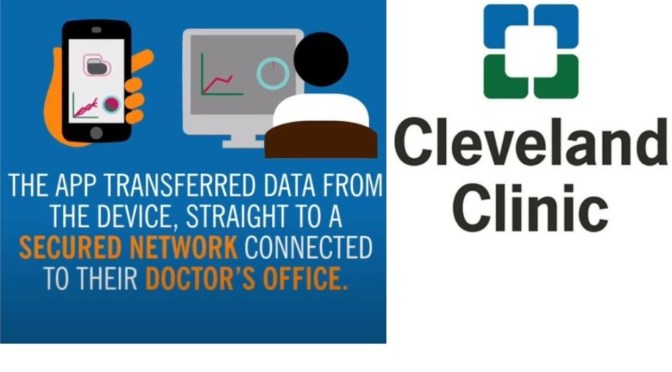
In a first of its kind study, Cleveland Clinic researchers found Bluetooth-enabled pacemakers successfully transferred information to doctors 95% of the time through an app on the patient’s smartphone or tablet. In comparison, traditional bedside consoles were successful 77% of the time.

Read more

HEALTH: ARE FACE SHIELDS THE BETTER PROTECTOR?

From a New York Times article (May 24, 2020):

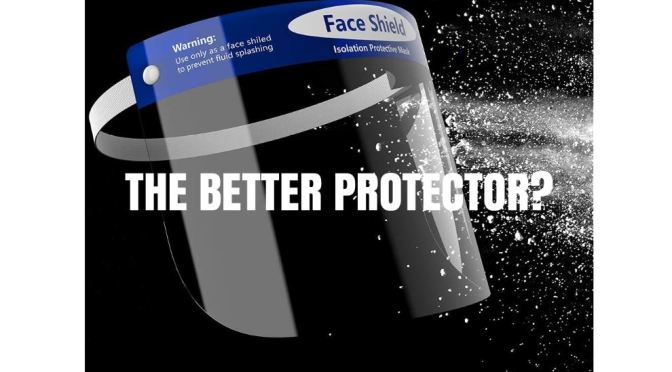
Dr. Perencevich believes that face shields should be the preferred personal protective equipment of everyone for the same reason health care workers use them. They protect the entire face, including the eyes, and prevent people from touching their faces or inadvertently exposing themselves to the coronavirus.

The debate over whether Americans should wear face masks to control coronavirus transmission has been settled. Governments and businesses now require or at least recommend them in many public settings. But as parts of the country reopen, some doctors want you to consider another layer of personal protective equipment in your daily life: clear plastic face shields.

Read more

COMMENTARY

When I take my walk, which currently is my only outing, I wear a face SHIELD for my personal protection against contracting Covid 19 from others.

I gave up on the face MASK because it is uncomfortable, especially when I am breathing heavily while walking rapidly up hills.

There isn’t much research supporting the self-protective use of face shields, but the video accompanying this article was enough for me; notice the aerosol-free area behind the face shield.

While walking, I breathe In deeply through my nose, and exhale through my mouth, using “pursed lips”, which aids in oxygen extraction by holding the alveolae open.

Exhaling through the mouth also clears the air behind the mask for subsequent nasal inhalation.

With nasal inspiration, any SARS CoV-2 aerosol particles would be deposited in the nasal passages, Which are that much farther away from your vulnerable lung.

It isn’t perfect. For one thing, it wouldn’t protect you much if someone coughed at you from the side or behind. I often hold my breath reflexes when I hear someone cough, or when I pass closely (even 6ft.) to someone.

The face shield holds promise for protecting you from viral infection, including the “flu”.

—Dr. C.

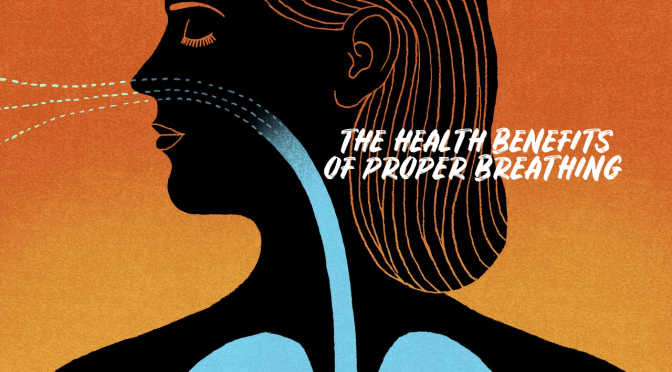
PREVENTION: THE HEALTH AND HEALING BENEFITS OF PROPER BREATHING

From a Wall Street Journal article (May 21, 2020):

Breathing properly can allow us to live longer and healthier lives. Breathing poorly, by contrast, can exacerbate and sometimes cause a laundry list of chronic diseases: asthma, anxiety, attention deficit hyperactivity disorder, hypertension and more. Poor breathing habits can even change the physical structure of our skeletons, depleting essential minerals and weakening our bones.

Most of us misunderstand breathing. We see it as passive, something that we just do. Breathe, live; stop breathing, die. But breathing is not that simple and binary. How we breathe matters, too.

Last year, I wanted to see just how dramatically breathing habits—good and bad ones—could affect my own brain and body. I’d learned that up to 50% of us are chronic mouth breathers, a problem well described by an ancient Tao text: “The breath inhaled through the mouth is called ‘Ni Ch’i, adverse breath,’ which is extremely harmful.”

Scientists have known for decades that inhaling through this pathway saps the body of moisture, irritates the lungs and loosens the soft tissues at the back of the mouth. Mouth breathing has also been linked with neurological disorders, periodontal disease and increased risk of respiratory infection. But nobody knew how quickly this damage came on.

Read full article

COMMENTARY

Breathing is something we don’t think about. It comfortably transcends the merely habitual, and there is a complex of controllers in the brain to Drive breathing should we be unable or forget to breathe voluntarily.
Breathing has it’s own poets and cults, one of which is MINDFULNESS MEDITATION, which uses our BREATHING as the focus of our consciousness, to get us outside ourselves.

With DEEP breathing,  I noticed an INCREASED pO2, as registered on my Pulse Oximeter.

In the 1960’s asthma was not so well controlled as now. The mechanics of breathing were more important, so we taught our Patients how to breathe properly.

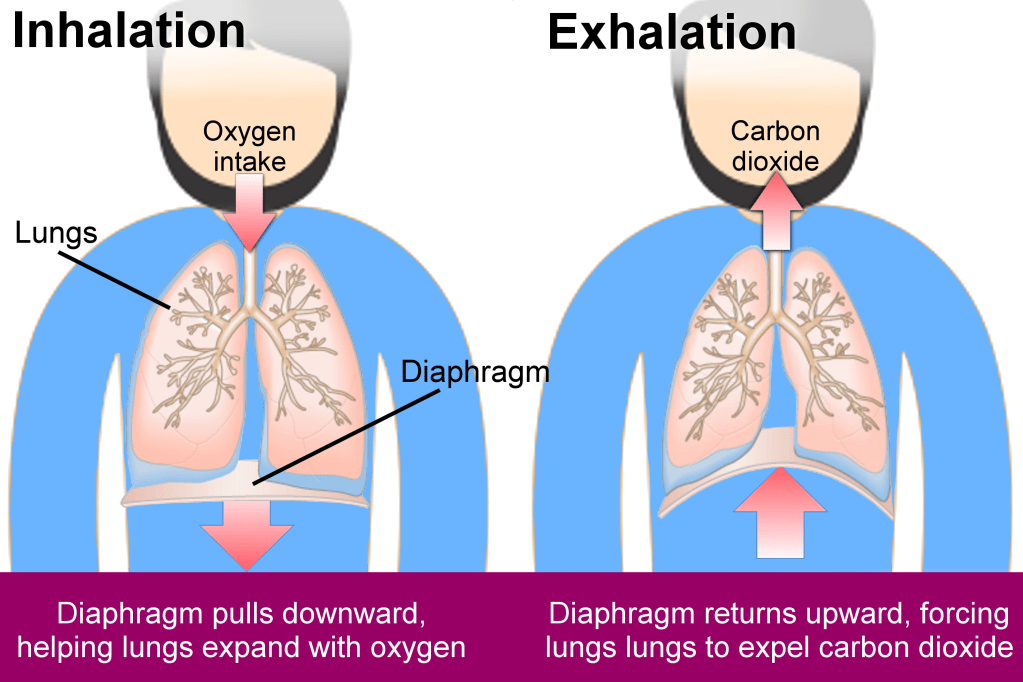
There are 2 sets of muscles we use to EXPAND our lungs, the DIAPHRAGM at the bottom of the chest, and the chest muscles themselves, the INTERCOSTALS. We refer to diaphragmatic breathing as “stomach” breathing, because the stomach bulges out as the descending diaphragm compresses the abdominal contents.

We refer to intercostal breathing as “chest” breathing because the chest expands when the inspiratory intercostals contract.

Diaphragmatic breathing is more efficient, and we encourage our asthmatic patients to Use their more efficient diaphragm to prevent them from tiring as they struggle to get their air out through their narrated airways.

You can squeeze a little extra air out of your lungs by contracting your abdominal muscles.

So to take a DEEP BREATH, see that your stomach rises and your chest expands with the breath IN, and that you squeeze both your abdomen and your chest with the breath out.

Your AIR SACS expand, your lungs are flushed with fresh air, and you blood oxygen, and BRAIN OXYGEN INCREASES with a deep breath in. The “stale air” is cleared by a full breath out.

When you are quietly breathing, letting that vital process take place automatically, notice that a deep breath, or “sigh”, occurs about once every 2 minutes. This is nature’s way to help lung surfactant PREVENT LUNG COLLAPSE and PNEUMONIA.

It is HEALTHFUL to PAY ATTENTION to your BREATHING occasionally! If uninclined to breathe deeply yourself, take a brisk walk up a hill, and let Nature do it for you.

—Dr. C.

INFOGRAPHICS: “WHAT ARE, HOW WE GET AND WHY DO WE EAT FERMENTED FOODS”

Read more

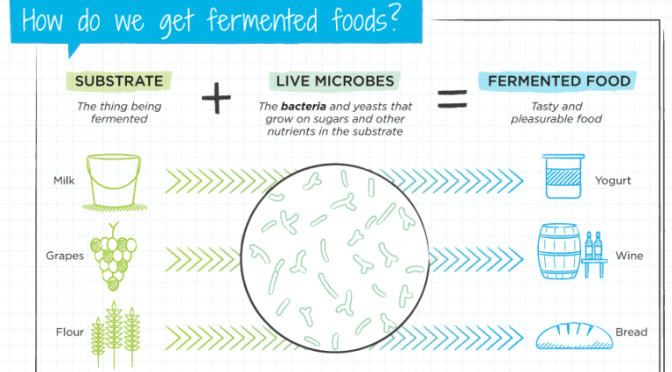
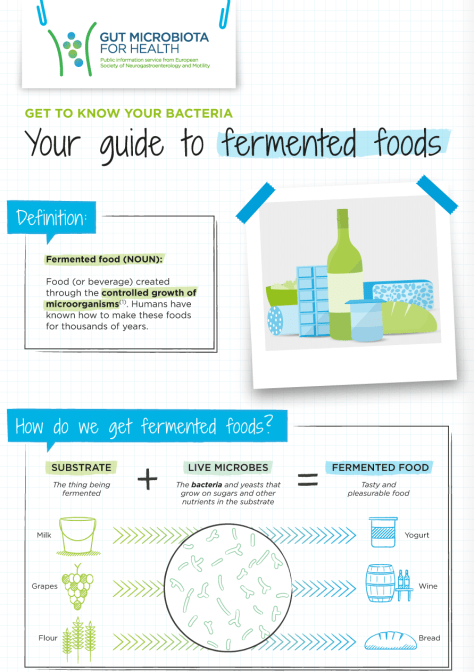
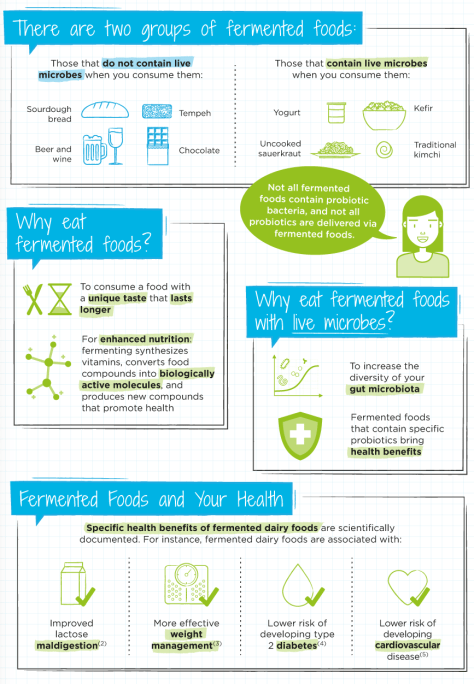
This article gave an interesting classification of fermented foods, pointing out that with some, like bread and wine, we eat the products of fermentation without the living organisms, while with others like kefir and yogurt, we eat the viable critters also.

Lactobacilli are called probiotics, and are supposed to have health benefits. It is not proven that they do, but at least the lactobacilli use up some of the sugar we would otherwise be eating, and taste good.

The problem with the claim that they diversify and benefit our microbiome, and crowd out the bad germs, is that they do not generally attach to our intestinal walls, and go right through with the rest of our food. They don’t stick around long enough to do any good.

My late wife had a bad infection with a bad actor called Clostridium difficile, which caused her to have a severe, bloody enterocolitis. After the second hospitalization with this affliction, an Infectious disease doctor suggested “culturelle”, which contained a patented Lactobacillus rhamnosus GG, which WAS supposedly proven to attach for a while. My wife took this, and never had another attack.

I still take this daily, “on faith”. Gullible me. Fecal transplants are now used effectively for C. Dif. enterocolitis. Avoiding unnecessary antibiotics, which wipe out your normal microbiome, your “good guy competition”, is An even better idea, but seems risky.

BOTTOM LINE:  Kefir and yogurt are calorie depleted, and taste good. What is not to like?

–Dr. C

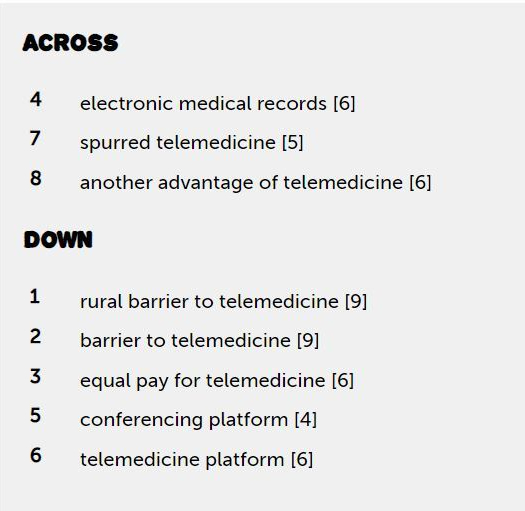
TELEMEDICINE: A REVIEW OF 9 CONDITIONS THAT CAN BE TREATED ONLINE (VIDEO)

TELEMEDICINE is here to stay! With all its’ advantages Patients will demand It!

This video is one of the few to highlight WOMENS’ HEALTH as an appropriate field for Telehealth. A remote visit first may at least let the Doctor order some tests that will accelerate your care.

Urinary problems can also be appropriate for telemedicine; the MEDICAL HISTORY is such a VALUABLE DIAGNOSTIC TOOL!

Psychological and Psychiatric care could be completely remote, by telemedicine. The Doctor could save on expenses, and deliver care less expensively.

Distance disappears as a barrier to Consultations and second opinions. A University medical center or prestigious multi specialty Clinic are on your doorstep.

Of course, barriers remain in the form of regulations, litigation, bureaucracy, and Insurance, but these can be overcome, if the Will is there.

—Dr. C

THE DOCTORS 101 CHRONIC SYMPTOMS & CONDITIONS #3: ITCHING WITH DRY SKIN

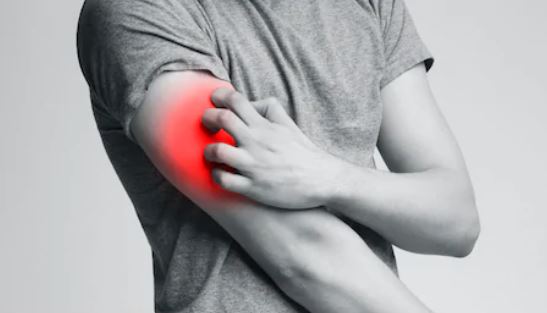
As I have aged, my skin has been more itchy. My allergy practice was loaded with Patients whose ECZEMA and HIVES itched. My favorite uncle developed intolerable itching (pruritis) in his 90’s, and died within a year of metastatic Prostate Cancer.

This gives you an idea of the Range of this annoying sensation. My emphasis here will be on CHRONIC ITCHING with DRY SKIN in otherwise HEALTHY PEOPLE without much rash or other skin condition. If you want extra discussion, look at Reference #1. If you are a Doctor, or a brute for punishment, see Ref.#2, a CME review.

Your skin is the largest organ in your body, and deserves respect right from birth. The skin of your child is wonderfly healthy in looks and self repair. EXCESSIVE SUN EXPOSURE is about the only thing you need to protect her from, and the only penalty is increased cancer risk in later life.

As your body ages, your skin looses some of its essential oils, and and becomes more dry (at least you don’t get acne any more). You become more sensitive to dry air, like in the winter, when the cold outside air (adiabatically) drops in relative humidity when warmed to inside temperature.

Do you notice the increase in static electricity shocks in the winter? If not, I’m sure that you do notice that your skin itches more. one treatment for the “winter itch” is to humidify the inside air. If you have a draughty old house like I do, it may be more convenient to use MOISTURIZING LOTIONS.

These were once mainstays of itch control in my former practice (before development of the effective modern medications). Eucerin and Cetaphil were very helpful. Maybe it is because of the name, but I now find myself using Curel “Itch Defense” all over my body twice daily,.

The itching is much less now, except for my EARS. My ear canals (they are skin too!) have recently been very dry and itchy, maybe because i listen to podcasts when walking or swimming.

Unwilling to give up my podcasts, I put some UNSCENTED Johnson’s baby oil with my little finger into my ear canals, as suggested by my ENT Doctor (I wanted to be sure i didn’t have a diagnosable condition like a fungal infection). If I have a small spot that itches a lot, I use some 1% Hydrocortisone cream, and I feel better.

Antihistamines don’t do much for me, but are effective if the itching is a real allergy (most of what people call allergy is not the IGE-MEDIATED, “real” variety). HISTAMINE is the quintessential provocateur of ITCH. Cetirizine (or atarax) is the strongest of available antihistamines, and diphenhydramine (benadryl) the old standby.

Chronic itching can be caused by a plethora of illnesses, as you will find if you choose to read the following papers.

– Dr. C

Reference #1

Reference #2