
Audio

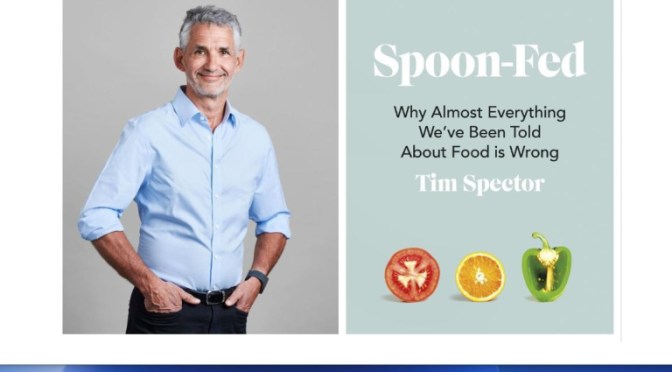
HEALTHY DIET PODCASTS: “SPOON-FED” AUTHOR & PROFESSOR TIM SPECTOR

According to a recent study, obesity increases the risk of dying of Covid-19 by nearly 50%. Governments around the world are now hoping to encourage their citizens to lose weight. But with so much complex and often contradictory diet advice, as well as endless food fads, it can be hard to know what healthy eating actually looks like. 

How many pieces of fruit and vegetables should you eat a day? Will cutting out carbs help you lose weight? Is breakfast really the most important meal of the day? Speaking to Tim Spector, professor of genetic epidemiology at King’s College London about his new book Spoon-Fed, Madeleine Finlay asks why we’re still getting food science wrong, and explores the current scientific evidence on snacking, supplements and calorie labels. 

Tim Spector is a Professor of Genetic Epidemiology and Director of the TwinsUK Registry at Kings College, London and has recently been elected to the prestigious Fellowship of the Academy of Medical Sciences. He trained originally in rheumatology and epidemiology. In 1992 he moved into genetic epidemiology and founded the UK Twins Registry, of 13,000 twins, which is the richest collection of genotypic and phenotypic information worldwide. He is past President of the International Society of Twin Studies, directs the European Twin Registry Consortium (Discotwin) and collaborates with over 120 centres worldwide. He has demonstrated the genetic basis of a wide range of common complex traits, many previously thought to be mainly due to ageing and environment. Through genetic association studies (GWAS), his group have found over 500 novel gene loci in over 50 disease areas. He has published over 800 research articles and is ranked as being in the top 1% of the world’s most cited scientists by Thomson-Reuters. He held a prestigious European Research Council senior investigator award in epigenetics and is a NIHR Senior Investigator. His current work focuses on omics and the microbiome and directs the crowdfunded British Gut microbiome project. Together with an international team of leading scientists including researchers from King’s College London, Massachusetts General Hospital, Tufts University, Stanford University and nutritional science company ZOE he  is conducting the largest scientific nutrition research project, showing that individual responses to the same foods are unique, even between identical twins. You can find more on https://joinzoe.com/ He is a prolific writer with several popular science books and a regular blog, focusing on genetics, epigenetics and most recently microbiome and diet (The Diet Myth). He is in demand as a public speaker and features regularly in the media.

Website

PODCAST: FEAR OF VACCINES, CONFUSION OVER ORIGINS OF CORONAVIRUS (sCIENCE)

Science Editor-in-Chief Holden Thorp joins host Sarah Crespi to discuss his editorial on preventing vaccine hesitancy during the coronavirus pandemic. Even before the current crisis, fear of vaccines had become a global problem, with the World Health Organization naming it as one of the top 10 worldwide health threats in 2019. Now, it seems increasingly possible that many people will refuse to get vaccinated. What can public health officials and researchers do to get ahead of this issue?

Also this week, Sarah talks with Science Senior Correspondent Jon Cohen about his story on Chinese scientist Shi Zhengli, the bat researcher at the center of the COVID-19 origins controversy—and why she thinks President Donald Trump owes her an apology.

Finally, Geert Van der Snickt, a professor in the conservation-restoration department at the University of Antwerp, talks with Sarah about his Science Advances paper on a new process for peering into the past of paintings. His team used a combination of techniques to look beneath an overpainting on the Ghent Altarpiece by Hubert and Jan Van Eyck—a pivotal piece that showed the potential of oil paints and even included an early example of painting from an aerial view.

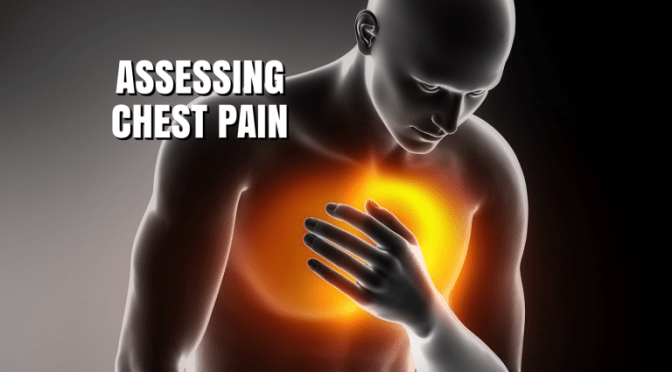
MEDICAL PODCAST: “ASSESSING CHEST PAIN” (BMJ)

Chest pain is a common chief complaint. It may be caused by either benign or life-threatening aetiologies and is usually divided into cardiac and non-cardiac causes. James E. Brown, Professor and Chair, Wright State University Boonshoft School of Medicine, Kettering, Ohio, gives us an overview of assessing chest pain in the emergency setting. 

COMMENTARY

Dr. James E Brown of the Wright State school Of medicine in Kettering Ohio gave a very interesting discussion of chest pain.

One interesting takeaway is the value of a very experienced clinician dealing with large volumes of emergency room patients. This would make telemedicine with an emergency room hub in a teaching center a very attractive platform.

The consultant doctor in the center has the advantage of his vast experience in rapidly narrowing down the heterogeneous list of different diagnoses that must be considered- the “differential diagnosis”.

Dr. Brown mentioned the “gestalt”, the incorporation of subjective features such as facial and voice cues which add to the objective parameters in patient evaluation. This of course would be amenable to telemedicine although other old-time clinical information like the changes in breath sounds would be more favorable to conventional in-person evaluation.

Ultrasound would More easily be done locally as well.

An interesting take away from this discussion is the value of The patient’s history and past laboratory data, so undervalued by rushed modern doctors. For instance, Electronic medical records (EMR) could provide past history or a previous electrocardiogram for comparison.

Dr. Brown favors the division of chest pain causes into cardiac and non-cardiac. It is easy  to develop tunnel vision and look at the patient only as a possible coronary thrombosis. In fact it is better to Rapidly consider the non-cardiac causes that would demand immediate attention while waiting for the results of the Troponin-T test.

For instance pulmonary embolism, aortic dissection, tension pneumothorax, cardiac Tamponade should be considered.

These considerations should be running through the head of the clinician as the IV,  EKG, and pulse oximetry are being set up.

In addition to the Troponin-T, bedside ultrasound, and Higher “slice count” CAT machines, and higher “Tesla” MRIs  are becoming available major centers which could support small emergency rooms.

If there is One place where “the Flow” would be Appropriate it would be in the mind of the emergency room doctor evaluating acute chest pain.
I have a hard time imagining artificial intelligence endangering her job.

—Dr. C.