If you can go the over-the-counter route, here are some tips.
Find the right power. Reading glasses will have signs or stickers noting their power. In most cases, they range from +1 to +4 diopter, in increments of +.25. Look for what matches your prescription. If you don’t have a prescription, try the lowest power (+1) first.
Test-drive the glasses. If you’ve brought reading material with you, try reading it at a comfortable length. (Many eyeglass displays have an eye chart, too, to test the glasses.) Try different powers until you can read clearly at a distance that’s most comfortable for you.
Go big the first time. While there are many styles and colors to choose from, you may want to start your reading glass journey with a bigger pair of specs. Larger lenses offer more of a “sweet spot” where the prescription is. It’s easier to use a smaller lens once you get used to wearing glasses.
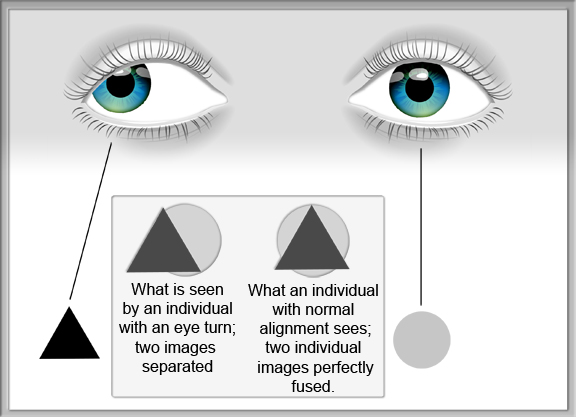
Amblyopia is an example of how the body suppresses or gets rid of activity that is not used. Amblyopia “ex anopsia” is the leading cause of poor vision in children, and the most common reason is a “lazy eye”. If the eyes do not work together for binocular vision, the weaker of the two eyes has suppressed development and eventually eyesight is lost.
I have a friend who was going in the pilot training, it was found to lack good depth perception, and could not proceed. He now complains occasionally of double vision, and may be an example of the suppressed eye with lack of binocular vision.
I have a muscle in balance which causes a rotation of my eye so that it’s hard to fuse on a horizontal linear object. I was probably able to fuse when I was younger and avoid this loss of vision in the weaker eye.
So be on the alert for a squint, or wandering eye in children. Get them in early for treatment, the earlier the better, and it must take place before age 5 to 7.
Falling down is common on both ends of the Human lifespan. Little kids are always falling down, but there isn’t much energy to dissipate, since their mass is small and they don’t have far to fall. Moreover, their bones are pliable.
The Elderly also fall, increasingly, as they age. They have a lot further to fall, and their bones are often brittle and osteoporotic. Injury is quite common, they often break a hip, and may slide into a peogressive deterioration leading to their demise..
Ordinary walking, a “normal gait”, is a very complex activity and requires a lot of information and coordination by the nervous system.
VISION is critical, as you are often navigating through a minefield of stairs, rug edges, slippery objects, lamp cords, tubes and pets. Cataracts may be a problem to be corrected. Multifocal glasses can be a factor.
HEARING can warn of certain hazards or warnings and is important. A FINE SENSE OF TOUCH is required to give you cues as you are walking. Peripheral neuropathy can make walking difficult.
PROPRIOCEPTION, the positional sense of where your extremities are located in space, is a sense we take for granted, but which may deteriorate in time. Proprioception is very important for a normal Gait. The inner ear, with it’s semicircular canals and vestibular apparatus is necessary for proper BALANCE.
Balance can be PRACTICED in a number of ways, like standing on one leg, or merely WALKING a lot. These MULTIPLE SENSES must be COORDINATED by the Thalamus, Corpus Striatum, medulla, Cerebellum, and Cerebral Cortex and instructions sent to the muscles of your Legs, Arms, back and abdomen.
It is mandatory to keep these muscles, your Heart and your body, STRONG and FIT. Factors that make you more likely to have a fall are mostly the reverse of the above, and are called RISK FACTORS.
–Previous Falls are the best predictor. More than 2 or 3 in a year is worrisome.
–Balance Impairment is best treated by practice.
–Decreased Muscle strength. –Visual impairment.
–Polypharmacy (more than 4 prescription Meds), or a Psychoactive drug (look up)
–Gait impairment, Walking difficulty.
–Depression, which is often treated by antidepressants or sleeping pills- Psychoactive drugs.
–Dizziness or orthostatic hypotension, which causes a drop in blood pressure on standing. and a number of other problems, often a function of age.
PREVENTION of falls is of course better than treatment of the resulting INJURY. Working on your HEALTH will help the INTRINSIC causes of falls, and that is what we have been discussing.
Preventing the EXTRINSIC causes of falls means working on: –Improving the household safety by putting in railings, getting rid of throw rugs, clutter, and maybe pets( a good friend went into a downward spiral after tripping over his Dog.
Adjusting or eliminating psychoactive drugs and antihypertensive drugs (which often include the beta blockers which worsen orthostatic hypotension.
Interestingly, VITAMIN D supplements were mentioned in 2 references I saw. Apparently Vitamin D reduces falls by increasing MUSCLE STRENGTH.
Please refer to the following Canadian article for a more complete discussion.
–Dr. C.
Empowering Patients Through Education And Telemedicine



 Doctors Without Waiting Rooms