Tag Archives: STDs

Dr. C’s Journal: What Are Symptoms Of Gonorrhea?

Gonorrhea been present since the earliest times. The United States has one of the highest incidences, and it was very common in colonial America, where it was called “clap”. Adolescents, with their increased sexual activity, have the highest incidence, and girls are somewhat more likely to have it than boys.
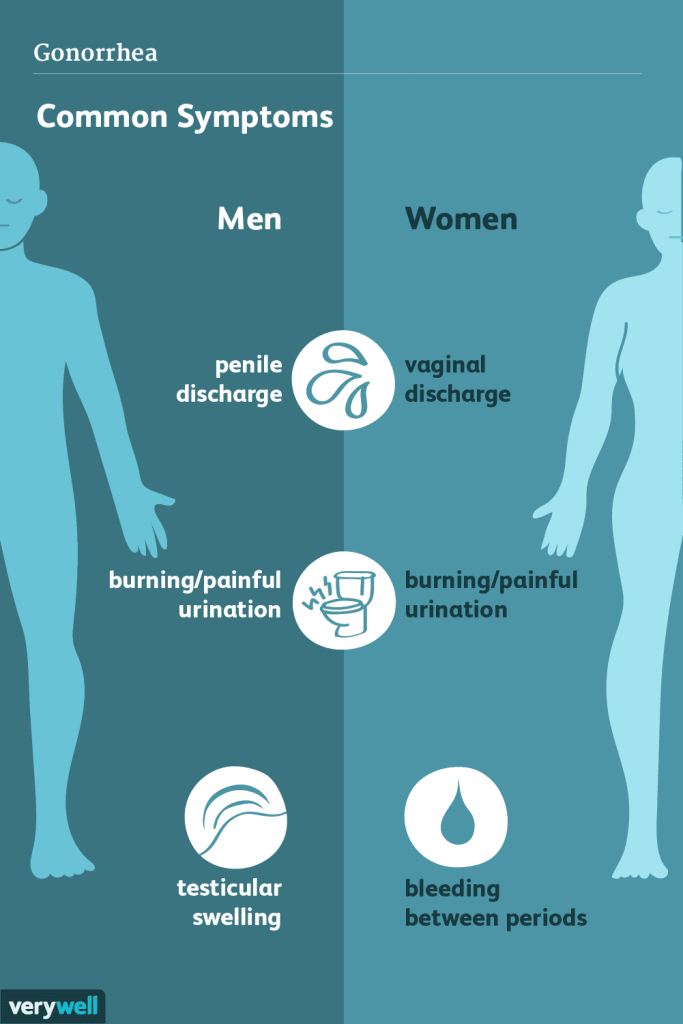
The symptoms have to do with infection and inflammation of the urethra. Burning on urination is almost universal, and purulent discharge and presence of pus in the urine is frequent. The infection is mostly a nuisance, but it can travel up the genito-urinary tract, and into the spermatic ducts in the male or the fallopian tubes in the female, and it is a common cause of sterility and pelvic inflammatory disease, or PID.

With its high frequency in young females, bacterial ointments are routinely applied to the eyes of newborn babies to prevent severe infection and possible blindness.

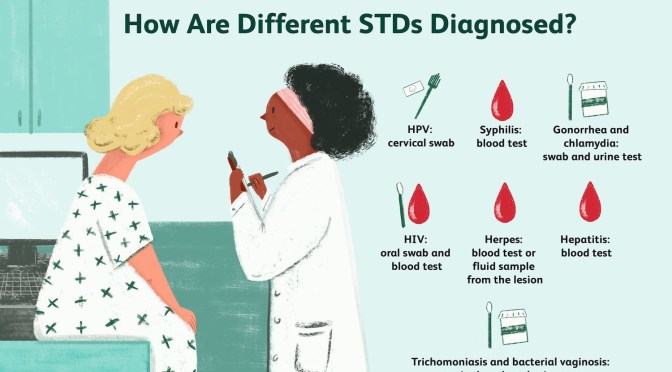
When I was practicing medicine, the diagnosis was made by culturing for the bacterium neisseria gonorrhea. Now the NAAT, the nucleic acid  amplification test, is the gold standard.

In my practicing  days, penicillin was the magic bullet, but resistance he has developed so that a cephalosporin and azithromycin combination is currently used.

STDs, sexually transmitted diseases, are one of the commonest conditions encountered in student health, according  to a good friend.

Please refer to the attached Mayo Clinic article for more information.

—Dr. C.

Read more

Dr. C’s Journal: Sexually Transmitted Disease (STDs)

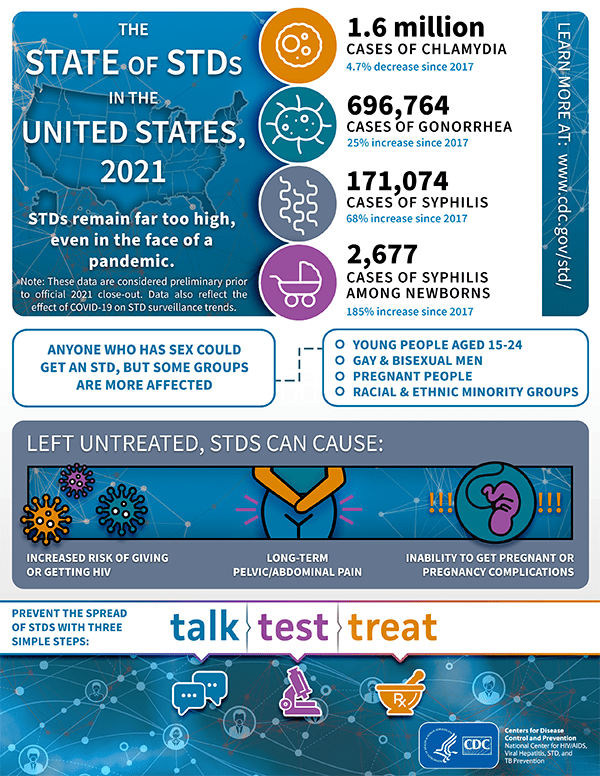
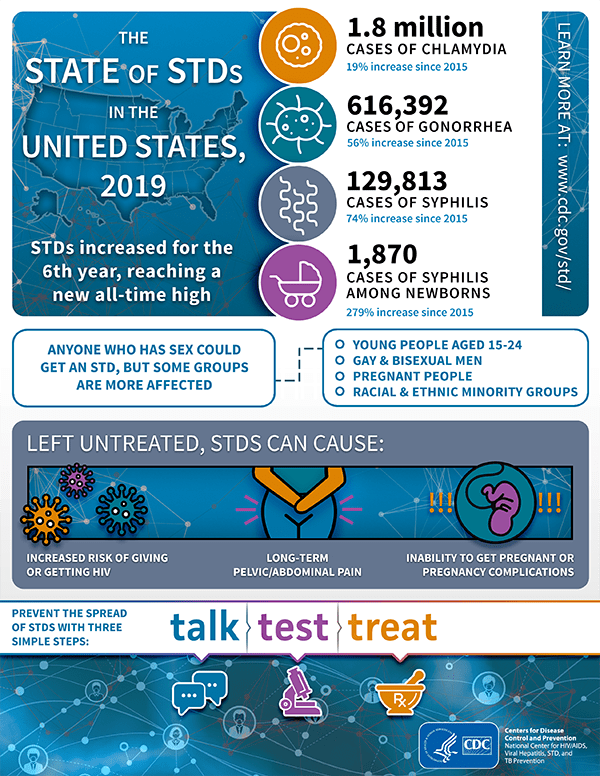
Sexually transmitted diseases are so common they deserve their own acronym, STDs. Down through the ages, Sexual activity with multiple partners has been so popular that the ever-resourceful bacteria, fungi, and viruses all compete for this ever present ecosystem. It is not uncommon to have multiple STDs at the same time.

Since STDs have many symptoms and physical findings in common, it is essential to go to the doctor for a diagnosis; certainly the treatments very widely.

Until the mid 20th century, treatments were very unsatisfactory, and the infection of the vagina would often lead to deeper infections of the uterus and abdominal cavity; pelvic inflammatory disease (PID)was fairly common then, and still occurs in people foolish enough to postpone getting their problem treated properly.

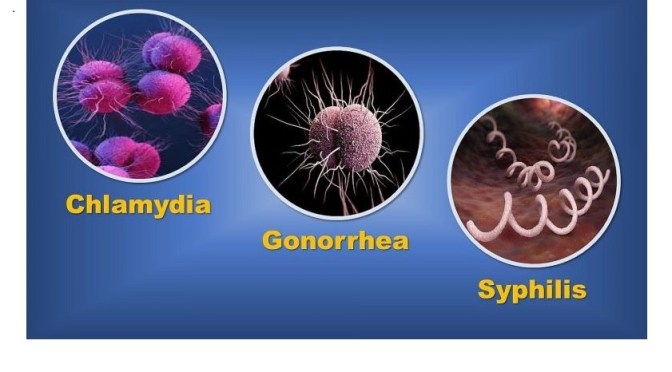
The common STDs include bacterial vaginosis, chlamydia, gonorrhea, genital herpes, human papilloma virus infection(HPV), Syphillis  and Trichomoniasis. These are sufficiently different in their symptoms and treatment as to deserve their own discussion among the 101 common disorders. Now we have a new kid on the block, Monkeypox, that is helping out AIDS as a plague to the homosexual community.

I have a dear friend who is a physician for a student health department at a major university. STDs, depression, and other psychiatric problems are among the more common things that she sees in her practice.

—Dr. C.

THE DOCTORS 101 CHRONIC SYMPTOMS & CONDITIONS #44: SYPHILIS (STD)

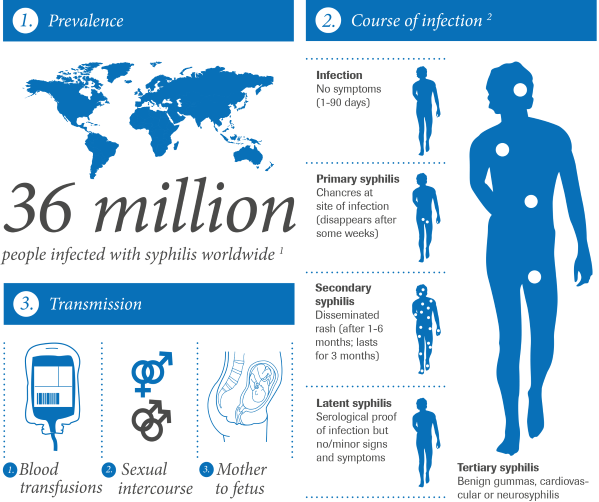
Syphilis is a venereal disease, or STD, that is unusual,  unique in many ways. First of all, it is one of the few major diseases to have originated in the Americas, the New World, and carried back to Europe most likely by Columbus; Popularized by “guns germs and steel”, the infectious disease traffic was almost all the other way, most famously smallpox which decimated the Native Americans.

A second unusual characteristic is that it’s treatment(penicillin) is known, cheap, easy, and yet Syphillis infects millions of people yearly, most commonly to be sure in the developing world, but also large numbers in America where is helped by AIDS, and spread by men having sex with men.

A third unusual characteristic  is that syphilis can mimic practically any disease. There are three stages.  The first stage is a painless ulcer, usually on the genitals.  After a few weeks, the second stage develops, showing a widespread rash and other symptoms.  After a few more months, problems develop in the heart, brain, or growths ( gummas) in many other areas .

When I was in medical school we used to go to an old peoples home to listen for aortic regurgitation, and observe the neurologic symptoms of syphilis patients. Syphilis is still a cause of aortic  insufficiency, if untreated.

Treponema pallidum, The causative agent, is also unusual. It has a very small geome, and has many missing cellular mechanisms, making it dependent upon Homo sapiens, it’s only known Reservoir. The fragile but very active organism will die in a few hours outside of its human host. Like it’s confederate,AIDS, The infection can easily spread from mother to child with devastating consequences. It is one of the major diseases for which pregnant mothers are tested.

Syphilis is one of the best arguments for being monogamous. If this can’t be, remember that syphilis is easily treatable, and that you should report any unusual illnesses to your doctor.

—Dr. C

THE DOCTORS 101 CHRONIC SYMPTOMS AND CONDITIONS #28: CERVICAL POLYPS

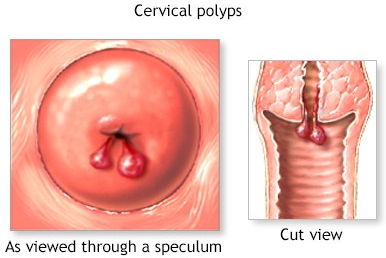
Cervical polyps are fairly common, particularly in young women who have had children. They are rare before periods start, and uncommon after menopause. Polyps are often silent, without symptoms.

Polyps are often silent, without symptoms. Polyps are often associated with INFLAMMATION, and may be discovered because of vaginal DISCHARGE. They may bleed and betray themselves by heavy periods, or BLEEDING between periods.

My Daughter, a Student Health Physician, recently saw a patient who presented with a foul discharge and examination revealed a large polyp. A blood count showed a severe ANEMIA.

Although cancer is rare, the polyp should be biopsied or removed and examined to be sure there is no malignancy. Cervical Polyps are often discovered on a routine Physical Examination. Preventative Physical and Vaginal examinations in young women are important to check for such conditions as Polyps, do PAP smears, and, in sexually active women, screen for STDs.

–Dr. C.

Read more