Tag Archives: Sleep Hygiene

DR. C’S JOURNAL: CAUSES & SYMTPOMS OF INSOMNIA

Sleep has many functions, among which are clearing the body of toxins and consolidating memory. The exact amount we need is determined by age, and genetics among another things. From what I’ve read, eight hours is required, plus or minus an hour.
That being said, there are a few  among us who are super sleepers. Going back in history this probably included Mozart and Thomas Edison: They could live healthy, productive lives with as few as three or four hours of sleep. Genetic mutations, including changes to the Orexin Gene receptor account for true super-sleepers.

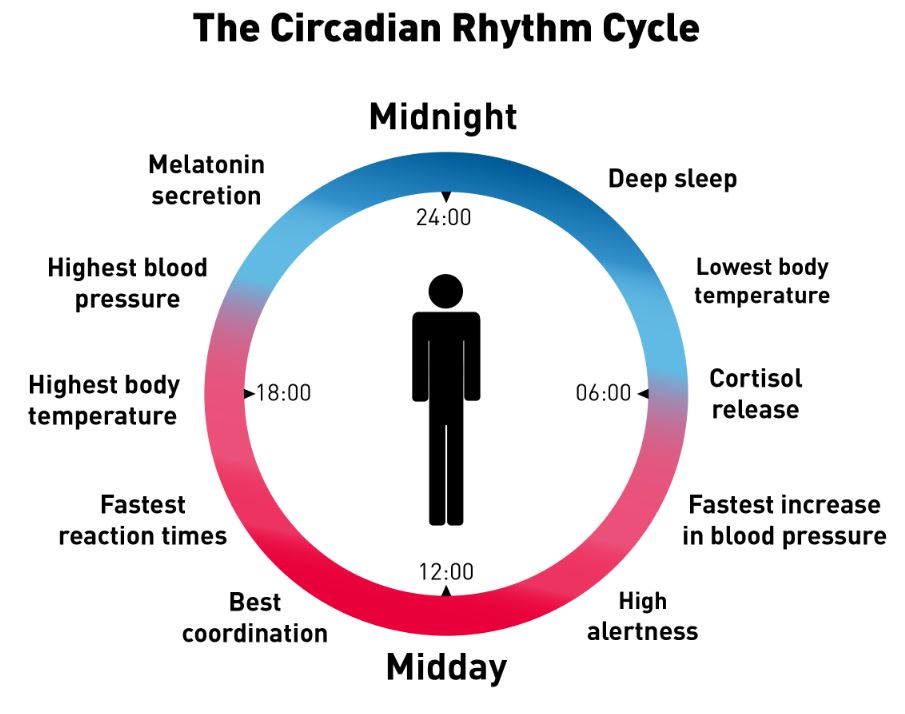
Familial fatal insomnia is a genetic disease operating through prion proteins, and does not illuminate the problem of insomnia. In most people  there are two major forces which determine the onset of sleep, the circadian rhythm, and sleep pressure.

The TIMING of the sleep varies from morning larks to night owls. These shifts in the circadian rhythm is also genetic, involving many genes, including PER and CRY. Diurnal rhythm can apparently be changed, But with difficulty.

The sleep pressure is caused by the gradual daily accumulation of adenosine in the system, apparently resulting from the stripping away of the phosphate groups from the energy currency, ATP.  This can be assuaged by caffeine containing drinks, such as tea or coffee. Caffeine temporally blocks the effect of adenosine, but when it wears off, you usually go right back to your fatigue state.

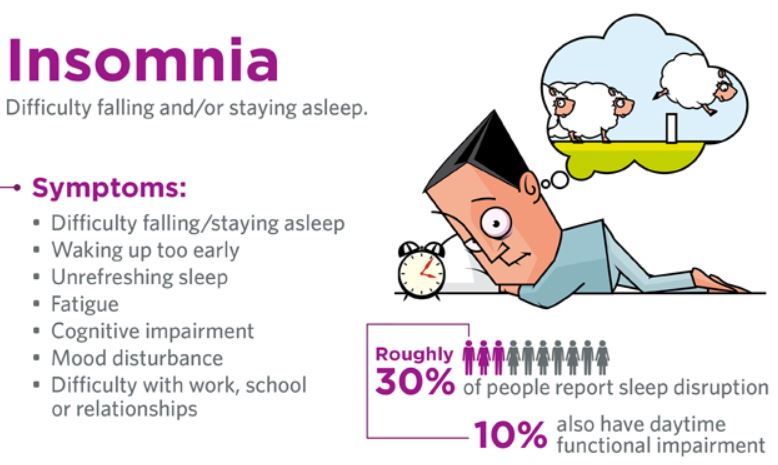
INSOMNIA occurs when you do not get as much sleep as you need, and are tired in the daytime. This is a major problem for a lot of people.

Insomnia has many causes. Stress will cause an increase in Cortisone in the bloodstream which interferes with sleep. Caffeinated drinks nicotine and other stimulants can cause you to have difficulty falling asleep, and alcohol will help you fall asleep but will often result in awakening in the middle of the night when the alcohol is metabolized.

Depression, Parkinson’s, chronic pain, gastroesophageal reflux and any other medical conditions can interfere with sleep. Sleep apnea, often associated with overweight and heavy snoring, is a special problem that sometimes needs the help of a sleep specialist.

Some poor habits such as reading in bed, doing work in bed, eating at bedtime, and heavy exercise just before bed can also be a problem.
A regular routine of Preparing for sleep, such as brushing and flossing and taking a warm shower are also helpful; you can get more details by looking up “sleep hygiene”.

A lot of people take a nap, but this can cause some difficulty in going to sleep. Among things you can do to prevent insomnia include living an active life, making your bedroom comfortable for sleep, and using your bedroom ONLY for sex and sleep.

Please refer to the accompanying Mayo clinic article for more organized information.

—Dr. C.

Mayo Clinic articlehttps://www.mayoclinic.org/diseases-conditions/insomnia/symptoms-causes/syc-20355167

DR. C’S JOURNAL: TIMING IN HEALTH AND MEDICINE

Timing is important in everything we do, and of course is important to health and how our bodies function.  It is a vast subject, and the only thing I can do here is to give you some ideas that might be helpful.

Your body will perform best for you if you have a daily routine; waking up at the same time every morning, and going to bed at the same time every evening keeps your circadian rhythm from getting confused. Of course, getting a good nights sleep is excessively important to your health. If you have trouble going to sleep at night or staying asleep, you can get all kinds of information over the Internet on “sleep hygiene”.

If you are an international traveler, jet lag is very important because the circadian rhythm is disrupted when you change time zones. The Internet is a rich source of information on how you might or rapidly get back into your routines. Timing of bright light and melatonin are involved.

Your metabolism also has a routine, and drugs work by targeting certain receptors, which cycle, depending on when their function is needed. “ Chronopharmacology” is a slowly developing science that will someday-if doctors, perhaps with electronic help, can ever get enough time to properly take care of the patients- be very important. As an example, certain cancer therapies vary significantly in their effects, depending upon the time of day they are given.

When I was a practicing Allergist, I took care of many Asthma patients. In the 60s and 70s there were few drugs to treat asthma, which is predominantly a nighttime disease. Giving medications, such as Theophylline, at the right time was therefore very important.

Finally, if you have any choice, you might arrange for your surgery during the first half of the day. Surgeons make less errors in the morning, when their minds are well rested.

—Dr. C.

THE DOCTORS 101 CHRONIC SYMPTOMS AND CONDITIONS #27: DELIRIUM

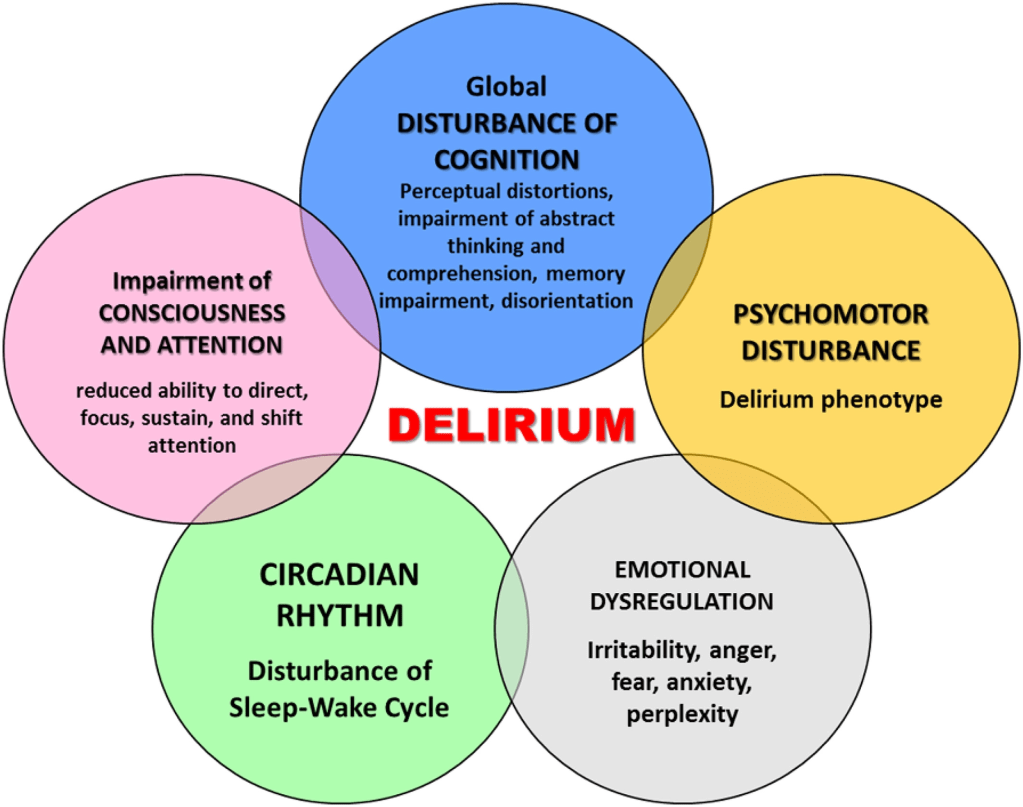
DELIRIUM is a rapidly-developing TEMPORARY DEMENTIA in response to almost any trauma, infection or stress, usually in a hospital setting, with its restrictive, isolating and disorienting environment.

I had little appreciation of the frequency or economic hazard of Delirium before I encountered this infographic. I knew little about the causative mechanisms, and after reading about it, I still don’t know what is going on. But I do know one thing; I don’t want to become delirious and risk its ominous outcome. To improve my odds, I want to keep myself as healthy as possible.

To prevent loss of focus, cognition and memory, challenge the Brain as much as possible. To prevent or restrain infection, support the immune system with a healthy diet. To combat sleep disturbances, practice Sleep Hygiene. To maintain adequate oxygen and nutrient delivery to the Brain, support a healthy cardiovascular-pulmonary system with regular aerobic exercise.

These preventative steps will also postpone the FRAILTY on which delirium feeds. This fuzziness, which afflicts most conditions with PSYCHIATRIC OVERTONES, should not be surprising, since the human Brain, the location of Delirium, is the most complex entity in the known universe.

Medical Knowledge of Delirium is still at the descriptive stage, even though it has been a feature of human life since Ancient times. Causation? Excess or Deficiency of most neurotransmitters have been described. To paraphrase “cytokine storm”, which can incidentally cause Delirium, one could call the condition a “neurotransmitter storm”.

Treatment? If the Delirious Patient is on a Psychotropic medication, try stopping it. If not taking such medication, try starting it. The only universal green light is Good general supportive care with IV fluids, oxygen, nutrition, and psychological support, with gentle, regular attention. Please read the accompanying Mayo Clinic article for a more conventional discussion.

–Dr. C.

Dr. C’s Journal: A Little Bit About “Energy & Fatigue”

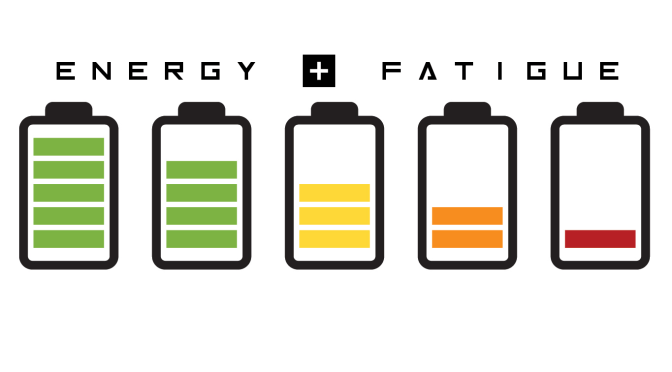
Sometimes I wake up in the morning with a feeling of RELAXED ENERGY. My mind is clear, I have no fatigue, and believe once more that the world is wonderful, and it’s great to be alive.

I St-re-tch, exercise my hands (I have Osteoarthritis, and they are stiff), take out my Nite guard ( I grind my teeth at night and would otherwise wear them away), take my beta blocker eye drops ( to lower my intraocular pressure) and wash down my Eliquis ( an anticoagulant to prevent stroke from my Atrial Fibrillation) with 16 oz. of water, while thinking about all of the delights awaiting me.

Yes, my body was in better shape 60 years ago; but I had much more responsibility then, and much less discretionary time. All things considered, I like to believe that I am happier now.

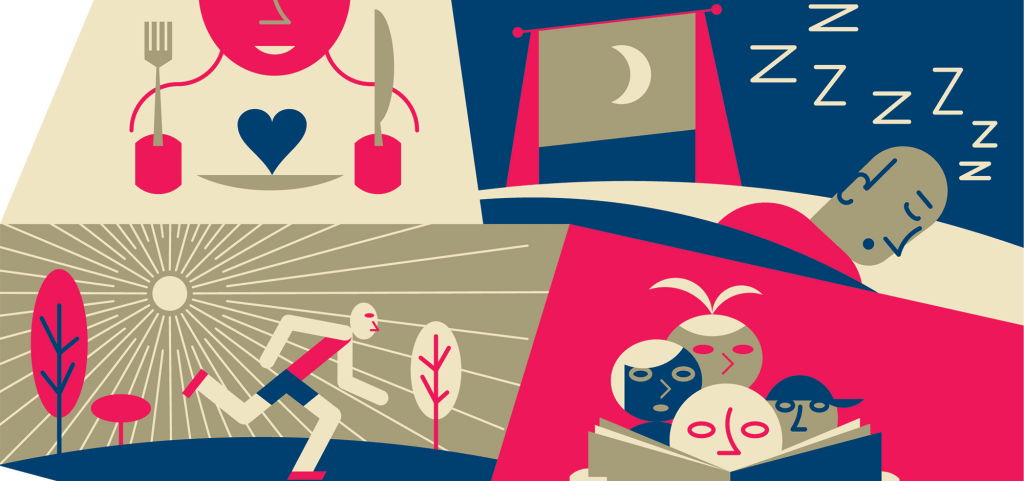
The KEY is to stay in GOOD HEALTH. GOOD SLEEP is critical, but it cannot be had by willpower alone. As I have discussed previously, you need a bedtime routine, good SLEEP HYGIENE.

You also need a…….. GOOD DIET. with lots of fruits, vegetables and whole grains. Fatty, spicy foods will stay in your stomach and bother you at night, particularly if you eat Late. I like to finish eating by 5 PM. Late dinner is also likely to produce GERD, and maybe Sleep Apnea.

GOOD EXERCISE is also critical. If you are not tired at the end of the day, it is hard to get good sleep. I always seem to sleep better on the day when I walk the hills for an hour, which is 3 days a week. Try not to exercise within 2 hours of bedtime. Assuming that you have a good base of SLEEP, DIET and EXERCISE, there are other mechanisms that can foul things up. INFLAMMATORY conditions often cause fatigue.

The most common inflammatory diseases are OBESITY, METABOLIC SYNDROME and DIABETES. OBESITY is the defining disease of our EXCESSIVE SOCIETY, where there is too much of everything, and excessive consumption is relentlessly advertised everywhere.

External correction is probably a pipe dream, since there is no will even to Tax Sugar-containing Beverages, the “low hanging fruit” of dietary excess. Internal correction is all that is left, and that takes WILL POWER, also in short supply.

INFECTIOUS DISEASES are a subset of inflammatory conditions. COVID 19 is the poster child of infection, and FATIGUE is one of the hallmarks of the disease. Interleukins, like TNF-alpha, IL-1, andIL-6 are some of the defense factors which cause the fatigue. AUTOIMMUNE Diseases like Rheumatoid Arthritis and Lupus are also associated with fatigue-producing interleukins.

Fatigue even has its own flagship disease, CHRONIC FATIGUE SYNDROME. Chronic viral disease has been suspected as the cause of this condition, and inflammatory cytokines may be elevated. This condition, and the similar GULF WAR SYNDROME are still poorly understood. Several CFS patients were sent to me when I was in practice, and I had some success in getting them to exercise regularly, which seemed to help. CANCER is another category of diseases where Fatigue is prominent.

Inflammation plays a role in these diseases, which also drain energy substrates from the Patients body; Cancer cells have a high metabolic requirement. MEDICATIONS, Cancer meds especially, but a variety of other Drugs are associated with FATIGUE. I went through MY MEDICATION LIST. Lo and behold, 3 of them are associated with fatigue.

Finasteride is a relic of my prostate operation, recommended to keep it from growing back. It causes fatigue, probably because of its ANTITESTOSTERONE effect. At least I can still pee, and am not bald. I take METFORMIN because of its fame in prolonging life. Its mechanism is that of interacting with the Sirtuin system, and increasing the inefficiency of mitochondria. Isn’t this surprising?

Like many other things in physiology, you place a stress on the body, and the body responds by improving its performance. If you are fatigued, you exercise. Respecting the body works with drugs as well. If you are drinking a ton of coffee and stop it, after a few weeks you will feel less fatigued.

And when you ARE FATIGUED, you drink a LITTLE coffee, and it wakes you right up. Caffeine works by displacing ADENOSINE, which causes Fatigue as it increases through the morning, peaking at SIESTA (or tea) time,at about 2 PM. OMEPRAZOLE, which I take to prevent HEARTBURN, also is related to fatigue especially if it blocks MAGNESIUM for long enough. DEPRESSION overlaps with fatigue, as does SLEEPINESS, to increase the complexity of the situation.

Many chronic LUNG, KIDNEY and LIVER diseases are associated with fatigue as a secondary concern. STAY HEALTHY!

–Dr. C

STUDY: “FRAGMENTED SLEEP” INCREASES INFLAMMATION & HARDENING OF THE ARTERIES

From UC Berkeley (June 4, 2020):

UC Berkeley Logo

“We’ve discovered that fragmented sleep is associated with a unique pathway — chronic circulating inflammation throughout the blood stream — which, in turn, is linked to higher amounts of plaques in coronary arteries,” said study senior author Matthew Walker, a UC Berkeley professor of psychology and neuroscience.

Disrupted nightly sleep and clogged arteries tend to sneak up on us as we age. And while both disorders may seem unrelated, a new UC Berkeley study helps explain why they are, in fact, pathologically intertwined.

Some tips to improve sleep quality

  • Maintain a regular sleep routine, going to bed and waking up at the same time each day.
  • As part of a nightly wind-down routine, avoid viewing computer, smartphone and TV screens in the last hour before bedtime, and keep phones and other digital devices out of the bedroom.
  • Engage in some form of physical exercise during the day.
  • Get exposure to natural daylight, especially in the first half of the day.
  • Avoid stimulants, like caffeine, and sedatives, like alcohol, later in the day.

UC Berkeley sleep scientists have begun to reveal what it is about fragmented nightly sleep that leads to the fatty arterial plaque buildup known as atherosclerosis that can result in fatal heart disease.

Read full article

COMMENTARY

“How much sleep do we need”, and “Sleep Hygine” were past topics on this site, and my own sleep fragmentation was mentioned. This study correlates sleep fragmentation in the elderly with increased blood vessel disease compared to elderly people who have no interruptions in their sleep.

The elderly have several obstacles to a good, full night’s sleep, although a fair number of my friends claim the blessings of sleeping soundly. As we get older, we lose the deepest sleep we enjoyed as children, and there is some loss of REM sleep as well. The elderly sleep more lightly.

Diseases begin to accumulate as we get older, and These DISORDERS and their TREATMENT can disrupt sleep. I mentioned My BPH with it’s blockage of flow, leading to incomplete emptying of my bladder. This led to FREQUENT URINATION and frequent arousal at night.

With aging, the tissues in the throat become more flabby, and if you SLEEP on your BACK, your inhalation may be blocked. This may result in OBSTRUCTIVE SLEEP APNEA, where your breathing  and sleep are interrupted repeatedly. The associated SNORING may interrupt the sleep of your partner, or even the sleep of those in the next room.

GERD, where you choke on regurgitated stomach contents, is more common in the elderly.

Chronic Heart, lung and Kidney disease can interfere with sleep.
SLEEP DEPRIVATION leads to a variety of problems, such as the inflammation and Arterial blockage highlighted in the above article.

Sleep is intimately connected with DIET and EXERCISE. As one of the PILLARS of HEALTH,  It s well worth discussing with your Doctor and following her instructions.

—Dr. C.