Tag Archives: Infographics

HEALTH: ‘DIABETES AND CHRONIC KIDNEY DISEASE’ – NEW GUIDELINES (OCT 2020)

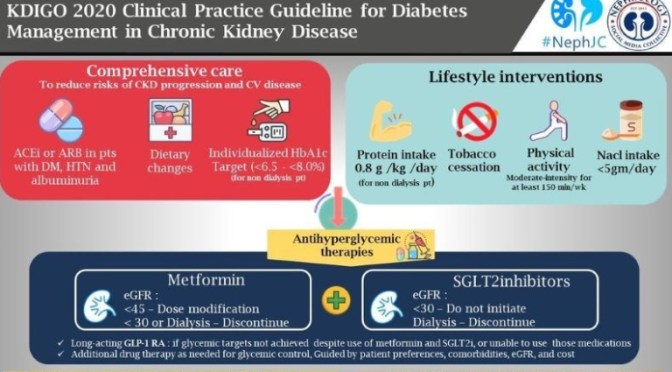
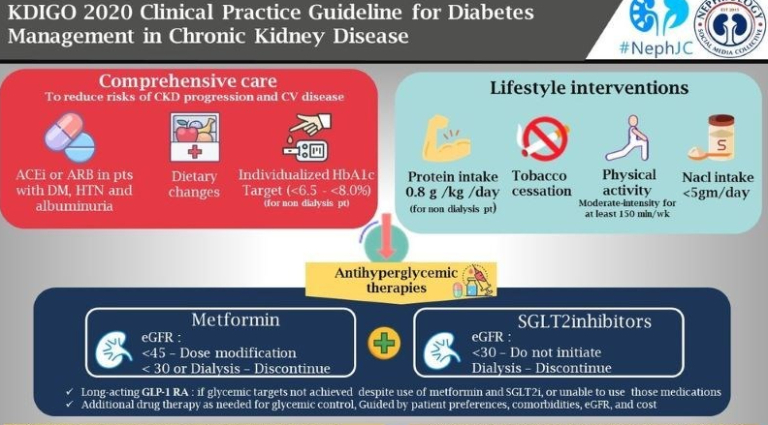
Comprehensive care in patients with diabetes and CKD

Management of CKD in diabetes can be challenging and complex, and a multidisciplinary team should be involved (doctors, nurses, dietitians, educators, etc). Patient participation is important for self-management and to participate in shared decision-making regarding the management plan. (Practice point).

We recommend that treatment with an angiotensin-converting enzyme inhibitor (ACEi) or an angiotensin II receptor blocker (ARB) be initiated in patients with diabetes, hypertension, and albuminuria, and that these medications be titrated to the highest approved dose that is tolerated (1B).

Lifestyle interventions in patients with diabetes and CKD

We suggest maintaining a protein intake of 0.8 g protein/kg)/d for those with diabetes and CKD not treated with dialysis (2C).

On the amount of proteins recommended in these guidelines, they suggest (‘recommend’ becomes a ‘suggest’ at this level of evidence) a very precise  intake of 0.8g/kg/d in patients with diabetes and CKD. Lower dietary protein intake has been hypothesized but never proven to reduce glomerular hyperfiltration and slow progression of CKD, however in patients with diabetes, limiting protein intake below 0.8g/kg/d can be translated into a decreased caloric content, significant weight loss and quality of life. Malnutrition from protein and calorie deficit is possible.

Physical activity

We recommend that patients with diabetes and CKD be advised to undertake moderate-intensity physical activity for a cumulative duration of at least 150 minutes per week, or to a level compatible with their cardiovascular and physical tolerance (1D).
Read full guidelines

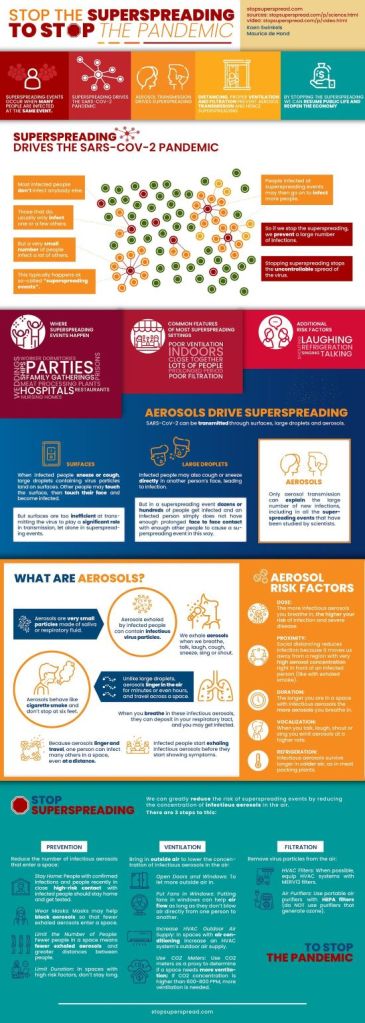
INFOGRAPHIC: ‘WHAT IS HERD IMMUNITY?’ – ACHIEVING IT WITH COVID-19 (JAMA)

What Is Herd Immunity?

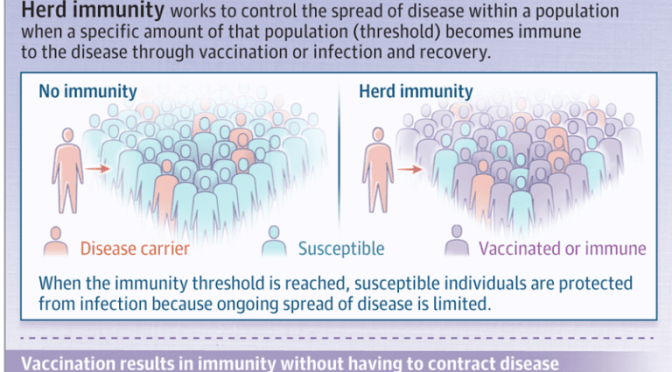
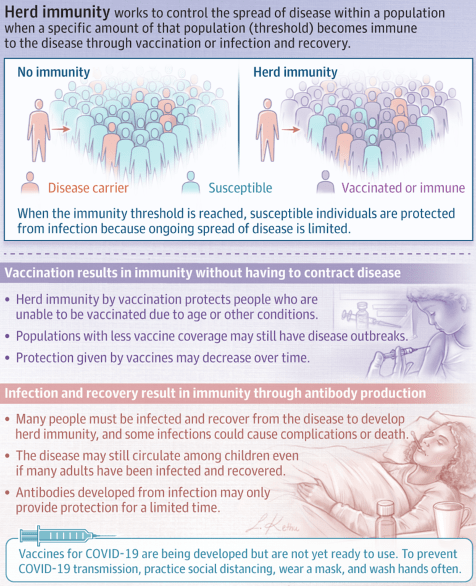
Herd immunity occurs when a significant portion of a population becomes immune to an infectious disease, limiting further disease spread.

Disease spread occurs when some proportion of a population is susceptible to the disease. Herd immunity occurs when a significant portion of a population becomes immune to an infectious disease and the risk of spread from person to person decreases; those who are not immune are indirectly protected because ongoing disease spread is very small.

The proportion of a population who must be immune to achieve herd immunity varies by disease. For example, a disease that is very contagious, such as measles, requires more than 95% of the population to be immune to stop sustained disease transmission and achieve herd immunity.

How Is Herd Immunity Achieved?

Herd immunity may be achieved either through infection and recovery or by vaccination. Vaccination creates immunity without having to contract a disease. Herd immunity also protects those who are unable to be vaccinated, such as newborns and immunocompromised people, because the disease spread within the population is very limited. Communities with lower vaccine coverage may have outbreaks of vaccine-preventable diseases because the proportion of people who are vaccinated is below the necessary herd immunity threshold. In addition, the protection offered by vaccines may wane over time, requiring repeat vaccination.

Achieving herd immunity through infection relies on enough people being infected with the disease and recovering from it, during which they develop antibodies against future infection. In some situations, even if a large proportion of adults have developed immunity after prior infection, the disease may still circulate among children. In addition, antibodies from a prior infection may only provide protection for a limited duration.

People who do not have immunity to a disease may still contract an infectious disease and have severe consequences of that disease even when herd immunity is very high. Herd immunity reduces the risk of getting a disease but does not prevent it for nonimmune people.

Herd Immunity and COVID-19

There is no effective vaccine against coronavirus disease 2019 (COVID-19) yet, although several are currently in development. It is not yet known if having this disease confers immunity to future infection, and if so, for how long. A large proportion of people would likely need to be infected and recover to achieve herd immunity; however, this situation could overwhelm the health care system and lead to many deaths and complications. To prevent disease transmission, keep distance between yourself and others, wash your hands often with soap and water or sanitizer that contains at least 60% alcohol, and wear a face covering in public spaces where it is difficult to avoid close contact with others.

Read more

CDC INFOGRAPHICS: ‘HEAT STROKE & HEAT EXHAUSTION’

COMMENTARY:

THERMOREGULATION, preservation of the normal body temperature, is well developed in humans, and monitoring the body temperature has been useful since the development of thermometers.

Indirect measurement by Infrared detectors is being widely used today to detect FEVER as a sign of Covid in gatherings such as schools. Reactive increase of body temperature in a cool environment is a body defense mechanism that I have discussed earlier. Contrary to general practice, Fever, in my opinion, should be left untreated unless excessive, such as above 103 degrees F., or even 104 degrees.

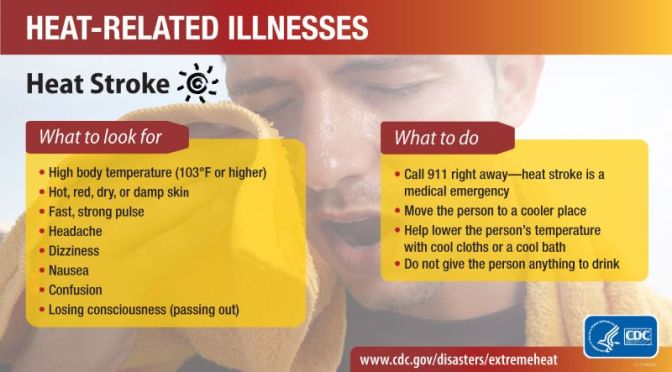
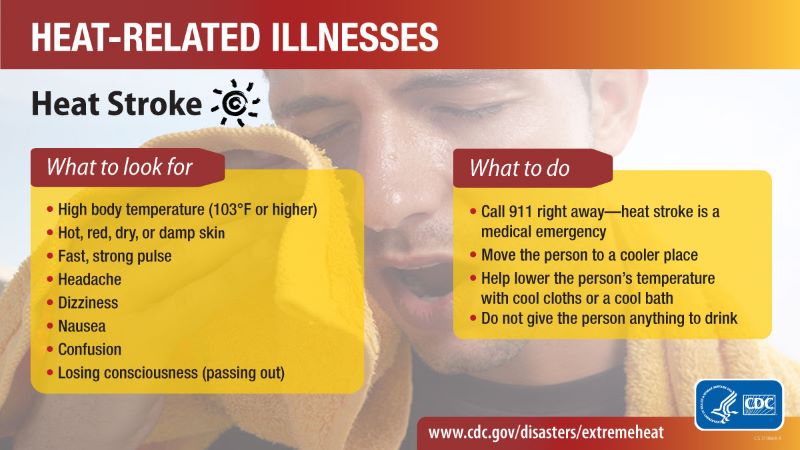
Excessive environmental temperature, such as in a closed car, Jacuzzi, or heat wave can defeat the body’s ability to defend the normal temperature. Children, with their high body surface to mass ratio, are particularly at risk, as periodic newspaper articles testify. HEAT STROKE is the most serious of heat-related illnesses, leading to high and increasing body temperature, mental symptoms, even convulsions, and is a MEDICAL EMERGENCY.

The treatment is to call 911, and to lower the body temperature by removing insulating clothing, and immersing in cold water. There are a variety of other conditions based on excessive exertion, water or salt loss.

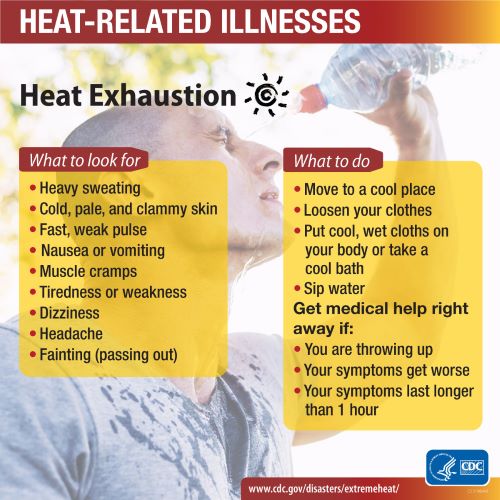
These include HEAT EXHAUSTION. Older Workers are particularly susceptible, and medical clinic attention may be needed for fluid and electrolyte replacement. MUSCLE CRAMPS and even damage( Rhabdomyolysis), FAINTING (this has been discussed before) and Heat Rash can result from too hot an environment. Furry Animals Pant instinctively to get their highly vascular Tongue to “air condition” their bodies. Humans should dress and exercise appropriately when the environment requires it.

–Dr. C.