Tag Archives: Exercise

MENTAL HEALTH: SOME THOUGHTS ON DIAGNOSING AND TREATING “DEPRESSION”

I recently posted a discussion on osteoporosis that was based on a MNEMONIC, using the word itself as the basis of exploring the Risk factors Evidence that you have Osteoporosis is hidden, and are discovered by Dexascan, or when you suddenly have a major fracture.

DEPRESSION is common, but sneaks up on you. It may be a job to discover that you have it, to DIAGNOSE it, so that you can be treated. The diagnosis has about 10 markers that can be formulated into a mnemonic, so that you can remember what they are. My favorite is by Paul Blenkiron, writing in the BMJ:
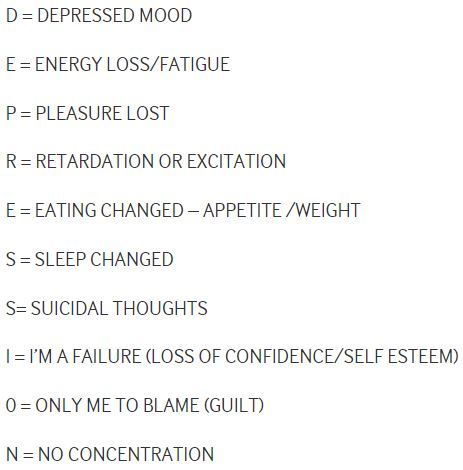
These 10 symptoms are described in the 10th edition of “the international classification of Diseases. The problem with some mnemonics is to remember the mnemonic itself.

Not here. Interestingly, The 4 PILLARS OF HEALTH are each represented in this list. 3 of them are valid TREATMENTS for DEPRESSION, as you will see in the following articles. When I looked up intellectual stimulation as a treatment for Depression, all i found was electrical or magnetic deep brain stimulation.
I can’t help but believe that INTELLECTUAL STIMULATION itself would at least help ward off much Anxiety and Depression. SLEEP has an interesting relationship to depression. Lack of sleep can be a CAUSE of Depression.

Recently, deprivation of sleep has been used to TREAT episodes of severe depression. Obviously there is a lot we don’t know. Another puzzlement is the several week delay in the effect of SSRI medications. I acknowledge that throughout history many great intellects have manic-depression, which may be key to their productivity.

Depression itself is credited with deep understanding. The “black Dog” of depression is best avoided, however. A HEALTHY LIFE STYLE SHOULD HELP WARD OFF DEPRESSION.
–Dr. C.

Reference #1

Reference #2

Reference #3

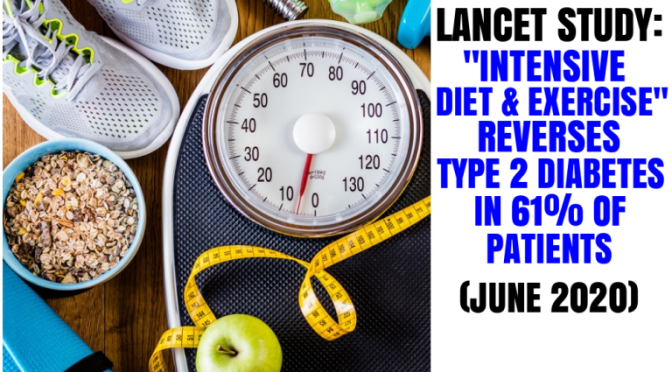
STUDY: “INTENSIVE DIET AND EXERCISE” REVERSES TYPE 2 DIABETES IN 61% OF PATIENTS

From The Lancet Diabetes & Endocrinology (June 2020):

Our findings show that the intensive lifestyle intervention led to significant weight loss at 12 months, and was associated with diabetes remission in over 60% of participants and normoglycaemia in over 30% of participants. The provision of this lifestyle intervention could allow a large proportion of young individuals with early diabetes to achieve improvements in key cardiometabolic outcomes, with potential long-term benefits for health and wellbeing.

The Lancet Diabetes & Endocrinology

Type 2 diabetes is affecting people at an increasingly younger age, particularly in the Middle East and in north Africa. We aimed to assess whether an intensive lifestyle intervention would lead to significant weight loss and improved glycaemia in young individuals with early diabetes..Between July 16, 2017, and Sept 30, 2018, we enrolled and randomly assigned 158 participants (n=79 in each group) to the study. 147 participants (70 in the intervention group and 77 in the control group) were included in the final intention-to-treat analysis population. Between baseline and 12 months, the mean bodyweight of participants in the intervention group reduced by 11·98 kg (95% CI 9·72 to 14·23) compared with 3·98 kg (2·78 to 5·18) in the control group (adjusted mean difference −6·08 kg [95% CI −8·37 to −3·79], p<0·0001). In the intervention group, 21% of participants achieved more than 15% weight loss between baseline and 12 months compared with 1% of participants in the control group (p<0·0001). Diabetes remission occurred in 61% of participants in the intervention group compared with 12% of those in the control group (odds ratio [OR] 12·03 [95% CI 5·17 to 28·03], p<0·0001). 33% of participants in the intervention group had normoglycaemia compared with 4% of participants in the control group (OR 12·07 [3·43 to 42·45], p<0·0001)

Read full study

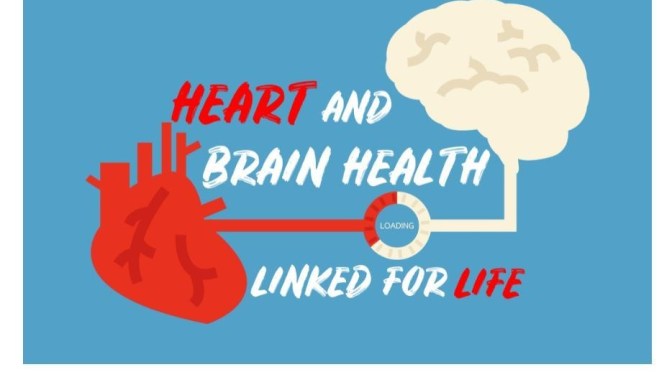
OPINION: HEART AND BRAIN HEALTH ARE LINKED FOR LIFE

Your heart and your brain are your two most vital organs, and if you enjoy life, they should be a top priority. These amazing structures are tethered to life-giving support by your arteries, just as the new you was tethered by your ubilical cord.

Life is fragile, hanging by a thread, or an artery. over the span of your life, These arteries can become plugged by fatty deposits called plaques. A healthy life style-SLEEP, DIET and EXERCISE– could slow down or prevent this atherosclerosis.

But everybody should know about the symptoms of HEART ATTACK and STROKE (1) and how to respond if the arteries sustaining your heart or brain become blocked.

You should be familiar with the hospitals in your area. How close are they? What are their capabilities? Are they Class 1 for heart attacks and stroke? Do they have a CATH LAB?

SPEED is important. Within minutes of the BLOCKAGE of an ARTERY to your heart or brain, vital cells start to die. The goal is to remove the blockage as soon as possible. CALL 911 as soon as you have heart attack or stroke symptoms. Don’t be afraid of the ER because of Covid, since almost all now use TELEMEDICINE SCREENING to keep infected patients segregated.

Alas, for many people, such PREVENTATIVE MEDICINE requires too much SELF DISCIPLINE AND CONVICTION. America has an epidemic of OBESITY and an avalanche of tasty FAST FOODS provided by a CONSUMER SOCIETY that is ever-attentive to the latest fads and trends.

DR. C

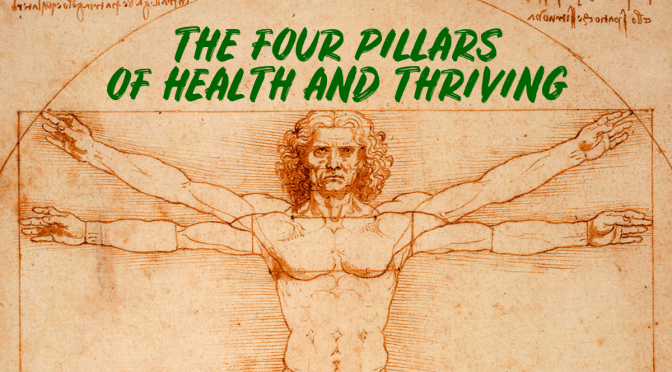
OPINION: THE ” FOUR PILLARS OF HEALTH AND THRIVING”

Homo sapiens have been around for upwards of 200,000 years and our bodies have evolved to deal with conditions far different than we experience in today’s life.

For about 95% of our species’ existence we have had:

  • Far more SLEEP. We were diurnal, going to bed at sundown, awakening at sunrise.
  • A more natural and varied DIET. We had to gather or kill what we ate.
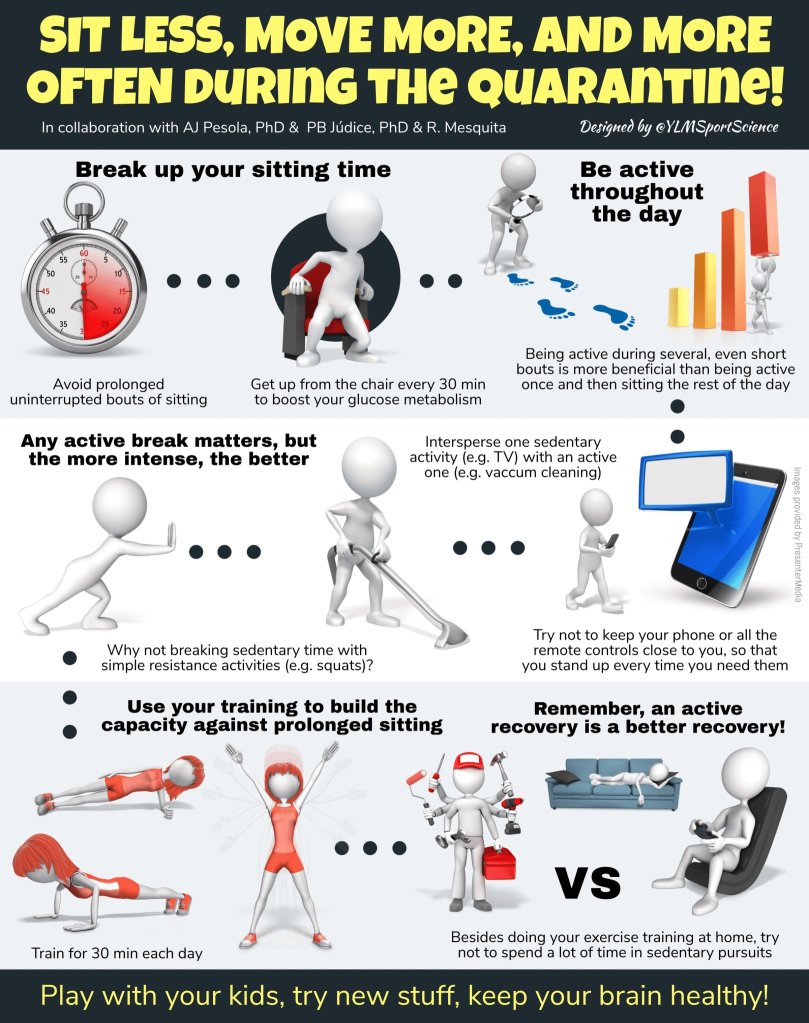
  • Far more EXERCISE as we walked many miles on most days.
  • INTELLECTUAL STIMULATION. Well, here at least we moderns have an advantage, and our brains are better for it, If we get enough Sleep, Diet and Exercise.

Intellectual stimulation is really just a form of exercise. Exercise of the brain; as the brain is in a way like a muscle. If you don’t exercise your muscles, they waste away. If you don’t exercise your brain, your synapses waste away. To overwork a cliche : use it or lose it. Your muscles and brain are very energy-intensive and therefore expensive in evolutionary terms. Metabolic mechanisms have evolved to weed out that which is not needed and not used.

We could then say that there are the “Three Pillars of Health: Sleep, Diet, and Exercise, with the understanding that exercise refers to both muscles and brain. But they are exercised in such radically different ways, and each is prominent at different times in life. Children are reluctant to exercise their brains and are in constant motion. The elderly have much less muscle to exercise, but the aged brain still works quite well if you nurture and use it. So Intellectual Stimulation is best considered a separate category.

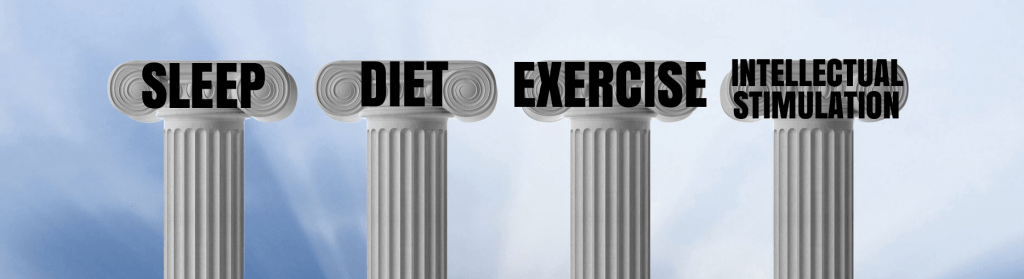
SLEEP, DIET, EXERCISE and INTELLECTUAL STIMULATION are then the “Four Pillars of HEALTH and THRIVING”.

These Four Pillars come as a package, reinforce each other, and are intricately interconnected. You can’t afford to neglect one without diminishing the others. But we will be discussing them separately, since they are separately researched and enacted.

Keep tuned.

—Dr. C.

Further reading

Health & Aging: The Importance Of Exercise (Scientific American)

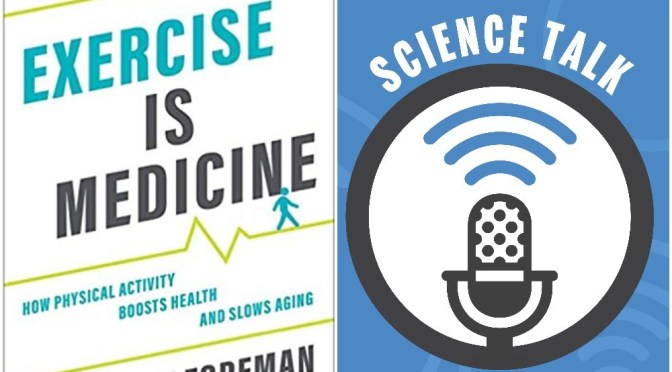
Health journalist Judy Foreman talks about her new book Exercise Is Medicine: How Physical Activity Boosts Health and Slows Aging

This is Scientific American’s Science Talk, posted on April 24th, 2020. I’m Steve Mirsky. And under our current, often locked-down situation, it’s still really important to try to get some exercise. Judy Foreman is the author of the new book Exercise is Medicine: How Physical Activity Boosts Health and Slows Aging. She’s a former nationally syndicated health columnist for the Boston Globe, LA times, Baltimore Sun and other places, and an author for the Oxford University Press. We spoke by phone.

Website

COMMENTARY

This Podcast is worth listening to in full. It will introduce some of the upcoming themes of DWWR.

Exercise is one of the 4 pillars of health, thriving and longevity, along with Diet, Sleep, and Intellectual Stimulation.  We look forward to highlighting and reveling in these subjects.

Judy Foreman’s thesis “ exercise is medicine” is true in many dimensions, including industries desire to capture the many beneficial biological effects of exercise in a pill; it requires effort to get off your duff, and you need to budget the time to work out.

My preference is WALKING and WATER EXERCISE. I make passing the time PLEASANT by listening to BBC “in our time”, recorded on a water-proof mp-3 player. EXERCISE is both VALUABLE and ENJOYABLE!

—Dr. C.