Tag Archives: Diagnosis

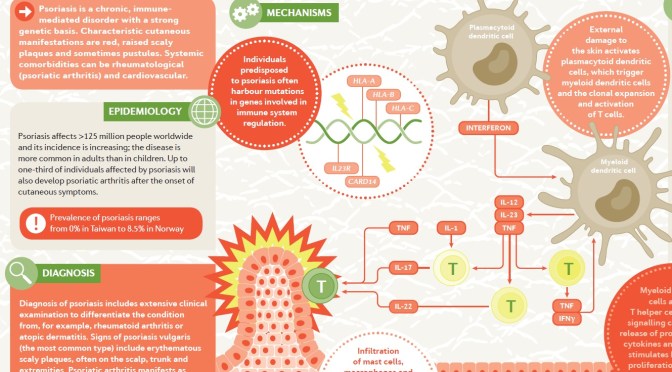
Infographic: Diagnosis & Treatment Of Psoriasis

Psoriasis is a skin disease that causes a rash with itchy, scaly patches, most commonly on the knees, elbows, trunk and scalp.

Psoriasis is a common, long-term (chronic) disease with no cure. It can be painful, interfere with sleep and make it hard to concentrate. The condition tends to go through cycles, flaring for a few weeks or months, then subsiding for a while. Common triggers in people with a genetic predisposition to psoriasis include infections, cuts or burns, and certain medications.

Treatments are available to help you manage symptoms. And you can try lifestyle habits and coping strategies to help you live better with psoriasis.

Website

COMMENTS ON ‘PSORATIC ARTHRITIS’:

My practice was restricted to allergy, but I saw many patients with psoriasis. The red scaly patches made them think they had allergic dermatitis, eczema. Psoriasis on the arm is usually located on the elbow, and atopic dermatitis on the opposite side, in the flexural area. Thick, pitted fingernails are also common in psoriasis. It’s combination with arthritis is worrisome.

Psoriasis will usually develop first, and the psoriatic arthritis will follow years later, but 10% of the time the arthritis Is the first problem. This form of arthritis can be very painful, and cause deformities. It is often worse than rheumatoid arthritis, although does not affect as many joints, and is often asymmetrical. It inflames the area where tendons attach to the bone, which is one of the reasons that it can be more painful than rheumatoid arthritis.

Psoriasis is an autoimmune problem and can involve practically any organ in the body.

It is often associated with metabolic syndrome and diabetes.

Psoriatic arthritis does not have the rheumatoid serum markers that can help diagnose rheumatoid arthritis, and unless psoriasis is also present on the skin, it can be hard to diagnose.

Symptomatic treatment with NSAIDs, physical therapy, phototherapy and topical treatments can be helpful, but very expensive biologics are sometimes needed to help out methotrexate and other first line DMARDs (Disease modifying antirheumatic drugs).

This condition can be  progressive.  If you develop scaly red patches on your skin, be sure to check with the doctor about the possibility of psoriasis.

—Dr. C.
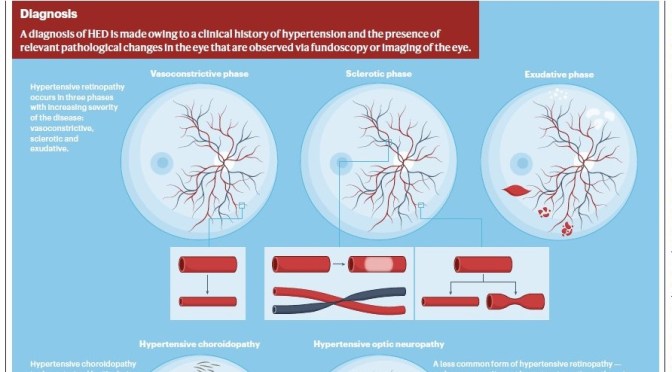
Diagnosis: Hypertensive Eye Disease (Infographic)

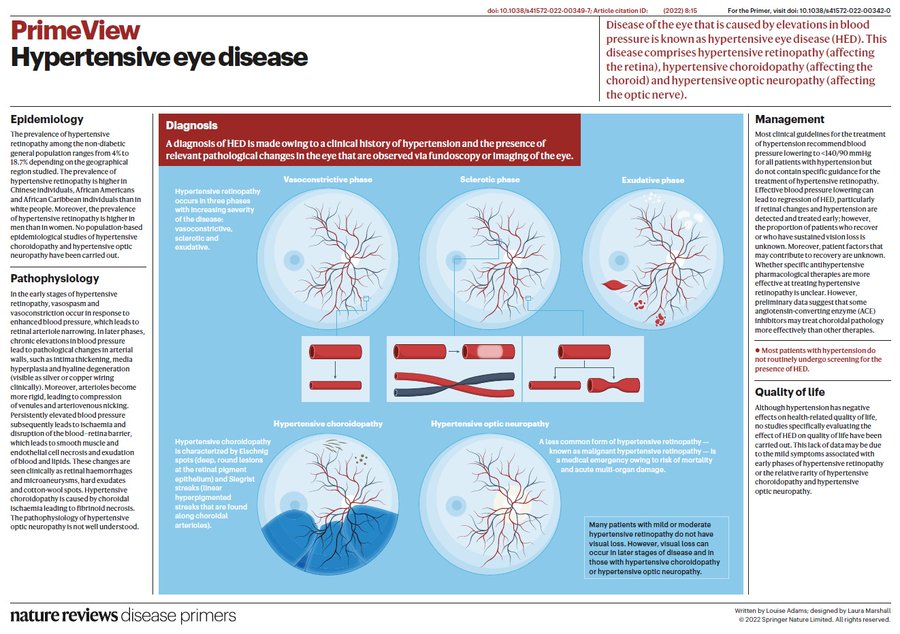
Hypertensive eye disease is diagnosed on the basis of a clinical history of #Hypertension and the presence of relevant pathological changes in the eye that are observed via fundoscopy or imaging. https://go.nature.com/3t0PahO

Commentary:

Control of hypertension is one of the triumphs of modern medicine, and there are many effective medications. One of the main problems that I hear about has  to do with taking too much of the medication, and having dizziness, especially on standing, which could cause a fall and injuries.

Abnormalities of the eye with hypertension are common. the doctor can look directly at the bare blood vessels as they course along the back of the eye. A hypertensive artery passing over a vein in the eye compresses it, producing a “nick” that doctors look for. other findings are shown in the info graphic.

These findings help doctors make a diagnosis, but only the rare complications of hypertensive optic atrophy and Choroidopathy actually endanger the vision.

The main organ that seems to suffer the most from hypertension is the heart, which has to work against a heavy load to pump the blood effectively at high pressure. This thickens the walls of the heart, especially the left side, making it less effective. Enlargement of the heart, heart attacks, and heart failure are not uncommon.

The brain is at risk with hypertensive arterial disease, and strokes can be a problem.

Kidney failure is also a real worry.

When you see your doctor for a blood pressure reading, make sure to take off coats and long sleeves. so that the bare arm can be tested. The left arm In right-handed people is preferable, because it has less musculature to shield the artery from compression by the blood pressure cuff.

Be sure you take your medication, if prescribed. The main emergency room visits occasioned by high blood pressure, such as 180/110, is when the patient skips the medication.

—Dr. C.

Infographics: Chronic Wounds In Older Adults

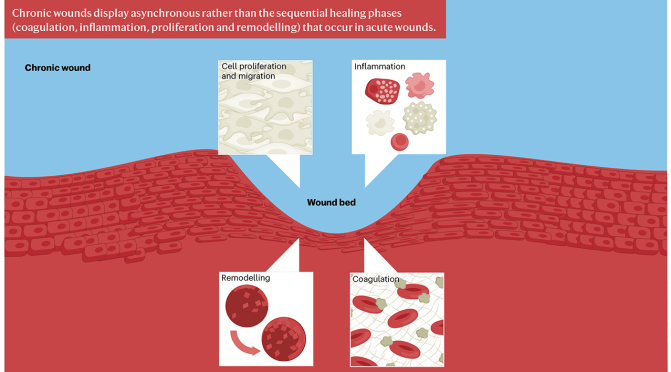
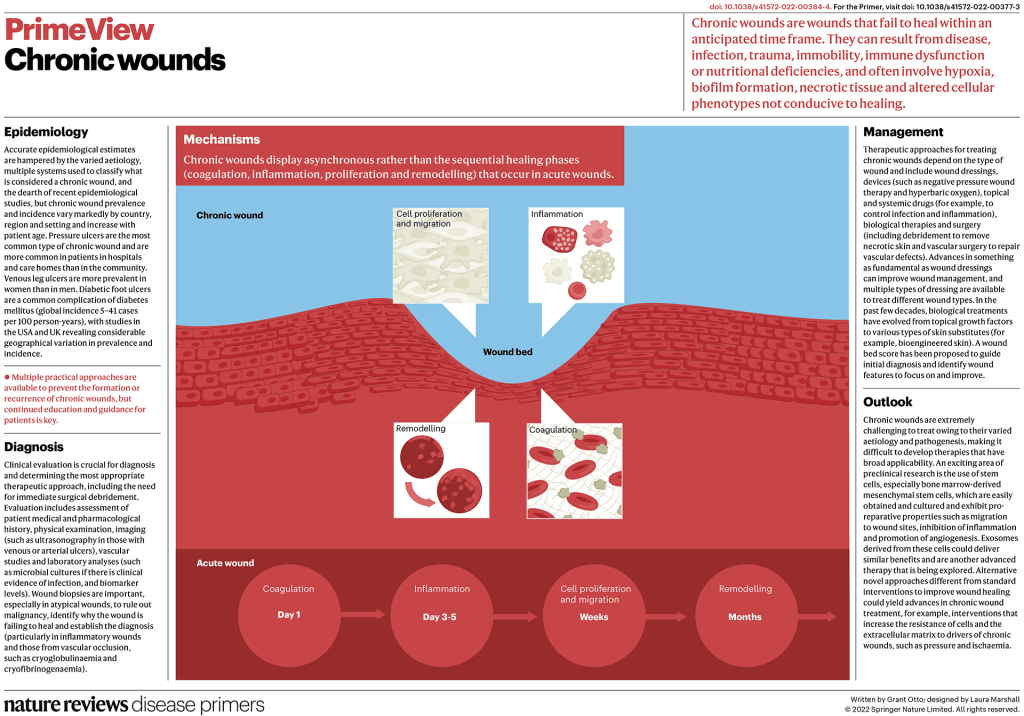
  • Chronic wounds are common, costly, and are more likely to affect older adults.
  • Venous ulcers, neuropathic ulcers, ischemic ulcers, and pressure injuries each necessitate unique prevention and treatment strategies.
  • With the evidence and pragmatic guidance provided herein, providers will have the working knowledge to successfully manage chronic wounds.

Appropriate prevention, diagnosis, and treatment of chronic wounds is important for providers across specialties. Wounds affect patients in all care settings and result in significant cost and morbidity. The burden of this condition falls largely on older adults, for whom the incidence of chronic wounds far exceeds that of younger populations.

 Medicare costs for wound care in 2014 were estimated at greater than $28 billion, and the prevalence for most wound types was greatest in patients aged 75 or older.

 Venous ulcers are the most common lower extremity wound type, comprising 45% to 60% of all wounds, followed by neuropathic ulcers (15% to 25%), ischemic ulcers (10% to 20%), and mixed ulcers (10% to 15%).

 Fortunately, new wound-treatment modalities continue to emerge. This review summarizes the latest information regarding prevention, identification, classification, and treatment of chronic wounds. Guidance on management of major wound types and pearls regarding dressing selection are provided.

Infographic: Diagnosis & Treatment Of Pneumonia

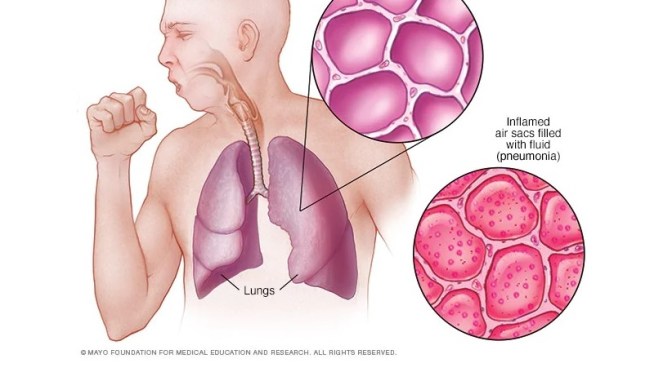
Pneumonia is an infection that inflames the air sacs in one or both lungs. The air sacs may fill with fluid or pus (purulent material), causing cough with phlegm or pus, fever, chills, and difficulty breathing. A variety of organisms, including bacteria, viruses and fungi, can cause pneumonia.

Pneumonia can range in seriousness from mild to life-threatening. It is most serious for infants and young children, people older than age 65, and people with health problems or weakened immune systems.

Men’s Health: How Serious Can Blood In The Urine Be?

Blood in your urine can be a startling sight, one that prompts concern over your health. While it doesn’t always mean something serious, several serious things can cause it. And that means you should contact your doctor right away.

It’s also important to understand what’s going on in your body. You may see a range of colors — from pink or slightly dark urine to bright red or cola-colored liquid. You may also see clots, which can come from your prostate, urethra, kidneys or ureters (tubes connecting your kidney to your bladder).

Infographic: Classic & Exertional Heatstroke

Heatstroke is a condition caused by your body overheating, usually as a result of prolonged exposure to or physical exertion in high temperatures. This most serious form of heat injury, heatstroke, can occur if your body temperature rises to 104 F (40 C) or higher. The condition is most common in the summer months.

Heatstroke requires emergency treatment. Untreated heatstroke can quickly damage your brain, heart, kidneys and muscles. The damage worsens the longer treatment is delayed, increasing your risk of serious complications or death.

Uterine Cancer: Risks, Diagnosis & Treatment

Uterine cancer is the most common cancer that affects a woman’s reproductive system, occurring mostly after menopause. It’s often diagnosed in an early stage. This video shares the symptoms and tests that may lead to a diagnosis.

Chapters: 0:00 What is uterine cancer? 0:10 What are the risk factors of uterine cancer? 0:27 What are symptoms of uterine cancer? 1:00 How is uterine cancer diagnosed? 2:21 What is the rate of successful outcomes for those diagnosed with uterine cancer?

Diagnosis: What Is Ulnar Wrist Pain? (Mayo Clinic)

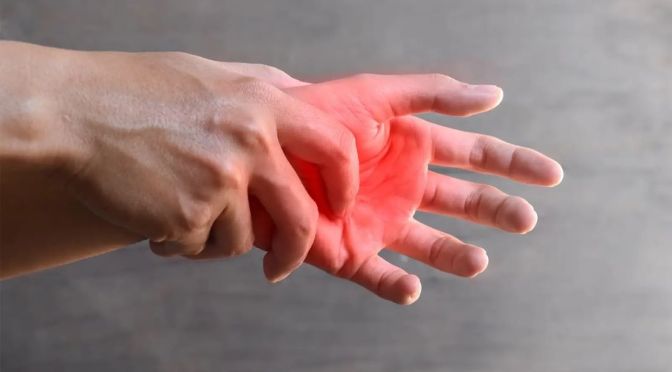
If you have pain on the side of your wrist opposite your thumb, it’s called ulnar wrist pain. There are many things that can cause it, and there are several ways to treat it.

“Ulnar wrist pain is a small area from the pinky side of your hand. And it’s from this little knobbly bone called the ulnar to this area near the wrist,” says Dr. Sanj Kakar, a Mayo Clinic hand and wrist surgeon. “It’s very, very common.”

Ulnar wrist pain can occur after a fall onto an outstretched hand. But it also happens in people who play stickhandling sports, like tennis or hockey, and certain occupations that require lifting or using a repetitive motion in the wrist. 

Endometriosis: Diagnosis And Treatment Options

Endometriosis is a health condition in which the kind of tissue commonly found in the inner lining of the uterus grows elsewhere in the body. This can cause severe pain and other complications. Miguel Luna, MD is here to share signs of endometriosis, how the condition is diagnosed and treatment options available

Liver Health: Diagnosis And Risks Of Cirrhosis

Learning about cirrhosis can be intimidating. Let our experts walk you through the facts, the questions, and the answers to help you better understand this condition.

Timeline: 0:00 Introduction 0:24 What is cirrhosis? 1:05 Who gets cirrhosis? / Risk factors 2:03 Symptoms of cirrhosis 2:49 How is cirrhosis diagnosed? 3:38 Treatment options 4:42 Coping methods/ What now? 5:17 Ending

For more reading visit: https://mayocl.in/3luptln.