Tag Archives: Covid-19

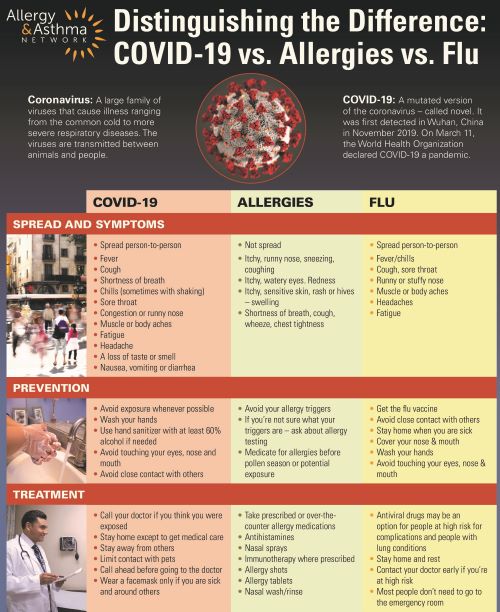
INFOGRAPHIC: ‘DIFFERENCES BETWEEN COVID-19, THE FLU AND ALLERGIES (2020)

COMMENTARY:

The infographic by the allergy and asthma foundation aims to distinguish between Covid, Influenza and allergy. I would like to discuss more than symptoms. Covid and Influenza are both caused by invading infectious viruses.

Allergy is an over-response by the sensitized body to harmless proteins from the environment Covid and Influenza viruses cause direct damage to the lining membranes of the respiratory tract provoking a protective response by the body which produces inflammation in the nose and lung. Rhinitis, bronchitis and pneumonia result, depending on the site of the inflammation.

The symptoms of Allergy are far different from both Influenza and covid. ITCHING of the nose, eyes and skin is the hallmark of allergic Rhinitis, allergic conjunctivitis and Hives, respectively. Influenza or Covid Infection of the nose, eyes and airways can produce sneezing, redness, coughing and difficulty breathing, but not usually itching.

Fever is characteristic of Influenza and Covid, but not of uncomplicated Allergy. Asthma can result from either infection or allergy, but is a separate beast, caused by release of different inflammatory cytokines.

The ASTHMATIC REACTION shows itself in the BLOCKAGE of breathing of air OUT of the lung, on EXHALATION. This blockage on exhalation in asthma is heard as wheezing, a musical sound. Just ask the wheezing person to take a deep breath IN, which should be easier, and then breathe out as fast as possible, which should be slower and more difficult. Fever is not a feature of uncomplicated Asthma. Influenza and Covid.

Both produce FEVER, fatigue, aching and usually coughing. Covid has the greater linkage with Coughing, which often progresses to Shortness of breath. Both Influenza and Covid can produce a sore throat and runny nose. LOSS OF SENSE OF SMELL is unique to Covid, although if your nose is stuffy, the sense of smell can be impaired. Influenza preys on the very young, which are generally spared from Covid.

If you are careful about social distancing and wear masks in public, and get sick, Covid is more likely, since COVID IS MORE CONTAGIOUS THAN INFLUENZA. Covid protections will probably result in fewer cases of Influenza this winter.

To summarize,both the “flu” and Covid 19 are infectious conditions, vastly different from allergy, which is a derailed body defense mechanism. Any of the three can result in an asthmatic reaction, though the fever of influenza often lessens the Asthmatic response to that condition.. Covid is much more contagious and severe than influenza and can cause more widespread organ damage. Be sure to practice MASK WEARING AND SOCIAL DISTANCING.

If you have asthma and it worsens, in my opinion, this favors covid. My asthmatic patients often got better with the fever of Influenza. If you have a CHILD that gets sick, it is more likely to be Influenza than Covid.

–Dr. C

INTERVIEW: ANTHONY FAUCI ON COVID-19 (JAMA VIDEO)

Anthony S. Fauci, MD returns to JAMA’s Q&A series to discuss the latest developments in the COVID-19 pandemic, including the continued importance of nonpharmaceutical interventions (masking, handwashing, physical distancing) for managing rising case numbers in the US and globally.

Recorded October 28, 2020.

Topics discussed in this interview: 0:00 Introduction 0:20 NAM Presidential Citation for Exemplary Leadership 1:19 COVID-19 numbers and excess deaths 4:05 National masking mandate 5:55 How to get people to accept masking 7:07 Herd Immunity and the Great Barrington Declaration 9:51 The holidays and airplane travel 13:44 Therapies update 17:54 Vaccines update 20:08 Vaccine distribution 22:00 Vaccine safety 24:42 How Australia has dealt with COVID-19 spikes 27:00 Acknowledgements and baseball

COVID-19 INFOGRAPHIC: ‘EXERCISE IS MEDICINE’ (BMJ)

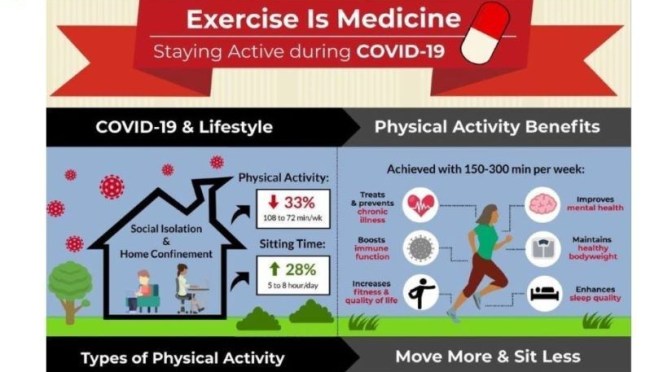
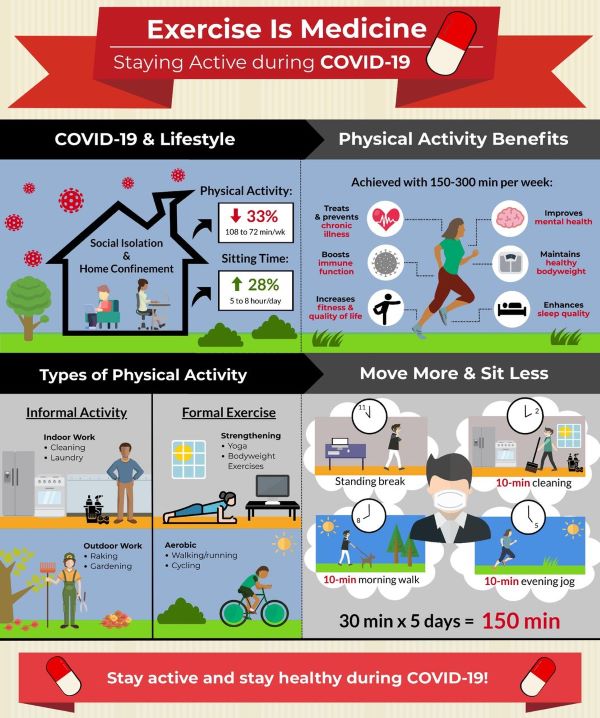
There are over 35,000,000 reported cases of COVID-19 disease and 1 000 000 deaths across more than 200 countries worldwide.1 With cases continuing to rise and a robust vaccine not yet available for safe and widespread delivery, lifestyle adaptations will be needed for the foreseeable future. As we try to contain the spread of the virus, adults are spending more time at home. Recent evidence2 suggests that physical activity levels have decreased by ~30% and sitting time has increased by ~30%. This is a major concern as physical inactivity and sedentary behaviour are risk factors3 for cardiovascular disease, obesity, cancer, diabetes, hypertension, bone and joint disease, depression and premature death.

To date, more than 130 authors from across the world have provided COVID-19-related commentary on these concerns. Many experts4 have emphasised the importance of increasing healthy living behaviours and others5 have indicated that we are now simultaneously fighting not one but two pandemics (ie, COVID-19, physical inactivity). Physical inactivity alone results in over 3 million deaths per year5 and a global burden of US$50 billion.6 Immediate action is required to facilitate physical activity during the COVID-19 pandemic because it is an effective form of medicine3 to promote good health, prevent disease and bolster immune function. Accordingly, widespread messaging to keep adults physically active is of paramount importance.

Several organisations including the WHO, American Heart Association and American College of Sports Medicine have offered initial suggestions and resources for engaging in physical activity during the COVID-19 pandemic. Expanding on these resources, our infographic aims to present a comprehensive illustration for promoting daily physical activity to the lay audience during the COVID-19 pandemic (figure 1). As illustrated, adults are spending more time at home, moving less and sitting more. Physical activity provides numerous health benefits, some of which may even help directly combat the effects of COVID-19. For substantial health benefits, adults should engage in 150–300 min of moderate-to-vigorous intensity physical activity each week and limit the time spent sitting. The recommended levels of physical activity are safely attainable even at home. Using a combination of both formal and informal activities, 150 min can be reached during the week with frequent sessions of physical activity spread throughout the day. Sedentary behaviour can be further reduced by breaking up prolonged sitting with short active breaks. In summary, this infographic offers as an evidence-based tool for public health officials, clinicians, educators and policymakers to communicate the importance of engaging in physical activity during the COVID-19 pandemic.

Read more

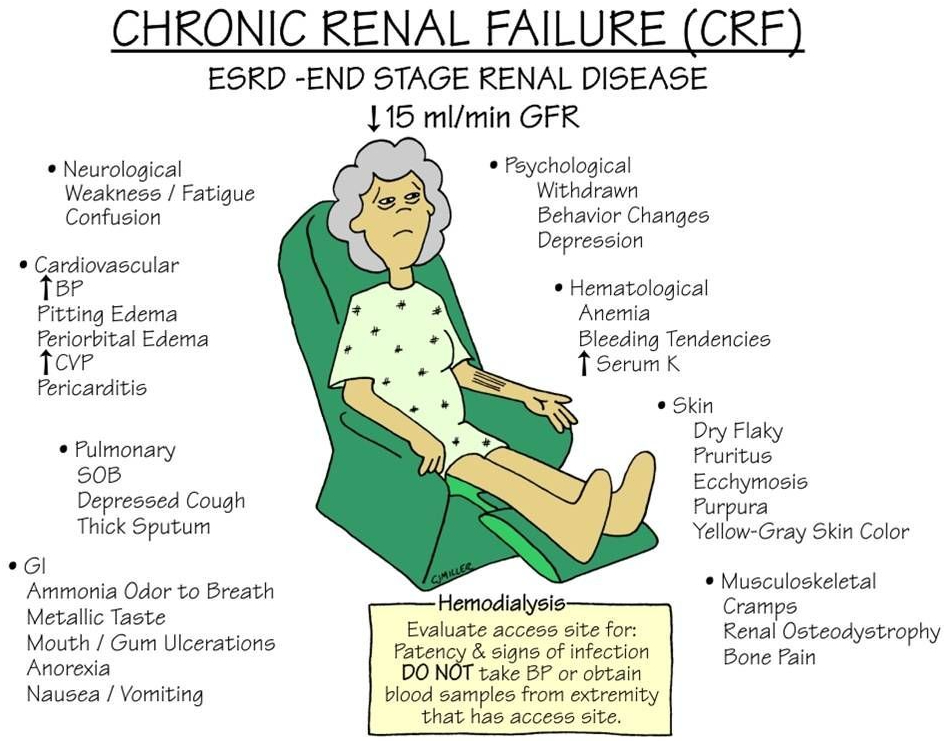
THE DOCTORS 101 CHRONIC SYMPTOMS & CONDITIONS #20: KIDNEY FAILURE (ESRD)

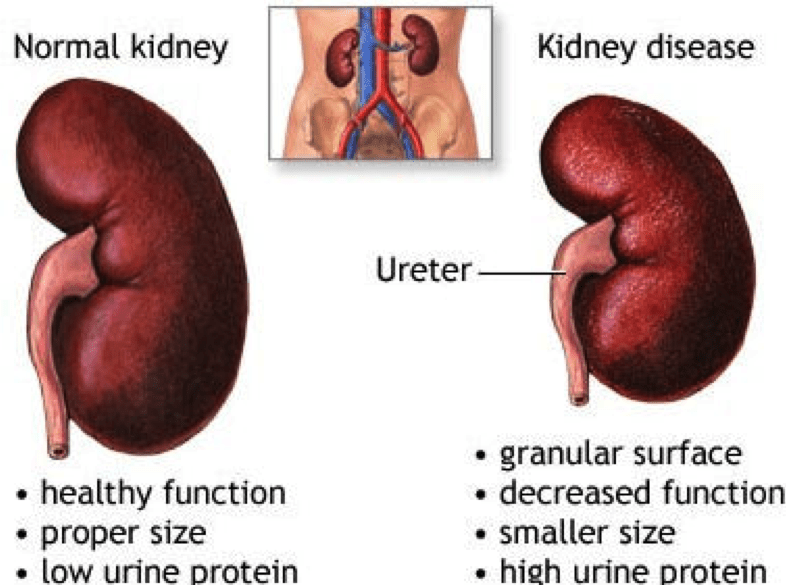
Our Kidneys and Liver have a lot in common. They are not dramatic, take-care-of-me-now organs like our Hearts and Brain, but usually do their job quietly until they lose almost all of their function. They have lots of reserve; you can donate one of your kidneys or a piece of your liver and notice no change. They are both vital organs, and you will die without them.

Since they both help clear wastes and toxins from the bloodstream and produce hormones, they SHARE SYMPTOMS such as nausea, vomiting, fatigue, and mental changes.Their performance can be checked by blood tests. Healthy habits will protect their -and your- survival.

Certain Drugs impair their operation. They are both composed of many identical functional units, the nephron in the kidney, and the hepatic lobule in the liver.

The GLOMERULUS of the Nephron is a tuft or ball of capillaries and associated kidney cells that allow the fluid and dissolved molecules of the blood to come through, while restraining the larger proteins and cells of the blood, keeping them in the vascular system. The smaller molecules of sodium, potassium, urea and other waste products leak through the glomerulus.

This filtered liquid travels through the long, folded kidney tubules, where the RIGHT AMOUNT of salt and water are REABSORBED. This keeps the vascular fluids, the internal environment, the MILIEU INTERIOR, perfectly well adjusted for proper cell function. It is when the chemical environment of the body falls out of adjustment, when the kidneys FAIL to do their job, that the cells of the body cannot function properly, and Symptoms-fatigue, lethargy etc. – develop.

BLOOD PRESSURE is intimately involved with the KIDNEYS, which has an Endocrine function. The Renin( Renal=kidneys) Angiotensin system is a major regulator of blood pressure.

You may have heard of the ACE-2 receptor as the binding site of th COVID Virus. This Angiotensin Converting Enzyme receptor is on the surface of cells all over the body and normally functions to control blood pressure.

DIABETES is the most common cause of end stage renal disease (ESRD), bringing our healthy triad of SLEEP DIET and EXERCISE to our attention once again.

POLYCYSTIC KIDNEY DISEASE is an inherited condition where many nephrons fail to hook up to the urine collecting system, and the fluid builds up into cysts, which then eventually replace the rest of the kidney. Pressure from urine blockage by an enlarged prostate, or even lack of ureteral valves can also back up into the kidneys and eventually cause ESRD.

Infections and autoimmune diseases can result in ESRD. Treatment of ESRD is usually a Kidney transplant or Dialysis. There is a waiting list for the former and the latter is life-altering. You can’t beat a healthy lifestyle.

–Dr. C.

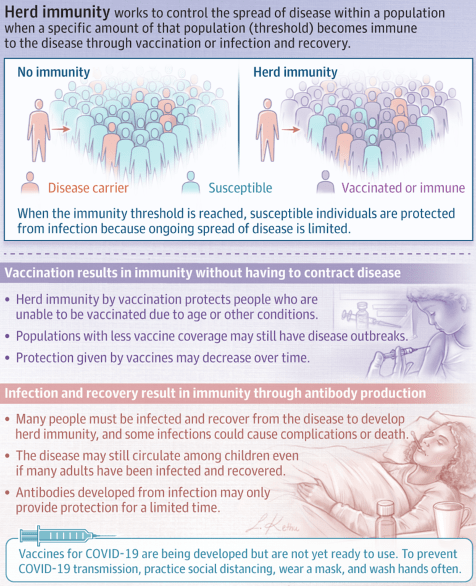
INFOGRAPHIC: ‘WHAT IS HERD IMMUNITY?’ – ACHIEVING IT WITH COVID-19 (JAMA)

What Is Herd Immunity?

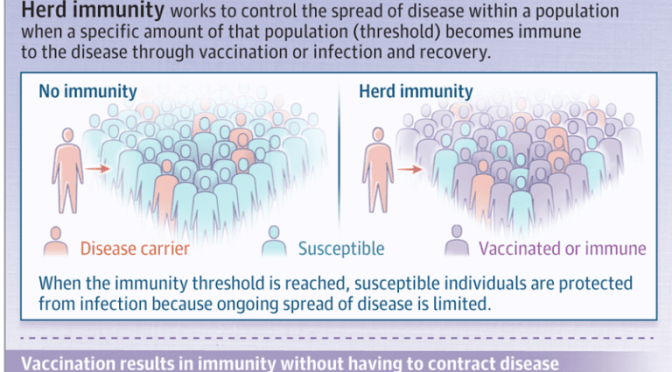
Herd immunity occurs when a significant portion of a population becomes immune to an infectious disease, limiting further disease spread.

Disease spread occurs when some proportion of a population is susceptible to the disease. Herd immunity occurs when a significant portion of a population becomes immune to an infectious disease and the risk of spread from person to person decreases; those who are not immune are indirectly protected because ongoing disease spread is very small.

The proportion of a population who must be immune to achieve herd immunity varies by disease. For example, a disease that is very contagious, such as measles, requires more than 95% of the population to be immune to stop sustained disease transmission and achieve herd immunity.

How Is Herd Immunity Achieved?

Herd immunity may be achieved either through infection and recovery or by vaccination. Vaccination creates immunity without having to contract a disease. Herd immunity also protects those who are unable to be vaccinated, such as newborns and immunocompromised people, because the disease spread within the population is very limited. Communities with lower vaccine coverage may have outbreaks of vaccine-preventable diseases because the proportion of people who are vaccinated is below the necessary herd immunity threshold. In addition, the protection offered by vaccines may wane over time, requiring repeat vaccination.

Achieving herd immunity through infection relies on enough people being infected with the disease and recovering from it, during which they develop antibodies against future infection. In some situations, even if a large proportion of adults have developed immunity after prior infection, the disease may still circulate among children. In addition, antibodies from a prior infection may only provide protection for a limited duration.

People who do not have immunity to a disease may still contract an infectious disease and have severe consequences of that disease even when herd immunity is very high. Herd immunity reduces the risk of getting a disease but does not prevent it for nonimmune people.

Herd Immunity and COVID-19

There is no effective vaccine against coronavirus disease 2019 (COVID-19) yet, although several are currently in development. It is not yet known if having this disease confers immunity to future infection, and if so, for how long. A large proportion of people would likely need to be infected and recover to achieve herd immunity; however, this situation could overwhelm the health care system and lead to many deaths and complications. To prevent disease transmission, keep distance between yourself and others, wash your hands often with soap and water or sanitizer that contains at least 60% alcohol, and wear a face covering in public spaces where it is difficult to avoid close contact with others.

Read more

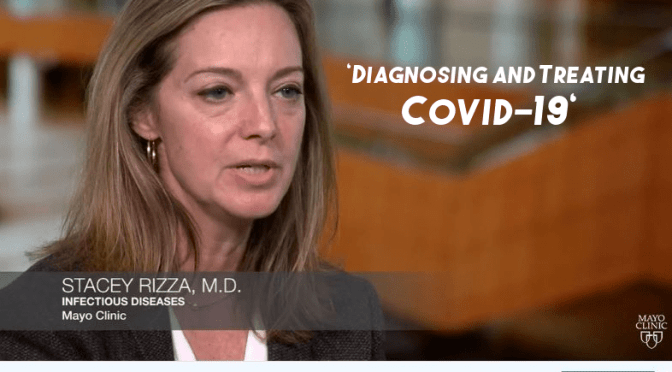
VIDEOS: DIAGNOSING AND TREATING COVID-19 (MAYO)

Dr. Stacey Rizza, an Mayo Clinic infectious diseases specialist, discusses the various ways COVID-19 is diagnosed and treated.

COVID-19 can be diagnosed several ways when looking for active infection.

“The most common way that testing is done is with a swab into the nose or into the nasal pharyngeal area,” says Dr. Stacey Rizza, a Mayo Clinic infectious diseases expert.

“This polymerase chain reaction (PCR) test is essentially a test looking for the genetic material of the virus.” If it’s positive, it means that person is infected with SARS-CoV-2, the coronavirus that causes COVID-19.

COMMENTARY:

Dr. Stacey Rizza from Mayo Clinic gave the standard Academic recommendations for Covid Testing and treatment. I will comment on how this differs from the testing recommendations of Dr. Michael Mina from the Chan school at Harvard and the actual treatment given to Donald Trump as we speak.

I agree with the latter recommendations, and route that I would opt for, were I to catch Covid 19. TESTING, if it is to be Epidemiologically effective should offer results that are rapidly available so as to reduce spreading of the virus and treatment delay. One trouble with PCR- based tests is that they are slow. Another trouble, according to Dr. Mina, is that if they run for 40 cycles for maximum sensitivity, they may pick up viral shedding that is too minor to be infective, and may cause unnecessary precautions, such as quarantining. If they run for 35 or even 30 cycles to show only infective, actionable cases, they take several days, and even then labs do not usually report the number of cycles run, but only yes or no, positive or negative.

The RAPID TESTS detect viral protein are available within hours. They are less sensitive, but in Dr. Mina’s view, this can be a virtue, since only definitely infected patients are identified. They are cheaper, and can even be done on site. Frequent testing more than makes up for decreased sensitivity. Most tests currently available use only specimens from nasal swabs, which are uncomfortable.

SALIVA is almost as sensitive, and has one additional virtue, when it comes to testing school children. If school children are organized into learning “pods”, They can all spit into a common collector, and the pod tested preemptively, at least twice weekly. If positive The entire pod is individually tested to find who is positive. Of course if a full 20 kids are in a pod, The sensitivity of the protein test may be insufficient for positive to survive a 20-fold dilution, but this can be empirically worked out. Twice weekly testing vs. every other week is much better for reducing the number of the pod members infected at time of discovery, as the NYT has illustrated.

TREATMENT given to Donald Trump has so far consisted of more than Remdesivir. He is also receiving Corticosteroids, plus an experimental double antibody mixture, derived from both Covid Convalescent serum, and monoclonal antibodies from a “humanized” murine source. The antibodies should theoretically be given early. The corticosteroids are generally not given until a bit later, but with the reported drop in O2 sats, he may be later in the disease than we are led to believe. To my knowledge, he is not receiving his tweeted Hydroxychloroquine- azithromycin combination.

If I were infected, at age 88, I would also like the antibody treatment, but most likely would not be allowed to get it.

–Dr. C.