Tag Archives: Communication

TELEMEDICINE “LANGUAGE” SKILLS WILL CONTINUE TO INCREASE AT A RAPID RATE

From a New York Times article (May 5, 2020):

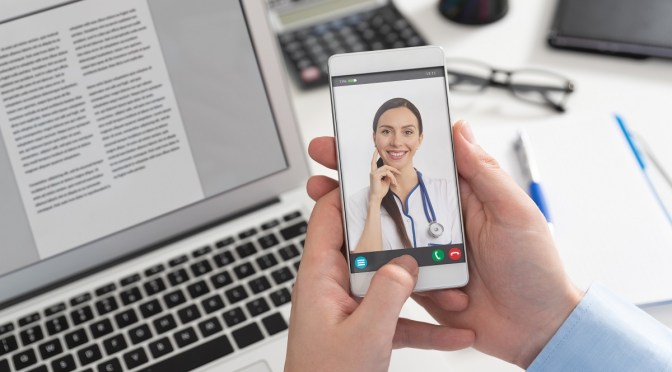
Calling my patients at home, with or without video, has become my new normal. After 25 years of being a pediatrician, telemedicine is teaching me new ways to communicate with families.

I try to hear the mother above the babbling of her baby. And then to listen to the babbling of the baby. Is it joyful? Are there big breaths between the babbling?

A federal government waiver, issued early in March, expanded the use of federally funded health insurance — Medicaid, Medicare and the Children’s Health Insurance Program — to pay for telemedicine visits. The goal was to allow more people with symptoms of illness to be heard, and sometimes also seen, by a health care provider without the risk of exposure to coronavirus at a doctor’s office or hospital.

The federal government has been expanding the use of telemedicine for years — but like so many changes in this pandemic, what used to take years to transform, we are now doing within weeks.

Read more

TELEMEDICINE: “FORWARD TRIAGE” FOR SCREENING PATIENTS DURING COVID-19

 Direct-to-consumer (or on-demand) telemedicine, a 21st-century approach to forward triage that allows patients to be efficiently screened, is both patient-centered and conducive to self-quarantine, and it protects patients, clinicians, and the community from exposure.

Interview with Dr. Judd Hollander on how health systems can use telemedicine services during the Covid-19 pandemic.

It can allow physicians and patients to communicate 24/7, using smartphones or webcam-enabled computers. Respiratory symptoms — which may be early signs of Covid-19 — are among the conditions most commonly evaluated with this approach. 

Health care providers can easily obtain detailed travel and exposure histories. Automated screening algorithms can be built into the intake process, and local epidemiologic information can be used to standardize screening and practice patterns across providers.

Disasters and pandemics pose unique challenges to health care delivery. Though telehealth will not solve them all, it’s well suited for scenarios in which infrastructure remains intact and clinicians are available to see patients. Payment and regulatory structures, state licensing, credentialing across hospitals, and program implementation all take time to work through, but health systems that have already invested in telemedicine are well positioned to ensure that patients with Covid-19 receive the care they need. In this instance, it may be a virtually perfect solution.

Read full article at NEJM