
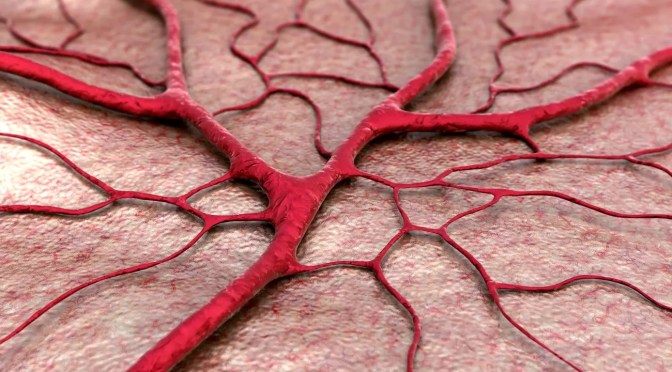
HHT is a rare hereditary condition with abnormal connections between the arteries and the veins. it’s most obvious sign is little spidery blood vessels, which increase with age, most apparently on the lips, but more importantly in the nose, where they lead to the most common problematic symptom, recurrent nosebleeds.
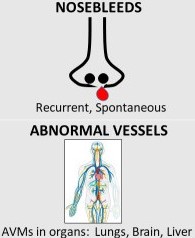
The abnormal connections between arteries and veins, called arteriovenous malformations, most commonly affect the nose, lungs, brain, and liver.
The AVMs in the lung can short-circuit the blood circulation and lead to shortness of breath, as can iron deficiency anemia caused by the frequent nosebleeds, and bleeding from the G.I. tract. Liver nodules, detected by imaging techniques such as CT and ultrasound, can be helpful in confirming the presence of the disease.
The AVMs in the brain can cause headaches and seizures.
The diagnosis is often delayed, unless it is known to run in the family. HHT is often called the great masquerader because of the variety of problems it can cause.
Children of proven HHT should have genetic testing, since the symptoms and telangiectasia are often not present in childhood. There are also other genetic abnormalities linked to HHT that can produce such disparate things as colonic polyps.
If I had this problem, I would invest in a device to monitor my hemoglobin level so as not to slip silently into debilitating anemia. I might also invest 15 or $20 In a fingertip oximeter. If I were short of breath, and not anemic, I might have a pulmonary AVM which bypasses the lung and produces a decrease in the Oxygen saturation.
With respect to Nose bleeds, it is important to maintain an adequate hemoglobin, preferably above 12g, using oral iron on a daily basis, and if necessary supplemented by intravenous iron. It is also important to avoid medication and foods which cause increased bleeding. This includes the NSAIDs, fish oil, ginkgo, and St. John’s wort. News to me is the possible contribution to nosebleeds of blueberries, red wine, dark chocolate, spicy fruit and spicy foods. It may well be advisable to keep a food diary that that also records when nosebleeds occur. Perhaps you are eating something that affects coagulation that is not on the common lists. Take it with you to your doctor visit.
This is a rare condition, and should be evaluated in a medical center specialized to treat HHT.
CureHHT has some interesting information. My alma mater, UCSF, specializes in this condition.
Mayo clinic and the Cleveland clinic, as well as Wikipedia, have broader, more organized articles on HHT. A link to the former will be attached, and the latter is the most detailed.
—Dr. C.

 Doctors Without Waiting Rooms