
COVID-19 STUDIES: 77% OF HOSPITALIZED PATIENTS ARE OVERWEIGHT OR OBESE

SEPTEMBER 11, 2020

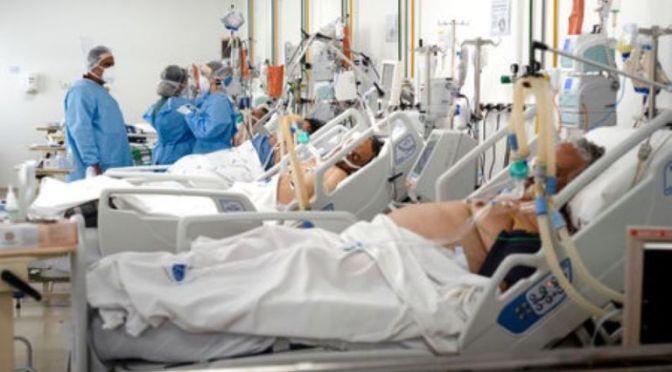
The Journal Science recently reported on nearly 77,000 patients hospitalized with Covid 19.  29% were overweight and 48% were Obese. A total of 77% of admissions for Covid were overweight or worse.

Overweight was defined as BMI of 25-29.9 Kg. per Square Meter, and Obese was defined as BMI of 30 or greater. Another way of stating the data is giving the rate of Hospital admissions per 10,000 People.

  • Normal Weight, BMI 18.5-25 kg. Per square Meter—12%
  • Overweight, BMI 25-29.9 per square a Meter———-19%
  • Obese, BMI 30-34.9 per square Meter——————-23%
  • Severe Obesity, more than 35 per square meter——-42%

BMI calculators are everywhere to be found on the internet. Put in your weight and height, and find your BMI displayed.
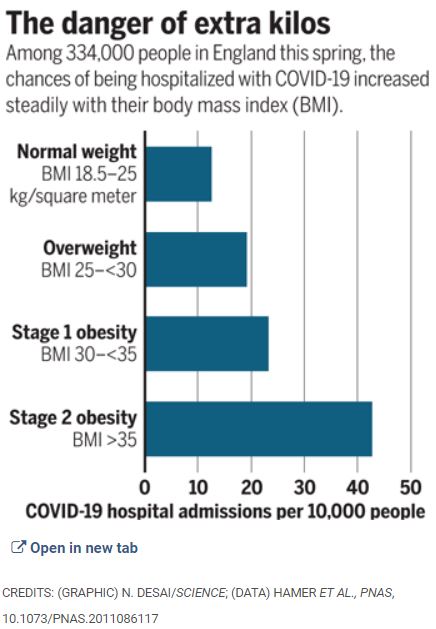
These are striking figures, the more so because of the LARGE SAMPLE, and the LINEAR Relationship; the greater the overweight, the greater the hospitalization rate.

Every way you look at it, obesity is hazardous. More hip and knee replacements, harder to exercise, find comfortable seats, more difficult to do surgery, more diabetes, heart attacks, stroke, Hypertension, Sleep apnea, worse immunity, and now, confirming previous suspicions, clearly higher risk of being hospitalized (and dying) with Covid.

I realize that nobody chooses to be Obese; in addition to the health problems,  overweight people are Subjected to discrimination.

Obesity is notoriously hard to treat; one of the few, seldom mentioned medical truths is that Diets fail long term. Starting and maintaining a diet takes Herculean Will Power, which is in short supply in our overindulgent, overadvertised, and overfed society.

If I were morbidly Obese, I might opt for Bariatric Surgery, and try my best to hold the short term weight loss, since even with surgery the pounds tend to creep back on over time.

The best way to treat Obesity is to treat it as the Plague it is. CHILDHOOD OBESITY should be treated aggressively. Keep the Obese Child from becoming an obese adult, and maybe carry yourself along with the Family.

Better yet, Good SLEEP, DIET, and EXERCISE come as an interactive mutually reinforcing package deal. Prevention always beats treatment.

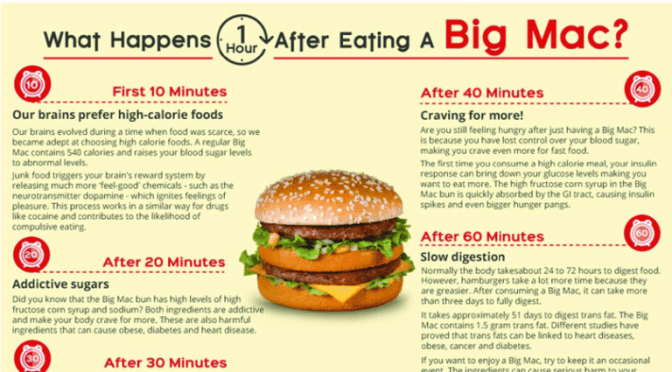
My article on ABDOMINAL FAT is suggested reading, and there is a link to the Infographic which Displays the above date in graphic form.
—Dr. C.

Read Science article online

STUDIES: “INSOMNIA / SHORT SLEEP DURATION” IS A TYPE 2 DIABETES “RISK FACTOR”

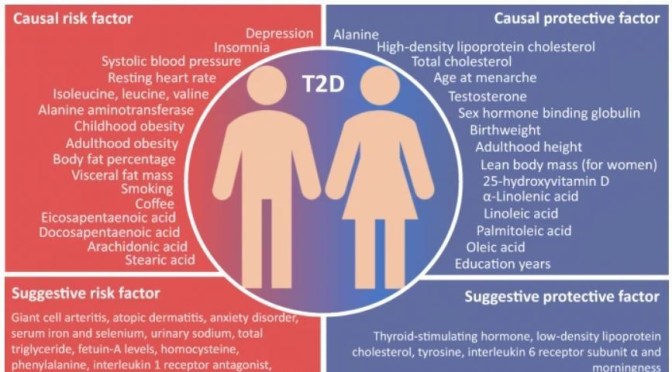
Diabetologia  (Sept 8, 2020) – Insomnia with objective short sleep duration has been associated with an increased risk of type 2 diabetes in observational studies [2728]. The present MR study found strong and suggestive evidence of a causal association of insomnia and short sleep duration, respectively, with increased risk of type 2 diabetes.

Conclusions/interpretation

The present study verified several previously reported risk factors and identified novel potential risk factors for type 2 diabetes. Prevention strategies for type 2 diabetes should be considered from multiple perspectives on obesity, mental health, sleep quality, education level, birthweight and smoking.

Read full study

COMMENTARY

This was a laborious and apparently objective study.

The discovery of insomnia as a unique risk factor is no surprise, and reinforces the restorative IMPORTANCE of SLEEP.

I was surprised to see docosohexanoic and Eicosapentanoic acids in the risk column and LDL in the good column. However they were studying type 2 diabetes, and not vascular health. I will continue to take my fish oil, and enjoy my HDL, which is in the good column.

—Dr. C.

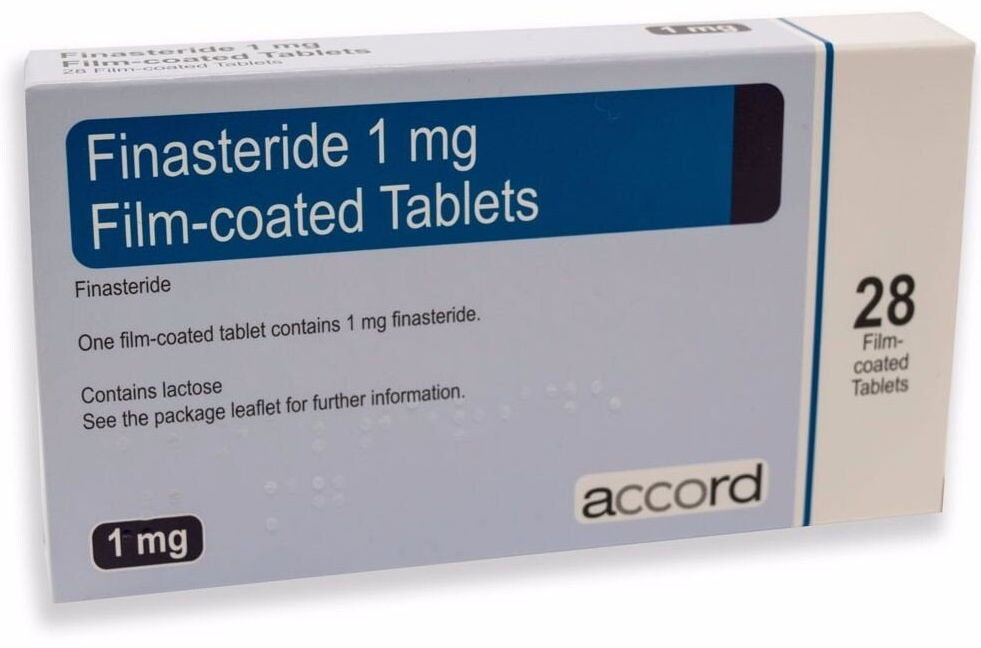
DR. C’S MEDICINE CABINET: BENEFITS OF “FINASTERIDE”

Finasteride is a medication that I was given by my urologist, after my operation for an enlarged prostate with restricted urine flow. It was used to prevent the re-growth of the prostate, and subsequent recurrence of urinary obstruction.

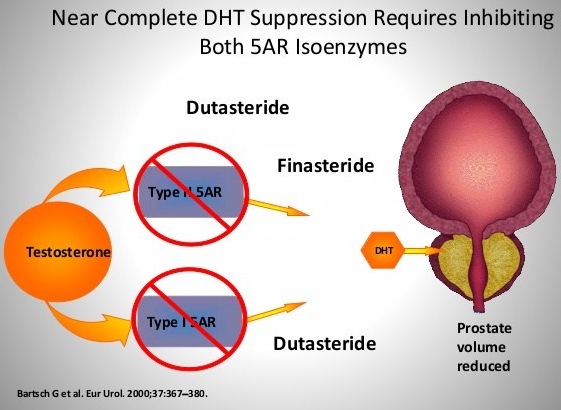
It is also recommended to treat male-pattern baldness. That it is used to treat male problems suggests that it has something to do with testosterone, and indeed it does. Finasteride (proscar) is a 5-alpha reductase inhibitor, preventing testosterone from being converted to dihydrotesterone, the active form, in the prostate and the skin.

Finasteride is well studied, and has been found to decrease PSA in the blood, and is suspected of interfering with the use of PSA as a screening device for Prostatic Cancer. It has also been suspected of increasing severe, high grade cancer. These findings have been refuted in later papers.

It has also been found to decrease sexual function, which it has in my case. I have continued it for several reasons.

First, my urine flow remains fine. Second, the bulk of the data indicates that it hinders prostatic cancer formation; and in a previous posting, I stated that Prostatic cancer in 88 year-olds is almost universal. Third, we are continuing in a Covid 19 pandemic.

One of the markers for severe infection is male-pattern baldness, which finasteride prevents. I did find in my reading about finasteride that there is a 1 mg. dose, and I am taking 5 mg..

When the Covid epidemic slows, I will probably opt for the 1 mg. Dose, which produces a significant effect, though of course less than the 5 mg. Less medication is usually better.

For Patients with BPH opting for medical treatment, Finasteride is usually recommended along with an alpha adrenergic agonist to relax the bladder sphincter.

For the men out there, facing an ever-increasing likelihood of BPH, or wanting to slow down baldness, you may eventually be making the decision whether or not to take this effective medication.

–Dr. C.

HEALTH VIDEOS: “YOU HAVE THE GUT MICROBIOME YOU DESERVE” (CAMBRIDGE)

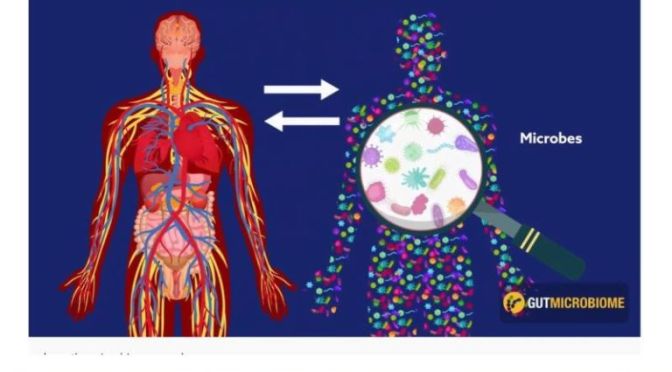
Do you have good or bad microbiome? Or do you have the microbiome you deserve?

Gut Microbiome, the new Open Access journal from Cambridge University Press and The Nutrition Society has published its first papers, including the animated abstract above from the paper: Hill, C. (2020) “You have the microbiome you deserve,” Gut Microbiome, Cambridge University Press, 1, p. e3.

Access the paper here: https://bit.ly/3bFOjc7

HEALTH: “6 TIPS FOR BETTER AND LONGER SLEEP” (VIDEO)

Want to not only fall asleep quickly but also stay asleep longer? Sleep scientist Matt Walker explains how your room temperature, lighting and other easy-to-fix factors can set the stage for a better night’s rest.

Sleeping with Science, a TED series, uncovers the facts and secrets behind our nightly slumber. (Made possible with the support of Beautyrest)

Check out more: https://go.ted.com/sleepingwithscience

THE DOCTORS 101 CHRONIC SYMPTOMS & CONDITIONS #14: TRIGEMINAL NEURALGIA

My Mother had Tic Douloureux, the traditional name for Trigeminal Neuralgia. I remember her suddenly covering her face with her hand and grimacing, but this was only occasionally.

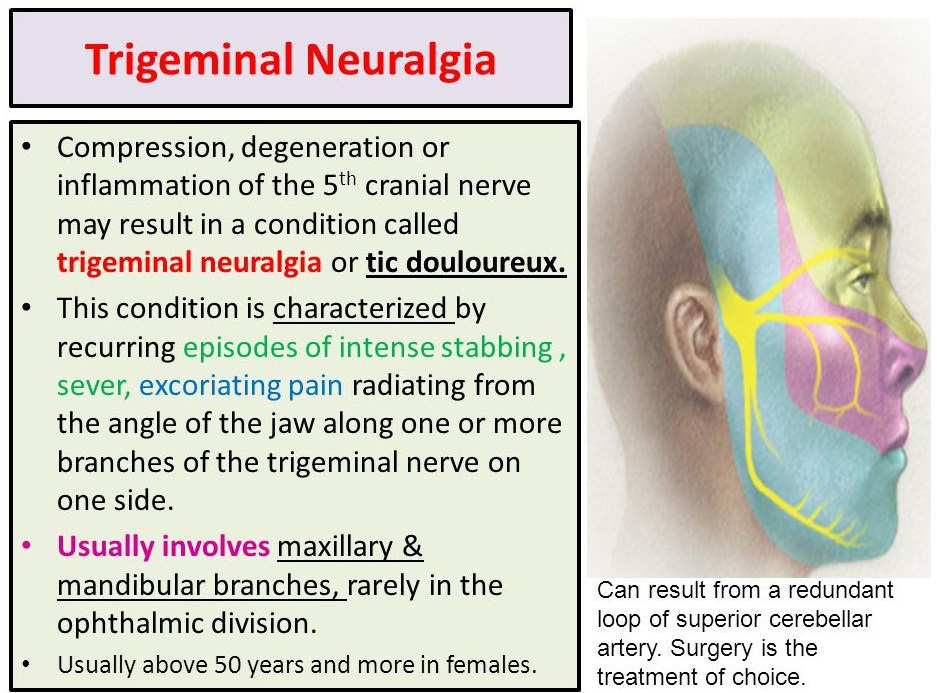
Compression, degeneration or inflammation of the 5th cranial nerve may result in a condition called trigeminal neuralgia or tic douloureux. This condition is characterized by recurring episodes of intense stabbing , sever, excoriating pain radiating from the angle of the jaw along one or more branches of the trigeminal nerve on one side. Usually involves maxillary & mandibular branches, rarely in the ophthalmic division. Usually above 50 years and more in females. Can result from a redundant loop of superior cerebellar artery. Surgery is the treatment of choice.

TD is not very common for “101 chronic conditions”, but it is the most common cause of chronic facial pain. It occurs in the FACIAL region supplied by the 5th cranial, or TRIGEMINAL nerve. This is about the area covered by your widely spread hand, pinkie on the nose, and the butt of the palm along the jawbone.

Brief shocking pain occurs in “PAROXYSMS” in the facial area, on ONE SIDE, and TRIGGERED by tooth brushing, touching the face, or even by the blowing of the wind. This description is so typical and specific as to be “pathognomonic”, and can be diagnosed over the telephone.

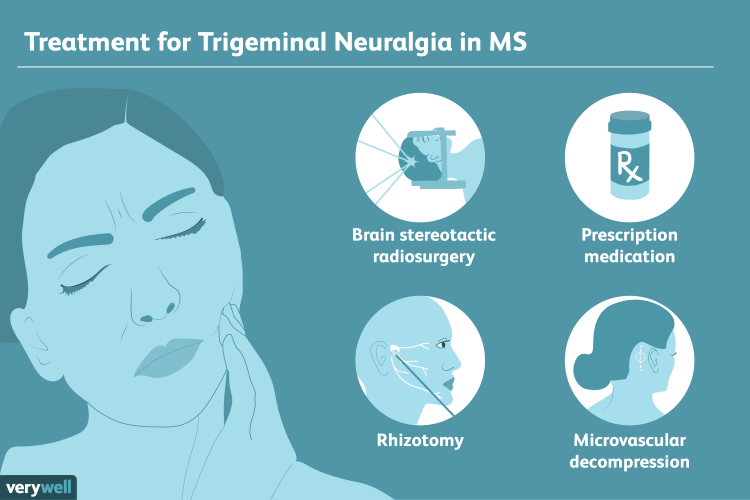
Variants can give continuous pain, or occur on both sides, but the “classical” variety is most common. You should contact your Doctor, since some cases are caused by Multiple Sclerosis or a tumor. Effective medications are available, such as carbamazepine.

TD can be familial, but is often caused by compression of a nearby artery, and “decompression” is currently the most effective surgical treatment. It is one of the few “chronic 101” conditions not to be substantially prevented or helped by our old standbys, sleep, diet and exercise.

That being said, it is sometimes helped by exercise, and almost never occurs during sleep. The August 20, 2020 New England Journal of Medicine Has an excellent Review article, which will be appended to this posting.

–Dr. C.

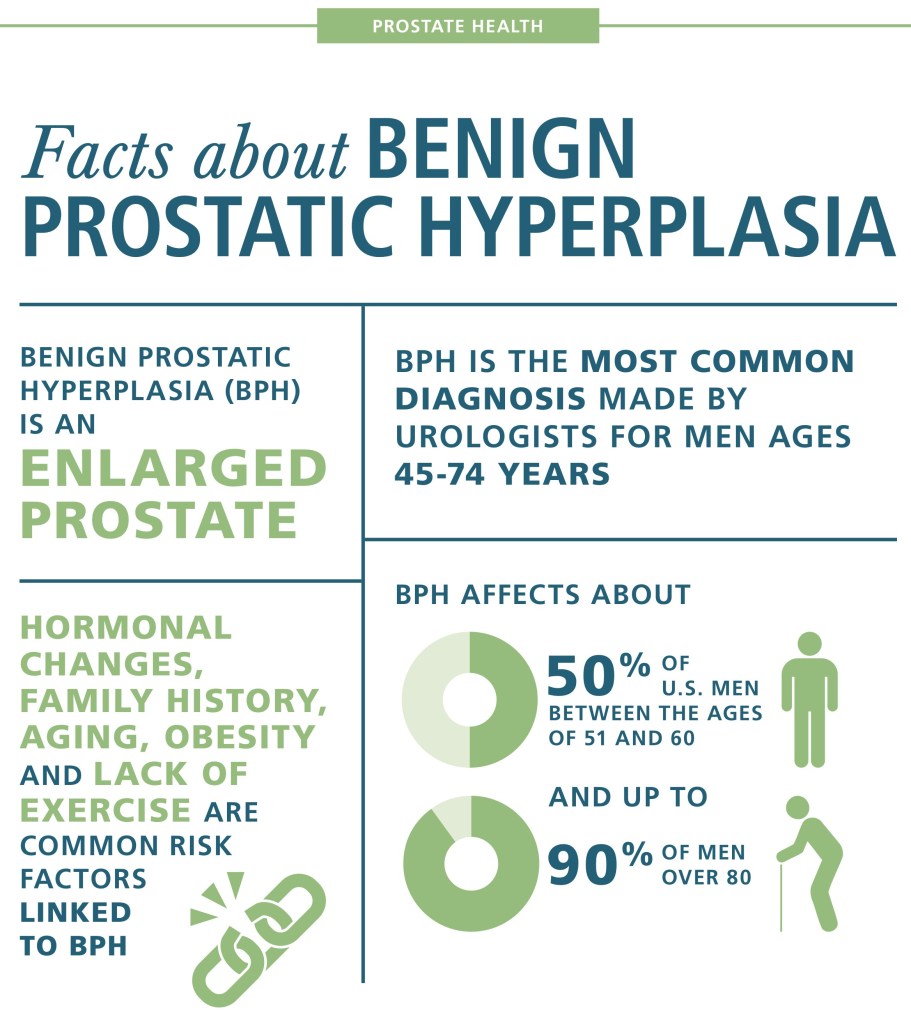
THE DOCTORS 101 CHRONIC SYMPTOMS & CONDITIONS #13: “BENIGN PROSTATIC HYPERPLASIA” (BPH)

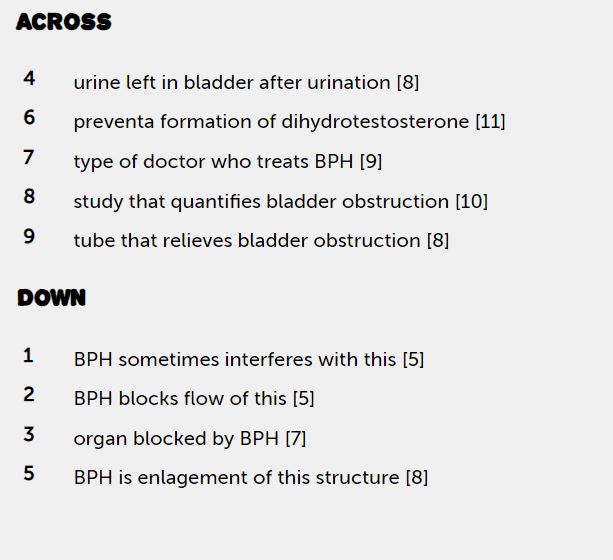
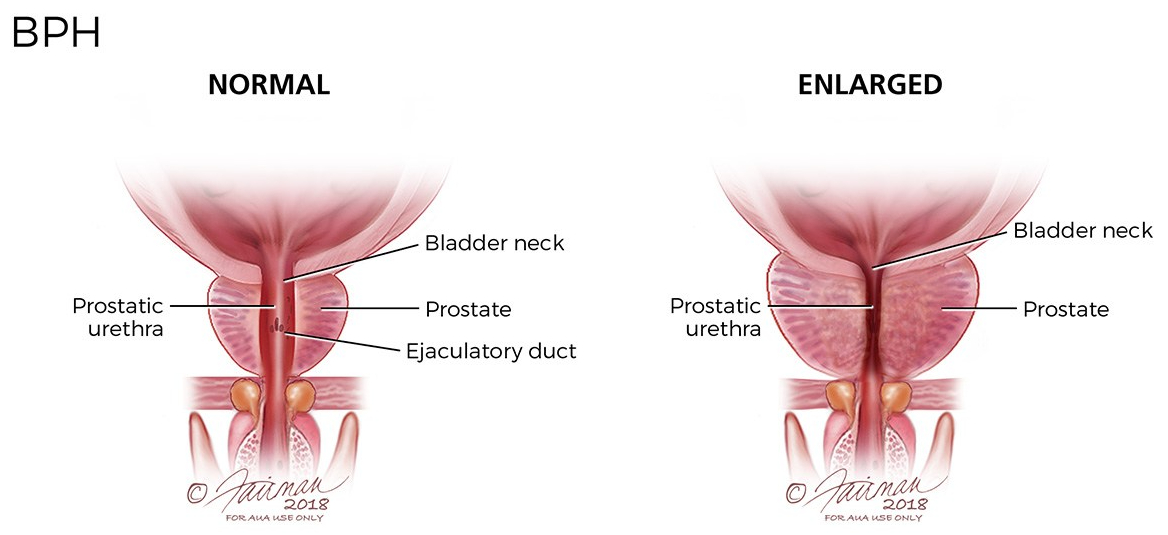
I have known about the Prostate gland, which surrounds the urethral channel exiting the bladder, since med school. I have seen evidence of its enlargement in the increasing time it takes older men to empty their bladders.

When my dad had his prostate surgery, he said that he could blast the porcelain right off the toilet, I could then appreciate for the first time that enlargement of the prostate caused a weak urinary stream.

When I started waking up at night 3 or 4 times to urinate, it really hit home. I had to get something done. My Urologist was a very good one, like all of my doctors. As the old saying goes, the best is none too good when it comes to your health.

On my first visit, he ordered a “Urodynamic” study. In this test, done by a visiting nurse who had the equipment, a small catheter, or tube, ws passed into my bladder, after loading myself with water until I could hold it no longer. The pressure in my bladder was measured, the speed with which I evacuated my bladder was measured, the volume of urine I passed was measured, as well as the volume retained in the bladder.

With these numbers, my bladder volume, residual, and the resistance to flow was calculated. I was shown to have a small bladder, too much residual retained after I emptied it, and an excessive resistance to the flow of urine out of the bladder.

I have not seen the urodynamic studies mentioned in the modern workup of BPH, and it may not have been critically necessary. I did appreciate his thoroughness, however, and factored in the study when he gave me the options of medicine vs. surgery.

were two medicines mentioned, an alpha adrenergic agonist, and finasteride, an anti-androgen. Since I would have to take both meds the rest of my life, I chose surgical enlargement of the urinary passage through the prostate, known technically as a “roto rooter job”. I, too, noticed the power of my urinary stream after the surgery.

A good friend of mine, also a physician, took medicines for many years, in spite of increasing trouble urinating, getting up at night, and frequent bathroom trips during the day. He eventually went to see a urologist after he had to go to the ER for completely being unable to pass urine.

The Urologist declined to do surgery on the basis of his health, the unusually large size of the blockage, and degree of obstruction. He used a catheter to relieve himself several times a day for the rest of his life. Had I been in his shoes, I would have tried to find a willing surgeon somewhere, perhaps at a university med school.

But then again, I wouldn’t have waited so long. These days many more options are available, and the appended article discusses some of them. –

–Dr. C.

Empowering Patients Through Education And Telemedicine