

A bi-weekly podcast on the latest medical, science and telehealth news.
Category Archives: Resources
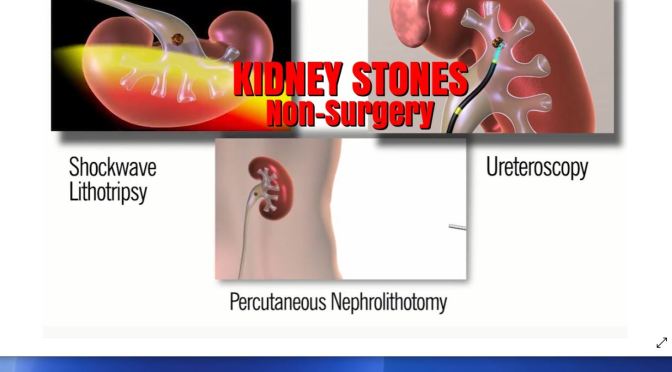
MEDICINE: ‘NON-SURGICAL TREATMENT OF KIDNEY STONES’ (CLEVELAND CLINIC)
Observation is a non-surgical approach in which we allow the stone to pass on its own. The smaller the stone, the better the chance that it will pass. The benefit of observation is that you avoid having surgery.
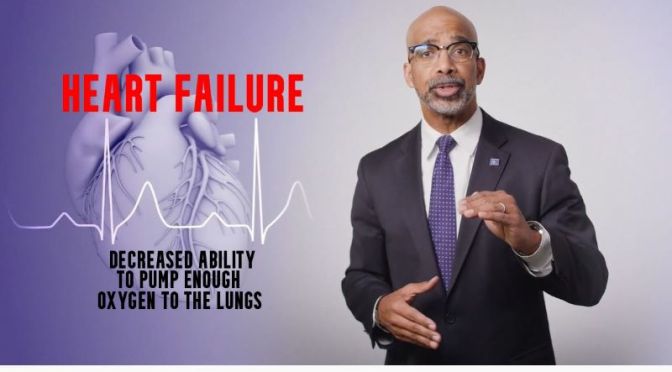
Heart Failure: ‘What It Is & How To Treat It’ (Video)
The heart is a hero. It works relentlessly to deliver oxygen and nutrients to the body. But just like all heroes, sometimes it gets tired, and can’t do its job as well. This is called heart failure – the inability for the heart to pump enough blood and oxygen to the lungs and rest of the body. In this video, Northwestern Medicine cardiologists Clyde W. Yancy, MD, MSc and Jane E. Wilcox, MD, MSc explain what heart failure is and the integrated and collaborative approach used to diagnose, stage and treat heart failure at Northwestern Medicine. For more information, visit http://heart.nm.org
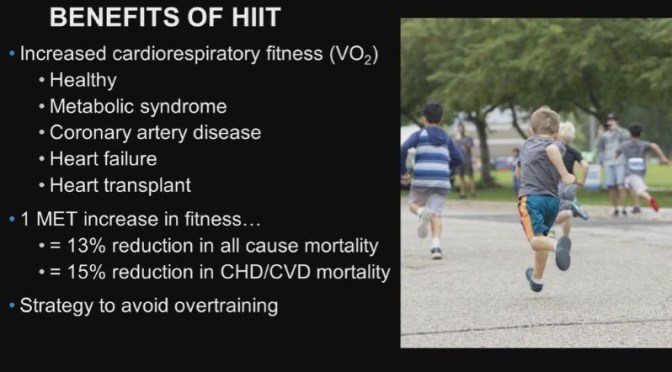
EXERCISE: BENEFITS OF HIIT (HIGH-INTENSITY INTERVAL TRAINING) – MAYO CLINIC
Mayo Clinic Division of Preventive Cardiology will be preparing a series of recordings focusing on Cardiovascular Disease states. This is the Exercise Series and this particular one focuses on HIIT and its benefits. Results in physiological adaptations linked to improved health (even with a very small volume of exercise).
DOCTORS PODCAST: MEDICAL & TELEHEALTH NEWS (FEB 6)
A bi-weekly podcast on the latest medical, science and telehealth news.

HEALTHY DIETS: BALANCED CARBOHYDRATE RATIO – LOW FREE SUGARS + HIGH FIBER
Are all carbohydrates equally important to you? Considering carbohydrate quantity but also quality has a crucial importance for a healthy and balanced nutrition. Balanced Carbohydrate Ratio has been developed and scientifically proven in order to identify products and diets with the most optimal carbohydrate content.
DOCTORS PODCAST: MEDICAL & TELEHEALTH NEWS (JAN 27)
A bi-weekly podcast on the latest medical, science and telehealth news.
ANALYSIS: ‘HEALTH CARE REFORM IN THE BIDEN ERA’
President Biden has released a health care plan that proposes reducing the age of eligibility for Medicare to 60 years and introducing a public option. Larry Levitt, MPP, Executive Vice President for Health Policy at the Kaiser Family Foundation, and Karen Joynt Maddox, MD, MPH, Co-Director of the Center for Health Economics and Policy (CHEP) at @Washington University School of Medicine, and Lawrence O. Gostin, JD from the O’Neill Institute for National and Global Health Law at Georgetown University discuss prospects for health care reform under the new administration. Recorded January 21, 2021.
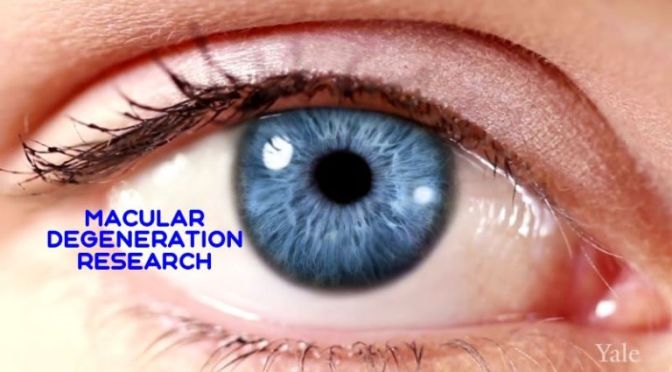
MEDICAL VIEWS: ‘MACULAR DEGENERATION RESEARCH’
Macular degeneration is a leading cause of visual impairment in people over 65 and can lead to blindness. One in three people will eventually suffer some degree of macular degeneration, which is caused by abnormal blood vessels under the retina, the light-sensitive part of the eye. We treat both the more common “dry” as well as the more dangerous “wet” forms of macular degeneration. While there is currently no cure for this disease, we offer the latest treatments to reduce the risk of vision loss and blindness. These include anti-VEGF drugs—which attack proteins that create the abnormal blood vessels that cause macular degeneration—and photodynamic therapy, in which patients ingest medication that is then activated with a laser.
To learn more about macular disease at Yale, visit: https://www.yalemedicine.org/departme….
COMMENTARY:
This high quality video shows several aspects of macular degeneration. It discusses treatments with stem cells that are in the research phase; in the future there may be replacements for the abnormal support cells, the vascular cells and pigmented epithelium, that are diseased in macular degeneration.
Current treatment centers on control of abnormal blood vessels either by photo active laser, laser coagulation, or anti-VEGF.
Macular degeneration has two forms, wet and dry. The wet macular degeneration has accumulations, or Drusen, under the epithelium. There are also machines to check the thickness of the macula, which is an aid in diagnosis.
The main symptom of macular degeneration or loss of vision especially in The center of the visual field, which is essential for reading.
As I mentioned in my podcast, I made a posting on macular degeneration that includes an amsler grid. Some early symptoms of macular degeneration include waviness of the lines of this grid. Certainly if you have any visual distortion or loss you should see an ophthalmologist.
If your medical plan permits it, I feel but a regular check buy an ophthalmologist approximately every 6 to 12 months, is very useful. My own ophthalmologist checks my retinal thickness, optic nerve, pressure and peripheral Field ( to pick up glaucoma) as well as my vision on each visit.
Dr. C.
COVID-19 VACCINES: ‘FREQUENTLY ASKED QUESTIONS ANSWERED’
How does each of the available Covid-19 vaccines work?
Once the vaccine is injected, the mRNA is taken up by the macrophages near the injection site and instructs those cells to make the spike protein. The spike protein then appears on the surface of the macrophages, inducing an immune response that mimics the way we fight off infections and protects us from natural infection with SARS-CoV-2. Enzymes in the body then degrade and dispose of the mRNA. No live virus is involved, and no genetic material enters the nucleus of the cells.
Although these are the first mRNA vaccines to be broadly tested and used in clinical practice, scientists have been working on mRNA vaccines for years. And despite this wonderful parody piece. opens in new tab saying that the technology is “obvious,” in fact the breakthrough insight that put the mRNA inside a lipid coating to prevent it from degrading is quite brilliant — and yes, this may be the first time the New England Journal of Medicine has referenced a piece in The Onion. (Last reviewed/updated on 11 Jan 2021)
How should early side effects be managed?
Analgesics and antipyretics such as acetaminophen or ibuprofen are effective in managing post-vaccine side effects including injection-site pain, myalgias, and fever. However, the CDC does not recommend prevaccine administration of these drugs, as they could theoretically blunt vaccine-induced antibody responses.
Because of the small risk of anaphylaxis, sites that administer the vaccines must have on hand strategies to evaluate and treat these potentially life-threatening reactions. The CDC has issued recommendations on how sites should prepare. opens in new tab. (Last reviewed/updated on 11 Jan 2021)
How long will the vaccines work? Are booster doses required?
Since the vaccines have been tested only since the summer of 2020, we do not have information about the durability of protection. Data from the phase 1 trial of the Moderna vaccine suggested that neutralizing antibodies persisted for nearly 4 months. opens in new tab, with titers declining slightly over time. Given the absence of information on how long the vaccines will be protective, there is currently no specific recommendation for booster doses. (Last reviewed/updated on 11 Jan 2021)
Do the vaccines prevent transmission of the virus to others?
Many commentaries on the results of the vaccine clinical trials cite a lack of information on asymptomatic infection as a limitation in our knowledge about the vaccines’ effectiveness. Indeed, this is a theoretical concern, since up to 40% of people who get infected with SARS-CoV-2 have no symptoms but may still transmit the virus to others.
Nonetheless, there are several good reasons to be optimistic about the vaccines’ effect on disease transmission. First, in the Moderna trial. opens in new tab, participants underwent nasopharyngeal swab PCR testing at baseline and testing at week 4, when they returned for their second dose. Among those who were negative at baseline and without symptoms, 39 (0.3%) in the placebo group and 15 (0.1%) in the mRNA-1273 group had nasopharyngeal swabs that were positive for SARS-CoV-2 by RT-PCR. These data suggest that even after one dose, the vaccine has a protective effect in preventing asymptomatic infection.
Second, findings from population-based studies now suggest that people without symptoms are less likely to transmit the virus to others. Third, it would be highly unlikely in biological terms for a vaccine to prevent disease and not also prevent infection. If there is an example of a vaccine in widespread clinical use that has this selective effect — prevents disease but not infection — I can’t think of one!
Until we know more, however, we should continue to emphasize to our patients that vaccination does not allow us to stop other important measures to prevent the spread of Covid-19. We need to continue social distancing, masking, avoiding crowded indoor settings, and regular hand washing. (Last reviewed/updated on 11 Jan 2021)
 Doctors Without Waiting Rooms