
CORONAVIRUS PODCAST: TRACING APPS, Antiviral remdesivir’S PROMISE

The Coronapod team pick through the latest news, plus we hear from the researchers making lemonade out of lockdown lemons.

In this episode:

01:10 Can contact-tracing apps help?

Governments around the world are banking on smartphone apps to help end the spread of the coronavirus. But how effective might these apps might be? What are the risks? And how should they fit into wider public health strategies?

Editorial: Show evidence that apps for COVID-19 contact-tracing are secure and effective

13:30 Antiviral remdesivir shows promise

Early results from a US trial of the antiviral drug remdesivir suggest it shortens recovery time for patients with COVID-19. We unpick the findings.

News: Hopes rise for coronavirus drug remdesivir

16:52 One good thing

Our hosts pick out things that have made them smile in the last week, including blooming trust in scientists, cooking experiments, and a neighbourhood coming together to clap for healthcare workers.

21:34 Unexpected opportunities

We hear from three researchers making the most of lockdown, studying tiny earthquakes, building balcony-based citizen science projects, or enlisting gamers to fight the coronavirus.

Fold-it, the protein-folding computer game

TELEMEDICINE: 80% OF PEDIATRIC PATIENTS SEEN REMOTELY AT JOHNS HOPKINS CHILDREN’S CENTER

From Johns Hopkins Medicine (April 30, 2020):

“A lot of our pediatric divisions are now seeing 80% or more of their patients by video or telephone,” says Hughes.

The Children’s Center’s preparations for the virus and the disease it causes, COVID-19, were unwittingly sparked by pediatrician Helen Hughes and her early work in telemedicine outreach for pediatric subspecialists. In 2018, she spearheaded development of a telemedicine collaboration with the Talbot County Health Department on Maryland’s Eastern Shore.

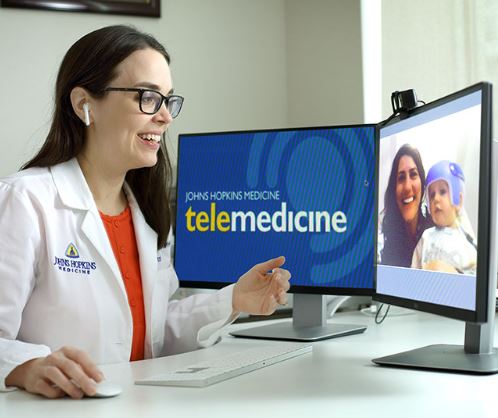
Pediatrician Helen Hughes during a video visit with a young patient and mom.. Johns Hopkins Medicine

The goal was to ease the burden of long treks to Johns Hopkins’ Baltimore campus for young patients — especially medically complex patients — for follow-up visits. At the time, she said, “This is where the future of health care is headed. Video technologies can allow us to do so many things for our patients without having to see them in person every time.”

The Children’s Center, notes Hughes, had been conducting between zero and eight video visits per month for the past two years. In the second half of March, after the coronavirus had clearly arrived, Johns Hopkins pediatricians and pediatric subspecialists saw 800 patients via telemedicine. That number increased to 1,400 telemedicine visits in the first half of April. Additionally, MyChart users in April jumped to 71%.

Read full article