Tag Archives: World Heart Federation

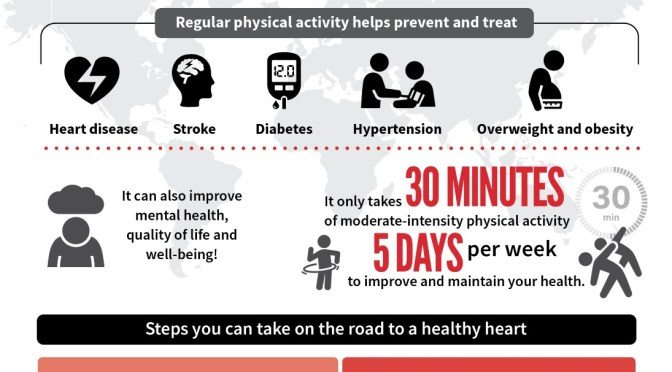
Studies: Regular Exercise Prevents Heart Disease

 Frequent exercise is robustly associated with a decrease in cardiovascular mortality as well as the risk of developing cardiovascular disease. Physically active individuals have lower blood pressure, higher insulin sensitivity, and a more favorable plasma lipoprotein profile. Animal models of exercise show that repeated physical activity suppresses atherogenesis and increases the availability of vasodilatory mediators such as nitric oxide.

Exercise has also been found to have beneficial effects on the heart. Acutely, exercise increases cardiac output and blood pressure, but individuals adapted to exercise show lower resting heart rate and cardiac hypertrophy. 
READ MORE


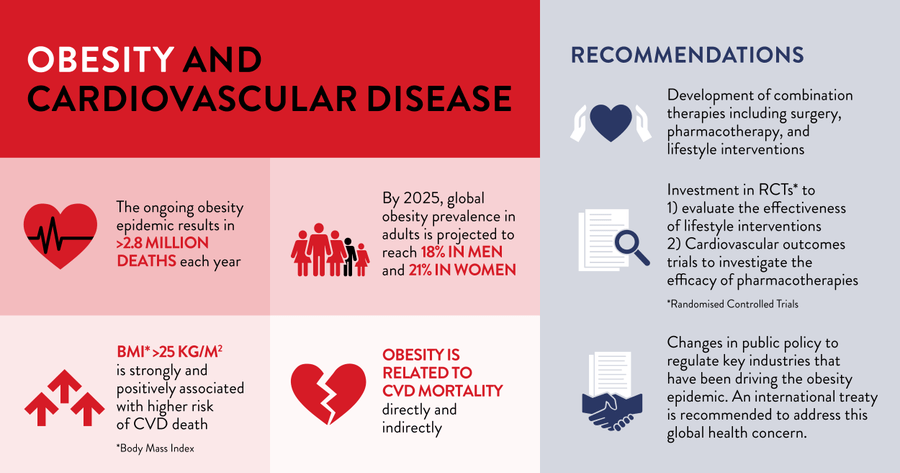
INFOGRAPHIC: OBESITY AND CARDIOVASCULAR DISEASE

Our new position paper with @worldheartfed summarises the relationship between obesity and cardiovascular disease (#CVD) mortality.

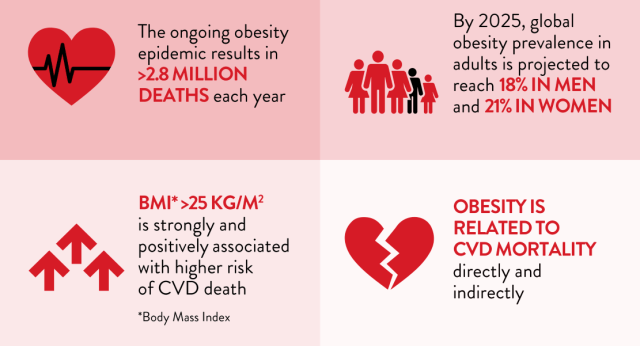
World Obesity Federation (January 2023) – The ongoing obesity epidemic represents a global public health crisis that contributes to poor health outcomes, reduced quality of life, and >2.8 million deaths each year. Obesity is relapsing, progressive, and heterogeneous. It is considered a chronic disease by the World Obesity Federation (WOF) and a chronic condition by the World Heart Federation (WHF).

People living with overweight/obesity are at greater risk for cardiovascular (CV) morbidity and mortality. Increased adiposity (body fat), particularly visceral/abdominal fat, is linked to CV risk and CV disease (CVD) via multiple direct and indirect pathophysiological mechanisms. The development of CVD is driven, in part, by obesity-related metabolic, endocrinologic, immunologic, structural, humoral, haemodynamic, and functional alterations.

Learn more: http://bit.ly/3THvOZa