
We humans, in common with all mammals and birds, are homeothermic; we defend a body temperature of approximately 98.6 F.. When we are cold, we shiver to warm up. If we get too cold, such as being in 50° water temperature for 50 minutes, we have a 50% chance of dying. When we are warm, we sweat . When we get too warm, and our core body temperature rises above a critical point, approximately 105°, we may die.
This article is about HEAT EXHAUSTION, which is very topical, considering the season and the recent “heat dome” in the Pacific Northwest, not to mention global warming.
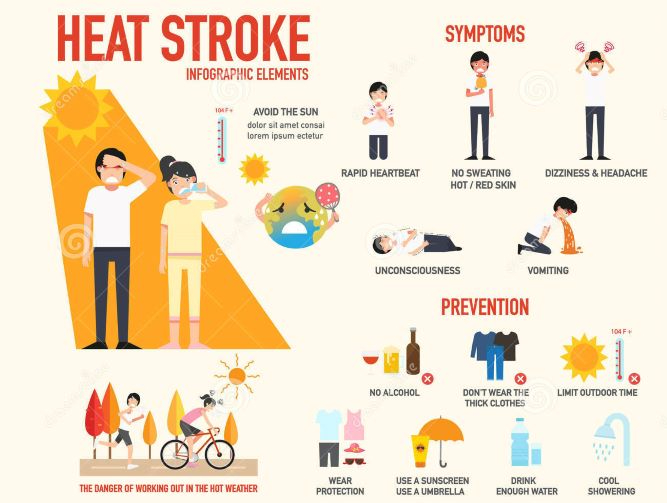
Our main defense against heat is to sweat. The water in sweat has a very high heat capacity. Changing sweat into water vapor requires a lot of heat, which is gratefully donated by the person who is too hot. Too much water vapor in the air, a high relative humidity, decreases the rate of evaporation, and therefore of Cooling. The critical measurement to warn us of Environmental overheating danger is the WET-BULB THERMOMETER, which is used in tandem with the regular, dry bulb thermometer to calculate the relative humidity.
To give perspective, the wet bulb thermometer reached 77° And the dry bulb thermometer read 116° in the pacific northwest, associated with 118 fatalities. In 2003, when Europe was hit by a heat wave, the wet bulb thermometer reached 82.4°, associated with 30,000 deaths.
When it Feels hot (check the heat index), which is related to both the temperature and the relative humidity, you should start to worry. You should drink extra fluids, wear loose fitting clothes, stay out of the direct sun, avoid sunburn, exercise in the cool of the morning and night, not during the heat of the day, avoid closed vehicles, especially for children, and don’t get sunburned, which decreases the ability of the skin to produce sweat.
Certain groups have more risk, such as very young or old age, the obese, and diabetics. Certain drugs, such as Alcohol, diuretics and beta blockers are factors.
Some typical symptoms are heavy sweating, faintness, dizziness, fatigue, muscle cramps, nausea, and headache. If you are hot, and think you might be experiencing heat exhaustion, you should stop all activity, move to a colder shaded place, and drink cool water or sports drinks.
If you’re caring for somebody, you should worry about confusion, agitation, and other central nervous system symptoms; the brain, together with the heart, kidneys and muscles are very susceptible to overheating.
Rectal temperature is the most reliable, and if it gets to 104°, immediate cooling is necessary, even packing in ice. Don’t bother to use aspirin, since it does not work with heat exhaustion. If coma or seizures develop, and the patient is diagnosed with a heat stroke, the fatality rate and long-term neurological complications are grave.
Please read the excellent article by Joe Craven McGinty in the July 10 Wall Street Journal, or the accompanying mayo clinic article. And stay Cool!


 Doctors Without Waiting Rooms