Tag Archives: Skin Conditions

Skin Conditions: A Review Of Urticaria (Or Hives)

One out of five people experience hives in their lifetime. These are itchy bumps, which are surrounded by a field of redness, and itch like crazy.

Hives are caused by the release of histamine from mast cells in the tissues, or basophiles in the bloodstream.
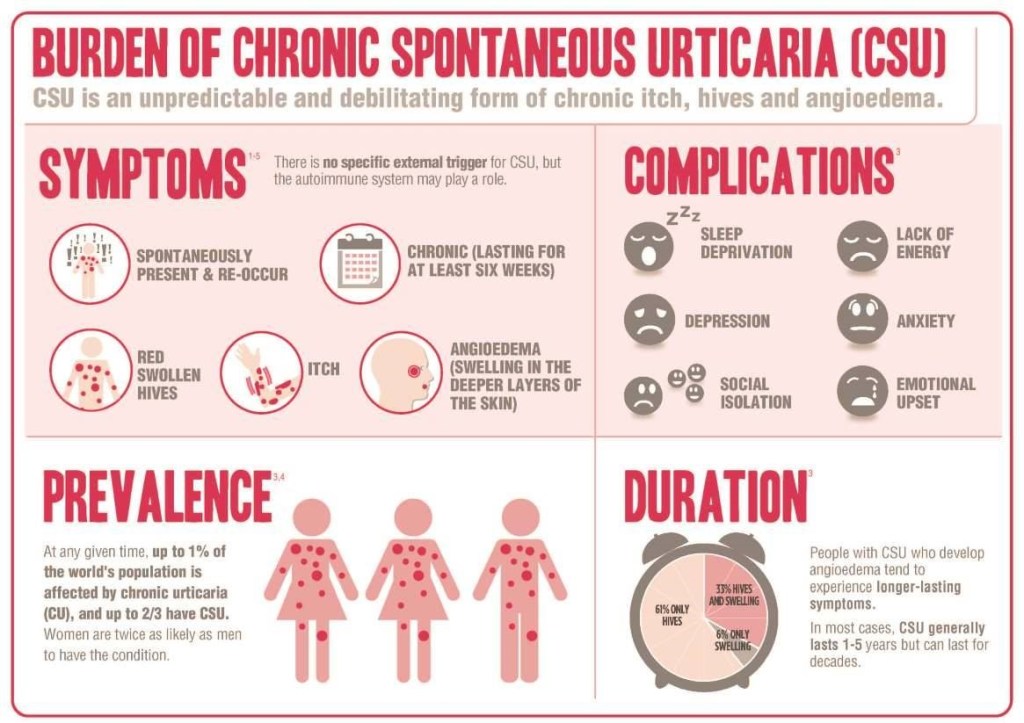
Itching is the chief annoyance, which can cause sleep loss, as well as misery severe enough to distract from normal activities. Hives are sometimes associated with angioedema, which is swelling in certain areas, such as the throat and windpipe, which can be fatal. Extensive hives, with leaking of fluid out of the blood vessel’s can also cause low blood pressure, which can be fatal, especially if you’re in a precarious situation, such as swimming.

The topic has been increasingly understood, and therefore growing increasingly complex, and I will only touch on some high points. I would recommend the review of Dermnet from New Zealand, which is included below if you want more complete and reasonably understandable information.

I have had hives only one time, after being stung by a bee for the third or fourth time. Within a few seconds, I started itching all over my body, but had no dizziness so apparently didn’t lose much fluid from my blood vessels. The hives went away after taking an antihistamine. I sometimes get itchy after wearing a tight belt, which is probably caused by histamine release due to “ pressure urticaria. As mentioned in previous articles, I also get itchy skin without hives if I let my skin get too dry, helped by lubricants, and have itchy ears for which I take drops of mineral oil into my ears, and wash the wax out every few months.

Urticaria, or hives, can be in a limited  area or all over the body, can last a few days or come and go indefinitely, and can be mild or incapacitating. They can be caused by a huge variety of known things, from infections, such as upper respiratory infections, foods such as peanut, drugs such as antibiotics, contactants, such as latex gloves, and stings or other injectants, which  can generalize into severe and sometimes fatal anaphylaxis.

Adrenaline, and antihistamines, are needed immediately in these situations. You may have heard of the rapidly injectable EpiPen, which you must carry with you if at risk.

Often with chronic urticaria, the cause remains unknown or “idiopathic”. As an allergist, this used to drive me almost as crazy as my patients, A lot of progress has been made in the last few decades. About half of the unknown causes turns out to be antibodies directed towards the allergic antibody, IGE, which can be treated by yet another antibody, omalizumab, or some other expensive new medications.

If you have urticaria that continues, and interferes with your enjoyment of life, You can help your doctor out by carefully remembering the circumstances, under which the hives occur, and the places on your body where they are the most annoying. Ask your relatives if they have any autoimmune diseases, like lupus, or vitiligo. Know exactly what medication you are taking, and bring a list with you.

Angioedema can be fatal due to blockage of breathing and demands immediate attention. ACE Inhibitors can cause these swellings, which often occur without itching.

Once again, go to the excellent and understandable article by Dermnet/urticaria/an overview.

—Dr. C.
Skin Conditions: Five Types Of Contact Dermatitis

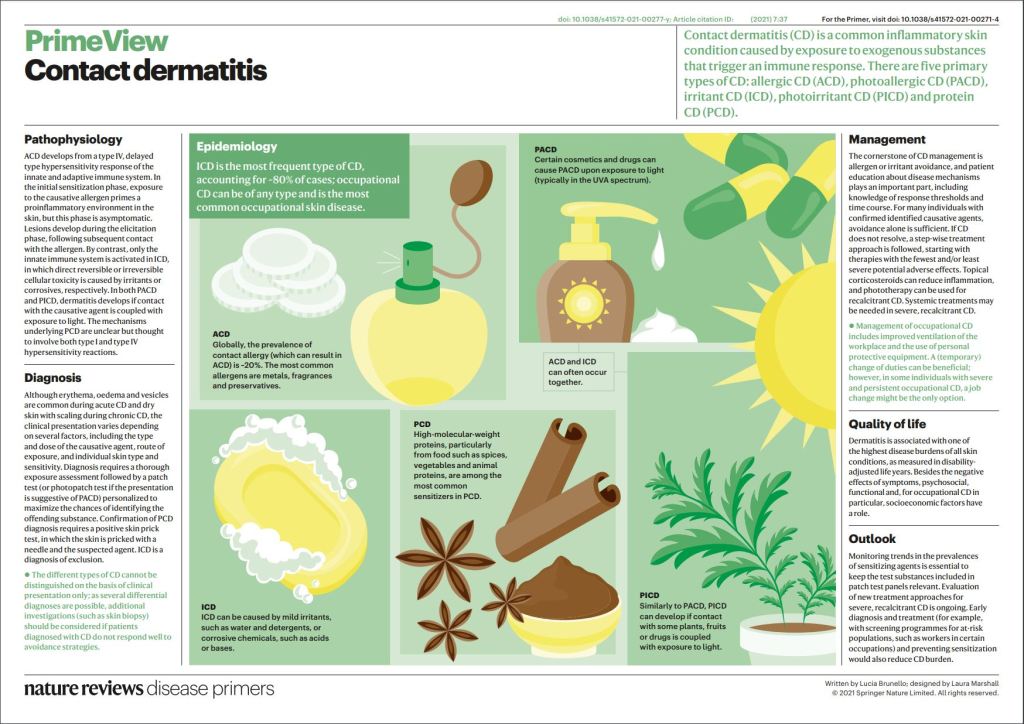
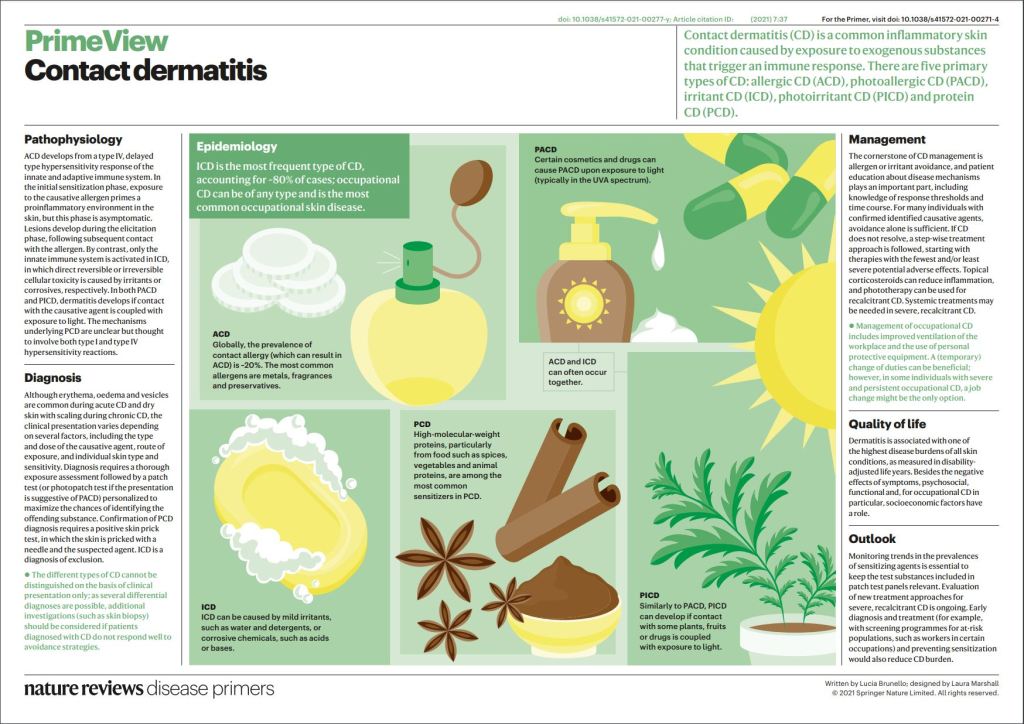
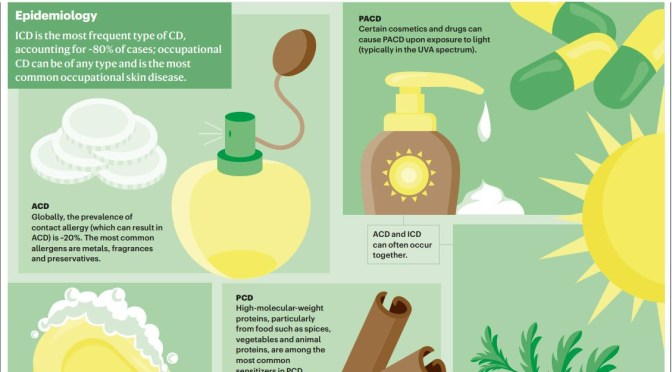
Contact dermatitis (CD) is among the most common inflammatory dermatological conditions and includes allergic CD, photoallergic CD, irritant CD, photoirritant CD (also called phototoxic CD) and protein CD. Occupational CD can be of any type and is the most prevalent occupational skin disease. Each CD type is characterized by different immunological mechanisms and/or requisite exposures. Clinical manifestations of CD vary widely and multiple subtypes may occur simultaneously. The diagnosis relies on clinical presentation, thorough exposure assessment and evaluation with techniques such as patch testing and skin-prick testing. Management is based on patient education, avoidance strategies of specific substances, and topical treatments; in severe or recalcitrant cases, which can negatively affect the quality of life of patients, systemic medications may be needed.

Infographic: What Is Contact Dermatitis?

Contact dermatitis happens when the skin becomes irritated or inflamed after coming in contact with a substance that triggers an allergic reaction. It bears some of the same symptoms as the six other types of eczema. But unlike atopic dermatitis — the most common and difficult-to-treat form of eczema — it doesn’t run in families and isn’t linked to other allergic conditions such as hay fever or asthma.

Skin Conditions: What Are The Causes Of Rosacea?

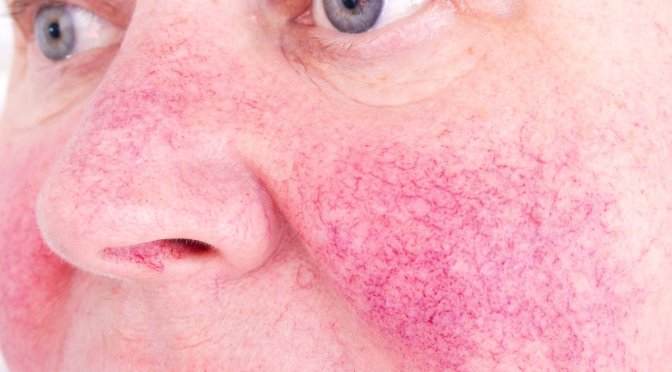
  1. Alcohol. Alcohol can dilate the tiny blood vessels in the face, causing the face to flush. Drink in moderation only on special occasions, if at all. Not only can drinking alcoholic beverages cause flare-ups, but so can topically applied alcohol in various facial cleansing products. Always check product ingredients and avoid those containing alcohol or other overly drying ingredients.
  2. Spicy or hot foods and drinks. Foods that contain spicy ingredients can affect the blushing areas of the face, leading to redness. If you love spicy food, go with mild spice and only enjoy these dishes on occasion. Since hot (temperature-wise) food and drinks often trigger facial flushing, you should allow your food or warm beverage to cool a bit before consuming.
  3. Exercise. Regular exercise is important for everyone, but it’s also a common trigger for rosacea flare-ups. But don’t abandon your exercise routine. Rather, limit outdoor exercising to morning or evening hours to avoid midday heat and sun exposure. When exercising outdoors, use shaded trails for cycling or jogging. And always remember to keep yourself well hydrated.
  4. Sun and wind exposure. Sun exposure, hot and cold temperatures and wind exposure frequently aggravate rosacea symptoms. Always wear a broad spectrum sunscreen when outside, even on cloudy days. If possible, stay inside on particularly hot, humid days. If you must venture out in the cold or wind, cover your cheeks and nose with a scarf.
  5. Anxiety and stress. Stress and anxiety can cause rosacea symptoms to worsen, so use stress management techniques when needed. Make sure to get plenty of rest and practice deep breathing when you feel anxiety creeping up.

DR. C’S JOURNAL: VITILIGO

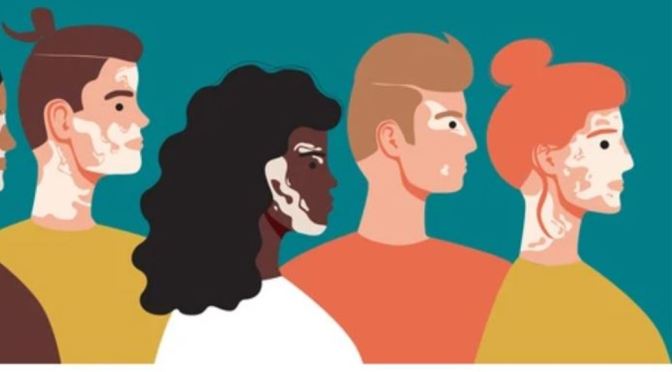
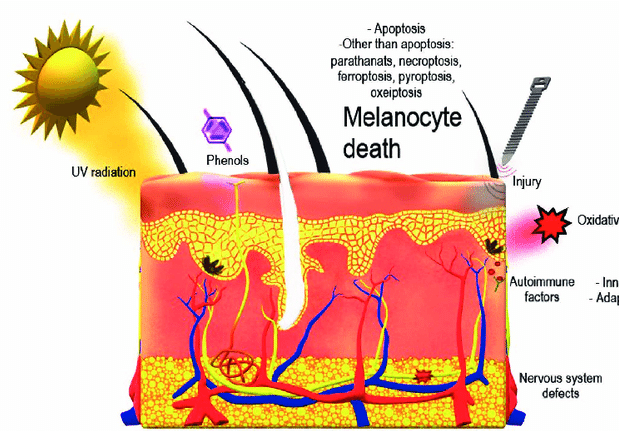
Vitiligo is the loss of skin color in patches. Most often it is widespread. It tends to occur on the hands, or around the mouth, and can start where there are irritations or injuries to the skin, such as with tattoos. This generalized Vitteligo begins in middle age, but a more localized, or segmental Vitelligo can start earlier, and affect one area or side of the body.

Well-tanned skin, and skin with a darker color make the vitiligo stand out more prominently and give more trouble.

When I was a kid, I had a sort of reverse vitiligo, namely freckles. With freckles, the pigment gathers into small spotty areas, and leaves the rest of the skin without sunburn protection. I can attest to the fact that ANY kind of skin difference will lead to social problems; the main suffering  with vitiligo is social.

Vitiligo is considered an autoimmune condition, and carries with it an increased likelihood of other autoimmune conditions, primarily thyroid and other endocrine.

Mimicking vitelligo, skin pigment can also disappear in areas of irritation or surface infection, such as in tinea versacolor and pityriasis alba. There is often a “halo” around a pigmented negus.

There are various treatments which aim to lighten up the surrounding skin area, or Increase pigmentation of the affected area. Such techniques use ultraviolet light, in combination with various various creams and medicines. Even surgery is sometimes used, so great it is the suffering of affected individuals.

Please refer to the accompanying article for more information.

—Dr. C.

Read more

THE DOCTORS 101 CHRONIC SYMPTOMS & CONDITIONS #30: ACNE (Vulgaris)

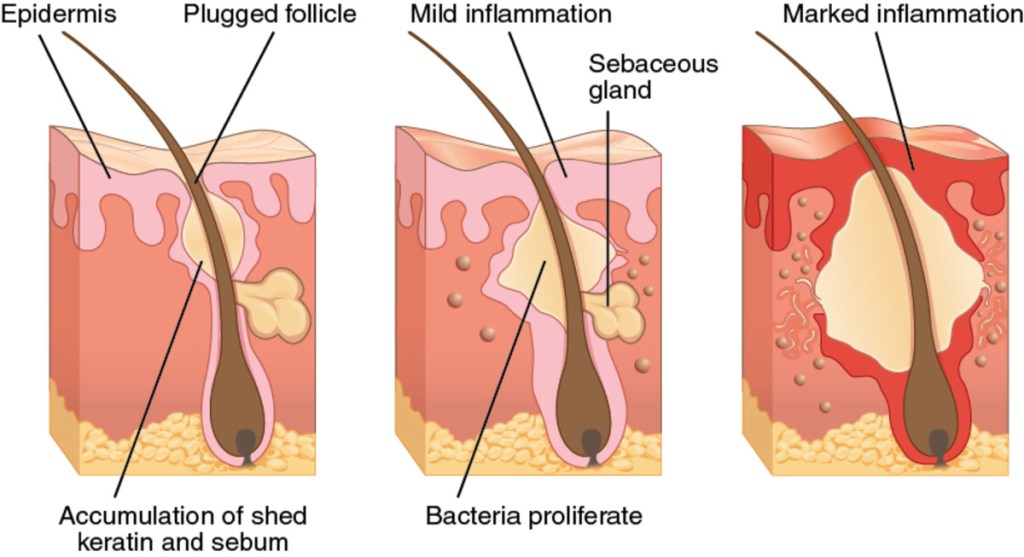
ACNE is almost a rite of passage in adolescents, although it is not totally restricted to the teen years; women may experience acne during pregnancy, or at the time of menopause. It afflicts about 90% of kids during their PUBERTAL growth spurt, though is moderate or severe in only 15%.

Acne is caused by PLUGGING of the sebaceous glands of the skin. Infection by certain skin BACTERIA follows. Check the accompanying video for a description of the battle between the “Good guys”, Staph epidermidis and Cutibacterium acnes, vs. the bad guy, Proprionibactrium
acnes.

Acne tends to run in families. The steroid HORMONES like Testosterone and Cortisone promote Acne. STRESS tends to chronically raise Cortisol and is a factor in Acne, and many chronic illnesses as well.

A person who is having trouble with Acne should avoid sweets and greasy foods, which is a good idea for everybody. Skin cleansers, using salicylic or azelaic acids and benzoyl peroxide may help, and creams containing retinoic acid derivatives may be useful..

The doctor may prescribe an antibiotic like tetracycline in resistant cases. Cystic acne may be scarring, but otherwise “the zits” depart with the pubertal years.

–Dr. C.

Further reading at Mayo Clinic